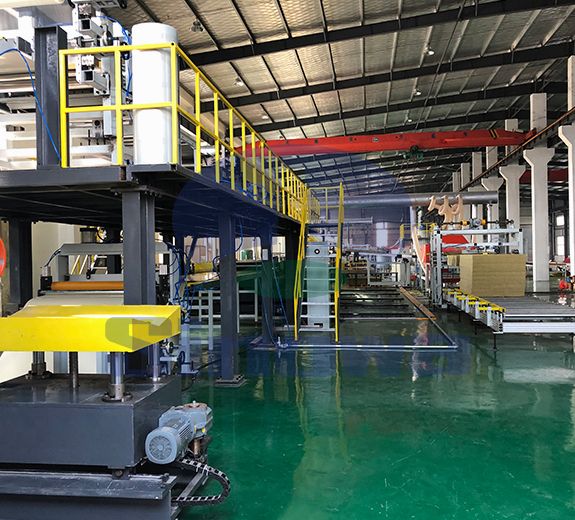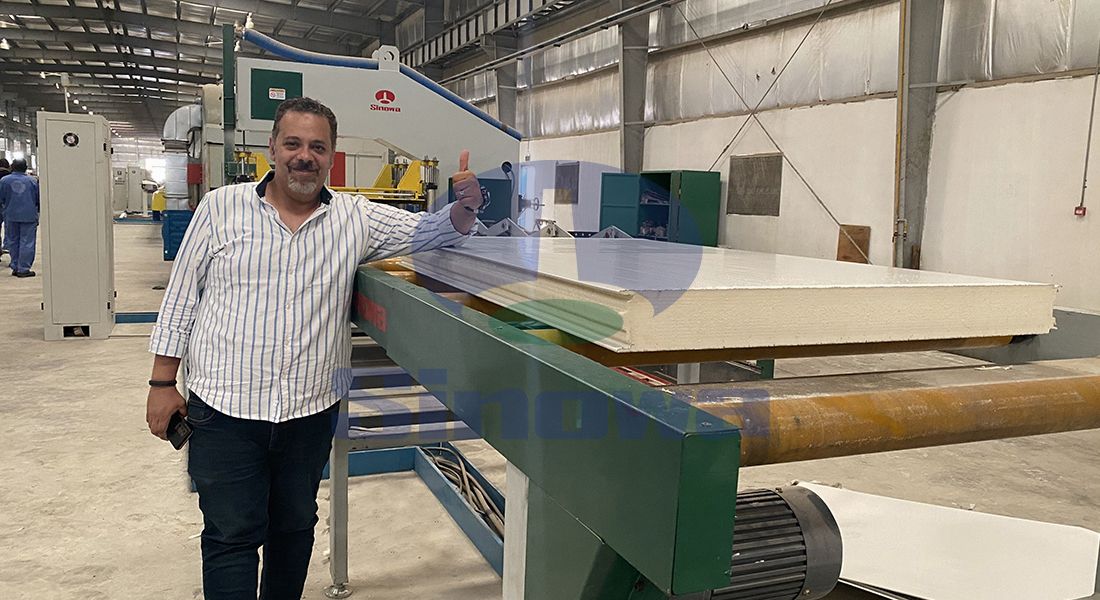

Sandwich panel lines have become an indispensable part of modern manufacturing and construction industries, providing efficient, high-quality production solutions for a wide range of composite panels. Among the various types of sandwich panel lines, PU Sandwich Panel Line, PIR Sandwich Panel Line, and Rockwool Sandwich Panel Line stand out due to their unique structural characteristics, superior performance, diverse types, and extensive applications. These three types of production lines are designed to manufacture sandwich panels with different core materials, each tailored to meet specific industry needs and environmental requirements.
To begin with, it is essential to understand the basic concept of a sandwich panel line. A sandwich panel line is a set of integrated equipment designed to produce sandwich panels, which consist of two outer facing materials and a core material bonded together through a series of manufacturing processes. The core material is the key component that determines the main performance of the sandwich panel, while the facing materials provide structural support, protection, and aesthetic appeal. The production line typically includes unwinding, feeding, gluing, laminating, cutting, and stacking processes, all of which are automated to ensure high production efficiency and consistent product quality. PU, PIR, and Rockwool sandwich panel lines differ primarily in the type of core material they process, as well as the corresponding adjustments in equipment and processes to accommodate the unique properties of each core material.
Starting with the PU Sandwich Panel Line, it is specifically designed to produce sandwich panels with polyurethane (PU) as the core material. Polyurethane is a synthetic polymer known for its excellent thermal insulation, lightweight, and high strength, making it a popular choice for various construction and industrial applications. The structure of a PU Sandwich Panel Line is carefully engineered to handle the unique properties of PU foam, which is formed by the reaction of isocyanate and polyol. The line consists of several key components, including unwinding machines for the facing materials, a PU foam mixing and pouring system, a laminating press, a cutting machine, and a stacking system. Each component works in harmony to ensure the smooth and efficient production of PU sandwich panels.
The unwinding machines in a PU Sandwich Panel Line are responsible for feeding the facing materials, which are usually metal sheets (such as galvanized steel, color-coated steel, or aluminum), into the production line. These machines are equipped with tension control systems to ensure that the facing materials are fed evenly and without wrinkles, which is crucial for the quality of the final product. The facing materials can vary in thickness, width, and material type depending on the application requirements of the PU sandwich panels. For example, thicker metal sheets may be used for panels intended for heavy-duty industrial applications, while thinner sheets are suitable for lightweight construction projects.
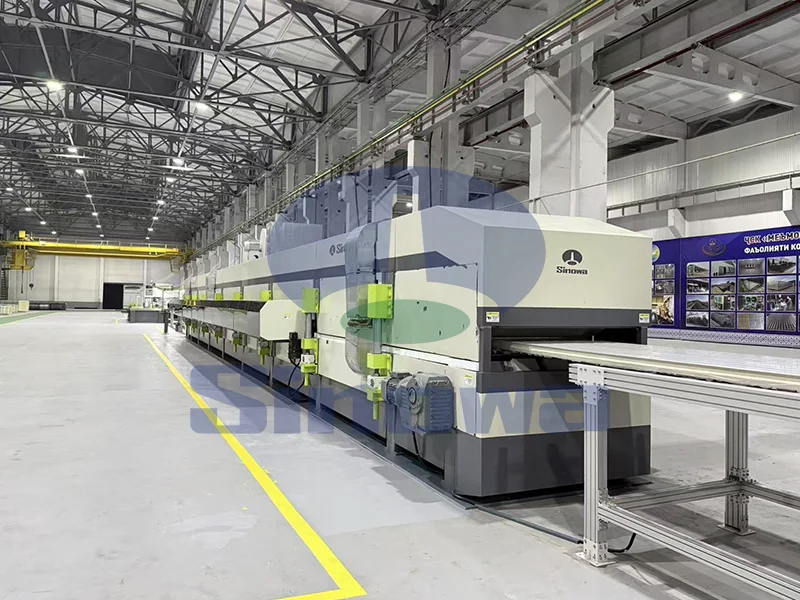
The core component of the PU Sandwich Panel Line is the PU foam mixing and pouring system. This system is designed to accurately mix the isocyanate and polyol components in the correct ratio, as well as add any necessary additives (such as flame retardants, foaming agents, or catalysts) to enhance the performance of the PU foam. The mixing process must be precise and efficient to ensure that the foam has a uniform density and structure, which directly affects the thermal insulation and mechanical performance of the sandwich panel. After mixing, the PU foam is poured onto the lower facing material, which is moving along the production line. The upper facing material is then fed onto the foam, and the entire assembly is passed through a laminating press.
The laminating press in a PU Sandwich Panel Line applies pressure and heat to bond the facing materials and the PU foam core together. The pressure and temperature are carefully controlled to ensure that the foam cures properly and forms a strong bond with the facing materials. The press may be a continuous belt press or a hydraulic press, depending on the production capacity and the type of PU sandwich panels being produced. Continuous belt presses are ideal for high-volume production, as they allow for a continuous flow of panels through the press, while hydraulic presses are suitable for smaller production runs or panels with special requirements.
After laminating, the continuous panel is cut into the desired length by a cutting machine, which is typically equipped with a circular saw or a CNC cutting system for precision. The cutting machine is synchronized with the production line to ensure that the panels are cut accurately without damaging the structure or surface of the panel. Finally, the cut panels are stacked by an automated stacking system, which organizes the panels into neat piles for storage or transportation. The entire production process of a PU Sandwich Panel Line is automated, which reduces labor costs and improves production efficiency, while also ensuring consistent product quality.
The performance of a PU Sandwich Panel Line is determined by its ability to produce high-quality PU sandwich panels with consistent properties. PU sandwich panels produced by this line exhibit excellent thermal insulation performance, with a low thermal conductivity that helps to reduce energy consumption in buildings and industrial facilities. This is particularly important in cold storage, refrigeration, and residential buildings, where maintaining a stable internal temperature is crucial. PU foam also has good mechanical strength, including high compressive strength and bending strength, which allows the sandwich panels to withstand heavy loads and resist deformation. Additionally, PU sandwich panels are lightweight, which makes them easy to transport and install, reducing construction time and costs.

Another key performance characteristic of PU sandwich panels produced by the PU Sandwich Panel Line is their excellent adhesion between the core and the facing materials. The strong bond ensures that the panel remains intact even under harsh conditions, such as extreme temperatures, humidity, or mechanical stress. PU foam is also resistant to water absorption, which prevents the core from deteriorating over time and maintains the panel's performance. Furthermore, PU sandwich panels can be made with flame-retardant additives, which improve their fire resistance and make them suitable for use in fire-sensitive applications.
There are several types of PU Sandwich Panel Lines, classified based on their production capacity, the type of facing materials they can handle, and the thickness of the panels they produce. Production capacity ranges from small-scale lines with a capacity of 1-2 meters per minute to large-scale lines with a capacity of 5-10 meters per minute. Small-scale lines are suitable for small businesses or specialized applications, while large-scale lines are designed for mass production to meet the high demand of large construction projects. Additionally, some PU Sandwich Panel Lines are designed to handle specific facing materials, such as aluminum or stainless steel, while others can process a variety of materials, including metal, wood, or composite sheets.
The thickness of the PU sandwich panels produced by the line can also vary, typically ranging from 50mm to 200mm. Thicker panels are used for applications that require higher thermal insulation and mechanical strength, such as cold storage facilities or industrial warehouses, while thinner panels are suitable for interior partitioning or lightweight roofing. Some PU Sandwich Panel Lines are equipped with adjustable systems that allow for the production of panels with different thicknesses, providing flexibility to meet diverse customer needs. Additionally, there are specialized PU Sandwich Panel Lines designed for the production of curved or custom-shaped panels, which are used in architectural projects with unique design requirements.
The applications of PU sandwich panels produced by the PU Sandwich Panel Line are extensive and diverse, covering various industries such as construction, cold storage, transportation, and industrial manufacturing. In the construction industry, PU sandwich panels are widely used for exterior walls, roofs, and interior partitions of residential, commercial, and industrial buildings. Their excellent thermal insulation performance helps to reduce energy consumption for heating and cooling, making them an environmentally friendly choice. PU sandwich panels are also used in cold storage facilities, such as refrigerated warehouses, food processing plants, and pharmaceutical storage facilities, where they help to maintain a stable low temperature and prevent the spoilage of goods.
In the transportation industry, PU sandwich panels are used in the manufacturing of refrigerated trucks, trailers, and shipping containers. Their lightweight and high thermal insulation properties make them ideal for transporting perishable goods over long distances. Additionally, PU sandwich panels are used in industrial manufacturing facilities for the construction of clean rooms, workshops, and equipment enclosures. Their smooth surface and easy-to-clean properties make them suitable for environments that require high hygiene standards, such as pharmaceutical and electronics manufacturing plants. PU sandwich panels are also used in temporary structures, such as construction site offices, disaster relief shelters, and exhibition halls, due to their quick installation and durability.

Next, we turn to the PIR Sandwich Panel Line, which is designed to produce sandwich panels with polyisocyanurate (PIR) as the core material. PIR is a type of rigid foam that is similar to PU but with improved fire resistance and thermal stability, making it a preferred choice for applications where fire safety is a top priority. The structure of a PIR Sandwich Panel Line is similar to that of a PU Sandwich Panel Line, but with some key modifications to accommodate the unique properties of PIR foam, which has a higher crosslinking density and requires different curing conditions.
Like the PU Sandwich Panel Line, the PIR Sandwich Panel Line consists of unwinding machines, a PIR foam mixing and pouring system, a laminating press, a cutting machine, and a stacking system. However, the PIR foam mixing and pouring system is designed to handle the more complex reaction of isocyanate and polyol with additional catalysts and additives to form PIR foam. The mixing ratio and temperature control are more precise in a PIR Sandwich Panel Line, as PIR foam requires a higher curing temperature and a longer curing time compared to PU foam. This ensures that the PIR foam has a uniform structure and excellent fire resistance properties.
The unwinding machines in a PIR Sandwich Panel Line are similar to those in a PU line, feeding the facing materials (usually metal sheets) into the production line with precise tension control. The facing materials for PIR sandwich panels are often thicker or have a higher grade of fire resistance to complement the fire performance of the PIR core. The laminating press in a PIR line is equipped with a more advanced temperature control system to ensure that the PIR foam cures properly. The press may also apply higher pressure to ensure a strong bond between the facing materials and the core, as PIR foam has a higher density and stiffness compared to PU foam.
The cutting machine in a PIR Sandwich Panel Line is designed to handle the harder and more rigid PIR core, ensuring clean and precise cuts without damaging the panel. The stacking system is also modified to handle the heavier weight of PIR sandwich panels, which are denser than PU panels. Additionally, some PIR Sandwich Panel Lines are equipped with a post-curing system, which allows the panels to cure further after cutting, ensuring that they reach their full mechanical and fire resistance performance.
The performance of a PIR Sandwich Panel Line is characterized by its ability to produce PIR sandwich panels with superior fire resistance, thermal stability, and mechanical strength. PIR foam has a higher limiting oxygen index (LOI) than PU foam, meaning it is less flammable and produces less smoke when exposed to fire. This makes PIR sandwich panels suitable for use in buildings and facilities that require high fire safety standards, such as hospitals, schools, shopping malls, and high-rise buildings. PIR foam also has excellent thermal insulation performance, with a thermal conductivity similar to or slightly lower than PU foam, making it an energy-efficient choice.

In addition to fire resistance and thermal insulation, PIR sandwich panels produced by the PIR Sandwich Panel Line exhibit excellent mechanical properties, including high compressive strength, bending strength, and impact resistance. The high density of PIR foam makes the panels more rigid and durable, able to withstand heavy loads and harsh environmental conditions. PIR foam is also resistant to water absorption and chemical corrosion, ensuring that the panels maintain their performance over a long service life. Furthermore, PIR sandwich panels have good dimensional stability, meaning they do not shrink or expand significantly under changes in temperature or humidity, which helps to prevent cracks and damage to the building structure.
There are several types of PIR Sandwich Panel Lines, classified based on production capacity, panel thickness, and the type of facing materials. Similar to PU lines, PIR lines range from small-scale to large-scale, with production capacities varying from 1-3 meters per minute to 5-8 meters per minute. Small-scale lines are suitable for specialized applications or small businesses, while large-scale lines are designed for mass production. The thickness of PIR sandwich panels produced by the line typically ranges from 60mm to 250mm, with thicker panels used for applications requiring higher fire resistance and thermal insulation, such as high-rise buildings and industrial facilities.
Some PIR Sandwich Panel Lines are designed to produce panels with different facing materials, including galvanized steel, color-coated steel, aluminum, and even fire-resistant composite materials. There are also specialized PIR lines for the production of curved panels, sound-insulating panels, and panels with decorative surfaces, which are used in architectural projects with specific design and performance requirements. Additionally, some PIR Sandwich Panel Lines are equipped with automated quality control systems, which monitor the foam density, panel thickness, and bond strength to ensure that each panel meets the required standards.
The applications of PIR sandwich panels produced by the PIR Sandwich Panel Line are primarily focused on areas where fire safety is a critical concern, as well as applications that require high thermal insulation and durability. In the construction industry, PIR sandwich panels are widely used for exterior walls, roofs, and fire partitions in high-rise buildings, hospitals, schools, hotels, and shopping malls. Their excellent fire resistance helps to prevent the spread of fire and protect the lives and property of building occupants. PIR sandwich panels are also used in industrial facilities, such as power plants, chemical plants, and oil refineries, where they provide fire protection and thermal insulation for equipment and structures.
In the cold storage and refrigeration industry, PIR sandwich panels are used for the construction of cold storage warehouses, freezers, and refrigerated display cases. Their excellent thermal insulation performance helps to maintain a stable low temperature, reducing energy consumption and operating costs. PIR sandwich panels are also used in the transportation industry for the manufacturing of refrigerated trucks and trailers, as well as in the marine industry for ship interiors and insulation. Additionally, PIR sandwich panels are used in temporary structures that require fire safety, such as construction site offices and disaster relief shelters, as well as in the renovation of existing buildings to improve fire safety and energy efficiency.
Finally, we explore the Rockwool Sandwich Panel Line, which is designed to produce sandwich panels with rockwool as the core material. Rockwool, also known as mineral wool, is a natural inorganic material made from volcanic rock, basalt, or slag, which is melted and spun into fibers. Rockwool is known for its excellent fire resistance, sound insulation, and thermal insulation, making it a popular choice for applications where fire safety and sound control are important. The structure of a Rockwool Sandwich Panel Line is different from that of PU and PIR lines, as it must handle the fibrous nature of rockwool core material.

The Rockwool Sandwich Panel Line consists of several key components, including a rockwool core feeding system, unwinding machines for facing materials, a gluing system, a laminating press, a cutting machine, and a stacking system. The rockwool core feeding system is the most distinctive component of this line, as it is designed to handle the rockwool fibers and form them into a uniform core of the desired thickness and density. The rockwool core is typically produced separately and then fed into the production line, or it can be formed on-site using a fiberizing and layering system.
The unwinding machines in a Rockwool Sandwich Panel Line feed the facing materials, which are usually metal sheets, into the line. The gluing system applies adhesive to the facing materials, which is crucial for bonding the rockwool core to the facing sheets. The adhesive must be compatible with both the rockwool and the facing material to ensure a strong and durable bond. The rockwool core is then placed between the two facing materials, and the entire assembly is passed through a laminating press, which applies pressure to bond the components together. The press may be a continuous belt press or a hydraulic press, depending on the production capacity and the type of rockwool sandwich panels being produced.
The cutting machine in a Rockwool Sandwich Panel Line is designed to cut the continuous panel into the desired length, and it must be able to handle the fibrous nature of the rockwool core without causing fiber shedding. The stacking system then organizes the cut panels into piles for storage or transportation. Additionally, some Rockwool Sandwich Panel Lines are equipped with a surface treatment system, which smooths the surface of the panels and removes any loose fibers, improving the appearance and handling of the product.
The performance of a Rockwool Sandwich Panel Line is determined by its ability to produce rockwool sandwich panels with excellent fire resistance, sound insulation, and thermal insulation. Rockwool is a non-combustible material with a high melting point, making it extremely fire-resistant. Rockwool sandwich panels do not burn, melt, or release toxic gases when exposed to fire, making them an ideal choice for fire-sensitive applications. Additionally, rockwool has excellent sound insulation properties, as the fibrous structure traps sound waves and reduces noise transmission, making it suitable for buildings and facilities that require sound control, such as schools, hospitals, theaters, and industrial workshops.
Rockwool sandwich panels produced by the Rockwool Sandwich Panel Line also exhibit good thermal insulation performance, with a thermal conductivity that is slightly higher than PU and PIR foam but still effective for most insulation applications. The thermal insulation performance of rockwool can be enhanced by increasing the thickness of the core, making it suitable for both cold and hot climates. Rockwool is also resistant to water absorption, mold, and mildew, ensuring that the panels maintain their performance over a long service life. Additionally, rockwool is an environmentally friendly material, as it is made from natural and renewable resources and is recyclable.
There are several types of Rockwool Sandwich Panel Lines, classified based on production capacity, core thickness, and the type of facing materials. Production capacity ranges from small-scale lines with a capacity of 1-2 meters per minute to large-scale lines with a capacity of 4-6 meters per minute. Small-scale lines are suitable for small businesses or specialized applications, while large-scale lines are designed for mass production. The thickness of rockwool sandwich panels produced by the line typically ranges from 50mm to 300mm, with thicker panels used for applications requiring higher fire resistance and sound insulation.

Some Rockwool Sandwich Panel Lines are designed to handle different types of facing materials, including galvanized steel, color-coated steel, aluminum, and wood-based panels. There are also specialized lines for the production of sound-insulating panels, fire-resistant panels, and panels with decorative surfaces. Additionally, some Rockwool Sandwich Panel Lines are equipped with automated quality control systems that monitor the core density, panel thickness, and bond strength to ensure consistent product quality. Some lines also have the capability to produce panels with different densities of rockwool core, allowing for customization based on the specific performance requirements of the application.
The applications of rockwool sandwich panels produced by the Rockwool Sandwich Panel Line are extensive, covering industries such as construction, industrial manufacturing, transportation, and marine. In the construction industry, rockwool sandwich panels are widely used for exterior walls, roofs, and interior partitions in buildings that require high fire safety and sound control, such as schools, hospitals, theaters, shopping malls, and high-rise buildings. They are also used for fire partitions and fire doors, helping to prevent the spread of fire and protect building occupants.
In the industrial manufacturing industry, rockwool sandwich panels are used for the construction of workshops, factories, and equipment enclosures, where they provide fire protection and sound insulation. They are particularly suitable for industries with high noise levels, such as manufacturing plants, power plants, and chemical plants, as they help to reduce noise pollution. Rockwool sandwich panels are also used in the transportation industry for the manufacturing of train carriages, ship interiors, and aircraft cabins, where they provide fire protection and sound insulation.
Additionally, rockwool sandwich panels are used in the renovation of existing buildings to improve fire safety and sound insulation. They are also used in temporary structures, such as construction site offices, disaster relief shelters, and exhibition halls, due to their durability and fire resistance. In the marine industry, rockwool sandwich panels are used for ship hulls, decks, and interiors, as they are resistant to water, corrosion, and fire, making them suitable for harsh marine environments.
In conclusion, PU Sandwich Panel Line, PIR Sandwich Panel Line, and Rockwool Sandwich Panel Line are three important types of sandwich panel production lines, each with its own unique structure, performance, types, and applications. The PU Sandwich Panel Line is ideal for producing panels with excellent thermal insulation and lightweight properties, suitable for a wide range of construction and cold storage applications. The PIR Sandwich Panel Line specializes in producing panels with superior fire resistance and thermal stability, making them suitable for fire-sensitive applications such as high-rise buildings and hospitals. The Rockwool Sandwich Panel Line produces panels with excellent fire resistance and sound insulation, ideal for applications where fire safety and noise control are critical.

Each of these production lines is designed to meet the specific needs of different industries, and their choice depends on the application requirements, environmental conditions, and performance priorities. As the construction and manufacturing industries continue to develop, the demand for high-quality sandwich panels is expected to grow, and these three types of sandwich panel lines will continue to play a crucial role in meeting this demand. With ongoing technological advancements, these production lines are likely to become more efficient, flexible, and environmentally friendly, further expanding their applications and contributing to the development of sustainable construction and manufacturing practices.
The continuous improvement in the design and functionality of these sandwich panel lines has led to the development of more advanced and efficient production processes. For example, modern PU, PIR, and Rockwool Sandwich Panel Lines are increasingly equipped with automated control systems, which allow for real-time monitoring and adjustment of production parameters, ensuring consistent product quality and reducing the risk of defects. Additionally, the use of eco-friendly materials and processes in these lines is becoming more prevalent, as the industry focuses on sustainability and reducing environmental impact.
Another trend in the development of these sandwich panel lines is the integration of digital technologies, such as IoT (Internet of Things) and AI (Artificial Intelligence), which enable remote monitoring and predictive maintenance of the equipment. This helps to reduce downtime, improve production efficiency, and extend the service life of the production line. Furthermore, the ability to customize the production process to meet specific customer requirements is becoming more important, and many sandwich panel lines are now designed with modular components that can be easily adjusted to produce different types and sizes of panels.
In terms of future applications, the use of PU, PIR, and Rockwool sandwich panels is expected to expand into new areas, such as renewable energy projects (e.g., solar panel installations, wind turbine enclosures), modular construction, and green buildings. The excellent performance characteristics of these panels, combined with the efficiency of the production lines, make them well-suited for these emerging applications. As the global focus on energy efficiency and sustainability continues to grow, the demand for these sandwich panels and their production lines is likely to increase, driving further innovation and development in the industry.
It is also important to note that the performance and applications of these sandwich panel lines are closely related to the quality of the raw materials used. High-quality core materials and facing materials are essential for producing high-performance sandwich panels, and manufacturers must ensure that they source materials from reliable suppliers. Additionally, proper maintenance and operation of the production lines are crucial for ensuring their long-term performance and efficiency. Regular maintenance, training of operators, and adherence to safety standards are all important factors that contribute to the success of these production lines.
In summary, PU Sandwich Panel Line, PIR Sandwich Panel Line, and Rockwool Sandwich Panel Line are vital components of the modern manufacturing and construction industries. Their unique structures, superior performance, diverse types, and extensive applications make them indispensable for producing high-quality sandwich panels that meet the diverse needs of various industries. As technology continues to advance and the demand for sustainable and efficient building materials grows, these production lines will continue to evolve, providing even more advanced and flexible solutions for the future.