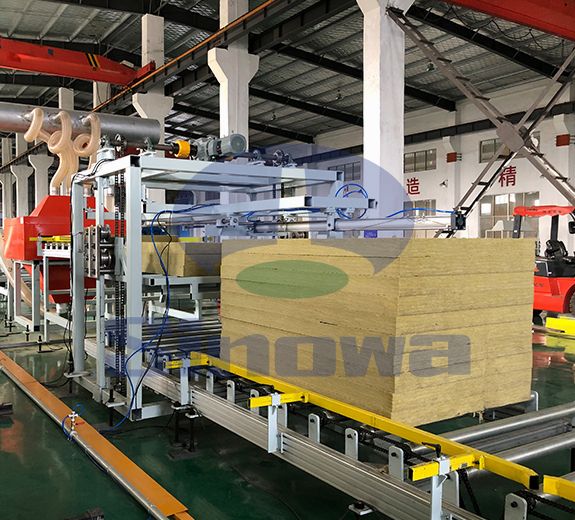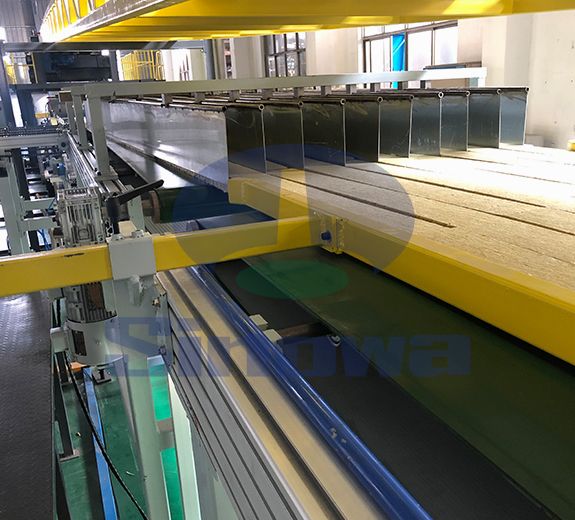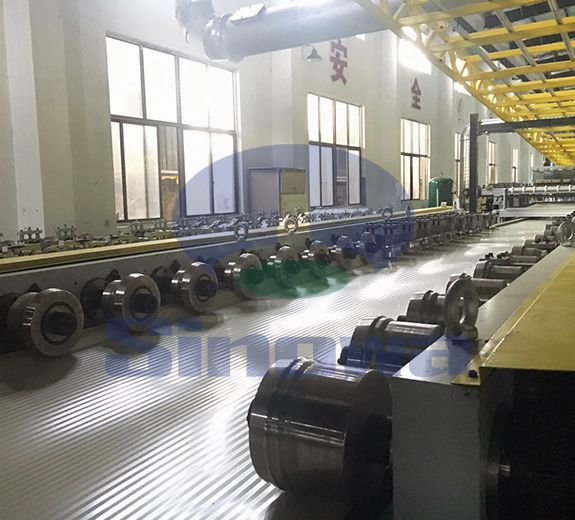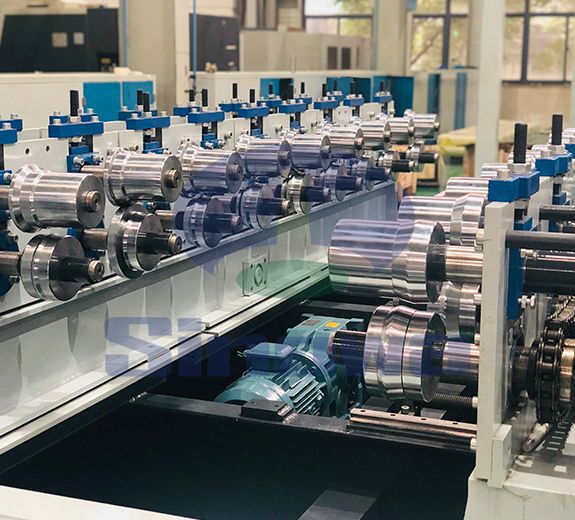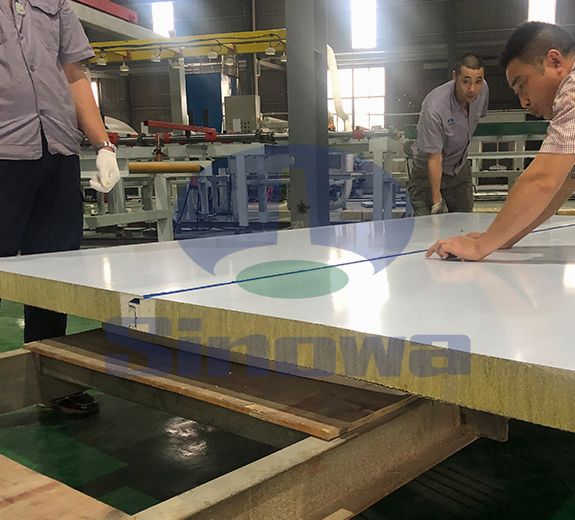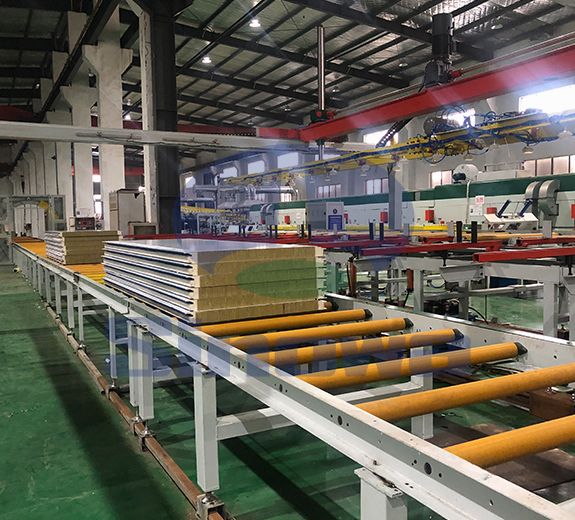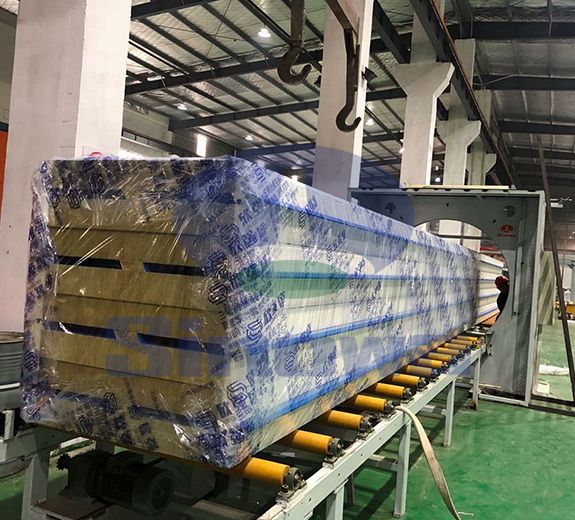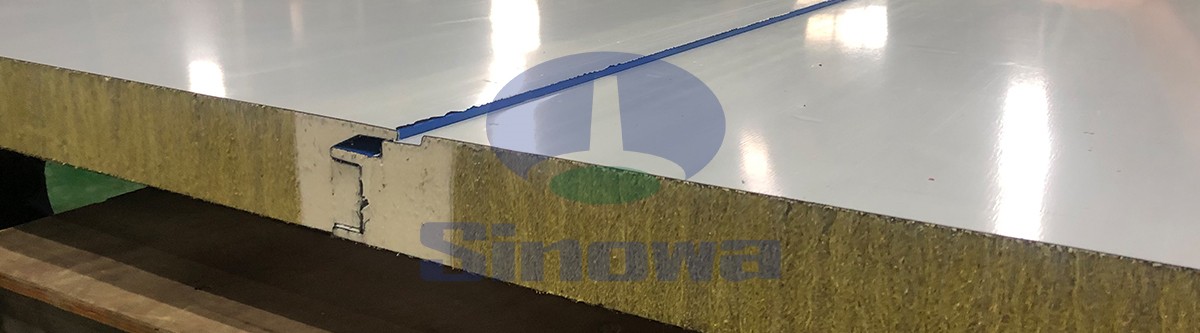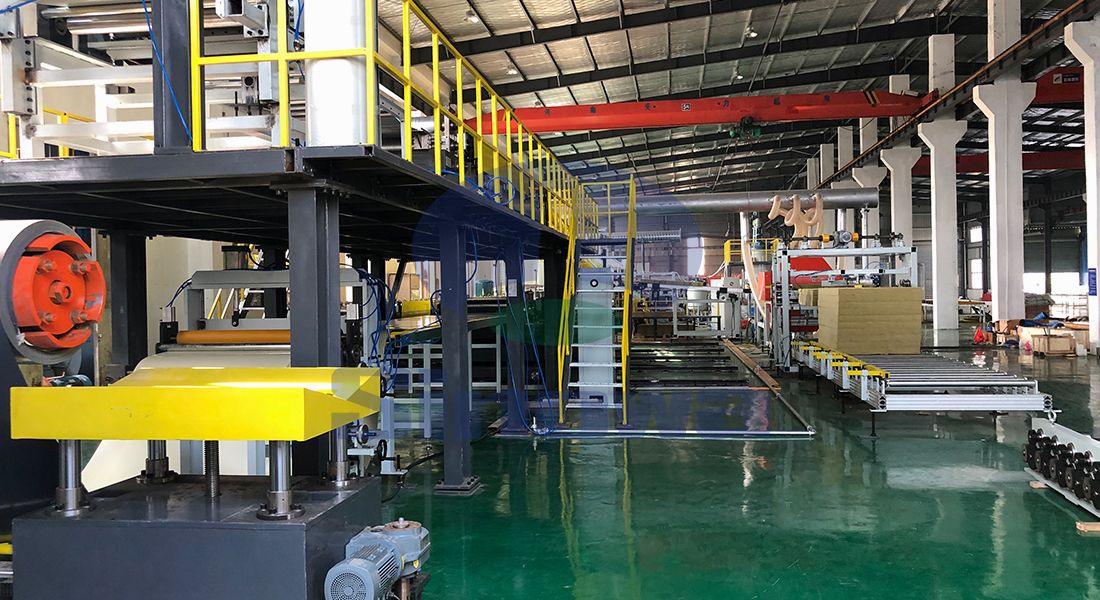
Dedicated to the research and development of high-end and high-efficiency Rockwool sandwich panel production lines, Sinowa is comprehensively taking the leading position in terms of efficiency, automation control level, HMI, environment protection and energy consumption, with subversive designs made in some critical technological fields to procure exceptional cost performance and customer-friendly experience for the entire Mineral Wool Sandwich Panel Production Line.
The adoption of system integration technology and bus control technology accomplishes the full automatization of integrated and coordinated control of the entire Continuous Rockwool panel production line with accessible remote interactive communication.
Based on the continuous technological pursuit, the rock wool sandwich panel production line developed by Sinowa provides you with high-efficiency industrial value. Based on China's cost advantage and our hard-working technology concept, our mineral wool sandwich panel line has a world-leading price-performance advantage. Continuous Rockwool Sandwich Panel Production Line can meet a variety of production needs of customers.The whole line design concept of modularization enables all our components to be integrated and combined at will.
Our rock wool panel line can easily automate the production of roof sandwich panel, wall sandwich panel, cold storage sandwich panel and other products by different combination and configuration selection and siple switching. The inner core layer can be polyrethane or rock wool, glass wool, an so on.
The rockwool panel machine has high adaptability, which may produce various sandwich panel of the PU, PIR and rock wool systems.
We may design various products according to the customer’s requirements, including various configurations, so as to meet their demands with flexible price system.
Highly integrated and linked control system centralizes all control points at the main central center, achieving parameter linkage, fault self-diagnosis controlled by the whole line and shipping distance control.
High-level automatic control system also saves the manpower and reduces the manpower loss for customers.
Concentrated system control is fully realized in the practice of concentrated process control so that the control system of all the movements of the parts in the line is integrated in one process control console with accessible remote communication to elevate the automation and reduce the allocated number of personnel for the assembly line.
The main engine with modularized design achieves the precision operation of the mineral wool panel production line, stable and reliable quality, less part and maintenance loss.
The whole mineral wool sandwich panel production line is strictly modularized in design to ensure the greatest probability for the parts to be interchangeable, making it the most cost- and energy-saving. No joining made manually, all the key processes of the parts are completed in the machining center. As soon as the parts are inspected and warehoused, they enter into the assembly process. The modularized assembly can not only greatly increase the production efficiency but, most importantly, realize quick delivery as well. It elevates the reliability of product quality to a totally new level and minimizes the influence from human factors.
The whole mineral wool panel line has over 40 innovative inventions, making our products have lots of unique features and the comprehensive performance of our production line leading in the industry.
The precision servo hoisting mechanism employed by the main engine without hydraulic system makes the board thickness control flexible and the customer may conveniently change or adjust the board thickness. There will be not such troubles as hydraulic system adjustment, leakage, maintenance, etc.
High-level energy saving and protection design makes the whole mineral wool sandwich panel machine possible to produce around the clock throughout the year and the customer will save huge budget. In addition, the isolated heat preservation room is constructed for warming the environment. The energy saving and protection design of our rock wool production line may guarantee that the customer’s rock wool sandwich panel line may be freely heated and produce in the main time to save more costs for customers.
The high-power low-consumption design quickens the reaction of the mineral wool panel machine while energy consumption is kept low.
With the brand-new, fully sealed inner insulation design, the energy consumption is controlled at the minimum level to achieve the design objective of less than an hour for the insulation system to be activated from the room temperature above 5℃ to the production process temperature.
The energy consumption is only 40% that of those similar products.
| PRODUCTION TYPE | PU | PIR | PHENOLIC | |||
|---|---|---|---|---|---|---|
| PRODUCTION USE | INSULATION PANEL | DOCORATIVE PANEL | ||||
| SURFACE OF SHEET | ALUMINUM FOIL | NON-WOVEN FABRIC | PAPER | NAKED | ||
| PRODUCT THICKNESS | 10m--- 200mm | |||||
| PRODUCTION SPEED | 3.0m---25m |
|---|---|
| FOAMING METHOD | TWO OR MULTI COMPONENTS FOAMING |
| FOAMING AGENT | PENTANE OR 141B |
| LENGTH OF LINE | 45m—100m CUSTOMER OPTIONAL |

In the modern manufacturing industry, especially in the field of building materials production, sandwich panel production lines play an indispensable role, providing high-quality, efficient, and multi-functional building materials for various construction projects. Among these production lines, Rockwool Sandwich Panel Production Line and Mineral Wool Sandwich Panel Production Line are two important types that are widely used in different fields due to their unique structural characteristics, excellent performance, diverse types, and extensive applications. Although rockwool is a type of mineral wool, the production lines designed for these two materials have subtle differences in structure, performance focus, and application scenarios, which are closely related to the physical and chemical properties of the core materials they process. To fully understand the value and application potential of these two production lines, it is necessary to conduct a detailed analysis of their structure, performance, types, and uses, revealing their internal characteristics and practical significance in industrial production and construction applications.
First, it is essential to clarify the basic concepts of rockwool and mineral wool, as well as the intrinsic connection between them, which lays the foundation for understanding the two production lines. Mineral wool is a general term for a class of fibrous materials made from natural minerals or industrial waste as raw materials, through high-temperature melting, fiberization, and other processes. It includes various types such as rockwool, glass wool, slag wool, and ceramic wool. Rockwool, specifically, is a type of mineral wool made from basalt, diabase, and other volcanic rocks as the main raw materials, supplemented by a small amount of auxiliary materials, which are melted at high temperatures (usually above 1400℃) and then fiberized by centrifugal force or blowing method. Therefore, rockwool belongs to the category of mineral wool, but it has more prominent performance advantages in some aspects due to its unique raw material composition and production process. Correspondingly, Rockwool Sandwich Panel Production Line is a specialized production equipment designed for processing rockwool as the core material to produce sandwich panels, while Mineral Wool Sandwich Panel Production Line is a more general production line that can process various types of mineral wool (including rockwool, glass wool, etc.) as core materials. The structural design and performance configuration of the two production lines are based on the characteristics of their respective processed core materials, ensuring the quality and production efficiency of the finished sandwich panels.
The structure of Rockwool Sandwich Panel Production Line and Mineral Wool Sandwich Panel Production Line has both similarities and differences. Generally speaking, both production lines follow the basic process of sandwich panel production, including raw material feeding, core material processing, facing material processing, composite bonding, shaping, cutting, and finished product collection. However, due to the differences in the physical properties of rockwool and other mineral wool materials (such as fiber length, density, and toughness), there are targeted adjustments in the core material processing section and some auxiliary structures. The overall structure of both production lines can be divided into several core systems: raw material supply system, core material processing system, facing material processing system, composite bonding system, shaping and curing system, cutting system, conveying system, and control system. Each system cooperates closely to form a complete production chain, ensuring the continuous and stable operation of the production line.

For the Rockwool Sandwich Panel Line, its structure is more targeted at the characteristics of rockwool, which has higher fiber strength, better fire resistance, and higher density compared to other mineral wool materials. The raw material supply system of this production line usually includes a rockwool raw material storage device, a crushing device, and a conveying device. The rockwool raw materials (usually in the form of blocks or loose fibers) are first crushed into uniform particles or fibers by the crushing device to facilitate subsequent fiberization and uniform distribution. The core material processing system is the key part of the Rock Wool Sandwich Panel Production Line, which mainly includes a melting furnace, a fiberization device, a fiber collection device, and a core material forming device. The crushed rockwool raw materials are sent to the melting furnace, where they are heated to a molten state at high temperatures. The molten rockwool is then sprayed into fine fibers by the fiberization device (usually a centrifugal spinneret), and the fibers are collected by the fiber collection device to form a loose rockwool core layer. The core material forming device compacts the loose rockwool fibers into a core layer with a certain density and thickness, ensuring that the core layer has sufficient strength and stability. The facing material processing system of the Rockwool Sandwich Panel Production Line is used to process the surface materials of the sandwich panel, which are usually metal plates (such as color steel plates, aluminum plates), composite plates, or other high-strength plates. The facing material processing system includes an uncoiler, a leveling device, a profiling device, and a cutting device. The coiled facing materials are uncoiled by the uncoiler, leveled by the leveling device to eliminate internal stress, and then processed into the required shape by the profiling device (such as corrugated, flat, or other special shapes) to meet different construction needs. The composite bonding system is responsible for bonding the rockwool core layer and the facing materials together. It usually includes an adhesive coating device, a pressing device, and a bonding curing device. The adhesive is evenly coated on the surface of the facing materials or the rockwool core layer by the adhesive coating device, and then the facing materials and the core layer are pressed together by the pressing device to ensure close bonding. The bonding curing device (usually a heating tunnel or a curing chamber) accelerates the curing of the adhesive, ensuring the bonding strength between the core layer and the facing materials. The shaping and curing system further shapes the composite sandwich panel, ensuring that the panel has a flat surface, uniform thickness, and no deformation. The cutting system uses a high-precision cutting device (such as a circular saw, band saw, or CNC cutting machine) to cut the continuous composite panel into finished products of the required length and width according to the production requirements. The conveying system runs through the entire production line, responsible for conveying raw materials, semi-finished products, and finished products between various devices, ensuring the continuity of the production process. The control system is the "brain" of the production line, usually adopting a PLC control system or a DCS control system, which can realize automatic control of the entire production process, including parameter adjustment, equipment operation monitoring, fault alarm, and production data statistics. The control system can also be equipped with a human-machine interface, which is convenient for operators to set parameters, monitor production status, and handle abnormal situations in a timely manner.
Compared with the Rockwool Sandwich Panel Production Line, the structure of the Mineral Wool Sandwich Panel Line is more versatile, as it needs to adapt to the processing of various mineral wool materials with different properties. The raw material supply system of this production line is more flexible, and can be equipped with different types of raw material storage and processing devices according to the type of mineral wool to be processed. For example, when processing glass wool (a type of mineral wool), the raw material supply system will include a glass raw material melting device, while when processing slag wool, it will be equipped with a slag processing device. The core material processing system of the Mineral Wool Sandwich Panel Production Line is also more adaptable. It can adjust the parameters of the melting furnace, fiberization device, and forming device according to the melting point, fiberization difficulty, and density requirements of different mineral wool materials. For example, glass wool has a lower melting point (about 1000-1200℃) than rockwool, so the temperature of the melting furnace can be appropriately reduced when processing glass wool, and the parameters of the fiberization device can be adjusted to ensure the quality of the glass wool fibers. The facing material processing system, composite bonding system, shaping and curing system, cutting system, and conveying system of the Mineral Wool Sandwich Panel Production Line are basically similar to those of the Rockwool Sandwich Panel Production Line, but there are some adjustments in terms of performance parameters to adapt to the different characteristics of various mineral wool core materials. For example, the pressing force of the pressing device in the composite bonding system can be adjusted according to the density of the mineral wool core layer; the curing temperature of the bonding curing device can be adjusted according to the type of adhesive and the characteristics of the core material to ensure the bonding effect. In addition, the control system of the Mineral Wool Sandwich Panel Production Line is usually equipped with more flexible parameter setting functions, which can quickly switch production parameters when processing different types of mineral wool materials, improving production efficiency and adaptability.
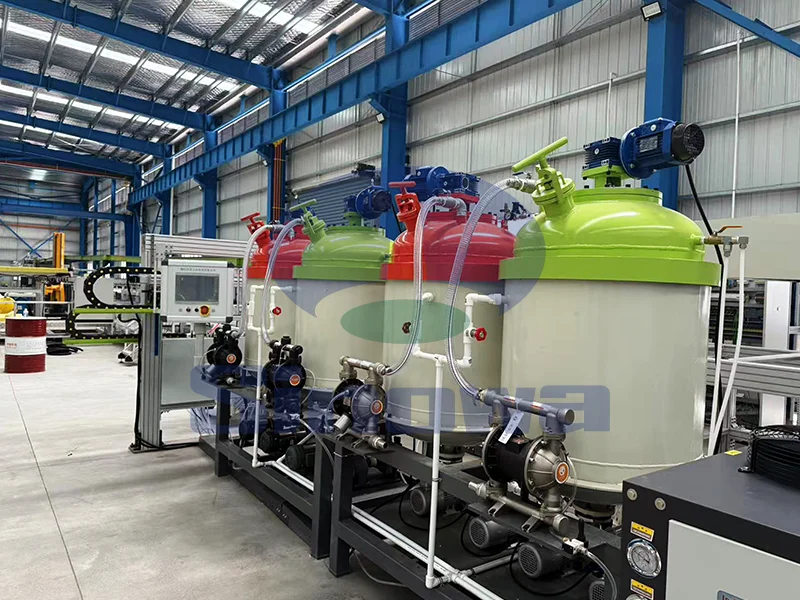
The performance of Rockwool Sandwich Panel Production Line and Mineral Wool Sandwich Panel Production Line is mainly reflected in production efficiency, product quality, stability, adaptability, energy consumption, and environmental protection. These performance indicators directly affect the production cost, product competitiveness, and market application prospects of the production lines.
In terms of production efficiency, both production lines have the characteristics of continuous production, which can greatly improve production efficiency compared with traditional manual or semi-automatic production methods. The production efficiency of the Rockwool Sandwich Panel Manufacturing Line is usually between 1-15 meters per minute, and the annual production capacity can reach 1 million to 2 million square meters, depending on the configuration of the production line and the specifications of the finished products. Due to the targeted design of the core material processing system, the Rockwool Sandwich Panel Production Line has higher production efficiency when processing rockwool core materials, and the fiberization rate and core layer forming efficiency are higher. The production efficiency of the Mineral Wool Sandwich Panel Production Line is slightly affected by the type of mineral wool being processed. When processing rockwool, its production efficiency is close to that of the Rockwool Sandwich Panel Production Machine; when processing glass wool or other mineral wool materials with lower fiber strength, the production efficiency may be slightly reduced, but it still maintains a high level of continuous production. In addition, both production lines can be equipped with automatic stacking and packaging devices, which further improves the overall production efficiency and reduces labor intensity.
Product quality is another important performance indicator of the two production lines. The Rockwool Sandwich Panel Machine, due to its targeted design for rockwool, can ensure that the rockwool core layer has uniform density, consistent fiber distribution, and sufficient strength. The finished rockwool sandwich panels produced have excellent fire resistance, thermal insulation, sound insulation, and mechanical properties. The facing materials and the core layer are closely bonded, with no delamination, bubble, or other quality defects. The thickness, length, and width of the panels are accurate, and the surface is flat and smooth. The Mineral Wool Sandwich Panel Production Line, on the other hand, can ensure the quality of the finished products according to the characteristics of different mineral wool materials. For example, when processing glass wool sandwich panels, it can ensure that the glass wool fibers are evenly distributed, the core layer is soft and has good thermal insulation performance; when processing slag wool sandwich panels, it can ensure that the core layer has sufficient density and mechanical strength. The composite bonding effect of the Mineral Wool Sandwich Panel Production Line is also stable, and the finished products can meet the relevant quality requirements of different application fields. Both production lines are equipped with strict quality control links in the production process, such as raw material inspection, semi-finished product inspection, and finished product inspection, which can timely detect and eliminate quality defects, ensuring the stability and reliability of product quality.
Stability is an important guarantee for the continuous operation of the production lines. Both Rockwool Sandwich Panel Production Line and Mineral Wool Sandwich Panel Manufacturing Line adopt modular design, with reasonable structural layout and high reliability of components. The key devices (such as melting furnace, fiberization device, pressing device, and cutting device) are made of high-temperature resistant, wear-resistant, and corrosion-resistant materials, which can adapt to the long-term continuous production environment. The control system of the production lines has stable performance, can realize real-time monitoring and adjustment of the production process, and has fault self-diagnosis and alarm functions, which can help operators find and solve problems in a timely manner, reducing the downtime of the production line. The Rockwool Sandwich Panel Production Line has higher stability when processing rockwool, because its core material processing system is specially designed for rockwool, and the parameters are more stable. The Mineral Wool Sandwich Panel Production Line, due to its versatility, needs to adjust parameters according to different mineral wool materials, but its control system is designed with high flexibility, which can ensure the stability of the production process during parameter switching.

Adaptability is another important performance difference between the two production lines. The Rockwool Sandwich Panel Making Machine is mainly used for processing rockwool as the core material, and its adaptability is mainly reflected in the adjustment of the specifications and parameters of the finished rockwool sandwich panels. For example, it can produce rockwool sandwich panels with different thicknesses (usually 40-300mm), widths (usually 950-1200mm), and surface shapes (flat, corrugated, etc.) by adjusting the parameters of the core material forming device, profiling device, and cutting device, to meet the needs of different construction scenarios. The Mineral Wool Sandwich Panel Production Line has stronger adaptability, as it can process various types of mineral wool materials, including rockwool, glass wool, slag wool, and ceramic wool. It can also adjust the production parameters according to the characteristics of different mineral wool materials, producing sandwich panels with different performance characteristics. For example, when processing glass wool, it can produce sandwich panels with good thermal insulation and sound absorption performance; when processing rockwool, it can produce sandwich panels with excellent fire resistance and mechanical strength. In addition, both production lines can adapt to different types of facing materials, such as color steel plates, aluminum plates, and composite plates, further expanding their application scope.
Energy consumption and environmental protection are important performance indicators in the context of modern green production. Both production lines adopt advanced energy-saving technologies to reduce energy consumption. For example, the melting furnace of the Rockwool Sandwich Panel Production Line adopts a high-efficiency heat insulation structure and a waste heat recovery system, which can effectively reduce heat loss and improve energy utilization efficiency. The Mineral Wool Sandwich Panel Production Machine also optimizes the energy consumption structure according to the type of mineral wool being processed, reducing energy waste. In terms of environmental protection, both production lines are equipped with dust removal, waste gas treatment, and waste recycling devices. The dust generated during the core material processing process is collected by the dust removal device, avoiding air pollution; the waste gas generated by the melting furnace is treated by the waste gas treatment system to meet the emission standards; the waste materials (such as leftover materials of facing materials and core materials) generated during the production process are recycled and reused, reducing resource waste. In addition, the adhesives used in the composite bonding system are usually environmentally friendly adhesives, which do not contain harmful substances, ensuring the environmental protection of the finished products and the production process.
The types of Rockwool Board Production Line and Mineral Wool Board Production Line can be divided according to different classification standards, such as production mode, product specifications, and automation level, which can meet the diverse needs of different users and application scenarios.
According to the production mode, both production lines can be divided into continuous production lines and intermittent production lines. Continuous production lines are the most common type, which can realize continuous feeding, processing, composite bonding, cutting, and finished product collection, with high production efficiency, stable product quality, and suitable for large-scale mass production. The Rockwool Sandwich Panel Production Line is mostly a continuous production line, which is designed to adapt to the continuous fiberization and forming of rockwool, ensuring the continuity and stability of the production process. The Mineral Wool Sandwich Panel Production Line also has both continuous and intermittent types. Continuous production lines are suitable for large-scale production of a single type of mineral wool sandwich panel, while intermittent production lines are suitable for small-batch, multi-variety production, which can flexibly switch between different types of mineral wool materials and product specifications, but the production efficiency is relatively low.

According to the product specifications, the Rockwool Panel Production Line can be divided into production lines for thin-panel rockwool sandwich panels (thickness less than 100mm), medium-panel rockwool sandwich panels (thickness 100-200mm), and thick-panel rockwool sandwich panels (thickness more than 200mm). Different thicknesses of rockwool sandwich panels have different application scenarios, such as thin-panel panels are suitable for interior partition walls and ceilings, while thick-panel panels are suitable for external walls and thermal insulation of industrial workshops. The Rockwool Sandwich Panel Production Line can adjust the parameters of the core material forming device and the pressing device to produce panels of different thicknesses. The Mineral Wool Sandwich Panel Production Line can be divided into production lines for rockwool sandwich panels, glass wool sandwich panels, slag wool sandwich panels, etc., according to the type of mineral wool core material. Each type of production line is equipped with corresponding core material processing devices to ensure the quality of the finished products. In addition, both production lines can be divided into production lines for flat sandwich panels and corrugated sandwich panels according to the surface shape of the finished products. Corrugated sandwich panels have better mechanical strength and wind resistance, suitable for external walls and roofs, while flat sandwich panels are suitable for interior walls and partitions.
According to the automation level, mineral wool and rockwool sandwich panel production equipments can be divided into fully automatic production lines, semi-automatic production lines, and manual production lines. Fully automatic production lines adopt advanced PLC or DCS control systems, which can realize automatic control of the entire production process, from raw material feeding to finished product packaging, with high production efficiency, low labor intensity, and stable product quality. Most of the modern Rockwool Sandwich Panel Production Line and Mineral Wool Panel Production Line are fully automatic production lines, which can meet the needs of large-scale production. Semi-automatic production lines require a certain amount of manual operation, such as manual feeding, manual inspection, and manual packaging, which are suitable for small and medium-sized enterprises with limited production scale and capital. Manual production lines are mostly used for small-batch production or trial production, with low production efficiency and high labor intensity, and are gradually being replaced by automatic and semi-automatic production lines.
In addition, there are some special types of production lines based on specific application needs. For example, some Rockwool Sandwich Panel Production Lines are designed with a side seal foaming function, which can perform PU side seal treatment on the rockwool sandwich panels, improving the waterproof and thermal insulation performance of the panels. Some Mineral Wool Sandwich Panel Production Lines are equipped with a multi-layer composite function, which can produce multi-layer mineral wool sandwich panels, further enhancing the performance of the panels. These special types of production lines expand the application scope of the finished products and meet the more stringent requirements of specific fields.
The uses of Rockwool Sandwich Panel Production Line and Mineral Wool Sandwich Panel Production Line are closely related to the performance of the finished sandwich panels they produce, and they are widely used in various fields such as construction, industry, agriculture, and transportation, providing high-quality building materials and supporting services for the development of these fields.

In the construction field, both production lines play an important role, and the finished sandwich panels are widely used in the construction of various buildings, including residential buildings, commercial buildings, industrial workshops, public facilities, and so on. The rockwool sandwich panels produced by the Rockwool Sandwich Panel Production Line have excellent fire resistance (melting point above 1000℃, non-combustible), thermal insulation, and sound insulation performance, making them suitable for external walls, internal partition walls, ceilings, roofs, and firewalls of buildings. In high-rise buildings, rockwool sandwich panels can effectively improve the fire safety of the building, prevent the spread of fire, and reduce the loss caused by fire. In cold regions, rockwool sandwich panels can play a good thermal insulation role, reducing energy consumption of building heating and air conditioning, and improving the comfort of the indoor environment. In noisy areas, rockwool sandwich panels can absorb noise, reduce the impact of external noise on the indoor environment, creating a quiet living and working space. The mineral wool sandwich panels produced by the Mineral Wool Sandwich Panel Production Line have diverse performance characteristics according to the type of mineral wool core material. For example, glass wool sandwich panels have excellent thermal insulation and sound absorption performance, suitable for interior partition walls, ceilings, and pipe insulation of buildings; slag wool sandwich panels have good mechanical strength and wear resistance, suitable for industrial workshops and warehouses with high requirements for structural strength. In addition, both types of sandwich panels are lightweight, easy to install, and have short construction cycles, which can greatly improve the construction efficiency of buildings and reduce construction costs.
In the industrial field, the sandwich panels produced by the mineral wool and rock wool production lines are widely used in the construction and transformation of industrial workshops, warehouses, workshops, and other facilities. Industrial workshops usually have high requirements for fire safety, thermal insulation, sound insulation, and corrosion resistance, and the sandwich panels produced by these two production lines can meet these requirements. For example, in chemical plants, smelters, and other enterprises with high fire risks, rockwool sandwich panels are used as external walls and firewalls to prevent fire spread and ensure production safety. In cold storage and refrigeration workshops, mineral wool sandwich panels (especially glass wool sandwich panels) are used to achieve good thermal insulation effect, maintain the low temperature environment in the workshop, and reduce energy consumption of refrigeration equipment. In machine processing workshops, sandwich panels can absorb the noise generated by mechanical operation, improve the working environment of workers. In addition, the sandwich panels produced by the two production lines have good corrosion resistance and durability, which can adapt to the harsh industrial production environment and extend the service life of industrial facilities.

In the agricultural field, the two production lines also have a wide range of applications. The sandwich panels produced by them are used in the construction of greenhouses, livestock and poultry houses, agricultural warehouses, and other facilities. Greenhouses require good thermal insulation and light transmission performance to create a suitable growth environment for crops. The mineral wool sandwich panels (such as glass wool sandwich panels) produced by the Mineral Wool Sandwich Panel Production Line have good thermal insulation performance and can be combined with transparent materials (such as glass, PC boards) to build greenhouses, which can effectively maintain the temperature in the greenhouse, extend the growing period of crops, and improve crop yield and quality. Livestock and poultry houses require good thermal insulation, sound insulation, and ventilation performance to ensure the healthy growth of livestock and poultry. Rockwool sandwich panels have excellent thermal insulation and sound insulation performance, and can be used as the walls and roofs of livestock and poultry houses, creating a comfortable living environment for livestock and poultry. Agricultural warehouses are used to store grain, agricultural machinery, and other materials, requiring good moisture-proof, insect-proof, and thermal insulation performance. The sandwich panels produced by the two production lines can meet these requirements, ensuring the safety and quality of stored materials.
In the transportation field, the sandwich panels produced by the two production lines are used in the manufacturing of vehicles, ships, and other transportation equipment. For example, in the manufacturing of passenger cars, trucks, and trains, sandwich panels are used as the inner and outer walls of the carriage, which can reduce the weight of the vehicle, improve fuel efficiency, and at the same time play a role in thermal insulation and sound insulation, improving the comfort of the carriage. In the manufacturing of ships, sandwich panels are used as the walls and ceilings of the cabin, which have good corrosion resistance, fire resistance, and thermal insulation performance, adapting to the harsh marine environment. In addition, the sandwich panels are also used in the construction of highway sound barriers, railway sound barriers, and other facilities. The rockwool sandwich panels have excellent sound absorption performance, which can effectively reduce the noise generated by vehicles and trains, reducing the impact on the surrounding environment and residents.
In addition to the above fields, the rockwool and mineral wool production lines also have applications in other fields. For example, in the field of environmental protection, the sandwich panels produced by them are used in the construction of sewage treatment plants, garbage treatment plants, and other facilities, which have good corrosion resistance and sealing performance, preventing the leakage of sewage and garbage and protecting the environment. In the field of national defense, the sandwich panels are used in the construction of military facilities, such as barracks, warehouses, and command centers, which have excellent fire resistance, explosion resistance, and thermal insulation performance, ensuring the safety and stability of military facilities. In the field of cultural and entertainment, the sandwich panels are used in the construction of theaters, stadiums, and other public facilities, which have good sound insulation and thermal insulation performance, improving the experience of audiences and participants.

It is worth noting that although Rockwool Sandwich Panel Making Line and Mineral Wool Sandwich Panel Production Line have many similarities in structure, performance, and uses, there are also obvious differences in practical application. The Rockwool Sandwich Panel Production Line is more suitable for scenarios that require high fire resistance, mechanical strength, and durability, such as high-rise buildings, industrial workshops with high fire risks, and military facilities. The Mineral Wool Sandwich Panel Production Line is more suitable for scenarios that require diverse performance, such as buildings that need both thermal insulation and sound absorption, agricultural greenhouses, and vehicle manufacturing. Users can choose the appropriate production line according to their own production needs, product positioning, and application scenarios, to maximize production benefits and product value.
With the continuous development of the construction industry, industrialization, and urbanization, the demand for high-performance sandwich panels is increasing, which also promotes the continuous upgrading and development of Rockwool Sandwich Panel Production Line and Mineral Wool Sandwich Panel Making Line. In the future, these two production lines will develop in the direction of higher automation, more energy conservation and environmental protection, stronger adaptability, and more intelligent. For example, the integration of intelligent technologies such as the Internet of Things, big data, and artificial intelligence will realize real-time monitoring, intelligent adjustment, and predictive maintenance of the production line, improving production efficiency and reducing maintenance costs. The development of new energy-saving and environmental protection technologies will further reduce the energy consumption and environmental impact of the production line, meeting the requirements of green production. The optimization of the structure and performance of the production line will further improve the quality and performance of the finished sandwich panels, expanding their application scope. At the same time, with the continuous improvement of relevant national standards and industry standards, the production lines will be more standardized, ensuring the quality and safety of the products.
In conclusion, Rockwool Sandwich Panel Production Machinery and Mineral Wool Sandwich Panel Production Machinery are two important types of sandwich panel production equipment, which have their own characteristics in structure, performance, types, and uses. The Rockwool Sandwich Panel Production Line is specialized in processing rockwool, with targeted structure, excellent performance, and wide application in scenarios requiring high fire resistance and mechanical strength. The Mineral Wool Sandwich Panel Production Line is versatile, can process various mineral wool materials, and is suitable for diverse application scenarios requiring different performance characteristics. Both production lines play an important role in the fields of construction, industry, agriculture, and transportation, providing high-quality, efficient, and multi-functional building materials for social and economic development. With the continuous progress of technology and the increasing demand for green and high-performance building materials, these two production lines will have broader development prospects, making greater contributions to the sustainable development of the manufacturing industry and the construction industry.