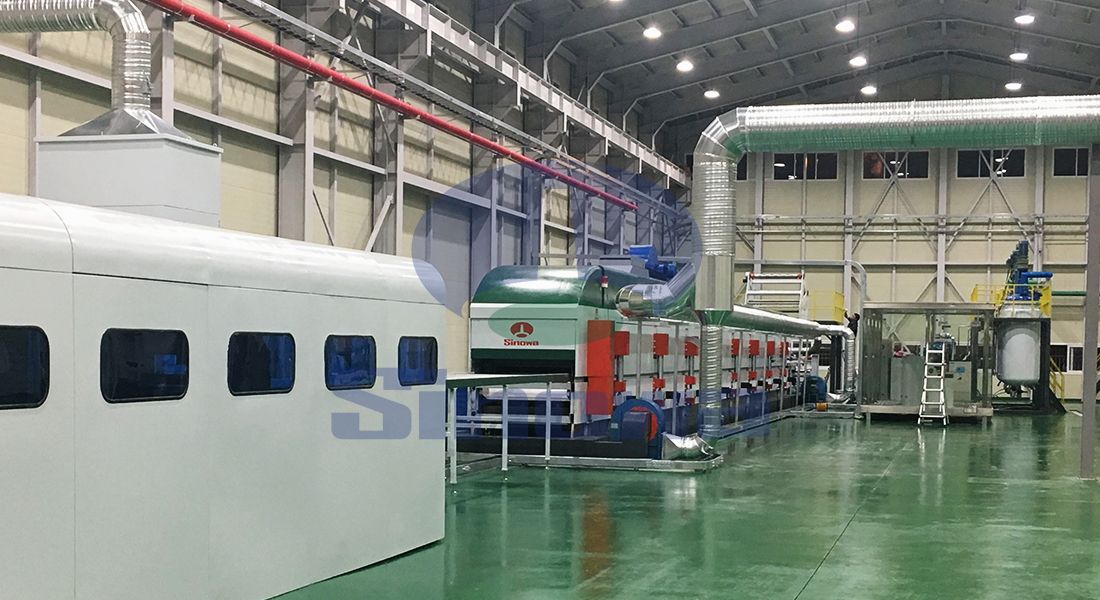
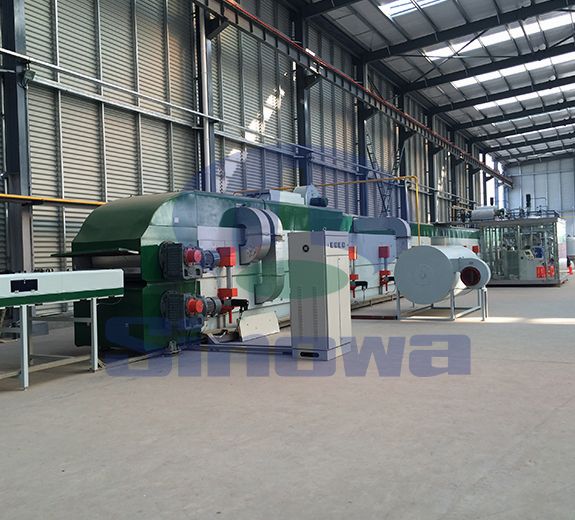
Sinowa is a well-known Insulated Sandwich Panel Lines Supplier From China, Continuous Insulation Panel Production Line of the PU and phenolic aldehyde surface has diversified and multifunctional production characteristics, which may produce products with different specifications such as PU, PF, PIR, etc.
The surface material may be aluminum foil, colored steel, cement base cloth, kraft paper, non-woven fabrics, etc.
The products are widely applied to such occasions as construction, decoration, pipeline ventilation, subway construction, etc.
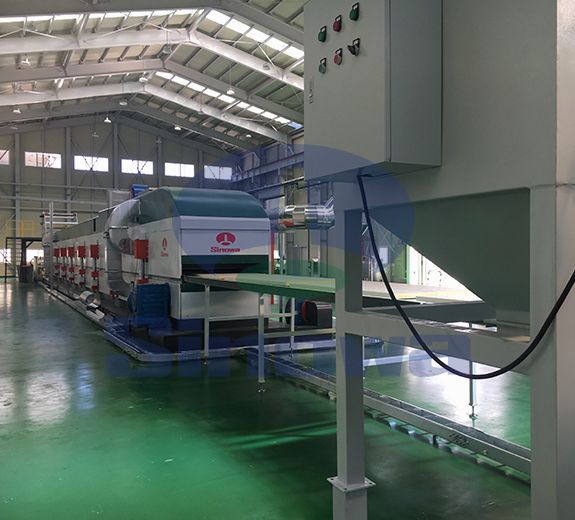
The insulated sandwich panel line of soft layer insulation board is able to continuously and efficiently produce high-quality PU and Phenolic insulation boards.
We spare no efforts to improve our product quality and technological reliability by employing the most cutting-edge and the most reliable support and processes to make our products highly reliable and endurable. As a result, the insulated sandwich panel line of our soft layer insulation panels is highlighted by many perfect qualities. It is the core idea in Sinowa's product roadmap to surpass our competitors in terms of design philosophy, manufacture methods and service level, going for excellence and leading position and making constant improvement on our products and services, which is also our core value system to create efficiency and convenience for our customers.
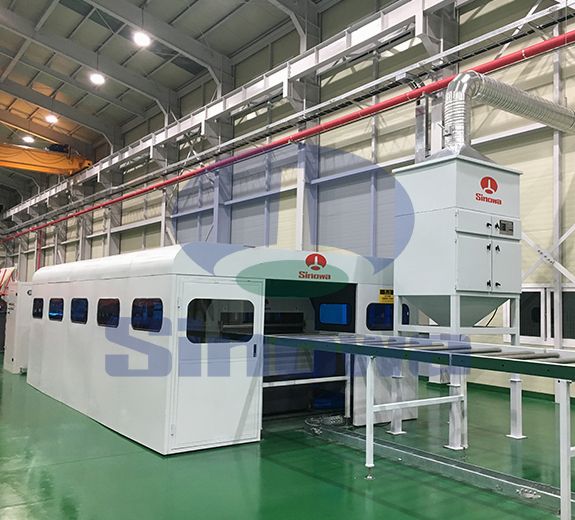
Well-grounded on our solid strength as a renowned large-scale enterprise, Sinowa has a high starting point in developing industrial assembly lines.
Based on the advanced science and technology introduced from within and without the country and supported by a great number of first-grade parts and components from the home and aboard, these assembly lines have a high-level configuration of supporting products in terms of machinery, electrical control, hydraulic pressure, automatic measurement and tracking, and so on.
This is a strong proof of our product’s reliable quality and high efficiency.
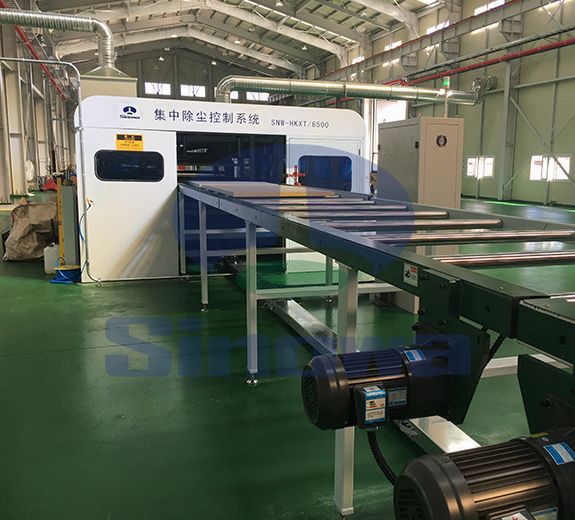
The first-class appearance design and excellent energy saving measures make it unnecessary for customers to additionally construct the heat preservation and isolation room for production around the clock throughout the year, so that the customers may save lots of resources and costs.
Modularized standard design and important parts machined with CNC machine tool make the production line have excellent quality assurance. Dependence on the man-made factors is eliminated. The operation is precision, with the highest operation speed of 30m/min. The insulated sandwich panel line has the world-class production efficiency.
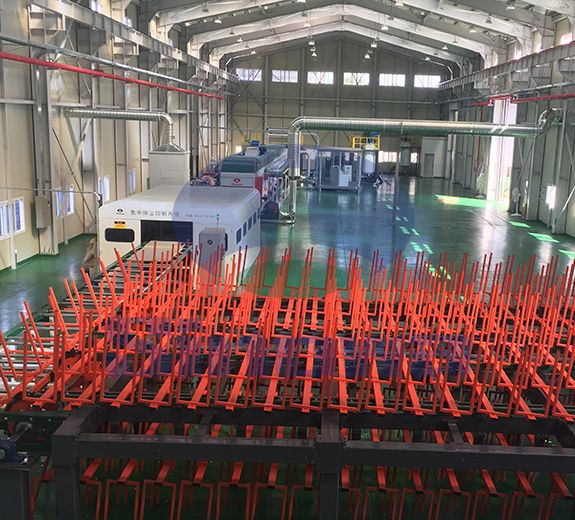
The high performance and reliable multicomponent cyclopentane foaming technology and equipment of Sinowa may be also applied to the foaming process of the phenolic aldehyde board. Therefore, our customers may not only freely adjust the foaming matching according to the raw material, but also save lots of costs. Moreover, they are of significance for environmental protection.
Sinowa's industrial insulated sandwich panel line of insulation panels is distinguished by its impressive performance of energy conservation. In each high point of energy consumption throughout the entire pu sandwich panel line are implemented corresponding measures to considerably lower the consumption level.
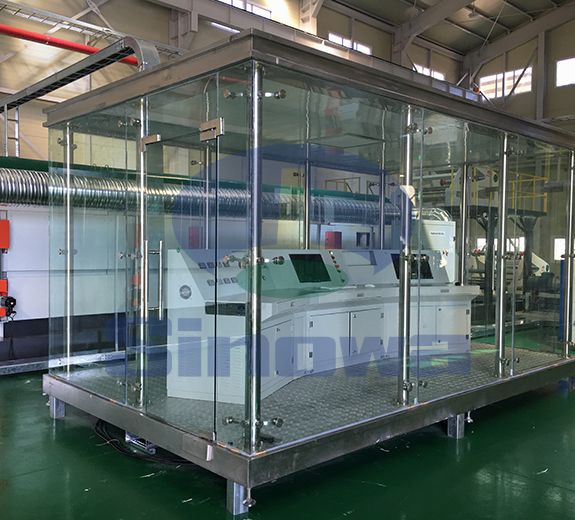
For example, the body of the lamination belt conveyer is covered with insulation panels in very reasonable structures, which doesn’t blemish the overall outlook but greatly increases the insulation performance.
The entire insulated sandwich panel line is constantly optimized and improved so that the consumption of each power source is significantly reduced. The motor power of our lamination conveying system is only 3.0 kw, about 50% less than those of the same kind.
All in all, the energy consumption of the whole sandwich panel line equals 40% or even less of the equivalent lines in the market.
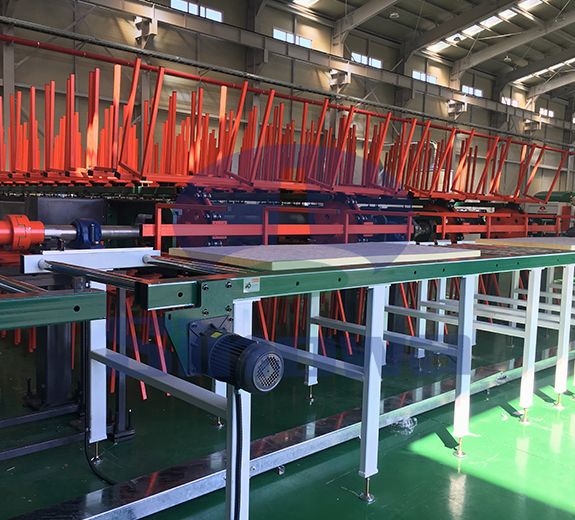
The insulated sandwich panel line of Sinowa adopts the most advanced concepts in the world to realize the modularized design with all the parts bolted together rather than welded.
In standardized production, the parts can be dismantled and exchanged, so the production cycle is drastically shortened and the maintenance becomes by far easier.
Through finite element analysis, the equipment design is greatly optimized to realize modularization, digitization, and weight-minimalization.
| PRODUCTION TYPE | PU | PIR | PHENOLIC | |||
|---|---|---|---|---|---|---|
| PRODUCTION USE | INSULATION PANEL | DOCORATIVE PANEL | ||||
| SURFACE OF SHEET | ALUMINUM FOIL | NON-WOVEN FABRIC | PAPER | NAKED | ||
| PRODUCT THICKNESS | 10m--- 200mm | |||||
| PRODUCTION SPEED | 3.0m---25m |
|---|---|
| FOAMING METHOD | TWO OR MULTI COMPONENTS FOAMING |
| FOAMING AGENT | PENTANE OR 141B |
| LENGTH OF LINE | 45m—100m CUSTOMER OPTIONAL |
Sinowa is a well-known manufacturer and technical service provider of high-end polyurethane insulation board production lines and various high-performance cold roll forming machine in China. Our main products include polyurethane double-sided color steel sandwich panel production line, polyurethane and phenolic soft facing insulation panel production line and high-efficiency roll forming machines.
Sinowa has invested outstanding efforts in insulated sandwich panel lines, This is why our products are more efficiency, quality, automatic control technology, environmental protection, energy consumption indicators and the appearance and safety protection are comprehensively leading, Some subversive design changes in many major technical points,these major innovations make our products excellent in price/performance and user experience.
Sinowa is committed to the development and manufacturing of high-end and high-efficiency insulated sandwich panel lines. Our sandwich panel production lines are leading the way in efficiency, automatic control, human-computer interaction, environmental protection and energy consumption. Using system integration and bus control technology, it realizes the automatic integrated linkage control of the entire production line, and can achieve remote interactive communication, which has the world-class level and a comprehensive leading high-performance production line in the market.
Insulated sandwich panel lines represent a sophisticated and integrated production system dedicated to the continuous and standardized manufacturing of composite building panels that combine structural stability, thermal insulation and multifunctional protective properties. As the core production backbone of modern prefabricated construction and industrial enclosure engineering, these specialized production lines integrate raw material feeding, continuous forming, core material compounding, high-pressure bonding, continuous curing, fixed-length cutting and finished product conveying into one seamless automated workflow, realizing the large-scale and efficient production of insulated sandwich panels with diverse structural specifications and performance attributes. The fundamental design logic of all insulated sandwich panel lines revolves around the classic composite sandwich structure mechanics, which ingeniously combines two high-strength thin outer face layers and a lightweight thick inner core layer, forming a structural stress system similar to the working principle of traditional I-beams. In this mature structural stress distribution mechanism, the outer face sheets undertake all tensile stress, compressive stress and lateral bending load generated by external forces and environmental changes, while the inner core layer bears shear force and vertical compressive load, effectively separating the structural bearing function and thermal insulation function of the panel, and achieving an optimal balance between lightweight design and overall structural rigidity that single-layer building materials cannot match. With the continuous upgrading of construction engineering requirements for building energy conservation, structural safety, environmental adaptability and construction efficiency, insulated sandwich panel lines have been continuously optimized in production technology, structural molding parameters and composite processing technology, deriving multiple types of production configurations corresponding to different structural performance levels, core material characteristics and application scenarios, and the panels produced by these different production line types have become indispensable core materials for industrial buildings, commercial facilities, special functional spaces and prefabricated residential construction worldwide.

The inherent structural performance of finished insulated sandwich panels is fundamentally determined by the production process settings and structural molding standards of insulated sandwich panel lines, and every link in the continuous production process directly affects the overall mechanical stability, long-term service durability and comprehensive functional performance of the final panels. The basic structural composition formed by all conventional insulated sandwich panel lines follows a unified three-layer composite mode, including two symmetric or asymmetric outer protective face layers made of rigid metal or non-metal materials and a porous lightweight insulating core layer tightly compounded between the two face layers through high-temperature and high-pressure bonding process. The production line controls the bonding uniformity between the face layers and the core layer through precise pressure regulation and temperature control systems, ensuring that no delamination, gap or local debonding occurs inside the panel after long-term use, which is the core prerequisite for maintaining the continuous structural performance of the sandwich panel. In terms of mechanical structural performance, the panels manufactured by standard insulated sandwich panel lines have excellent lightweight and high-strength characteristics, far lower self-weight than traditional brick-concrete, concrete and single-layer steel plate enclosure materials, which can effectively reduce the overall dead load of the building’s main steel structure and foundation engineering. This lightweight structural advantage not only simplifies the design difficulty of building main frames and reduces the bearing requirements for supporting structures, but also greatly facilitates on-site handling, hoisting and rapid assembly construction, shortening the overall construction cycle of the project significantly. At the same time, the integrated composite structure formed by the continuous compounding of the production line gives the sandwich panel good overall rigidity and structural impact resistance, enabling it to withstand external dynamic loads such as strong wind pressure, rainstorm impact and minor external impact without permanent deformation or structural damage. The production line can also adjust the thickness of the core layer and the thickness of the outer face layers according to actual structural use needs, flexibly optimizing the compressive resistance, bending resistance and shear resistance of the panel to adapt to different building height specifications and external environmental load conditions.
In addition to basic mechanical structural bearing performance, insulated sandwich panel lines are designed and produced to endow finished panels with a series of comprehensive auxiliary structural and functional performances closely matched with building use needs, covering thermal insulation and energy saving, acoustic noise reduction, moisture and water resistance, and environmental weathering resistance, all of which are important components of the overall structural performance system of sandwich panels. The thermal insulation structural performance is the most core functional advantage of the panels produced by these production lines, relying on the low thermal conductivity characteristics of the porous core material and the integrated composite structure without thermal bridge loss, which can effectively block the heat transfer inside and outside the building envelope, maintain the stability of indoor ambient temperature, and reduce the energy consumption of building heating and cooling operation throughout the year. The production line controls the foaming density and pore uniformity of the core material in the continuous foaming and compounding process, ensuring that the thermal insulation performance of each batch of finished panels is stable and consistent, avoiding the problem of uneven thermal insulation effect caused by manual production differences. In terms of acoustic structural performance, the composite laminated structure formed by the production line can effectively absorb and isolate external noise transmission, reduce the impact of external environmental noise on the indoor space, and create a quiet and comfortable indoor working and living environment. For moisture and water resistance structural performance, the continuous edge sealing and integral molding process of the insulated sandwich panel line ensures that the splicing joints and the overall surface of the panel have good tightness, preventing rainwater, humid air and external moisture from penetrating into the interior of the panel and causing core material deterioration, bonding layer aging and structural performance attenuation. Moreover, the production line can complete surface anti-corrosion and anti-oxidation pretreatment of the outer face layers in the preliminary processing stage, enabling the finished panels to have excellent weathering resistance, resisting long-term erosion of natural environments such as ultraviolet radiation, temperature difference change and humid climate, and maintaining stable structural and functional performance in long-term outdoor service without obvious aging, fading or structural damage.
According to different production process configurations, core material processing methods and targeted structural performance adjustment directions, insulated sandwich panel lines can be divided into several main structural performance categories, each corresponding to independent production process characteristics and exclusive performance positioning, meeting the differentiated structural and functional needs of diverse construction scenarios. The first category is conventional general-purpose structural insulated sandwich panel lines, which adopt the most basic continuous flat pressing composite production process, with fixed standard bonding pressure and conventional temperature curing parameters, mainly producing sandwich panels with balanced basic structural bearing and conventional thermal insulation performance. The core materials used in this type of production line are mostly common lightweight foamed materials, and the outer face layers adopt conventional thickness protective sheets, with moderate overall structural strength and conventional thermal insulation and weather resistance. The panels produced by general-purpose insulated sandwich panel lines have no special enhanced structural design or special functional performance configuration, focusing on meeting the most basic enclosure, thermal insulation and rain protection needs of ordinary buildings, with moderate overall performance and wide adaptability, suitable for most conventional industrial and commercial building enclosure projects that do not require extreme structural load-bearing and special environmental adaptation capabilities. The production rhythm of this type of production line is fast and the production cost control is stable, which is the most widely used and most mass-produced type of insulated sandwich panel production equipment in the prefabricated construction industry.
The second category is high-strength enhanced structural insulated sandwich panel lines, which are specially optimized and upgraded in structural bearing design and production process parameters on the basis of general-purpose production lines, focusing on improving the overall mechanical structural performance and external load resistance of finished panels. This type of production line is equipped with high-pressure enhanced bonding systems and reinforced raw material feeding devices, which can increase the bonding strength between the face layers and the core layer, and add internal reinforcement structures inside the panel during the continuous production and forming process, effectively improving the bending resistance, compressive resistance and wind pressure resistance of the panel. The core material foaming density and face layer thickness matching parameters of the production line are adjusted to high-strength specifications, making the finished panels have stronger structural rigidity and deformation resistance, able to adapt to building structures with higher height, larger span and higher external wind load requirements. The panels produced by high-strength enhanced structural insulated sandwich panel lines maintain good lightweight characteristics while greatly improving structural bearing capacity, avoiding the excessive self-weight increase caused by simply thickening the panel structure, and are mainly used for high-rise industrial workshops, large-span logistics warehouses, coastal wind-resistant buildings and other engineering scenarios that require high structural stability and strong external load resistance.
The third category is special functional thermal insulation insulated sandwich panel lines, which take professional thermal insulation performance and special environmental temperature control needs as the core design orientation, and the production process is specially adjusted for the thermal insulation structural parameters and low-temperature stability of the core material. This type of production line adopts low thermal conductivity core material special foaming and compounding process, strictly controls the closed-cell rate and foaming uniformity of the core material in the production process, eliminates thermal bridge points inside the panel, and maximizes the overall thermal insulation and heat preservation effect of the panel. At the same time, the production line optimizes the internal sealing structure of the panel to enhance low-temperature moisture resistance and cold and heat cycle aging resistance, ensuring that the panel can maintain stable thermal insulation performance and structural integrity in long-term low-temperature or high-temperature constant temperature environments without core material shrinkage, bonding layer cracking and performance attenuation. The structural mechanical performance of the panels produced by this type of production line meets the basic building enclosure needs, and the core advantage lies in extreme thermal insulation stability and special environmental adaptability, which is specially used for constant temperature and humidity buildings such as cold storage refrigeration projects, food processing constant temperature workshops, pharmaceutical production constant temperature workshops and energy-saving passive buildings.
The fourth category is fire-resistant and safe structural insulated sandwich panel lines, which focus on fire safety structural performance and flame retardant functional design, and carry out targeted upgrading and transformation on core material processing and production compounding links. This type of production line uses inherently flame-retardant inorganic or high-performance organic core materials, and adopts special high-temperature resistant bonding adhesives and flame-retardant pretreatment processes in the production and compounding process, so that the finished panels have good flame retardant, fire isolation and high-temperature structural stability. The production line can ensure that the panel does not burn violently or produce a large amount of harmful smoke in case of open fire, and can maintain the overall structural integrity for a certain period of time under high-temperature fire conditions, preventing the rapid spread of fire and delaying the spread of fire hazards. The structural bearing and thermal insulation performance of the panels produced by fire-resistant and safe structural production lines meet the conventional building use standards, and the fire-resistant structural performance is significantly enhanced, suitable for factory buildings, storage warehouses, commercial complex buildings and public facilities with high fire safety management requirements.
The fifth category is lightweight decorative integrated insulated sandwich panel lines, which balance basic structural performance, thermal insulation function and building decorative effect, and integrate structural molding, thermal insulation compounding and surface decorative processing into one continuous production process. This type of production line is equipped with surface texture pressing, color uniform coating and decorative edge sealing integrated devices, which can complete the surface decorative treatment of the outer face layer while producing the sandwich panel, making the finished panel have beautiful surface texture, uniform color and good decorative performance without additional on-site decoration and surface treatment. The overall structural performance of the panels produced by lightweight decorative integrated production lines is moderate, the thermal insulation performance meets the daily energy-saving needs of buildings, and the self-weight is lighter and the installation is more convenient. It not only realizes the basic enclosure and thermal insulation functions of the building, but also directly forms the external facade decorative effect of the building, simplifying the subsequent building decoration process and saving project construction time and decoration investment.
The diversified structural performance types of panels produced by different insulated sandwich panel lines correspond to rich and diverse practical application scenarios, covering the whole field of modern industrial construction, commercial construction, special functional construction and prefabricated residential construction, and becoming an important material support for the rapid development of prefabricated building industrialization. In the field of industrial building construction, general-purpose and high-strength structural insulated sandwich panels are the most widely used, mainly used for the external wall enclosure, roof cover and internal functional partition of various industrial production workshops, processing factories, logistics transfer centers and large storage warehouses. The lightweight and high-strength structural characteristics of the panels can adapt to the large-span and open structural design of industrial buildings, reduce the construction difficulty of industrial plant main structures, and the good thermal insulation and weather resistance can meet the production and storage environmental needs of industrial sites, ensuring the stable operation of industrial production activities and the safe storage of materials. For coastal industrial parks and high-altitude industrial buildings, high-strength enhanced structural sandwich panels produced by corresponding professional production lines are selected to cope with harsh natural environmental conditions such as strong wind pressure and extreme temperature difference, ensuring the long-term structural safety and stable operation of industrial buildings.
In the field of commercial building construction, lightweight decorative integrated insulated sandwich panels and conventional general-purpose sandwich panels are widely used in the exterior wall facades, roof systems and internal space partitions of shopping malls, office buildings, exhibition halls, sports venues and commercial service facilities. The integrated design of structural performance and decorative effect of decorative sandwich panels enables commercial buildings to quickly form a neat and beautiful exterior facade effect without complex subsequent decoration construction, meeting the dual needs of commercial building appearance image and basic enclosure thermal insulation. Good acoustic insulation performance can reduce the interference of external pedestrian flow and traffic noise to the indoor commercial office and shopping environment, creating a comfortable indoor business and office space. At the same time, the rapid assembly and installation characteristics of sandwich panels produced by efficient production lines can shorten the construction cycle of commercial buildings, enable commercial projects to be put into operation and use as soon as possible, and improve the economic benefits of commercial construction projects.
In the field of special functional building construction, special functional thermal insulation and fire-resistant structural insulated sandwich panels produced by professional matching insulated sandwich panel lines play an irreplaceable core role, mainly used in cold storage refrigeration engineering, pharmaceutical and electronic clean workshops, food processing sterile production spaces and special fire-proof isolation buildings. The excellent thermal insulation and constant temperature stability of special thermal insulation sandwich panels can accurately control the indoor temperature and humidity range, maintain the low-temperature refrigeration needs of cold storage for a long time, and ensure the sterile and constant temperature production environment required by pharmaceutical and electronic production. Fire-resistant structural sandwich panels can effectively isolate fire hazards in special buildings with high fire protection requirements, improve the overall fire safety level of the building, and avoid property losses and safety accidents caused by fire spread. The structural performance of these special panels is precisely matched with the professional needs of special functional buildings, ensuring the long-term stable operation of special production and storage activities.
In the field of prefabricated residential and temporary building construction, insulated sandwich panels produced by general-purpose and lightweight integrated insulated sandwich panel lines are widely used in prefabricated residential houses, temporary construction dormitories, mobile office rooms and rural prefabricated housing renovation projects. The lightweight and easy-to-install characteristics of the panels enable prefabricated houses to be built quickly and put into use rapidly, and the good thermal insulation and heat preservation performance can improve the living comfort of residential buildings, reduce the energy consumption of household heating and cooling, and meet the basic living and office needs of personnel. The weathering resistance and durability of the panels ensure that prefabricated residential and temporary buildings can maintain good use effect and structural stability in different seasonal and climatic environments, with low later maintenance cost and long service life.
With the continuous progress of prefabricated building technology and the continuous improvement of global building energy conservation and environmental protection requirements, insulated sandwich panel lines will continue to develop in the direction of more refined structural performance regulation, more diversified functional customization and more intelligent automated production. Different types of insulated sandwich panel lines will further optimize the matching degree between production process parameters and building engineering needs, continuously improve the structural stability, functional durability and environmental protection performance of finished sandwich panels, and expand the application scope of insulated sandwich panels in more emerging building fields. As an important production equipment supporting the development of modern construction industry, insulated sandwich panel lines and their produced sandwich panel products will always rely on excellent structural performance and diversified application advantages, continuously promote the upgrading and innovation of prefabricated building enclosure systems, and make important contributions to the realization of efficient, energy-saving, safe and sustainable development of the construction industry.
«Insulated Sandwich Panel Lines» Update Date:2026/4/29
URL: https://www.sinowa.cn/en/blog/insulated-sandwich-panel-lines.html

