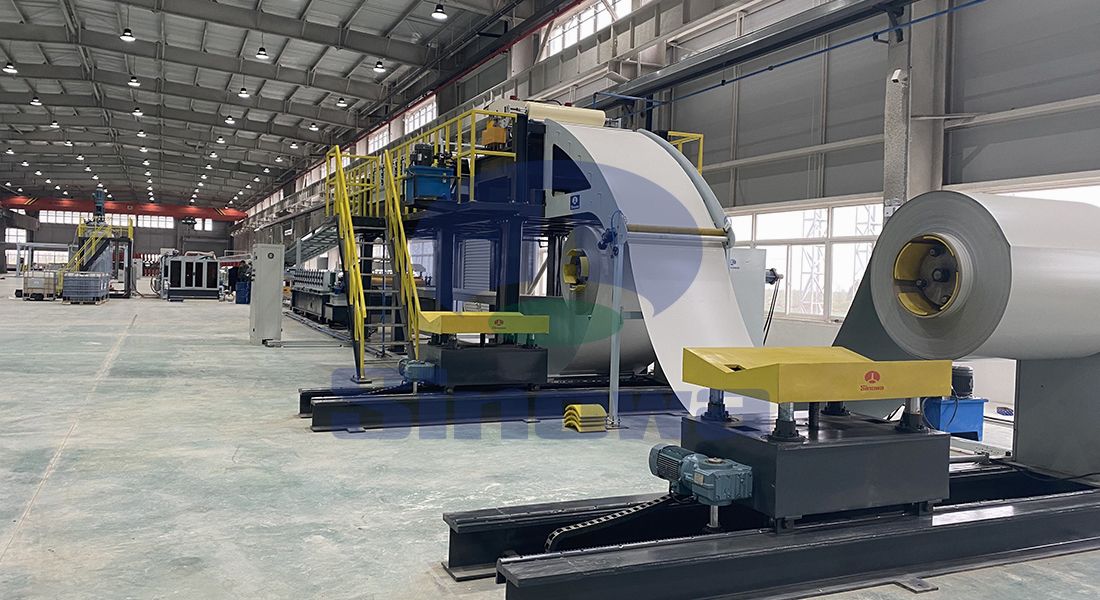
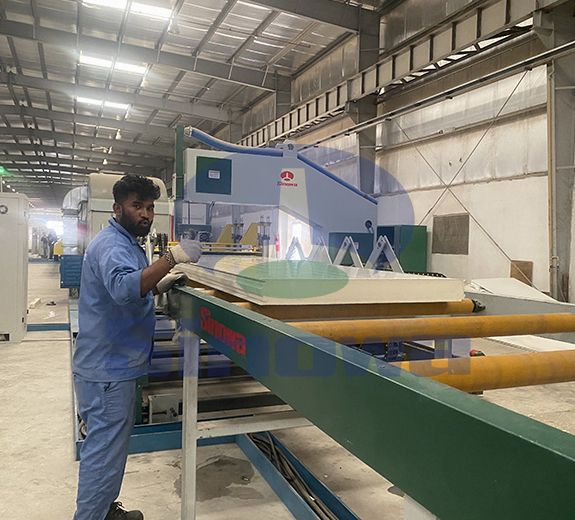
Sinowa is a well-known PU Foam Production Line Supplier From China, Dedicated to the research and development of high-end & high-efficiency pu foam production line, Sinowa is comprehensively taking the leading position in terms of efficiency, automation control level, HMI, environment protection and energy consumption, with subversive designs made in some critical technological fields to procure exceptional cost performance and customer-friendly experience for the entire pu foam production line.
The adoption of system integration technology and bus control technology accomplishes the full automatization of integrated and coordinated control of the entire pu foam production line with accessible remote interactive communication. Ranking the first-class level in the world, it is currently the continuous pu sandwich panel line in the market taking a comprehensive lead in high performance.
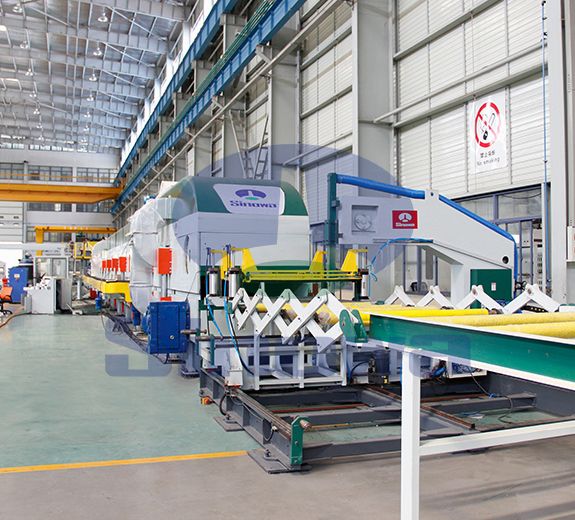
Based on the continuous technological pursuit, the pu foam production line developed by Sinowa provides you with high-efficiency industrial value. Based on China's cost advantage and our hard-working technology concept, our sandwich panel production line has a world-leading price-performance advantage. PU Foam Production Line can meet a variety of production needs of customers.The whole sandwich panel line design concept of modularization enables all our components to be integrated and combined at will.
Our pu foam production line can easily automate the production of roof sandwich panel, wall sandwich panel, cold storage sandwich panel and other products by different combination and configuration selection and siple switching. The inner core layer can be polyrethane or rock wool, glass wool, an so on.
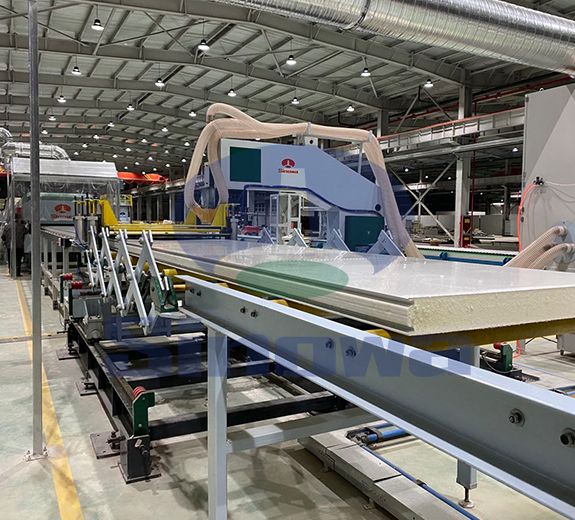
The pu foam production line has high adaptability, which may produce various sandwich panel of the PU, PIR and rock wool systems.
We may design various products according to the customer’s requirements, including various configurations, so as to meet their demands with flexible price system.
Highly integrated and linked control system centralizes all control points at the main central center, achieving parameter linkage, fault self-diagnosis controlled by the whole continuous sandwich panel line and shipping distance control.
High-level automatic control system also saves the manpower and reduces the manpower loss for customers.
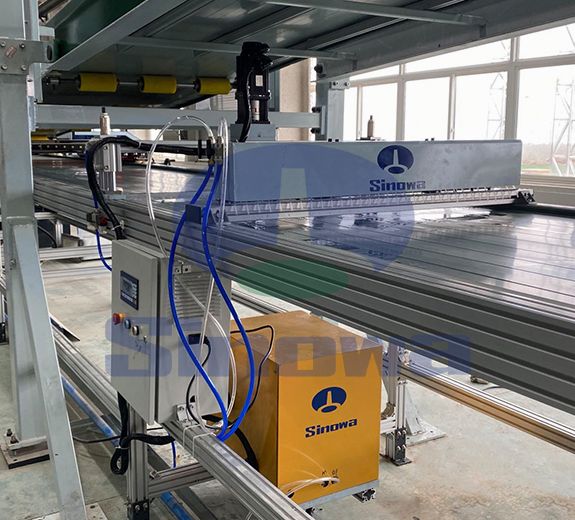
Concentrated system control is fully realized in the practice of concentrated process control so that the control system of all the movements of the parts in the pu foam production line is integrated in one process control console with accessible remote communication to elevate the automation and reduce the allocated number of personnel for the assembly line.
The main engine with modularized design achieves the precision operation of the pu foam production line, stable and reliable quality, less part and maintenance loss.
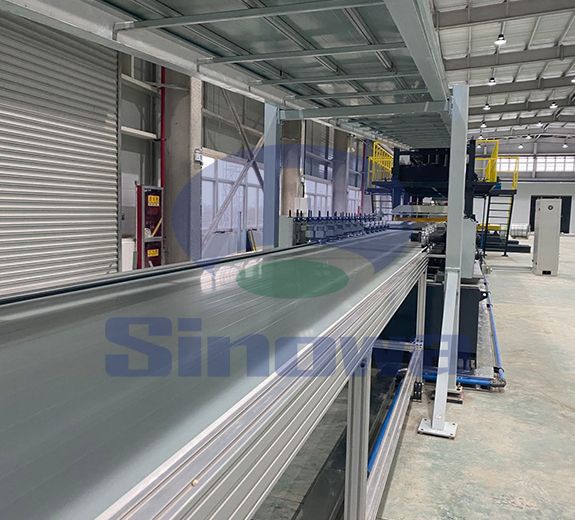
The whole pu foam production line is strictly modularized in design to ensure the greatest probability for the parts to be interchangeable, making it the most cost- and energy-saving. No joining made manually, all the key processes of the parts are completed in the machining center. As soon as the parts are inspected and warehoused, they enter into the assembly process. The modularized assembly can not only greatly increase the production efficiency but, most importantly, realize quick delivery as well. It elevates the reliability of product quality to a totally new level and minimizes the influence from human factors.
The whole pu foam production line has over 40 innovative inventions, making our products have lots of unique features and the comprehensive performance of our production line leading in the industry.
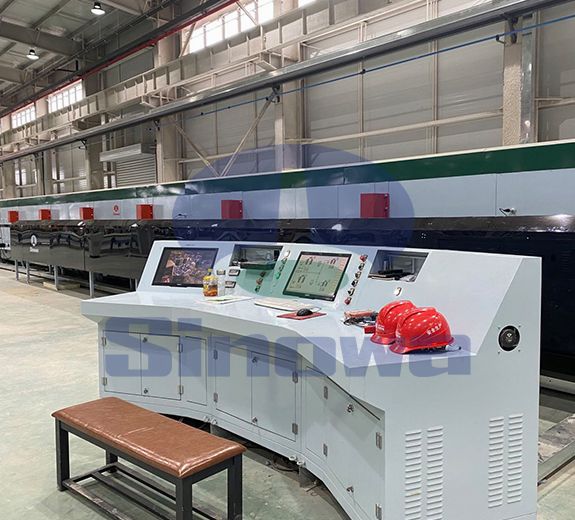
The precision servo hoisting mechanism employed by the main engine without hydraulic system makes the board thickness control flexible and the customer may conveniently change or adjust the board thickness. There will be not such troubles as hydraulic system adjustment, leakage, maintenance, etc.
High-level energy saving and protection design makes the whole pu foam production line possible to produce around the clock throughout the year and the customer will save huge budget. In addition, the isolated heat preservation room is constructed for warming the environment. The energy saving and protection design of our high-tech pu foam production line may guarantee that the customer’s production line may be freely heated and produce in the main time to save more costs for customers.
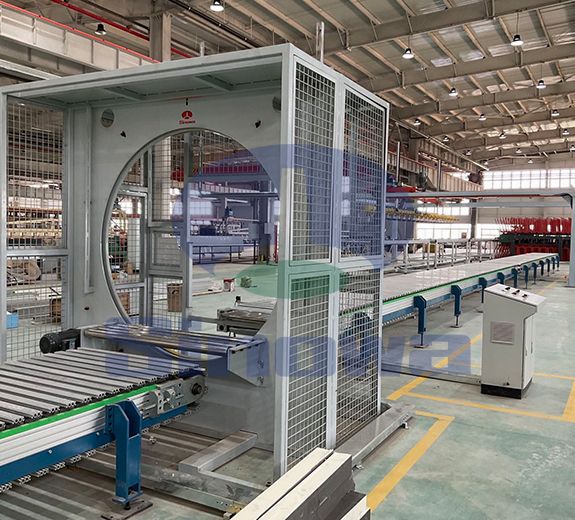
The high-power low-consumption design quickens the reaction of the pu foam production line while energy consumption is kept low.
With the brand-new, fully sealed inner insulation design, the energy consumption is controlled at the minimum level to achieve the design objective of less than an hour for the insulation system to be activated from the room temperature above 5℃ to the production process temperature.
The energy consumption is only 40% that of those similar products.
| PRODUCTION TYPE | PU | PIR | PHENOLIC | |||
|---|---|---|---|---|---|---|
| PRODUCTION USE | INSULATION PANEL | DOCORATIVE PANEL | ||||
| SURFACE OF SHEET | ALUMINUM FOIL | NON-WOVEN FABRIC | PAPER | NAKED | ||
| PRODUCT THICKNESS | 10m--- 200mm | |||||
| PRODUCTION SPEED | 3.0m---25m |
|---|---|
| FOAMING METHOD | TWO OR MULTI COMPONENTS FOAMING |
| FOAMING AGENT | PENTANE OR 141B |
| LENGTH OF LINE | 45m—100m CUSTOMER OPTIONAL |
Sinowa is a well-known manufacturer and technical service provider of high-end polyurethane insulation board production lines and various high-performance cold roll forming machine in China. Our main products include polyurethane double-sided color steel sandwich panel production line, polyurethane and phenolic soft facing insulation panel production line and high-efficiency roll forming machines.
Sinowa has invested outstanding efforts in pu foam production line, This is why our products are more efficiency, quality, automatic control technology, environmental protection, energy consumption indicators and the appearance and safety protection are comprehensively leading, Some subversive design changes in many major technical points,these major innovations make our products excellent in price/performance and user experience.
Sinowa is committed to the development and manufacturing of high-end and high-efficiency pu foam production line. Our sandwich panel production lines are leading the way in efficiency, automatic control, human-computer interaction, environmental protection and energy consumption. Using system integration and bus control technology, it realizes the automatic integrated linkage control of the entire production line, and can achieve remote interactive communication, which has the world-class level and a comprehensive leading high-performance production line in the market.
Polyurethane foam production lines represent a sophisticated set of integrated manufacturing systems specially designed to facilitate the continuous or batch-based chemical reaction between polyether polyol, isocyanate, blowing agents and auxiliary additives, realizing the stable foaming, forming, curing and subsequent processing of polyurethane foam materials in standardized and controllable production environments. As the core foundational equipment supporting the entire polyurethane foam manufacturing industry, these production lines combine precise chemical metering and feeding systems, stable mixing and reaction mechanisms, intelligent forming and conveying structures, and scientific post-processing and environmental auxiliary configurations, working together to convert raw chemical materials into foam products with different cell structures, hardness levels, density specifications and functional characteristics. The overall structural design of a qualified PU foam production line always adheres to the core principle of matching production process logic with product performance requirements, focusing on ensuring the uniformity of chemical raw material mixing ratio, the stability of foaming reaction temperature and pressure, the consistency of foam cell formation and growth, and the continuity of follow-up shaping and curing procedures. Every structural component of the production line is carefully optimized and coordinated, from the initial raw material storage and constant temperature adjustment units to the final finished product cutting, trimming and stacking links, and each functional module undertakes an irreplaceable role in stabilizing production quality, improving production efficiency and maintaining the long-term stable operation of the entire equipment system, laying a solid equipment foundation for the mass production and personalized customized production of various polyurethane foam products in different industrial and civilian fields.

The basic structural composition of all PU foam production lines follows a unified core functional framework, although the detailed structural configuration and component matching will be adjusted according to different production modes and product types. The most fundamental part of the production line is the raw material processing and metering feeding system, which is responsible for storing all chemical raw materials required for foaming production, maintaining the constant temperature and sealed storage state of each raw material to prevent raw material deterioration, chemical composition changes or reaction failure caused by external temperature and humidity changes. This system is equipped with high-precision metering and pumping devices that can accurately control the feeding volume and feeding speed of each raw material according to the preset foaming formula, ensuring that the proportion of polyether polyol, isocyanate and various auxiliary materials is always kept within the optimal reaction range, which is the primary prerequisite for avoiding unstable foaming, uneven foam density, cell rupture and other product quality problems. Closely connected to the feeding system is the high-pressure or low-pressure mixing reaction unit, the heart core structure of the entire PU foam production line. This unit realizes the instantaneous and uniform mixing of all raw materials through professional mixing components, and creates the optimal initial reaction environment for the chemical cross-linking and foaming reaction of polyurethane raw materials. The mixing efficiency and mixing uniformity of this structure directly determine the fineness and uniformity of the foam cell structure, and further affect the mechanical properties, thermal insulation performance and service life of the final foam products.
Subsequent to the mixing and reaction unit is the foaming forming and conveying curing structure, which is the key link to realize the qualitative forming of polyurethane foam. After the fully mixed raw material mixture is injected into the forming area, it undergoes rapid chemical foaming, expansion and gradual curing and shaping under the set temperature and space conditions. Different production lines adopt different forming and conveying structures according to the production scale and product forming requirements. Some are equipped with long-distance continuous conveyor tunnel structures, which can realize uninterrupted continuous foaming and curing of foam raw materials, and are suitable for the production of large-size foam base materials and long-strip foam profiles. Others adopt fixed forming mold matching with semi-continuous conveying structures, which are used for the fixed-shape forming processing of special-shaped foam parts. The interior of the forming and conveying area is equipped with a scientific temperature control and heat preservation structure and a reasonable ventilation and exhaust structure. The temperature control system maintains the constant temperature required for foam curing throughout the process to ensure that the foaming reaction proceeds stably without excessive reaction or insufficient curing, while the ventilation and exhaust structure can timely discharge the heat and trace gas generated during the foaming reaction, avoiding the impact of excessive internal temperature and gas accumulation on foam forming quality and production safety. The final part of the production line is the post-processing finishing structure, including automatic cutting, trimming, flattening and stacking devices, which cut and trim the initially cured foam semi-finished products according to the required size and specification, remove irregular edges and excess leftover materials, and finally complete the finishing and neat stacking of finished products, making the foam products meet the subsequent use and transportation requirements.
In terms of overall structural performance, PU foam production lines have three core advantageous characteristics that determine their wide applicability in modern industrial production. The first is excellent production stability and parameter controllability. The whole production line adopts integrated linkage control design for each functional module, and all key production parameters such as raw material feeding ratio, mixing speed, foaming temperature, conveying speed and curing time can be adjusted and locked according to production needs. This precise controllability enables the production line to always maintain consistent production conditions in long-term continuous operation, effectively avoiding product quality fluctuations caused by manual operation errors or equipment parameter deviations, and ensuring that every batch of produced polyurethane foam has stable density, uniform cell structure and consistent performance indicators. The second prominent structural performance is strong production adaptability and flexible adjustability. The main structural modules of the production line adopt modular combined design, which can be flexibly adjusted and combined according to different production needs and product types. Manufacturers can adjust the metering ratio of raw materials, replace mixing components, change forming molds or adjust conveying and curing parameters according to the production requirements of flexible foam, rigid foam or semi-rigid foam, realizing the switching production of different types of foam products on the same production line, without the need to replace the entire equipment, greatly reducing production adjustment costs and improving the flexible response capacity of production enterprises to market demand changes.
The third core structural performance is high operational efficiency and long-term structural durability. The key load-bearing and working components of the PU foam production line are made of high-strength and corrosion-resistant structural materials, which can adapt to the long-term working environment of chemical raw material contact and continuous mechanical operation, effectively resisting equipment aging, corrosion and mechanical wear, ensuring that the production line can maintain stable and efficient operation for a long time and reduce equipment failure rate and maintenance frequency. At the same time, the integrated structural design of the production line simplifies the production operation process, realizes the automatic connection and seamless docking of all production links from raw material feeding to finished product stacking, reduces manual intervention links in the production process, not only greatly improves the overall production efficiency and output per unit time, but also reduces the labor cost and operation difficulty of production work. In addition, the optimized structural layout of the production line also takes into account the convenience of daily maintenance and later equipment maintenance, with reasonable spatial layout of each functional module, convenient disassembly and replacement of vulnerable parts, and simple and fast daily cleaning and maintenance work, which further ensures the long-term efficient and stable operation state of the entire production line and creates favorable conditions for enterprises to carry out large-scale and standardized foam production.
According to different production process modes, product structural characteristics and actual production application directions, PU foam production lines can be divided into multiple distinct types, each with unique structural design focus and performance orientation, corresponding to different foam product manufacturing needs and application scenarios. The most basic classification method divides PU foam production lines into continuous production lines and batch discontinuous production lines, which are distinguished by production operation mode and production scale orientation. Continuous PU foam production lines are designed for large-scale, long-term and standardized mass production scenarios, with a highly integrated and fully automated overall structure. The raw material feeding, mixing and reaction, foaming forming, curing and conveying, and post-processing finishing of the entire production process are carried out uninterruptedly in a continuous assembly line mode. The structural design of this type of production line focuses on continuous operation stability and high-efficiency production capacity, with long conveyor tunnels, large-capacity raw material storage and supply systems, and high-power continuous mixing and reaction equipment. It is mainly used for the mass production of regular-shaped and large-volume foam products, such as large foam base materials for furniture mattresses, continuous insulation foam boards for building exterior walls, and foam base materials for carpet underlayment. The foam products produced by continuous production lines have uniform overall performance, consistent density and stable quality, and can meet the large-scale material supply needs of the downstream industry chain.
Batch discontinuous PU foam production lines adopt intermittent production operation mode, with relatively compact overall structure and flexible and adjustable functional modules. Each production cycle is completed by feeding raw materials, mixing and foaming, mold forming, curing and demolding in sequence, and then the next production cycle is carried out after the completion of one batch of product production. The structural design of this type of production line focuses on flexibility, versatility and small-batch customized production capacity, with small and precise metering feeding devices, flexible movable mixing equipment and replaceable forming molds of different specifications. It is very suitable for small and medium-sized production enterprises or production scenarios with diverse product types, small single-batch demand and frequent product specification switching. Batch production lines can quickly adjust production formulas and forming molds according to customer personalized customization needs, produce special-shaped foam parts and customized foam products of different sizes and shapes, and have the advantages of low initial equipment investment, small production site occupation and flexible production mode, making them widely used in the production of small-batch special foam accessories and personalized civilian foam products.
According to the performance type and structural characteristics of the produced foam products, PU foam production lines can be further divided into flexible PU foam production lines, rigid PU foam production lines and semi-rigid PU foam production lines, each with targeted structural optimization and performance matching design. Flexible PU foam production lines are specially developed for the production of open-cell high-elasticity soft foam materials. The structural design of this type of production line focuses on controlling the formation of open-cell foam structure and maintaining the high resilience and soft touch of foam products. The mixing reaction unit adopts low-pressure uniform mixing structure to avoid excessive mixing pressure leading to foam cell closure and elasticity reduction, and the foaming forming and curing structure is equipped with gentle temperature rise and slow curing control function to ensure the natural formation of uniform and dense open-cell structure inside the foam. The flexible foam produced by this kind of production line has the characteristics of low density, good compressibility, strong resilience and soft texture, which can quickly recover its original shape after being squeezed and deformed, and has excellent buffering and comfort performance.
Rigid PU foam production lines are professional production equipment for manufacturing closed-cell high-hardness rigid foam materials, and their structural design is completely different from that of flexible foam production lines. The mixing reaction unit of rigid foam production lines adopts high-pressure rapid mixing structure to promote sufficient chemical cross-linking reaction of raw materials, and the foaming forming structure is equipped with high-pressure sealing forming space and rapid curing temperature control system, which is conducive to the formation of dense closed-cell structure inside the foam. The rigid foam produced by this production line has high hardness, good structural stability, low thermal conductivity and excellent compression resistance and deformation resistance, and will not be easily deformed or damaged under long-term pressure. Semi-rigid PU foam production lines are between flexible and rigid foam production lines in terms of structural design and performance regulation, with adjustable raw material ratio and flexible mixing and curing parameter settings. The produced semi-rigid foam has moderate hardness, certain elasticity and good structural rigidity, balancing comfort and structural stability, and can meet the use needs of special scenarios that require both buffering performance and certain structural support capacity.
Another common classification of PU foam production lines is molded foam production lines and slabstock foam production lines, divided according to foam forming and processing methods. Molded PU foam production lines focus on mold closed forming processing, which can be subdivided into open-mold production systems and closed-mold production systems according to the mold sealing degree. Open-mold molded production lines have relatively simple structural design, low mold sealing requirements, and are suitable for producing foam products with simple shapes and large surface areas. The production operation process is simple and the production cycle is short. Closed-mold molded production lines adopt fully sealed precision mold structure, with high requirements for mold matching accuracy and production parameter control, and can produce complex-shaped, high-precision foam parts with uniform internal density and smooth surface quality. Slabstock PU foam production lines mainly produce large-size whole foam slab materials through continuous foaming and natural forming, with long-distance continuous conveying structure and large-scale foaming space. The produced foam slabs are regular in shape and uniform in overall performance, and can be cut and processed into various sizes and specifications of foam products according to subsequent use needs, with strong secondary processing adaptability.
Various types of PU foam production lines with different structural performances have covered a wide range of application fields in modern industry, construction, transportation, civilian life and other industries, providing core material support for the upgrading and development of multiple downstream industries. Flexible PU foam produced by professional flexible foam production lines is the most widely used in the furniture and home furnishing industry, and is processed into sofa cushions, mattress filling layers, seat backrests, pillows and other home furnishing products. The high resilience and soft comfort of flexible foam can effectively improve the sitting and lying experience of daily life, and the good compression resistance and fatigue resistance can ensure that home furnishing products maintain long-term stable use effect without deformation and collapse. At the same time, flexible foam is also used in home textile auxiliary materials and indoor sound insulation and shock absorption materials, relying on its porous open-cell structure to achieve good sound absorption and noise reduction effect, improving indoor living comfort and quietness environment.
Rigid PU foam produced by rigid foam production lines plays an irreplaceable core role in the building insulation and cold chain logistics industries. Relying on its excellent closed-cell structure and low thermal conductivity, rigid foam has outstanding thermal insulation and heat preservation performance, and is processed into building exterior wall insulation panels, roof thermal insulation layers, floor heating insulation materials and other building thermal insulation products, which can effectively reduce indoor and outdoor heat transfer, reduce building energy consumption for heating and cooling, and achieve the effect of building energy saving and consumption reduction. In the cold chain logistics industry, rigid foam is made into insulation layers of cold storage panels, refrigerated truck compartments and fresh-keeping packaging containers, maintaining stable low-temperature internal environment, reducing cold air loss and ensuring the fresh-keeping effect of transported goods. In addition, rigid foam also has good waterproof and moisture-proof performance, which can avoid the impact of moisture erosion on building structures and cold chain equipment, and extend the service life of related facilities and equipment.
The transportation industry is also an important application field for products from multiple types of PU foam production lines. The automotive industry uses flexible foam produced by flexible foam production lines to make car seat cushions, headrests, armrests and interior soft trim parts, improving the riding comfort of drivers and passengers. Semi-rigid foam produced by semi-rigid foam production lines is used for automobile dashboard buffer layers, door inner buffer parts and body shock absorption components, which can effectively absorb vibration and impact force during vehicle driving, reduce vehicle vibration and noise, and improve driving stability and safety. Rigid foam is used for automobile body lightweight structural parts and vehicle thermal insulation and sound insulation layers, reducing the overall weight of the vehicle while ensuring structural strength, helping to reduce energy consumption, and optimizing the internal driving environment of the vehicle.
In the packaging industry, molded PU foam produced by molded foam production lines is widely used for protective packaging of fragile and precision products. Customized special-shaped foam inserts and packaging buffer parts can be produced according to the shape and size of electronic products, glass products, precision industrial parts and medical equipment. Relying on the good buffering and shock absorption performance of PU foam, it can effectively absorb external impact and vibration force during product transportation and handling, avoid collision, extrusion and damage of precision and fragile goods, and ensure the intact rate of product transportation and storage. With the continuous development of emerging industries, PU foam products produced by various PU foam production lines are also gradually applied to renewable energy equipment, medical and health care equipment, electronic product auxiliary parts and other emerging fields. With the continuous optimization and upgrading of the structural performance of PU foam production lines and the continuous expansion of foam material functional characteristics, the application scope of PU foam production lines will continue to expand, and play a more important role in promoting the high-quality development of various industries and improving the quality of social production and life.
«PU Foam Production Line» Update Date:2026/4/29
URL: https://www.sinowa.cn/en/blog/pu-foam-production-line.html

