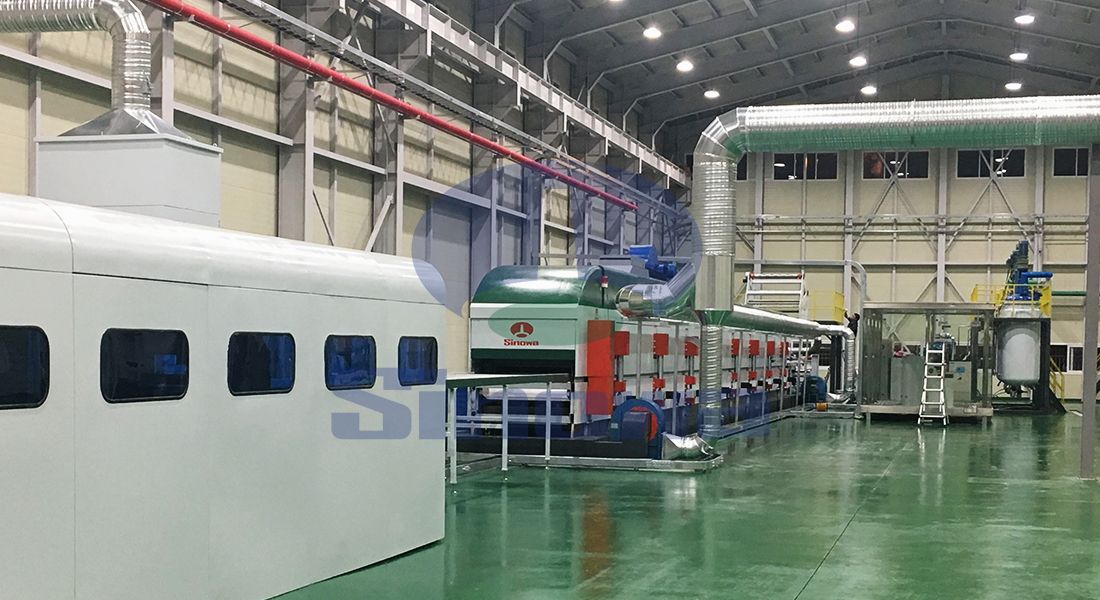
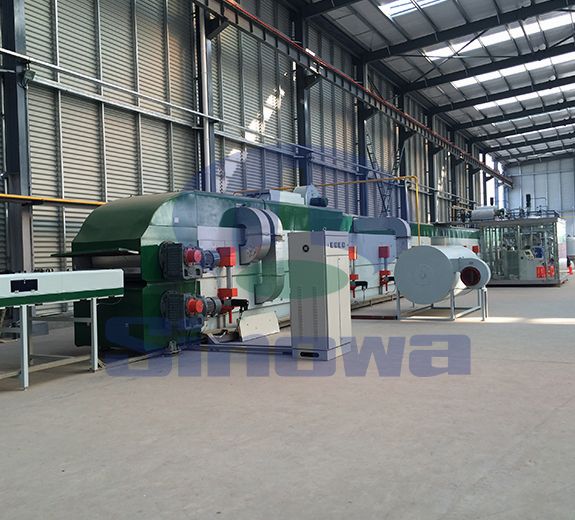
Sinowa is a well-known Insulated Sandwich Panel Machines Supplier From China, Continuous Insulation Panel Production Line of the PU and phenolic aldehyde surface has diversified and multifunctional production characteristics, which may produce products with different specifications such as PU, PF, PIR, etc.
The surface material may be aluminum foil, colored steel, cement base cloth, kraft paper, non-woven fabrics, etc.
The products are widely applied to such occasions as construction, decoration, pipeline ventilation, subway construction, etc.
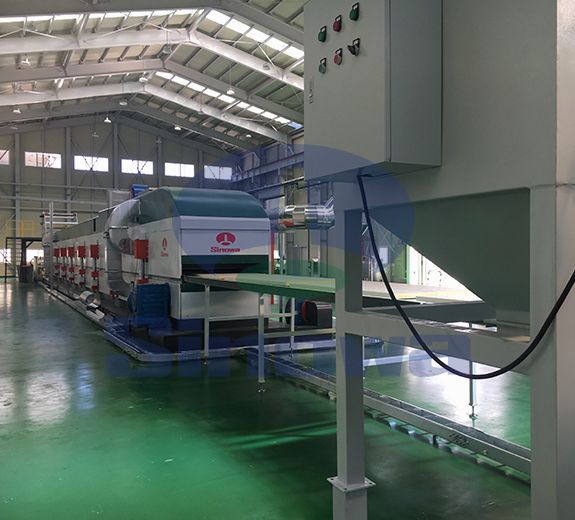
The insulated sandwich panel machine of soft layer insulation board is able to continuously and efficiently produce high-quality PU and Phenolic insulation boards.
We spare no efforts to improve our product quality and technological reliability by employing the most cutting-edge and the most reliable support and processes to make our products highly reliable and endurable. As a result, the insulated sandwich panel machine of our soft layer insulation panels is highlighted by many perfect qualities. It is the core idea in Sinowa's product roadmap to surpass our competitors in terms of design philosophy, manufacture methods and service level, going for excellence and leading position and making constant improvement on our products and services, which is also our core value system to create efficiency and convenience for our customers.
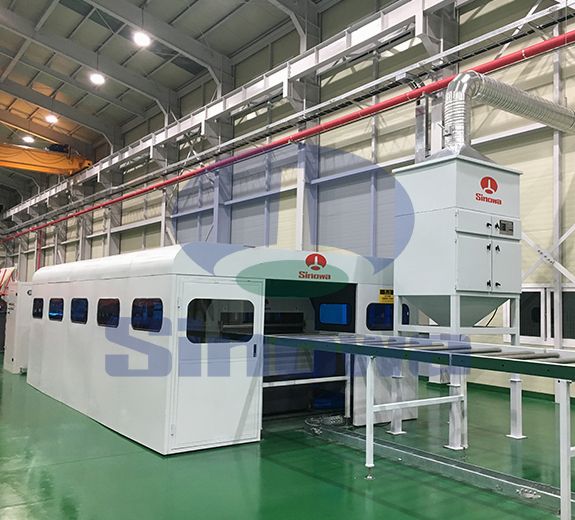
Well-grounded on our solid strength as a renowned large-scale enterprise, Sinowa has a high starting point in developing industrial assembly lines.
Based on the advanced science and technology introduced from within and without the country and supported by a great number of first-grade parts and components from the home and aboard, these assembly lines have a high-level configuration of supporting products in terms of machinery, electrical control, hydraulic pressure, automatic measurement and tracking, and so on.
This is a strong proof of our product’s reliable quality and high efficiency.
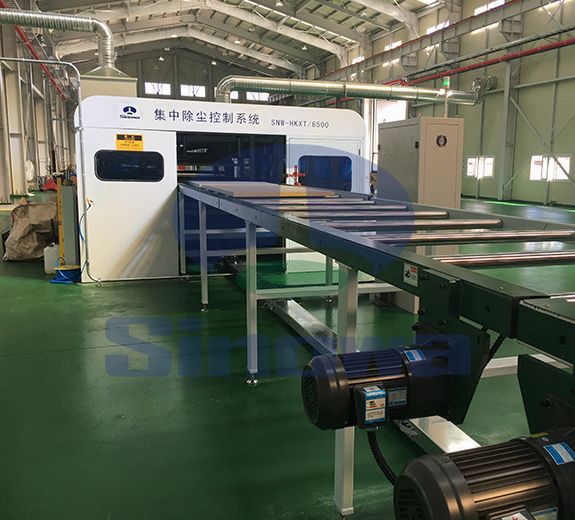
The first-class appearance design and excellent energy saving measures make it unnecessary for customers to additionally construct the heat preservation and isolation room for production around the clock throughout the year, so that the customers may save lots of resources and costs.
Modularized standard design and important parts machined with CNC machine tool make the production line have excellent quality assurance. Dependence on the man-made factors is eliminated. The operation is precision, with the highest operation speed of 30m/min. The insulated sandwich panel machine has the world-class production efficiency.
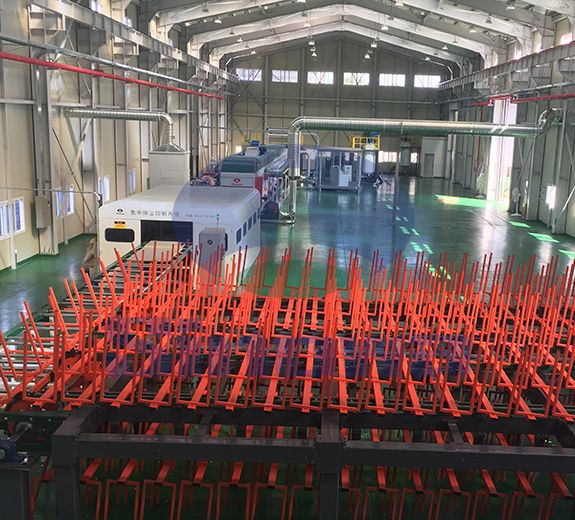
The high performance and reliable multicomponent cyclopentane foaming technology and equipment of Sinowa may be also applied to the foaming process of the phenolic aldehyde board. Therefore, our customers may not only freely adjust the foaming matching according to the raw material, but also save lots of costs. Moreover, they are of significance for environmental protection.
Sinowa's industrial insulated sandwich panel machine of insulation panels is distinguished by its impressive performance of energy conservation. In each high point of energy consumption throughout the entire pu sandwich panel line are implemented corresponding measures to considerably lower the consumption level.
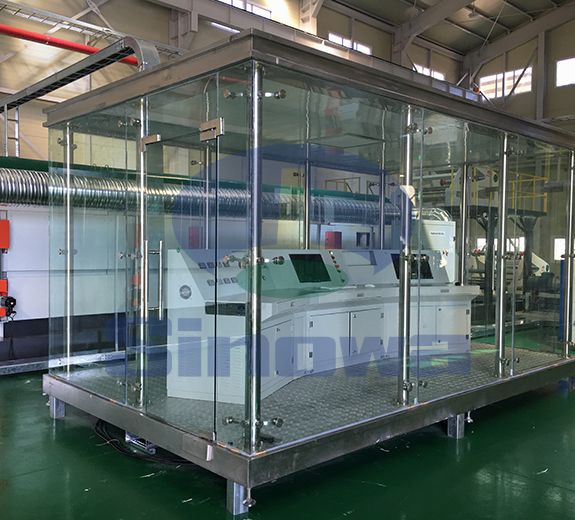
For example, the body of the lamination belt conveyer is covered with insulation panels in very reasonable structures, which doesn’t blemish the overall outlook but greatly increases the insulation performance.
The entire insulated sandwich panel machine is constantly optimized and improved so that the consumption of each power source is significantly reduced. The motor power of our lamination conveying system is only 3.0 kw, about 50% less than those of the same kind.
All in all, the energy consumption of the whole sandwich panel line equals 40% or even less of the equivalent lines in the market.
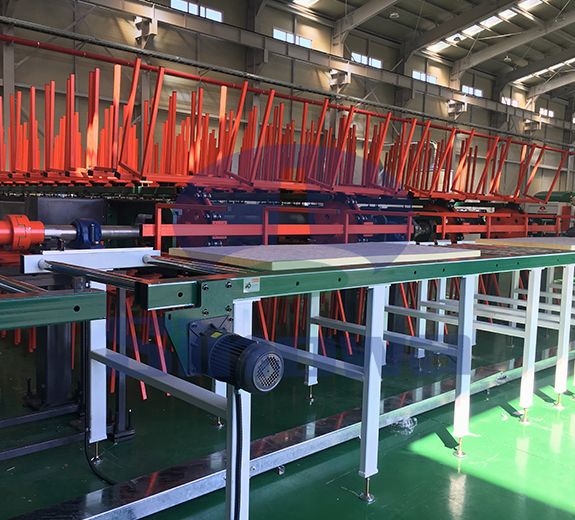
The insulated sandwich panel machine of Sinowa adopts the most advanced concepts in the world to realize the modularized design with all the parts bolted together rather than welded.
In standardized production, the parts can be dismantled and exchanged, so the production cycle is drastically shortened and the maintenance becomes by far easier.
Through finite element analysis, the equipment design is greatly optimized to realize modularization, digitization, and weight-minimalization.
| PRODUCTION TYPE | PU | PIR | PHENOLIC | |||
|---|---|---|---|---|---|---|
| PRODUCTION USE | INSULATION PANEL | DOCORATIVE PANEL | ||||
| SURFACE OF SHEET | ALUMINUM FOIL | NON-WOVEN FABRIC | PAPER | NAKED | ||
| PRODUCT THICKNESS | 10m--- 200mm | |||||
| PRODUCTION SPEED | 3.0m---25m |
|---|---|
| FOAMING METHOD | TWO OR MULTI COMPONENTS FOAMING |
| FOAMING AGENT | PENTANE OR 141B |
| LENGTH OF LINE | 45m—100m CUSTOMER OPTIONAL |
Sinowa is a well-known manufacturer and technical service provider of high-end polyurethane insulation board production lines and various high-performance cold roll forming machine in China. Our main products include polyurethane double-sided color steel sandwich panel production line, polyurethane and phenolic soft facing insulation panel production line and high-efficiency roll forming machines.
Sinowa has invested outstanding efforts in insulated sandwich panel machines, This is why our products are more efficiency, quality, automatic control technology, environmental protection, energy consumption indicators and the appearance and safety protection are comprehensively leading, Some subversive design changes in many major technical points,these major innovations make our products excellent in price/performance and user experience.
Sinowa is committed to the development and manufacturing of high-end and high-efficiency insulated sandwich panel machines. Our sandwich panel production lines are leading the way in efficiency, automatic control, human-computer interaction, environmental protection and energy consumption. Using system integration and bus control technology, it realizes the automatic integrated linkage control of the entire production line, and can achieve remote interactive communication, which has the world-class level and a comprehensive leading high-performance production line in the market.
The insulated sandwich panel machine stands as a foundational and indispensable piece of processing and manufacturing equipment in the modern building material production and industrial manufacturing sectors, specially developed to integrate different surface protective materials and thermal insulation core substrates into integrated composite sandwich panels through mechanized compounding, molding, pressing and fixed-length cutting processes. Unlike single-purpose metal forming or simple material pressing equipment, this type of professional production machinery is designed with a comprehensive integration of mechanical transmission, material continuous feeding, precise composite bonding, constant pressure shaping and automatic sizing cutting functions, focusing on realizing continuous and standardized mass production of insulated sandwich panels with dual attributes of structural bearing capacity and thermal insulation and energy-saving performance. With the rapid development of low-carbon construction concepts, prefabricated building promotion and cold chain logistics infrastructure construction worldwide, the market demand for high-quality insulated sandwich panels with stable structure, excellent thermal insulation effect and long service life has continued to rise steadily, which in turn drives the continuous upgrading and iterative optimization of the overall structural design, core mechanical performance parameters and functional classification of insulated sandwich panel machines. The intrinsic structural design logic of the equipment directly determines the molding quality, overall flatness, bonding firmness and dimensional stability of finished sandwich panels, while different structural configuration modes and performance parameter settings divide the equipment into multiple professional types adapted to different core materials and production demands, and these differentiated machine types further expand the application scope of finished panels in various construction, industrial production, special environmental protection and thermal constant temperature maintenance fields, forming a complete industrial chain connection from mechanical manufacturing and panel production to terminal engineering application.

The overall structural composition of a complete insulated sandwich panel machine follows a modular integrated design concept, with each functional module closely connected and coordinated in operation to ensure the continuity and stability of the entire panel production process without intermittent shutdowns or manual intervention links in the middle stage. The whole equipment set is mainly composed of raw material unwinding and feeding modules, surface material roll forming and leveling modules, core material automatic laying and positioning modules, high-pressure composite laminating modules, constant temperature bonding and curing auxiliary modules, automatic fixed-length cutting and finishing modules, and finished product conveying and stacking auxiliary modules. Each structural module is designed with targeted mechanical stress-bearing structure and transmission control system to adapt to the physical characteristics of different production raw materials and the composite molding process requirements of sandwich panels. The raw material unwinding and feeding part is the starting link of the entire production line, adopting a heavy-duty fixed support frame structure matched with a stable rotating transmission device, which can stably place large-coil metal sheet substrates or other flexible and rigid surface decorative and protective materials, and realize uniform-speed continuous feeding without material deviation, tension fluctuation or coil loosening during long-term continuous operation. The internal structural reinforcement design of this part focuses on improving overall torsional resistance and load-bearing stability, avoiding feeding jitter or position deviation caused by long-term operation vibration, which is the basic guarantee for ensuring the consistent thickness and flatness of subsequent finished panels.
The surface material roll forming and leveling structure is a key functional part that shapes the outer protective layer of sandwich panels, equipped with multi-group precision arranged forming roller sets and leveling correction roller sets inside. The structural layout of the roller sets follows the gradual forming mechanical principle, enabling flat metal or non-metal surface sheets to be processed into various required corrugated, flat or special-shaped cross-section structures through gradual rolling and bending without surface cracking, deformation or internal stress concentration. The frame of the roll forming structure adopts thickened welded steel structure overall processing technology, with strong overall rigidity and deformation resistance, which can maintain the relative position accuracy of each roller set under long-term high-load continuous working conditions, ensuring the consistency of the surface shape and size of each batch of produced panels. After roll forming, the surface material will enter the leveling correction link, and the precision gap adjustment structure inside the leveling module can fine-tune the horizontal and vertical flatness of the surface material, eliminate tiny bending deformation and internal stress generated in the roll forming process, and lay a good foundation for the subsequent firm composite bonding between the surface material and the core insulation material.
The core material automatic laying and positioning structure is specially designed for the transportation, arrangement and fixed-position laying of different thermal insulation core raw materials, adapting to the physical characteristics of soft fiber core materials and rigid foam core materials respectively. The internal structure is equipped with adjustable-speed conveying chains, flexible positioning baffles and thickness limiting and guiding components, which can automatically and evenly lay the bulk or plate-shaped insulation core materials between the upper and lower surface materials according to the preset thickness and width specifications, avoiding core material deviation, uneven laying thickness or local accumulation and gaps. The structural design of this part focuses on flexibility and adjustability, realizing quick switching and adaptation to core materials of different densities, thicknesses and material characteristics, ensuring that the core material distribution of each sandwich panel product is uniform and consistent, and avoiding the decline of overall structural performance and thermal insulation effect of finished panels caused by uneven core material laying.
The high-pressure composite laminating structure is the core load-bearing and key working part of the entire insulated sandwich panel machine, and its structural performance directly determines the bonding strength and overall composite firmness between the surface material and the core material of finished panels. This structure adopts a large-scale integral frame pressure-bearing design, matched with upper and lower symmetric pressure roller sets or flat pressing plates, and relies on mechanical hydraulic or pneumatic power systems to provide stable and continuous composite pressure. The internal pressure transmission structure is precisely calibrated to ensure uniform pressure distribution in all areas of the composite surface, avoiding local excessive pressure leading to core material crushing or local insufficient pressure leading to weak bonding and easy delamination of panels. The structural materials of the composite laminating part all have strong compression resistance and fatigue resistance, which can maintain stable pressure output and structural shape without deformation and failure after long-term repeated high-pressure operation. In addition, some optimized equipment structures are also equipped with synchronous speed adjustment devices inside the composite part, realizing the synchronous operation of feeding speed and composite pressing speed, preventing relative displacement between surface materials and core materials during the composite process, and further improving the overall structural integrity of composite sandwich panels.
The constant temperature bonding and curing auxiliary structure and automatic fixed-length cutting and finishing structure are important auxiliary components to ensure the final molding quality and dimensional accuracy of sandwich panels. The constant temperature curing structure can provide a stable temperature environment for the initial bonding and solidification of the adhesive between the surface material and the core material, accelerating the bonding and forming speed of composite panels and improving the initial bonding strength, so that the panels can maintain a stable integrated structure in the subsequent cutting and handling links without delamination and cracking. The fixed-length cutting structure adopts precision mechanical cutting tools and automatic length measurement and induction control components, which can accurately cut the continuously produced long-strip composite panels according to the preset dimensional specifications, and the cutting section is flat and smooth without burrs, edge collapse or core material falling off. The overall structure of the cutting part is compact and stable, with good vibration reduction performance, avoiding cutting vibration affecting the overall structural stability of the cut panels and ensuring the consistency of the dimensional specifications of each finished panel.
The structural performance of insulated sandwich panel machines refers to the comprehensive mechanical working characteristics and operational stability formed by the coordination of all functional structures in the actual production and processing process, covering overall structural rigidity, load-bearing stability, continuous operation durability, adjustment flexibility and production molding precision, which are the core indicators to measure the working quality and service life of the equipment. The overall structural rigidity performance is the most basic core performance, reflecting the ability of the equipment to resist deformation and vibration under long-term high-load working conditions. High-quality insulated sandwich panel machines adopt integral welded thick steel plate and section steel frame structure as the main body, with reasonable structural stress distribution, no stress concentration points, and will not produce overall bending deformation, local structural fracture or component displacement due to long-term continuous rolling, pressing and cutting operations. Good structural rigidity ensures that all functional modules can maintain accurate relative position relationships during operation, avoiding product quality fluctuations caused by structural deformation, and ensuring the long-term stable and consistent production of high-standard sandwich panels.
Load-bearing stability performance focuses on the continuous working capacity of the equipment under long-term uninterrupted production conditions, reflecting the coordination and wear resistance of internal transmission parts, pressure-bearing components and connecting structures. In the actual production process, the equipment needs to bear the continuous tension of raw material feeding, the continuous pressure of composite pressing and the mechanical impact of cutting and finishing for a long time. Excellent load-bearing structural design can evenly disperse various mechanical forces to all stress-bearing components, reduce local component wear and fatigue loss, and extend the overall service cycle of the equipment. At the same time, good load-bearing stability can avoid equipment failure and production shutdown caused by component damage, improve the continuous production efficiency of the production line, and reduce the later maintenance and component replacement costs of mechanical equipment.
Continuous operation durability performance is closely related to the material selection and processing technology of equipment structural parts, reflecting the adaptability of the equipment to long-term high-frequency working environments. The key moving parts and pressure-bearing parts of qualified insulated sandwich panel machines are processed through special anti-wear and anti-corrosion processes, which can resist mechanical wear, environmental humidity corrosion and temperature change aging during long-term operation, maintain stable working performance for a long time, and avoid performance attenuation and product quality decline caused by equipment aging. Adjustment flexibility performance refers to the convenience and accuracy of the equipment in adapting to different panel production specifications, including rapid adjustment of panel thickness, width, surface shape and cutting size. The optimized structural adjustment design enables the equipment to quickly switch production specifications without complex component replacement or tedious debugging work, improving the production flexibility of the equipment and meeting the diversified production needs of different types of sandwich panels.
Production molding precision performance is the core performance index related to finished product quality, reflecting the equipment's control ability over panel dimensional accuracy, surface flatness, bonding uniformity and overall structural consistency. Excellent molding precision performance ensures that the produced sandwich panels have accurate overall dimensions, flat and smooth surface, firm bonding between layers, uniform core material distribution, no warping deformation, delamination and other quality problems, making the finished panels have good structural bearing capacity and thermal insulation performance in subsequent engineering applications. All structural performance indicators of insulated sandwich panel machines interact and restrict each other, and only when all performance indicators reach a balanced and excellent state can the equipment give full play to its production advantages and produce high-quality insulated sandwich panels that meet various application needs.
According to different structural configuration forms, core processing technological characteristics and applicable production raw materials, insulated sandwich panel machines can be divided into several mainstream core types, each with unique structural design focus, performance adjustment focus and targeted production positioning, adapting to different core insulation materials and different production scale demands. The first mainstream type is continuous automatic insulated sandwich panel production machine, which is the most widely used equipment type in large-scale standardized sandwich panel mass production. This type of machine adopts full-line continuous integrated structural design, with all functional modules connected in seamless linkage, realizing automatic completion from raw material feeding, roll forming, core material laying, high-pressure composite bonding, constant temperature curing to fixed-length cutting and finished product output without manual intervention in the whole process. The structural design of this equipment focuses on overall linkage coordination and high-efficiency continuous production capacity, with high operational automation, fast production speed and stable product quality consistency. It is mainly suitable for large-scale batch production of various common specification flat and corrugated insulated sandwich panels, meeting the large-volume material demand of large engineering construction projects and large building material production enterprises.
The second common type is discontinuous pressing type insulated sandwich panel machine, which adopts intermittent modular structural design and separate setting of feeding, composite pressing and cutting links. Different from continuous production equipment, this type of machine does not realize uninterrupted assembly line operation, but completes panel composite molding through single-plate pressing and batch processing. The structural design focuses on high-pressure composite performance and flexible production adjustment capacity, with large adjustable range of pressing pressure and strong adaptability to special-shaped panels and special specification panels. It is mainly suitable for small-batch customized production of special size, special structure and special performance insulated sandwich panels, as well as production of panels with complex surface shapes and special bonding process requirements. This type of equipment has low requirements for production site and production scale, flexible operation and convenient debugging, and is suitable for small and medium-sized building material processing enterprises and engineering supporting customized production needs.
The third core classification is special core material targeted insulated sandwich panel machine, which is professionally optimized and upgraded in structural design aiming at the physical characteristics of different insulation core materials. Among them, polyurethane and polyisocyanurate foam core sandwich panel machines adopt special liquid material injection and foaming composite structural design, equipped with precise material injection and foaming control structures inside, which can realize synchronous foaming and composite bonding of foam core materials between upper and lower surface materials, with good structural sealing and foaming uniformity, ensuring the fine and uniform internal foam structure of finished panels and excellent thermal insulation performance. Rock wool and mineral wool fiber core sandwich panel machines adopt special fiber core material fixed-length cutting, directional laying and anti-compression deformation structural design, enhancing the anti-pressure protection structure of the composite part to avoid crushing the fiber core material during the pressing process, ensuring the structural integrity and fire resistance of the fiber core material. Expanded polystyrene core sandwich panel machines focus on lightweight structural design and low-pressure gentle composite structure, avoiding damage to the lightweight foam core material during production, and maintaining the stable thermal insulation and structural performance of the core material. Each special core material targeted machine type carries out targeted structural optimization according to the characteristics of the corresponding core material, ensuring the production quality and performance stability of specific type of sandwich panels.
Fourthly, according to the different surface material processing forms, it can be divided into flat panel special production machines and corrugated special molding sandwich panel machines. Flat panel machines adopt simple roll forming structure and flat composite pressing structure, mainly producing flat surface insulated sandwich panels with smooth and neat surfaces, suitable for interior partition walls and indoor thermal insulation decoration occasions. Corrugated special molding machines are equipped with multi-group complex corrugated roll forming structures, which can process surface materials into various corrugated shapes with strong structural rigidity and good waterproof and drainage performance. The produced corrugated sandwich panels are mostly used for exterior wall enclosure and roof thermal insulation and waterproofing projects. Different structural design of surface processing parts makes the two types of equipment have different production positioning and terminal application directions, meeting the structural performance and use environment requirements of different building parts.
Insulated sandwich panel machines and the sandwich panels produced by them have extremely wide and diversified practical application scenarios, covering prefabricated building construction, industrial factory construction, special constant temperature facility construction, cold chain logistics storage, agricultural facility construction and other multiple fields, and play an irreplaceable important role in improving construction efficiency, reducing building energy consumption and optimizing the use effect of special facilities. In the field of prefabricated civil and industrial building construction, insulated sandwich panels produced by professional machines are widely used as exterior wall enclosure structures, interior partition wall components, roof thermal insulation and waterproof structures of various prefabricated buildings, temporary construction facilities and permanent industrial plants. The panels produced by standardized equipment have light overall weight, high structural strength, good thermal insulation and sound insulation effect, and convenient on-site installation and construction, which can greatly shorten the construction cycle of buildings, reduce the use of traditional building materials, reduce the overall construction cost of projects, and effectively improve the thermal insulation and energy-saving level of building envelopes, realizing the dual goals of building structural stability and low-carbon energy conservation.
In the construction of special constant temperature and clean facilities, such as various constant temperature workshops, dust-free purification workshops, pharmaceutical production workshops, food processing workshops and laboratory testing facilities, the high-performance insulated sandwich panels produced by special targeted sandwich panel machines become the core enclosure and partition materials. These facilities have strict requirements on indoor temperature stability, air cleanliness, sound insulation effect and internal and external environmental isolation performance. The panels produced by professional equipment have uniform internal structure, stable thermal insulation performance, good air tightness and anti-pollution surface characteristics, which can effectively isolate external temperature changes, dust intrusion and noise interference, maintain the long-term stability of indoor production and working environment, and meet the strict environmental control requirements of special production and experimental places.
In the cold chain logistics and low-temperature storage industry, low-temperature cold storage, frozen storage rooms and fresh-keeping warehouses have extremely high requirements on the thermal insulation performance and structural frost resistance of enclosure materials. The foam core insulated sandwich panels produced by professional foam core sandwich panel machines have excellent low-temperature thermal insulation performance, good structural anti-deformation ability and anti-condensation characteristics, which can effectively reduce the loss of internal cold energy of cold storage, maintain the long-term stable low-temperature environment inside the warehouse, reduce the energy consumption of refrigeration equipment operation, and ensure the fresh-keeping and storage effect of cold chain goods. At the same time, the panels have strong structural durability, can adapt to long-term low-temperature and high-humidity working environment, and will not be deformed, delaminated or damaged due to long-term low-temperature operation, ensuring the long-term safe and stable operation of cold storage facilities.
In the field of agricultural modernization facilities construction, various agricultural greenhouses, seedling breeding houses and livestock and poultry breeding constant temperature houses also widely use insulated sandwich panels produced by sandwich panel machines as wall and roof thermal insulation materials. Agricultural production facilities need to maintain relatively stable internal temperature according to the growth and breeding needs of crops and livestock, and resist the influence of external severe weather such as high temperature, low temperature and strong wind. The sandwich panels have light weight, convenient installation, good thermal insulation and wind and pressure resistance, which can create a suitable constant temperature growth and breeding environment for agricultural production, improve agricultural production efficiency, and reduce the energy consumption of agricultural facility temperature regulation. In addition, in the special fields of transportation equipment insulation, mobile temporary accommodation facilities and outdoor emergency shelter construction, the lightweight and high-strength insulated sandwich panels produced by insulated sandwich panel machines are also widely used, relying on the excellent comprehensive performance of the panels and the stable production quality guaranteed by professional mechanical equipment.
In summary, the insulated sandwich panel machine, with its scientific and reasonable overall structural design, comprehensive and balanced mechanical structural performance, rich and diverse equipment classification types and reliable and efficient production capacity, has become an important mechanical equipment supporting the development of modern building energy conservation and special facility construction industries. The continuous optimization of its internal structural design continuously improves the production quality and production efficiency of insulated sandwich panels, the continuous improvement of various structural performance indicators ensures the stable and reliable operation of the equipment in long-term production, and the diversified equipment types meet the production demands of sandwich panels with different materials and specifications. With the continuous advancement of global energy-saving and emission reduction policies and the continuous expansion of prefabricated building and special facility construction scales, the technological upgrading and application scope of insulated sandwich panel machines will be further expanded, and the equipment will continue to play a core supporting role in promoting the high-quality development of the building material industry and the construction field, creating more practical value for various engineering construction and industrial production fields.
«Insulated Sandwich Panel Machines» Update Date:2026/4/29
URL: https://www.sinowa.cn/en/blog/insulated-sandwich-panel-machines.html
