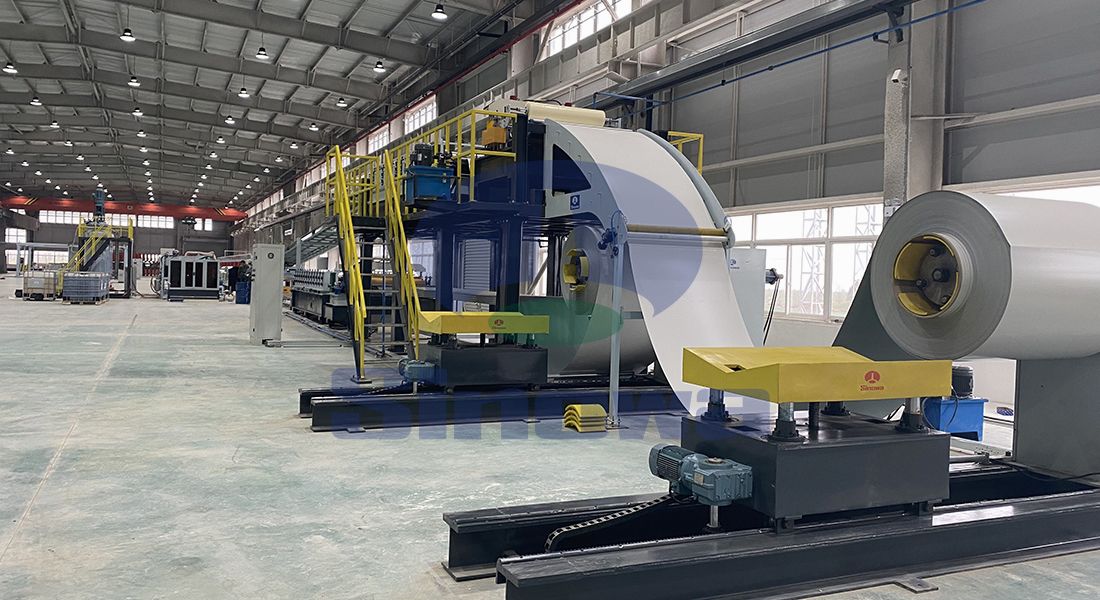
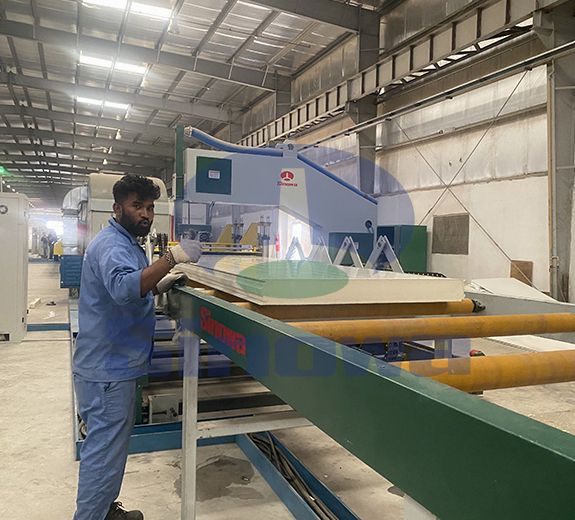
Sinowa is a well-known Continuous PU Sandwich Panel Machine Supplier From China, Dedicated to the research and development of high-end & high-efficiency continuous pu sandwich panel machine, Sinowa is comprehensively taking the leading position in terms of efficiency, automation control level, HMI, environment protection and energy consumption, with subversive designs made in some critical technological fields to procure exceptional cost performance and customer-friendly experience for the entire continuous pu sandwich panel machine.
The adoption of system integration technology and bus control technology accomplishes the full automatization of integrated and coordinated control of the entire continuous pu sandwich panel machine with accessible remote interactive communication. Ranking the first-class level in the world, it is currently the continuous pu sandwich panel line in the market taking a comprehensive lead in high performance.
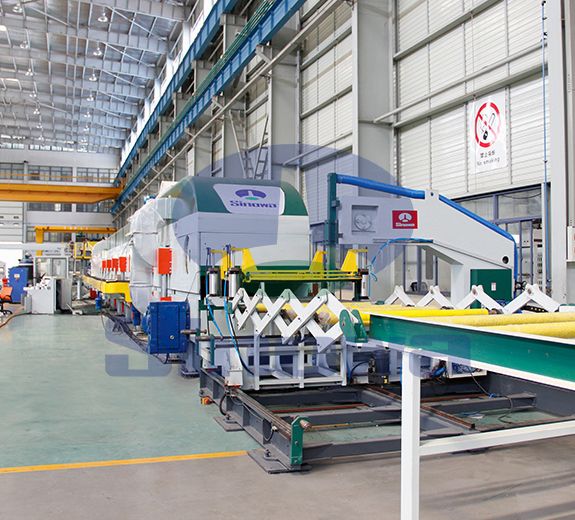
Based on the continuous technological pursuit, the continuous pu sandwich panel machine developed by Sinowa provides you with high-efficiency industrial value. Based on China's cost advantage and our hard-working technology concept, our sandwich panel production line has a world-leading price-performance advantage. Continuous PU Sandwich Panel Machine can meet a variety of production needs of customers.The whole sandwich panel line design concept of modularization enables all our components to be integrated and combined at will.
Our continuous pu sandwich panel machine can easily automate the production of roof sandwich panel, wall sandwich panel, cold storage sandwich panel and other products by different combination and configuration selection and siple switching. The inner core layer can be polyrethane or rock wool, glass wool, an so on.
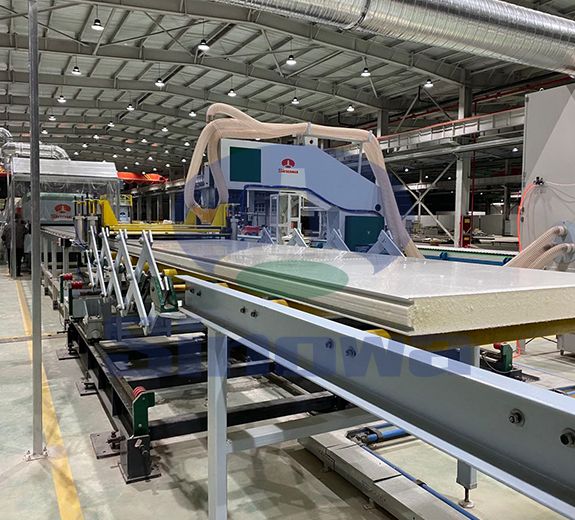
The continuous pu sandwich panel machine has high adaptability, which may produce various sandwich panel of the PU, PIR and rock wool systems.
We may design various products according to the customer’s requirements, including various configurations, so as to meet their demands with flexible price system.
Highly integrated and linked control system centralizes all control points at the main central center, achieving parameter linkage, fault self-diagnosis controlled by the whole continuous sandwich panel line and shipping distance control.
High-level automatic control system also saves the manpower and reduces the manpower loss for customers.
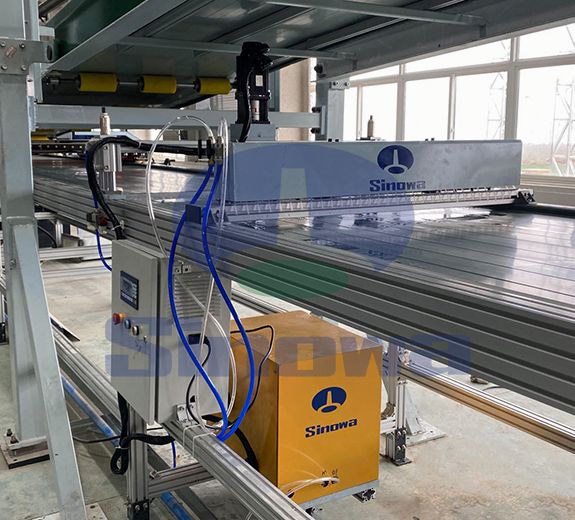
Concentrated system control is fully realized in the practice of concentrated process control so that the control system of all the movements of the parts in the continuous pu sandwich panel machine is integrated in one process control console with accessible remote communication to elevate the automation and reduce the allocated number of personnel for the assembly line.
The main engine with modularized design achieves the precision operation of the continuous pu sandwich panel machine, stable and reliable quality, less part and maintenance loss.
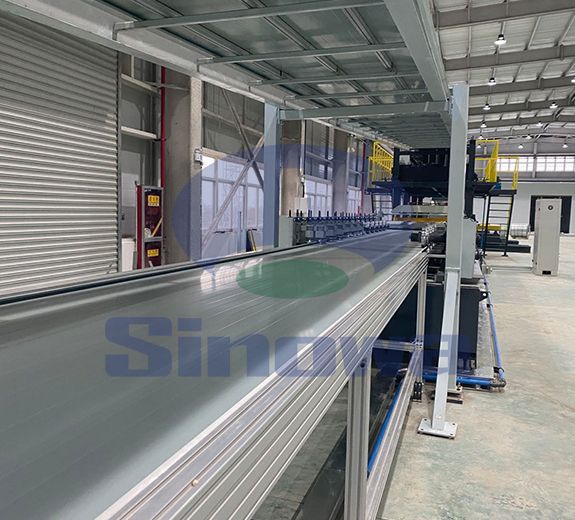
The whole continuous pu sandwich panel machine is strictly modularized in design to ensure the greatest probability for the parts to be interchangeable, making it the most cost- and energy-saving. No joining made manually, all the key processes of the parts are completed in the machining center. As soon as the parts are inspected and warehoused, they enter into the assembly process. The modularized assembly can not only greatly increase the production efficiency but, most importantly, realize quick delivery as well. It elevates the reliability of product quality to a totally new level and minimizes the influence from human factors.
The whole continuous pu sandwich panel machine has over 40 innovative inventions, making our products have lots of unique features and the comprehensive performance of our production line leading in the industry.
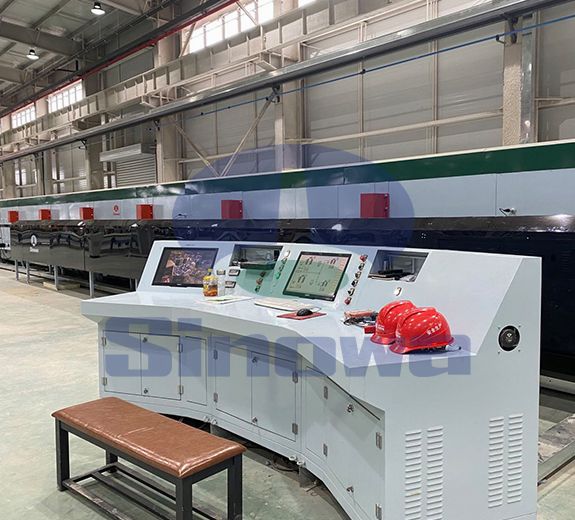
The precision servo hoisting mechanism employed by the main engine without hydraulic system makes the board thickness control flexible and the customer may conveniently change or adjust the board thickness. There will be not such troubles as hydraulic system adjustment, leakage, maintenance, etc.
High-level energy saving and protection design makes the whole continuous pu sandwich panel machine possible to produce around the clock throughout the year and the customer will save huge budget. In addition, the isolated heat preservation room is constructed for warming the environment. The energy saving and protection design of our high-tech continuous pu sandwich panel machine may guarantee that the customer’s production line may be freely heated and produce in the main time to save more costs for customers.
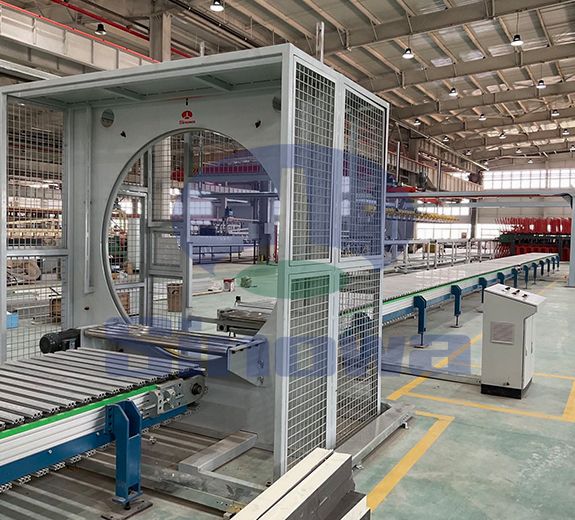
The high-power low-consumption design quickens the reaction of the continuous pu sandwich panel machine while energy consumption is kept low.
With the brand-new, fully sealed inner insulation design, the energy consumption is controlled at the minimum level to achieve the design objective of less than an hour for the insulation system to be activated from the room temperature above 5℃ to the production process temperature.
The energy consumption is only 40% that of those similar products.
| PRODUCTION TYPE | PU | PIR | PHENOLIC | |||
|---|---|---|---|---|---|---|
| PRODUCTION USE | INSULATION PANEL | DOCORATIVE PANEL | ||||
| SURFACE OF SHEET | ALUMINUM FOIL | NON-WOVEN FABRIC | PAPER | NAKED | ||
| PRODUCT THICKNESS | 10m--- 200mm | |||||
| PRODUCTION SPEED | 3.0m---25m |
|---|---|
| FOAMING METHOD | TWO OR MULTI COMPONENTS FOAMING |
| FOAMING AGENT | PENTANE OR 141B |
| LENGTH OF LINE | 45m—100m CUSTOMER OPTIONAL |
Sinowa is a well-known manufacturer and technical service provider of high-end polyurethane insulation board production lines and various high-performance cold roll forming machine in China. Our main products include polyurethane double-sided color steel sandwich panel production line, polyurethane and phenolic soft facing insulation panel production line and high-efficiency roll forming machines.
Sinowa has invested outstanding efforts in both the insulation board production line and the roll forming line, This is why our products are more efficiency, quality, automatic control technology, environmental protection, energy consumption indicators and the appearance and safety protection are comprehensively leading, Some subversive design changes in many major technical points,these major innovations make our products excellent in price/performance and user experience.
Sinowa is committed to the development and manufacturing of high-end and high-efficiency sandwich panel production lines. Our sandwich panel production lines are leading the way in efficiency, automatic control, human-computer interaction, environmental protection and energy consumption. Using system integration and bus control technology, it realizes the automatic integrated linkage control of the entire production line, and can achieve remote interactive communication, which has the world-class level and a comprehensive leading high-performance production line in the market.
The continuous PU sandwich panel machine for roof is a specialized production system built to turn raw chemical materials and metal facings into finished roof panels in one uninterrupted workflow. Unlike intermittent production setups that require separate stages of mixing, pouring, curing and cutting, this continuous line keeps material feeding and forming moving steadily once the production run begins. It handles the coordination of upper and lower metal sheet unwinding, surface treatment, foam ingredient metering, high-pressure mixing of polyurethane components, uniform pouring onto the moving substrate, and constrained foaming inside a double-belt conveyor. The core advantage of this continuous design lies in its stable foam density and consistent panel thickness across long production batches. Operators can adjust parameters to match different roof design requirements, controlling the expansion rate of PU foam to create a tight bond between the foam core and metal skins. Proper alignment of metal sheets throughout the process avoids uneven edges or delamination, issues that often appear in slower batch production methods. Every part of the machine works in sync, so variations in foam formulation translate evenly into the finished product rather than creating random defects along individual panels. This synchronized operation also reduces manual handling of semi-finished materials, lowering the chance of surface scratches or contamination before panels fully cure.

The material feeding section forms the starting point of the whole production sequence, supporting the smooth delivery of metal facings and liquid PU raw materials into the forming zone. Metal coils for roof panels are loaded onto unwinding stations, which apply controlled tension to prevent wrinkling or stretching as the sheets travel forward. As metal sheets unwind, they pass through simple surface conditioning units that clear away surface dust and improve adhesive compatibility with the polyurethane foam. At the same time, separate storage and circulation units maintain the liquid polyol and isocyanate components at steady temperatures, because temperature shifts directly change the reaction speed of the PU mixture. Precision metering pumps send the two liquid streams to the mixing head at an accurate ratio, and minor adjustments to flow rates can alter the final hardness and insulation performance of the foam core. The mixing head sprays or pours the blended liquid onto the lower metal sheet at a set position, right before the sheet enters the long double-belt curing channel. Timing here is critical; the liquid must start foaming at the correct moment so it fills the space between the top and bottom metal skins completely without overflowing or leaving hollow gaps inside the panel structure.
Inside the double-belt conveyor curing section, the poured PU mixture expands and solidifies under controlled pressure and temperature to form the insulated core of the roof sandwich panel. The upper and lower belts hold the metal sheets at a fixed distance, locking in the target panel thickness while the foam expands and presses firmly against both surfaces. The enclosed environment keeps heat stable during the chemical reaction, ensuring the PU foam cures uniformly from the center of the core all the way to the contact surfaces with metal. If heat distribution becomes uneven, some sections of foam may cure too quickly and turn brittle, while other areas remain under-cured and prone to shrinkage after leaving the line. The belts move at a speed matched to the curing cycle, so panels spend exactly the required length of time inside the chamber before exiting. This constrained expansion process creates a closed-cell foam structure that supports the roof panel’s thermal performance and structural stability. The bond created between foam and metal is mechanical and chemical combined, making the finished panel resist separation under normal temperature changes that roof structures regularly experience. This stage is where most of the panel’s final physical properties are set, so steady running of the belt system remains one of the most important factors for reliable output.
After the curing chamber, the continuous PU sandwich panel machine carries the solid continuous slab to the cutting and trimming station, where it is divided into individual roof panels according to preset lengths. A flying saw unit moves in synchronization with the forward speed of the panel, cutting without stopping the main production line. This synchronized cutting eliminates start-stop cycles that would disrupt the continuous flow and create inconsistent panel dimensions. Side trimming devices remove excess foam and metal edge flash from both sides of the slab, forming clean, straight edges that fit neatly during roof installation. Trimming waste can be collected separately for later disposal or further processing, keeping the working area tidy and reducing material buildup around moving parts. Operators input target length values through the control interface, and the system automatically tracks travel distance to trigger each cut at the precise position. The cut surfaces of the PU core stay neat and compact, without crumbling or exposing large open cell areas that could weaken insulation. Once cut, individual panels move forward along discharge rollers, separating from the endless slab and ready for stacking. This non-stop cutting design greatly boosts overall throughput compared with lines that must pause production for every cut operation.
The control system serves as the central nerve of the continuous PU sandwich panel machine for roof, gathering real-time data from sensors spread across every functional section of the line. It monitors belt speed, material flow rates, mixing pressure, curing zone temperature, sheet tension and cutting position all at once, displaying key readings on a central operating screen. When a sensor detects a reading drifting outside the preset range, the system can send alerts and make gentle automatic corrections to bring parameters back into balance, before defects appear in the panels. The control logic allows operators to save different parameter profiles for various roof panel specifications, so switching between different thicknesses or foam formulations only requires recalling a saved set of settings instead of readjusting every component manually. Access permission levels separate basic operation controls from deeper parameter modification, preventing untrained users from altering critical mixing or curing settings. Data logs record running conditions over time, making it easier to trace the source of occasional quality fluctuations during long production runs. Well-tuned control logic reduces reliance on constant manual observation, letting skilled operators oversee larger production volumes while maintaining consistent roof panel quality.
Maintenance routines for the continuous PU sandwich panel machine focus heavily on the mixing system, conveyor belts, and moving transmission parts, as these components face the highest wear during daily operation. The high-pressure mixing head needs regular flushing to remove residual cured PU material, which can block nozzles and distort mixing ratios if allowed to accumulate. Belt surfaces are inspected often for scratches, cracks or hardened foam residue, because damaged belts can leave marks on metal roof facings or distort panel flatness. Chain drives, bearings and guide rollers receive scheduled lubrication to keep movement smooth and avoid jerky motion that might shift sheet alignment. Seals around liquid material pipelines are checked for tiny leaks; even small leaks of PU raw materials can react in open air and form solid deposits that interfere with nearby mechanisms. Routine checks also cover heating elements inside the curing tunnel, confirming that heat spreads evenly across the full width of the panel path. Planned maintenance prevents sudden breakdowns that halt continuous production, and most inspections can be arranged between production batches to minimize downtime. Proper upkeep extends the service life of the line and preserves the uniformity of roof panels it produces over years of operation.
The finished roof panels coming from this continuous PU sandwich line carry performance features well suited for building roofing applications, balancing thermal insulation, light weight and structural rigidity. The closed-cell PU foam core slows the transfer of heat between the outside atmosphere and the space beneath the roof, helping stabilize indoor temperatures and reduce the load on temperature control systems inside buildings. The metal outer skin offers protection against weather exposure, while the integrated foam core adds stiffness without adding the heavy weight of solid insulation materials. Panels formed on continuous lines have consistent foam core density throughout their length, so thermal performance does not vary randomly across different sections of a single roof. The interlocking profile shapes that can be formed on the panel edges simplify installation on roof frames, creating overlapping joints that help block rainwater penetration when assembled correctly. These panels can adapt to many roof layouts, covering large roof areas with fewer individual components. Their lightweight nature also lowers the load requirements for the supporting steel structure of the building, which brings advantages during roof design and construction planning.
Running a continuous PU sandwich panel machine for roof requires careful attention to working environment conditions, especially ventilation and temperature stability around the production area. The chemical reaction of PU raw materials releases heat and trace vapors during foaming, so adequate ventilation keeps air quality stable for on-site workers and prevents vapor buildup around the mixing station. Ambient temperature in the workshop affects how fast the liquid PU reacts after pouring; large swings in room temperature can change foaming behavior even when machine parameters stay unchanged. Dust control is another practical concern, as airborne particles can settle on metal sheets before foaming and create weak points between foam and metal skin. The floor space around the line needs to remain clear for material delivery and finished panel removal, while keeping access routes open for maintenance teams. Operators working close to the machine follow consistent operating sequences to avoid accidental contact with moving belts and high-pressure fluid lines. Stable workshop conditions remove one major source of inconsistency, allowing the machine’s calibrated systems to deliver the intended panel quality run after run.
Comparing continuous PU sandwich panel production for roof with discontinuous production approaches reveals clear differences in output rhythm and product consistency. Batch-based equipment makes one panel or a small group of panels at a time, with separate loading, foaming, curing and unloading steps that create gaps between each finished unit. Each new batch carries a higher risk of minor variations from the previous one, caused by resetting molds or repositioning materials. Continuous lines, by contrast, maintain a steady flow once stabilized, producing a long uninterrupted slab that is cut into uniform roof panels. Labor input per finished panel tends to decrease over time because fewer workers are needed for repeated loading and unloading of molds. Continuous production is especially fitting when large quantities of roof panels are needed for big building projects. The main consideration for continuous lines is the initial setup time before production reaches a stable state; the first portion of panels at the start of a run often needs inspection until all parameters settle. Once stable operation is achieved, however, the line sustains long runs of high-consistency roof panels far more efficiently than intermittent systems.
Looking ahead, the development direction of continuous PU sandwich panel machines for roof centers on finer process adjustment, waste reduction and broader adaptability to different roofing design needs. Upgraded sensing components capture subtler changes in foam reaction behavior, letting the control system compensate faster for small shifts in raw material characteristics. Design improvements to the mixing and pouring units aim to cut leftover material waste at startup and shutdown phases, reducing the volume of off-spec panels generated at the beginning and end of each production campaign. Line configurations are becoming more flexible to support varied panel profiles, surface textures and foam formulations, so one single continuous machine can serve a wider range of roof project requirements. At the same time, machine designers keep refining access points for cleaning and maintenance, cutting the time required for routine service tasks. These advances do not change the core principle of continuous forming, but they make the equipment more resilient and economical in daily operation. As building projects continue to seek reliable insulated roof solutions, continuous PU sandwich panel machines will remain a central production option for modern roof panel manufacturing.
continuous pu sandwich panel machine, continuous pu sandwich panel machine manufacturer, continuous pu sandwich panel machine for sale, continuous pu sandwich panel machine supplier, China continuous pu sandwich panel machine, Custom continuous pu sandwich panel machine
«Continuous PU Sandwich Panel Machine For Roof» Update Date:2026/10/26
URL: https://www.sinowa.cn/en/blog/continuous-pu-sandwich-panel-machine-for-roof.html
Tags: Continuous PU Sandwich Panel Machine , PU sandwich panel line , PU sandwich panel machine , PU sandwich panel production line , sandwich panel line , sandwich panel machine , sandwich panel production line
