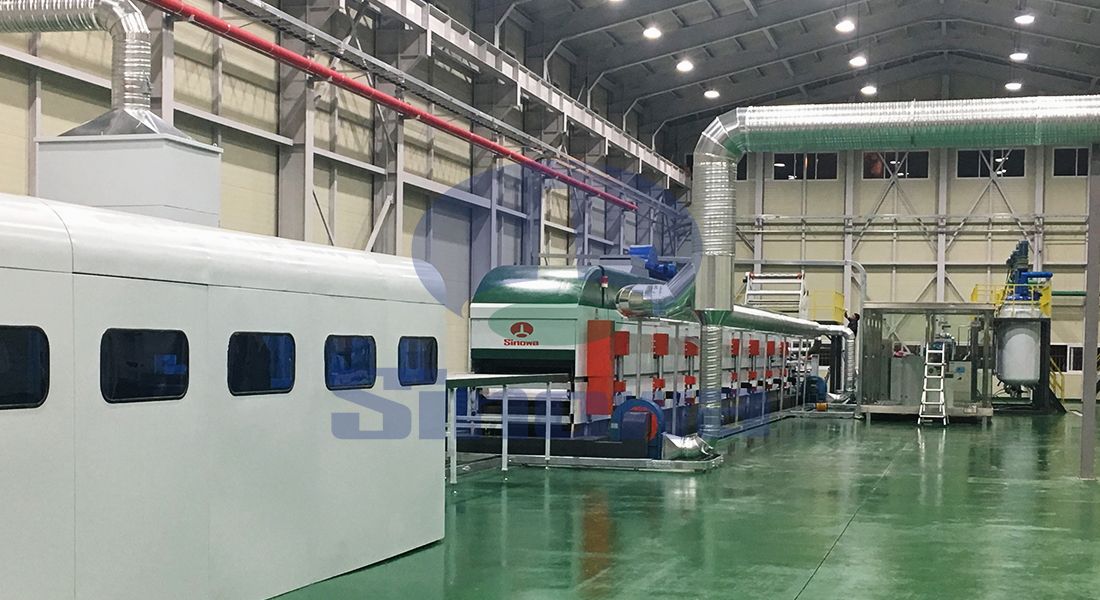
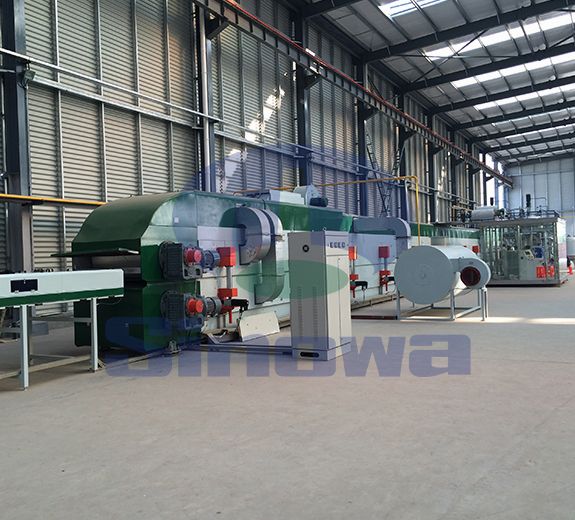
Sinowa is a well-known Fireproof Exterior Wall Insulation Panel Production Machine Supplier From China, Continuous Insulation Panel Production Line of the PU and phenolic aldehyde surface has diversified and multifunctional production characteristics, which may produce products with different specifications such as PU, PF, PIR, etc.
The surface material may be aluminum foil, colored steel, cement base cloth, kraft paper, non-woven fabrics, etc.
The products are widely applied to such occasions as construction, decoration, pipeline ventilation, subway construction, etc.
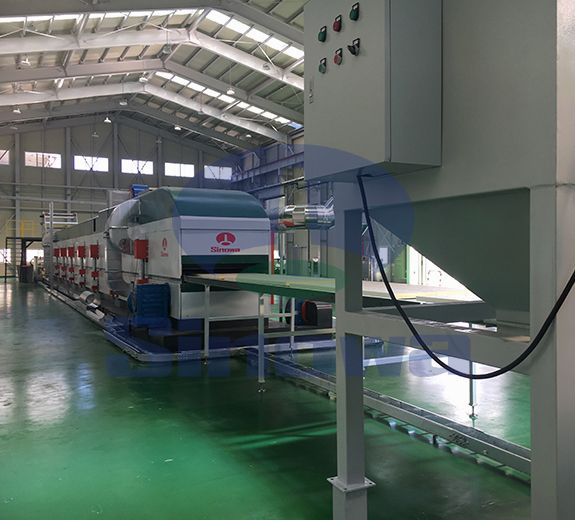
The fireproof exterior wall insulation panel production machine of soft layer insulation board is able to continuously and efficiently produce high-quality PU and Phenolic insulation boards.
We spare no efforts to improve our product quality and technological reliability by employing the most cutting-edge and the most reliable support and processes to make our products highly reliable and endurable. As a result, the fireproof exterior wall insulation panel production machine of our soft layer insulation panels is highlighted by many perfect qualities. It is the core idea in Sinowa's product roadmap to surpass our competitors in terms of design philosophy, manufacture methods and service level, going for excellence and leading position and making constant improvement on our products and services, which is also our core value system to create efficiency and convenience for our customers.
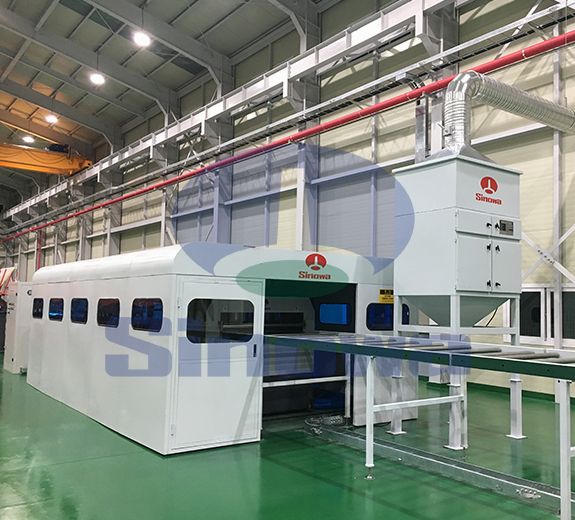
Well-grounded on our solid strength as a renowned large-scale enterprise, Sinowa has a high starting point in developing industrial assembly lines.
Based on the advanced science and technology introduced from within and without the country and supported by a great number of first-grade parts and components from the home and aboard, these assembly lines have a high-level configuration of supporting products in terms of machinery, electrical control, hydraulic pressure, automatic measurement and tracking, and so on.
This is a strong proof of our product’s reliable quality and high efficiency.
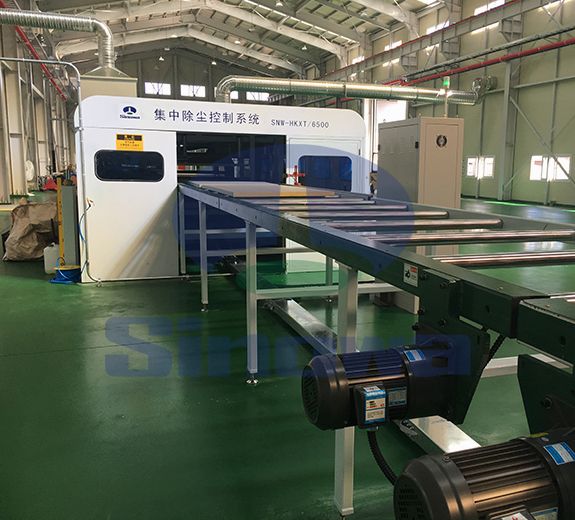
The first-class appearance design and excellent energy saving measures make it unnecessary for customers to additionally construct the heat preservation and isolation room for production around the clock throughout the year, so that the customers may save lots of resources and costs.
Modularized standard design and important parts machined with CNC machine tool make the production line have excellent quality assurance. Dependence on the man-made factors is eliminated. The operation is precision, with the highest operation speed of 30m/min. The fireproof exterior wall insulation panel production machine has the world-class production efficiency.
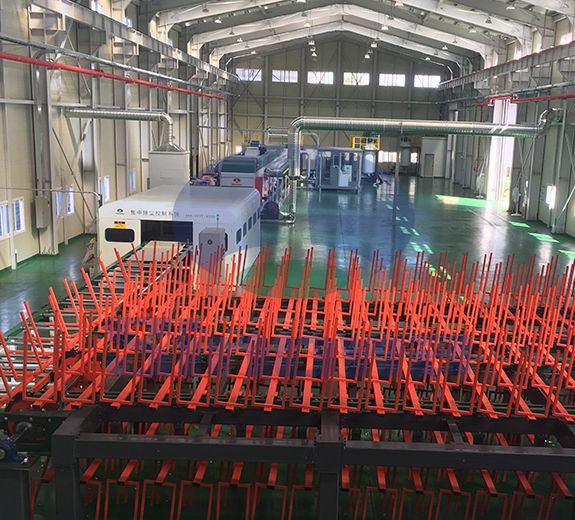
The high performance and reliable multicomponent cyclopentane foaming technology and equipment of Sinowa may be also applied to the foaming process of the phenolic aldehyde board. Therefore, our customers may not only freely adjust the foaming matching according to the raw material, but also save lots of costs. Moreover, they are of significance for environmental protection.
Sinowa's industrial fireproof exterior wall insulation panel production machine of insulation panels is distinguished by its impressive performance of energy conservation. In each high point of energy consumption throughout the entire pu sandwich panel line are implemented corresponding measures to considerably lower the consumption level.
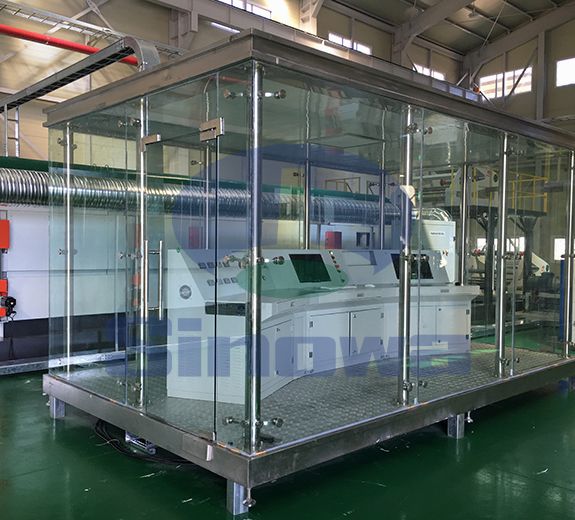
For example, the body of the lamination belt conveyer is covered with insulation panels in very reasonable structures, which doesn’t blemish the overall outlook but greatly increases the insulation performance.
The entire fireproof exterior wall insulation panel production machine is constantly optimized and improved so that the consumption of each power source is significantly reduced. The motor power of our lamination conveying system is only 3.0 kw, about 50% less than those of the same kind.
All in all, the energy consumption of the whole sandwich panel line equals 40% or even less of the equivalent lines in the market.
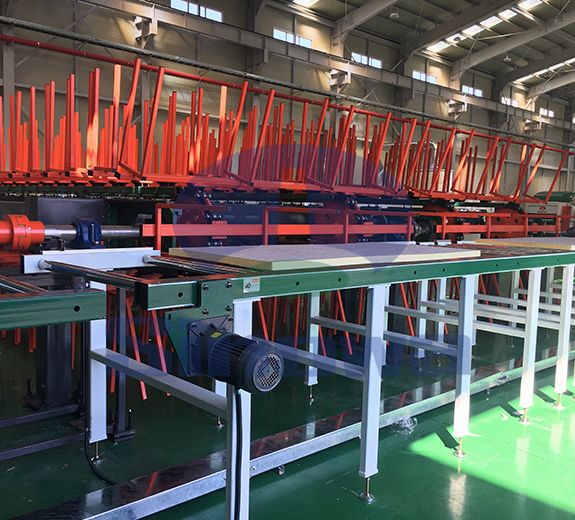
The fireproof exterior wall insulation panel production machine of Sinowa adopts the most advanced concepts in the world to realize the modularized design with all the parts bolted together rather than welded.
In standardized production, the parts can be dismantled and exchanged, so the production cycle is drastically shortened and the maintenance becomes by far easier.
Through finite element analysis, the equipment design is greatly optimized to realize modularization, digitization, and weight-minimalization.
| PRODUCTION TYPE | PU | PIR | PHENOLIC | |||
|---|---|---|---|---|---|---|
| PRODUCTION USE | INSULATION PANEL | DOCORATIVE PANEL | ||||
| SURFACE OF SHEET | ALUMINUM FOIL | NON-WOVEN FABRIC | PAPER | NAKED | ||
| PRODUCT THICKNESS | 10m--- 200mm | |||||
| PRODUCTION SPEED | 3.0m---25m |
|---|---|
| FOAMING METHOD | TWO OR MULTI COMPONENTS FOAMING |
| FOAMING AGENT | PENTANE OR 141B |
| LENGTH OF LINE | 45m—100m CUSTOMER OPTIONAL |
Sinowa is a well-known manufacturer and technical service provider of high-end polyurethane insulation board production lines and various high-performance cold roll forming machine in China. Our main products include polyurethane double-sided color steel sandwich panel production line, polyurethane and phenolic soft facing insulation panel production line and high-efficiency roll forming machines.
Sinowa has invested outstanding efforts in fireproof exterior wall insulation panel production machine, This is why our products are more efficiency, quality, automatic control technology, environmental protection, energy consumption indicators and the appearance and safety protection are comprehensively leading, Some subversive design changes in many major technical points,these major innovations make our products excellent in price/performance and user experience.
Sinowa is committed to the development and manufacturing of high-end and high-efficiency fireproof exterior wall insulation panel production machine. Our sandwich panel production lines are leading the way in efficiency, automatic control, human-computer interaction, environmental protection and energy consumption. Using system integration and bus control technology, it realizes the automatic integrated linkage control of the entire production line, and can achieve remote interactive communication, which has the world-class level and a comprehensive leading high-performance production line in the market.
The demand for safer building enclosure solutions continues to grow as construction projects pursue better thermal performance alongside reliable fire resistance, and fireproof exterior wall insulation panel production machines stand at the core of this evolving manufacturing sector. These integrated systems are engineered to combine raw insulation substrates with fire-retardant composite layers in a continuous workflow, eliminating many inconsistent manual processing steps that once limited product uniformity. Each unit is designed to handle material feeding, surface pretreatment, compound lamination, curing, shaping and trimming within a single connected line, so that newly formed panels maintain consistent thickness, bonding strength and surface finish across long production runs. Operators can adjust running parameters to match different formulation requirements, adapting the output for varied wall structure designs without major reconfiguration of the whole equipment framework. The mechanical structure balances steady conveying speed with precise pressure control during the bonding stage, which is critical to avoid voids, delamination or uneven distribution of fire-resistant components inside the finished board. Careful attention is also paid to material waste reduction, as guided feeding mechanisms cut down excess offcuts and make raw material consumption more predictable for long-term production planning.

Material compatibility represents one of the most important functional features built into fireproof exterior wall insulation panel production machines, since different base insulation materials respond differently to heat, pressure and coating treatments during fabrication. The equipment supports the integration of inorganic fireproof matrices and lightweight thermal insulation cores, arranging these components in a stable layered structure that does not compromise either heat insulation capability or fire blocking performance. Specialized mixing and dispensing modules evenly apply fireproof binders and coating materials, ensuring that protective layers fully cover the substrate surfaces and penetrate into necessary microstructures without saturating and degrading the insulation core. Temperature zones along the production line are independently regulated, so curing progresses gradually rather than abruptly, preventing thermal shock that might crack or warp the fresh composite panels. Operators monitor the flow state of mixed raw materials in real time, making minor adjustments to viscosity and application volume according to ambient workshop conditions. This flexible compatibility removes rigid restrictions on single-formula production, allowing manufacturers to develop multiple panel variants suited for different climate exposure and building facade layouts.
Automation upgrades have reshaped the practical operation of fireproof exterior wall insulation panel production machines, lowering reliance on repetitive manual labor while stabilizing product quality day after day. Sensors placed at key transition points track panel position, thickness and surface condition as materials move through each processing station, feeding data back to the central control system for automatic correction of deviations. When minor misalignment or uneven feeding is detected, the system triggers gentle corrective actions instead of immediately halting the entire line, which preserves production continuity and reduces unnecessary downtime. Human operators mainly focus on formula setup, periodic equipment inspection and abnormal condition handling, rather than carrying out heavy lifting or repeated positioning work. Safety interlock systems are embedded throughout moving sections of the line, restricting access to high-pressure and high-temperature areas while the machine is in active operation. Data records generated during each production shift can be reviewed later to identify recurring patterns, supporting gradual optimization of process sequences and helping teams refine operating routines over time.
The curing section of fireproof exterior wall insulation panel production machines plays an irreplaceable role in shaping the long-term stability of finished exterior wall panels, as incomplete curing will weaken interlayer bonding and reduce the durability of fireproof components. This segment creates a controlled environment where heat and air circulation are distributed evenly across stacked or continuously moving panels, allowing chemical reactions inside composite materials to finish at a predictable pace. Airflow paths are carefully arranged to avoid localized hot spots that cause surface discoloration, internal stress or uneven hardening. The length of the curing tunnel can be matched to the line speed and material formula, giving panels sufficient time to develop stable physical properties before trimming and sorting. Panels leaving the curing area possess enough structural rigidity to withstand subsequent cutting, stacking and transportation without bending or damaging the protective fireproof skin. Proper curing management also helps finished products resist deformation caused by temperature fluctuations after installation on building exteriors, extending the usable service life of the facade system. Many machine designs separate preliminary and deep curing stages to balance output efficiency and final product reliability.
Post-forming processing modules attached to fireproof exterior wall insulation panel production machines handle finishing work that prepares panels for direct use on construction sites, removing the need for secondary processing in separate workshops. After curing, continuous panels pass through precision cutting assemblies that cut the wide continuous sheet into standard dimensions, with cutting tools calibrated to deliver clean, straight edges free from crumbling or fraying of composite layers. Some configurations include grooving and edge chamfering units, creating joint structures that simplify on-site assembly and improve sealing performance between adjacent panels. Dust collection structures run alongside cutting stations to capture fine particulate waste generated during trimming, maintaining cleaner workshop air and preventing debris from adhering to fresh panel surfaces. Finished panels then move to an automatic stacking area, where they are neatly piled up in set quantities to facilitate packaging and loading. The coordination between forming and post-processing sections keeps the whole workflow streamlined, so raw material enters one end of the line and finished, ready-to-use panels exit from the other end with minimal handling in between.
Maintenance requirements for fireproof exterior wall insulation panel production machines are structured around regular inspection schedules that protect long-term operational stability and avoid unexpected breakdowns. High-load moving parts such as conveyor rollers, pressing rollers and transmission components need periodic lubrication and wear checks, as gradual abrasion can slowly reduce dimensional accuracy and create uneven pressure on panels. Mixing chambers and material delivery pipelines require routine cleaning when switching between different material formulas, to stop residual hardened composite materials from blocking passages or contaminating the next batch of products. Electrical sensing elements and control interfaces should be inspected for signal stability, because weak or distorted sensor readings can lead to inaccurate adjustments during production. Many machine designs make frequently serviced parts easy to access, cutting down the time needed for cleaning and component replacement. Following consistent maintenance practices helps preserve the original precision of the equipment for years, and it also reduces the risk of sudden failures that interrupt order fulfillment and create delays for downstream construction supply chains.
Energy efficiency has become a key consideration in the design of modern fireproof exterior wall insulation panel production machines, as manufacturers seek to contain ongoing operating costs while lessening the environmental footprint of panel fabrication. Heating systems in curing zones use targeted heat delivery rather than uniformly heating an entire large space, concentrating thermal energy only where composite materials require it to complete curing. Variable speed drives adjust the power consumption of conveyors and mixing motors according to real-time production load, so energy input drops automatically during low-load periods instead of staying at a fixed high level. Heat recovery structures can capture waste heat released from curing exhaust and redirect it to preheat incoming raw materials, recycling energy that would otherwise dissipate into the surrounding workshop. Insulation wraps around high-temperature machine housings reduce outward heat loss and also improve workplace comfort near operating equipment. Optimized energy use does not come at the expense of production quality; the control system keeps critical process parameters stable even while adjusting overall power draw. This balance makes continuous large-scale production more economically sustainable over extended operating cycles.
Adaptability to workshop layout is another notable characteristic of fireproof exterior wall insulation panel production machines, as manufacturing spaces vary widely in available floor area, ceiling height and logistics arrangement. The full production line can be supplied in modular segments that connect sequentially, so planners can arrange the modules in linear layouts or folded layouts to fit narrow or irregular workshop spaces. Individual modules can also be expanded or upgraded gradually, allowing manufacturers to start with a moderate production capacity and add extra feeding, curing or finishing stations later when market demand grows. Connection interfaces between modules follow unified mechanical and signal standards, so new additions integrate smoothly with the existing control system without major overhauls. Material inlet and finished product outlet positions can be oriented to align with raw material storage zones and loading bays, shortening internal transport routes inside the factory. This modular approach lowers the threshold for new entrants to enter the panel manufacturing business, and it also gives established producers flexibility to reconfigure their production setup as product ranges and order volumes change.
Quality monitoring throughout the operation of fireproof exterior wall insulation panel production machines focuses on physical characteristics that define how panels perform after installation on building exteriors. Beyond basic dimensional checks, the system tracks interlayer adhesion, surface integrity and the uniform distribution of fire-resistant components across the panel body. Random sampling stations can be integrated into the line to pull individual panels for offline testing, supplementing real-time sensor data with deeper physical assessment. Any batch showing consistent deviation from target parameters triggers a review of formulation ratios, line speed, pressure settings or curing conditions to locate the root cause. Stable quality control reduces the rate of rejected panels, which saves raw materials and prevents defective units from reaching construction projects. It also builds consistent performance in the final facade assembly, helping the insulation system maintain its designed function under outdoor exposure. The combination of inline automatic monitoring and periodic sampling creates a layered quality framework that supports reliable output even during nonstop multi-shift production cycles.
Looking ahead, the evolution of fireproof exterior wall insulation panel production machines will continue to tie closely to the shifting needs of modern building construction, as facades demand better combinations of light weight, thermal efficiency, weather resistance and fire safety. Upcoming improvements will focus on smarter process prediction, where the control system learns from historical production data to pre-adjust parameters before environmental or material changes create quality variation. New material delivery systems will support emerging low-carbon raw material formulations, expanding the range of sustainable panel options available for building projects. Human-machine interaction interfaces will become more intuitive, simplifying parameter setup and diagnostic feedback so operators can master complex production workflows more quickly. Line configurations will also keep advancing toward higher integration, merging more auxiliary steps into the continuous production sequence to further cut labor and handling costs. As building design continues to push the boundaries of energy-saving facade systems, these production machines will remain the foundational platform turning innovative insulation and fireproof material formulas into practical, widely usable exterior wall panels for diverse construction applications.
fireproof exterior wall insulation panel production machine, fireproof exterior wall insulation panel production machine manufacturer, fireproof exterior wall insulation panel production machine for sale, fireproof exterior wall insulation panel production machine supplier, China fireproof exterior wall insulation panel production machine, Custom fireproof exterior wall insulation panel production machine
«Fireproof Exterior Wall Insulation Panel Production Machine» Update Date:2026/10/27
URL: https://www.sinowa.cn/en/blog/fireproof-exterior-wall-insulation-panel-production-machine.html
Tags: PU sandwich panel line , PU sandwich panel machine , PU sandwich panel production line , sandwich panel line , sandwich panel machine , sandwich panel production line
