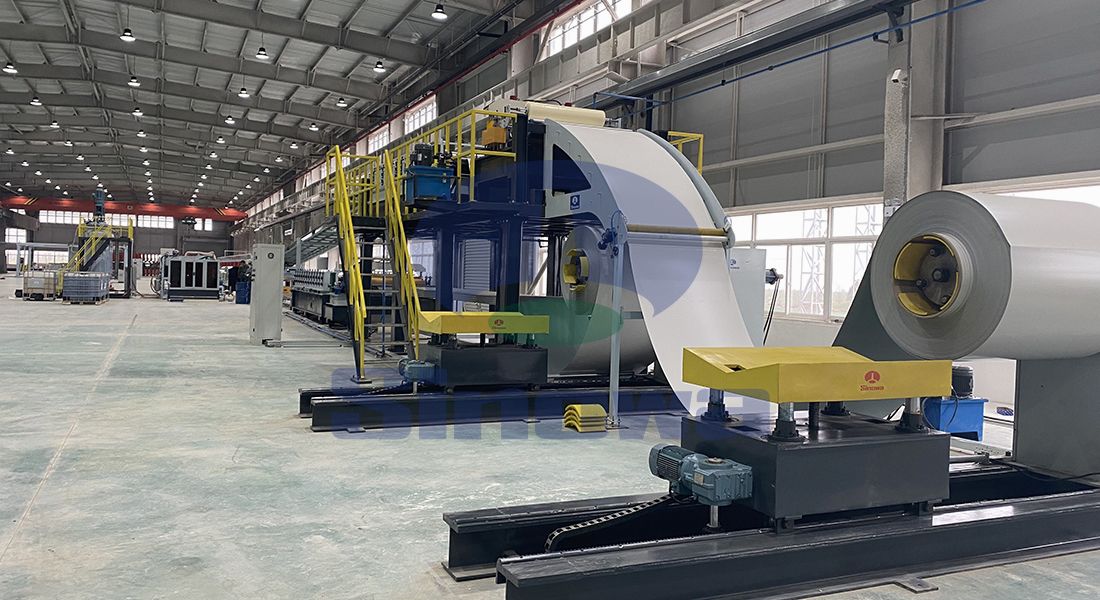
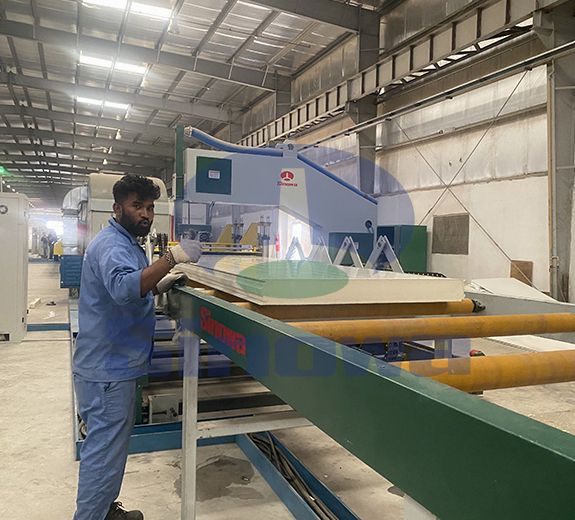
Sinowa is a well-known Fully Automatic PU Sandwich Panel Line Supplier From China, Dedicated to the research and development of high-end & high-efficiency fully automatic pu sandwich panel line, Sinowa is comprehensively taking the leading position in terms of efficiency, automation control level, HMI, environment protection and energy consumption, with subversive designs made in some critical technological fields to procure exceptional cost performance and customer-friendly experience for the entire fully automatic pu sandwich panel line.
The adoption of system integration technology and bus control technology accomplishes the full automatization of integrated and coordinated control of the entire fully automatic pu sandwich panel line with accessible remote interactive communication. Ranking the first-class level in the world, it is currently the continuous pu sandwich panel line in the market taking a comprehensive lead in high performance.
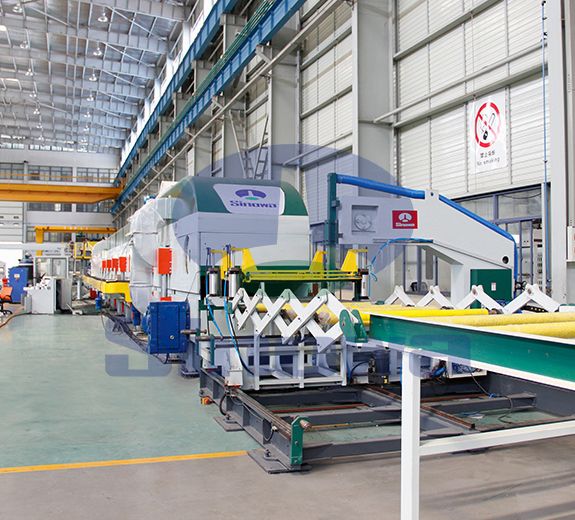
Based on the continuous technological pursuit, the fully automatic pu sandwich panel line developed by Sinowa provides you with high-efficiency industrial value. Based on China's cost advantage and our hard-working technology concept, our sandwich panel production line has a world-leading price-performance advantage. Fully Automatic PU Sandwich Panel Line can meet a variety of production needs of customers.The whole sandwich panel line design concept of modularization enables all our components to be integrated and combined at will.
Our fully automatic pu sandwich panel line can easily automate the production of roof sandwich panel, wall sandwich panel, cold storage sandwich panel and other products by different combination and configuration selection and siple switching. The inner core layer can be polyrethane or rock wool, glass wool, an so on.
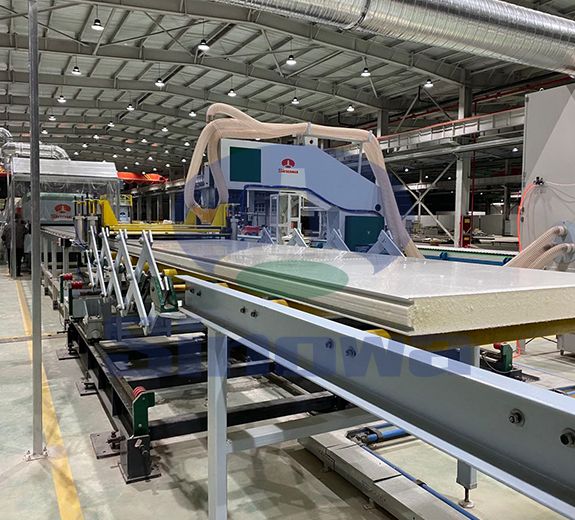
The fully automatic pu sandwich panel line has high adaptability, which may produce various sandwich panel of the PU, PIR and rock wool systems.
We may design various products according to the customer’s requirements, including various configurations, so as to meet their demands with flexible price system.
Highly integrated and linked control system centralizes all control points at the main central center, achieving parameter linkage, fault self-diagnosis controlled by the whole continuous sandwich panel line and shipping distance control.
High-level automatic control system also saves the manpower and reduces the manpower loss for customers.
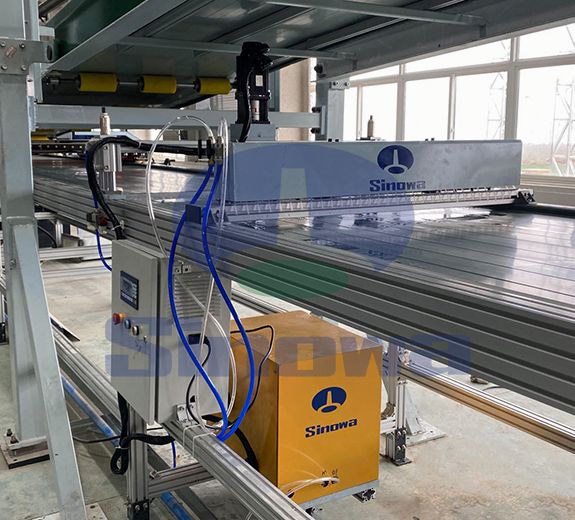
Concentrated system control is fully realized in the practice of concentrated process control so that the control system of all the movements of the parts in the fully automatic pu sandwich panel line is integrated in one process control console with accessible remote communication to elevate the automation and reduce the allocated number of personnel for the assembly line.
The main engine with modularized design achieves the precision operation of the fully automatic pu sandwich panel line, stable and reliable quality, less part and maintenance loss.
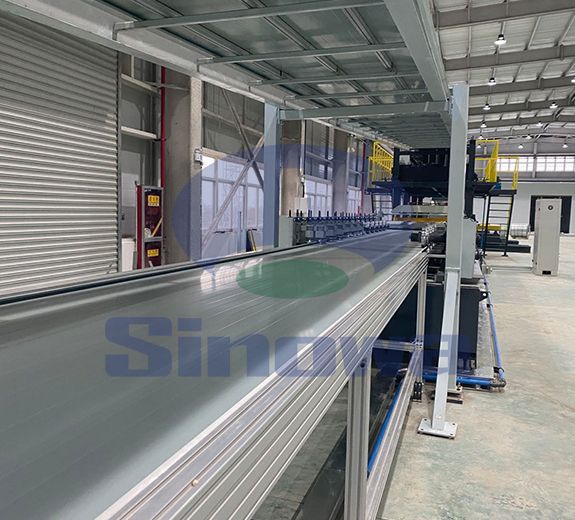
The whole fully automatic pu sandwich panel line is strictly modularized in design to ensure the greatest probability for the parts to be interchangeable, making it the most cost- and energy-saving. No joining made manually, all the key processes of the parts are completed in the machining center. As soon as the parts are inspected and warehoused, they enter into the assembly process. The modularized assembly can not only greatly increase the production efficiency but, most importantly, realize quick delivery as well. It elevates the reliability of product quality to a totally new level and minimizes the influence from human factors.
The whole fully automatic pu sandwich panel line has over 40 innovative inventions, making our products have lots of unique features and the comprehensive performance of our production line leading in the industry.
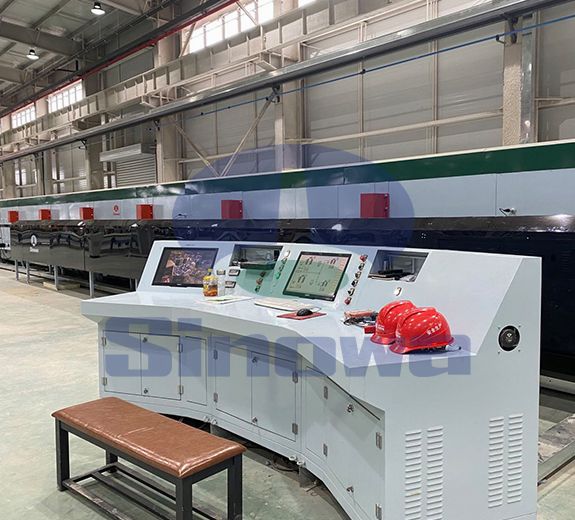
The precision servo hoisting mechanism employed by the main engine without hydraulic system makes the board thickness control flexible and the customer may conveniently change or adjust the board thickness. There will be not such troubles as hydraulic system adjustment, leakage, maintenance, etc.
High-level energy saving and protection design makes the whole fully automatic pu sandwich panel line possible to produce around the clock throughout the year and the customer will save huge budget. In addition, the isolated heat preservation room is constructed for warming the environment. The energy saving and protection design of our high-tech fully automatic pu sandwich panel line may guarantee that the customer’s production line may be freely heated and produce in the main time to save more costs for customers.
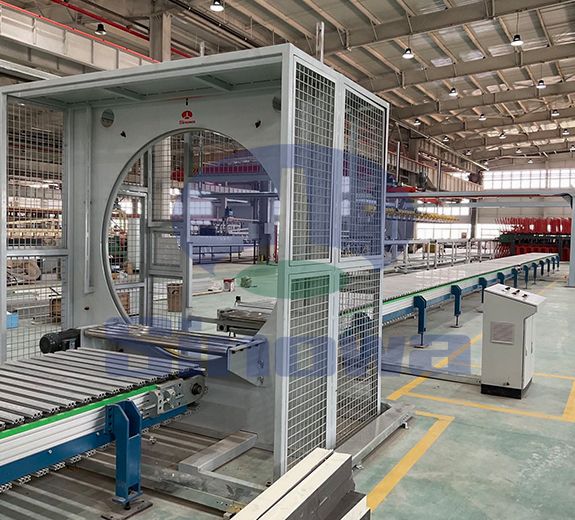
The high-power low-consumption design quickens the reaction of the fully automatic pu sandwich panel line while energy consumption is kept low.
With the brand-new, fully sealed inner insulation design, the energy consumption is controlled at the minimum level to achieve the design objective of less than an hour for the insulation system to be activated from the room temperature above 5℃ to the production process temperature.
The energy consumption is only 40% that of those similar products.
| PRODUCTION TYPE | PU | PIR | PHENOLIC | |||
|---|---|---|---|---|---|---|
| PRODUCTION USE | INSULATION PANEL | DOCORATIVE PANEL | ||||
| SURFACE OF SHEET | ALUMINUM FOIL | NON-WOVEN FABRIC | PAPER | NAKED | ||
| PRODUCT THICKNESS | 10m--- 200mm | |||||
| PRODUCTION SPEED | 3.0m---25m |
|---|---|
| FOAMING METHOD | TWO OR MULTI COMPONENTS FOAMING |
| FOAMING AGENT | PENTANE OR 141B |
| LENGTH OF LINE | 45m—100m CUSTOMER OPTIONAL |
Sinowa is a well-known manufacturer and technical service provider of high-end polyurethane insulation board production lines and various high-performance cold roll forming machine in China. Our main products include polyurethane double-sided color steel sandwich panel production line, polyurethane and phenolic soft facing insulation panel production line and high-efficiency roll forming machines.
Sinowa has invested outstanding efforts in both the insulation board production line and the roll forming line, This is why our products are more efficiency, quality, automatic control technology, environmental protection, energy consumption indicators and the appearance and safety protection are comprehensively leading, Some subversive design changes in many major technical points,these major innovations make our products excellent in price/performance and user experience.
Sinowa is committed to the development and manufacturing of high-end and high-efficiency sandwich panel production lines. Our sandwich panel production lines are leading the way in efficiency, automatic control, human-computer interaction, environmental protection and energy consumption. Using system integration and bus control technology, it realizes the automatic integrated linkage control of the entire production line, and can achieve remote interactive communication, which has the world-class level and a comprehensive leading high-performance production line in the market.
The fully automatic line for PU sandwich panels represents a major advancement in continuous panel manufacturing, streamlining a sequence of processes that once required extensive manual oversight and separate workstations. This integrated system is engineered to handle raw material feeding, surface layer preparation, foaming, pressing, curing, trimming, and final cutting within one connected workflow, reducing interruptions between individual production stages. Every core function is synchronized through centralized control, ensuring consistent timing and uniform material distribution across the width and length of each panel. Operators no longer need to move semi-finished products between different machines, which lowers the risk of surface damage and uneven foam formation that often appear in semi-automatic setups. The design prioritizes steady material flow, where metal facings or other skin materials unwind smoothly and travel at a matched speed with the incoming PU mixture, preventing misalignment that would compromise the finished panel’s structural integrity. Sensors embedded along the line track feed rates and material thickness in real time, making minor adjustments automatically to keep output stable even when slight variations occur in incoming raw materials. This level of coordination helps maintain predictable production rhythm and cuts down on waste generated from misrun or poorly formed panels.

The preparation stage at the start of the automatic line focuses on conditioning the facing materials before they meet the polyurethane foam, a step that shapes the bonding quality between the skin and core. Surface cleaning and texturing modules remove dust, residual oils, and loose particles that could weaken adhesion, creating a clean substrate for the foam to attach firmly. The system controls the tension of rolled facings precisely to avoid wrinkles, stretching, or uneven sagging as the sheets move forward. Different facing types can be run through the same line after simple parameter adjustments, supporting flexible production for panels with varied outer layers. Guides and alignment rollers keep both upper and lower facings centered as they advance toward the mixing zone, maintaining a consistent cavity height that defines the final panel thickness. This preparatory segment works quietly in the background of the full production cycle, yet its reliability directly determines how consistently each finished panel will perform in later applications. Without stable facing handling, even high-quality PU raw materials cannot form a durable composite structure, making this part of the line essential to overall product uniformity.
Polyurethane mixing and dispensing sit at the functional heart of the automatic line, where liquid components combine and are applied evenly into the space between the moving upper and lower facings. Metering units deliver each chemical stream at accurately calibrated ratios, mixing them thoroughly inside a high-efficiency mixing head before the mixture flows onto the lower facing. The dispensing head travels horizontally across the panel width in a controlled pattern, laying down a continuous layer of reactive PU liquid without gaps or excessive accumulation in localized spots. Timing is critical here, as the foam begins to expand rapidly after mixing, and the line speed must match the foam’s natural rise rate to fill the cavity completely. The enclosed environment around the dispensing area limits uncontrolled air flow that could disturb the foaming reaction or introduce bubbles inside the core. Operators adjust mixing parameters through the main control interface to accommodate different foam densities, balancing insulation performance and structural weight for the intended use of the panels. Stable dispensing prevents hollow sections, dense spots, or incomplete filling, all of which would reduce the thermal and mechanical properties of the sandwich panel.
After dispensing, the combined materials enter the double-belt pressing section, which shapes the composite into a flat panel while the polyurethane foam expands and cures. The upper and lower moving belts apply uniform pressure across the entire surface, maintaining the set cavity height and restraining overexpansion of the foam. Belt speed matches the upstream feed speed perfectly, so there is no pulling or bunching of materials as they pass through the press zone. The structure of the press supports long continuous runs, allowing panels to form in endless lengths before cutting takes place. Temperature control within the pressing chamber supports steady curing conditions, helping the PU foam develop its closed-cell structure evenly throughout the core. Pressure distribution is balanced across the full width, so edges do not become thinner or thicker than the central area of the panel. This continuous pressing method eliminates the batch-to-batch inconsistency common with discontinuous molding processes, delivering panels with flat surfaces and consistent core thickness along every meter of production. Proper pressing also locks the bond between foam core and facings, resisting delamination under normal handling and service conditions.
Curing continues as the newly formed panel exits the press and moves along the extended conveyor path built into the automatic line. This section provides sufficient time for the polyurethane chemical reaction to finish, allowing the foam to gain its final hardness, dimensional stability, and insulation characteristics before cutting and handling. The conveyor maintains a steady travel speed so that every segment of the panel spends the same amount of time in the curing zone. Air circulation around the curing tunnel keeps conditions homogeneous, avoiding hot or cold pockets that would cause uneven shrinkage or warping after the panel is cut. Panels remain supported along their entire length during curing to prevent bending or sagging while the foam is still gaining strength. Rushing this stage can lead to post-production deformation, where panels twist or change dimension after stacking, so the length of the curing path is matched to the line’s maximum operating speed. Once the material reaches the end of this zone, the composite is dimensionally stable enough to withstand trimming, cutting, stacking, and transport without permanent distortion.
Trimming and edge profiling modules follow the curing tunnel, removing excess material from the sides of the continuous panel and forming interlocking profiles along the edges. Rotary cutting tools run parallel to the panel travel direction, shaving off uneven edge portions left from the foaming and pressing process to achieve precise panel width. Profiling cutters shape the tongue and groove structure that allows separate panels to fit tightly together during installation, reducing gaps that would weaken sealing and thermal performance. All trimming tools are synchronized with the line speed, so cut depth and profile shape stay consistent without manual repositioning during a production run. Dust and foam scraps generated during trimming are collected by an integrated extraction system, keeping the working area clean and preventing debris from sticking to panel surfaces or interfering with downstream sensors. Edge quality is closely controlled because poorly formed joints can create weak points when panels are assembled. The automatic trimming station removes the need for secondary edge processing offline, saving handling steps and reducing the chance of scratching the finished facing surfaces.
The cross-cutting station divides the endless continuous panel into individual finished lengths according to preset size requirements. The cutting system tracks the advancing panel position using high-precision measuring devices, triggering the cut at the exact target length without stopping the main production line. Flying cut technology allows the cutting blade to move alongside the moving panel during the cut stroke, eliminating the pause in material flow that would slow overall throughput. Cutting force and blade speed are tuned to deliver clean, straight cuts without chipping the foam core or tearing the outer facings. After each cut, the separated panel segment continues forward while the cutting head returns to its starting position to wait for the next length signal. Length settings can be updated quickly through the control system, letting the line switch between different panel sizes within a single production shift. Accurate cross-cutting reduces leftover offcuts and ensures each finished unit meets dimensional expectations, simplifying packaging, transport, and on-site installation planning for end users.
Once cut, finished panels move to the final handling section, which includes automatic sorting, surface inspection, stacking, and packaging preparation. Non-contact inspection points scan the panel surfaces for visible defects such as scratches, indentations, uneven edges, or discoloration from abnormal foaming. Panels that fail inspection can be diverted automatically without disrupting the flow of acceptable units. Stacking mechanisms arrange panels neatly in horizontal piles, with protective separators placed between layers when needed to guard against surface contact damage. The stacking system counts finished panels and builds uniform stacks of a predefined quantity, making later wrapping and loading straightforward. This stage removes heavy lifting and repetitive sorting work from staff duties, lowering physical workload and the risk of accidental panel damage during handling. The sequence from inspection to stacking operates in harmony with the upstream processes, so the output rate matches the capacity of the foaming and forming sections. Careful handling at this final stage preserves the cosmetic and functional quality achieved in earlier production steps.
The central control system acts as the nerve center of the fully automatic PU sandwich panel line, collecting data from sensors across every station and giving operators a single interface to manage production. All key parameters including line speed, chemical ratios, pressing pressure, temperature settings, cutting lengths, and inspection thresholds are accessible and adjustable from this control platform. Historical run data can be stored for review, helping operators trace the conditions under which a batch of panels was produced and identify trends if quality issues emerge. Safety interlocks are built into the control logic, stopping or slowing the line automatically if sensors detect abnormal conditions such as blocked material paths, pressure deviations, or unexpected equipment faults. Access permissions limit parameter changes to trained personnel, preventing unintended adjustments that could disrupt product quality. The interface is designed for clear operation, showing real-time live status of each segment of the line, current production count, and active alerts. This centralized control architecture reduces reliance on operator experience alone, making consistent production reproducible across different shifts and operating cycles.
The adoption of a fully automatic line for PU sandwich panels brings lasting operational benefits that extend beyond simple gains in output speed. By minimizing human intervention in material handling, mixing, forming, and cutting, the system shrinks variability in finished panel properties and lowers the volume of raw material wasted on defective units. The continuous workflow occupies a compact footprint compared to a series of standalone machines linked manually, optimizing the use of floor space within a production facility. Maintenance routines are structured around the modular nature of the line, so individual stations can be serviced without taking the entire system out of operation for extended periods. The flexibility built into the control and material feeding systems allows manufacturers to respond to shifting demand for panels of different thicknesses, facing materials, and edge profiles. As demand for efficient composite insulation panels continues to grow, this type of automatic production platform provides a reliable foundation for stable, high-volume manufacturing. It balances steady throughput with consistent product quality, supporting the reliable supply of PU sandwich panels for a wide range of building and enclosure applications.
fully automatic pu sandwich panel line, fully automatic pu sandwich panel line manufacturer, fully automatic pu sandwich panel line for sale, fully automatic pu sandwich panel line supplier, China fully automatic pu sandwich panel line, Custom fully automatic pu sandwich panel line
«Fully Automatic Line For PU Sandwich Panels» Update Date:2026/10/26
URL: https://www.sinowa.cn/en/blog/fully-automatic-line-for-pu-sandwich-panels.html
Tags: PU sandwich panel line , PU sandwich panel machine , PU sandwich panel production line , sandwich panel line , sandwich panel machine , sandwich panel production line
