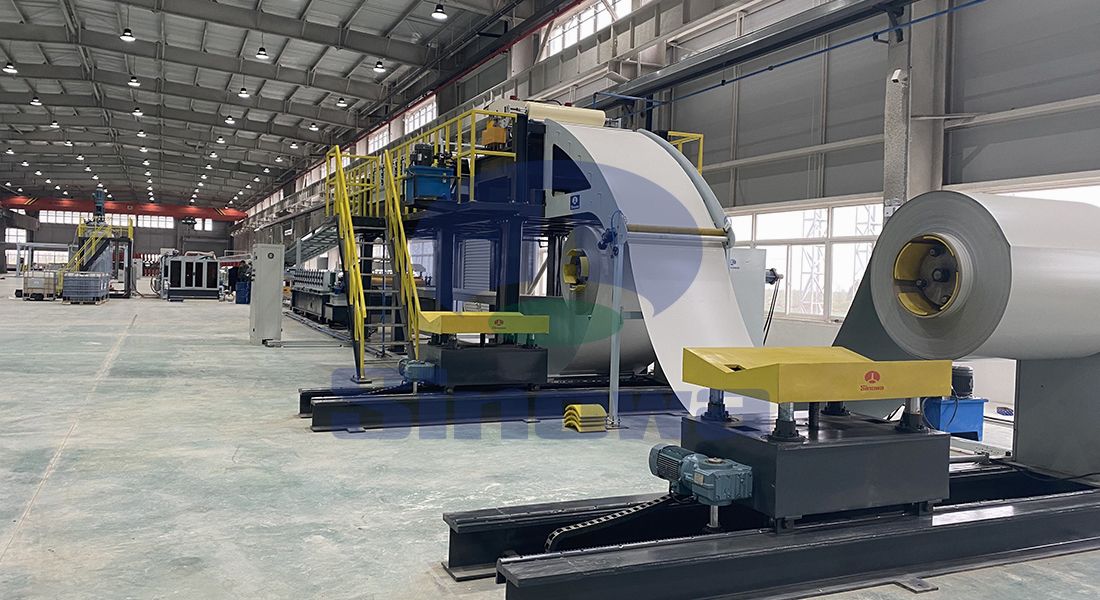
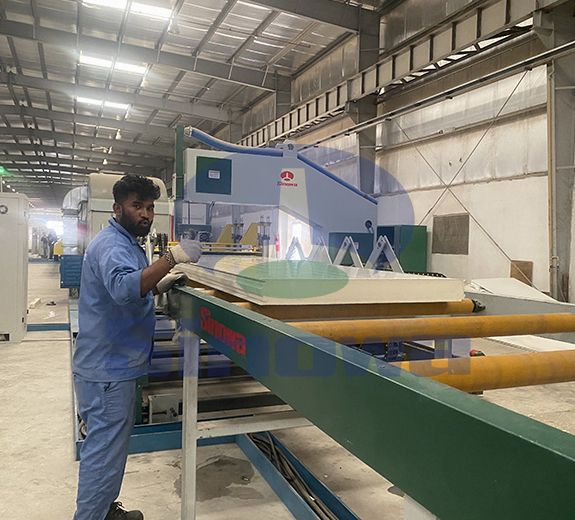
Sinowa is a well-known Polyurethane Sandwich Panel Production Line Supplier From China, Dedicated to the research and development of high-end & high-efficiency polyurethane sandwich panel production line, Sinowa is comprehensively taking the leading position in terms of efficiency, automation control level, HMI, environment protection and energy consumption, with subversive designs made in some critical technological fields to procure exceptional cost performance and customer-friendly experience for the entire polyurethane sandwich panel production line.
The adoption of system integration technology and bus control technology accomplishes the full automatization of integrated and coordinated control of the entire polyurethane sandwich panel production line with accessible remote interactive communication. Ranking the first-class level in the world, it is currently the continuous pu sandwich panel line in the market taking a comprehensive lead in high performance.
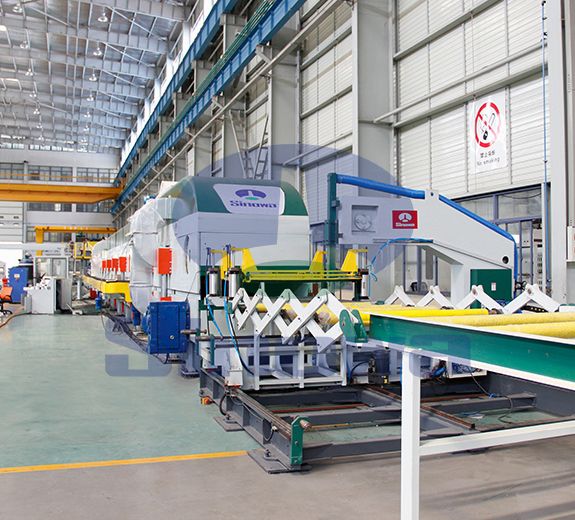
Based on the continuous technological pursuit, the polyurethane sandwich panel production line developed by Sinowa provides you with high-efficiency industrial value. Based on China's cost advantage and our hard-working technology concept, our sandwich panel production line has a world-leading price-performance advantage. Polyurethane Sandwich Panel Production Line can meet a variety of production needs of customers.The whole sandwich panel line design concept of modularization enables all our components to be integrated and combined at will.
Our polyurethane sandwich panel production line can easily automate the production of roof sandwich panel, wall sandwich panel, cold storage sandwich panel and other products by different combination and configuration selection and siple switching. The inner core layer can be polyrethane or rock wool, glass wool, an so on.
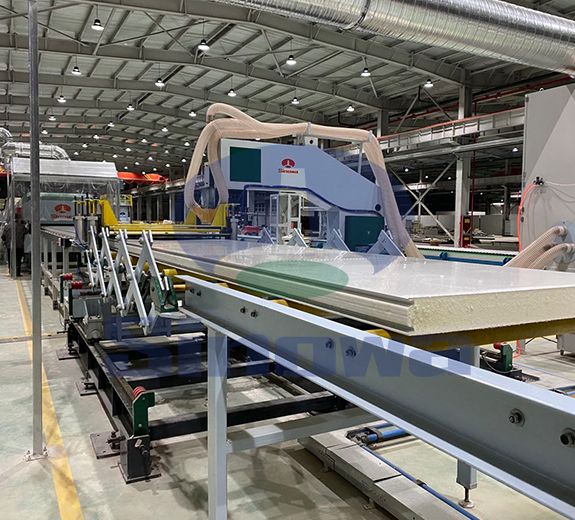
The polyurethane sandwich panel production line has high adaptability, which may produce various sandwich panel of the PU, PIR and rock wool systems.
We may design various products according to the customer’s requirements, including various configurations, so as to meet their demands with flexible price system.
Highly integrated and linked control system centralizes all control points at the main central center, achieving parameter linkage, fault self-diagnosis controlled by the whole continuous sandwich panel line and shipping distance control.
High-level automatic control system also saves the manpower and reduces the manpower loss for customers.
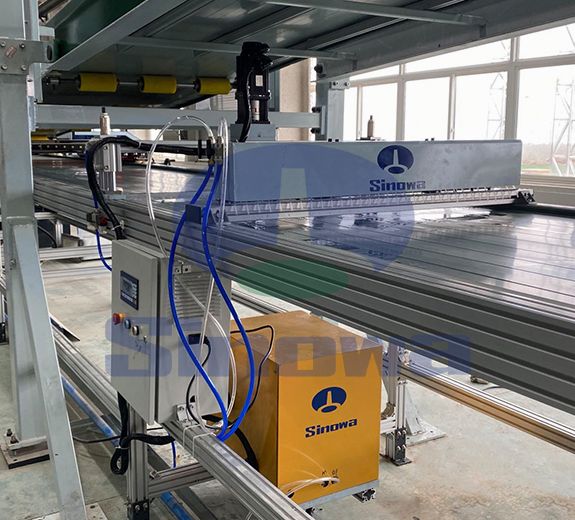
Concentrated system control is fully realized in the practice of concentrated process control so that the control system of all the movements of the parts in the polyurethane sandwich panel production line is integrated in one process control console with accessible remote communication to elevate the automation and reduce the allocated number of personnel for the assembly line.
The main engine with modularized design achieves the precision operation of the polyurethane sandwich panel production line, stable and reliable quality, less part and maintenance loss.
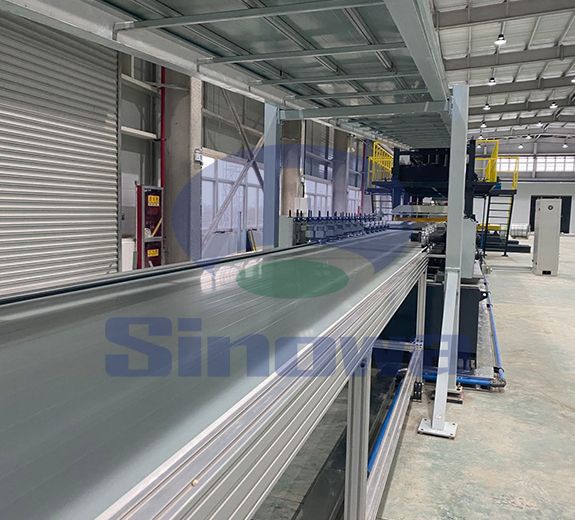
The whole polyurethane sandwich panel production line is strictly modularized in design to ensure the greatest probability for the parts to be interchangeable, making it the most cost- and energy-saving. No joining made manually, all the key processes of the parts are completed in the machining center. As soon as the parts are inspected and warehoused, they enter into the assembly process. The modularized assembly can not only greatly increase the production efficiency but, most importantly, realize quick delivery as well. It elevates the reliability of product quality to a totally new level and minimizes the influence from human factors.
The whole polyurethane sandwich panel production line has over 40 innovative inventions, making our products have lots of unique features and the comprehensive performance of our production line leading in the industry.
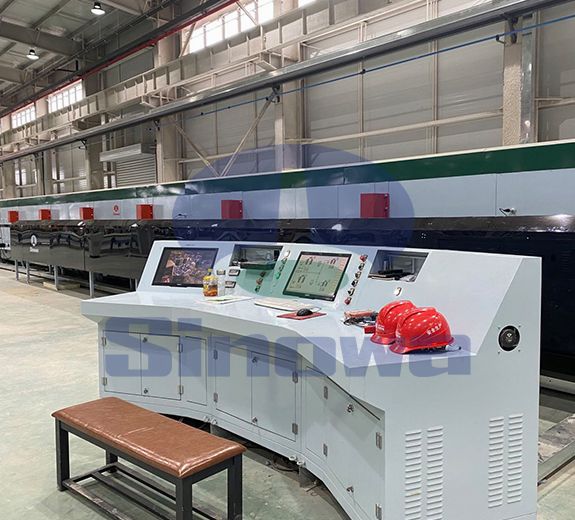
The precision servo hoisting mechanism employed by the main engine without hydraulic system makes the board thickness control flexible and the customer may conveniently change or adjust the board thickness. There will be not such troubles as hydraulic system adjustment, leakage, maintenance, etc.
High-level energy saving and protection design makes the whole polyurethane sandwich panel production line possible to produce around the clock throughout the year and the customer will save huge budget. In addition, the isolated heat preservation room is constructed for warming the environment. The energy saving and protection design of our high-tech polyurethane sandwich panel production line may guarantee that the customer’s production line may be freely heated and produce in the main time to save more costs for customers.
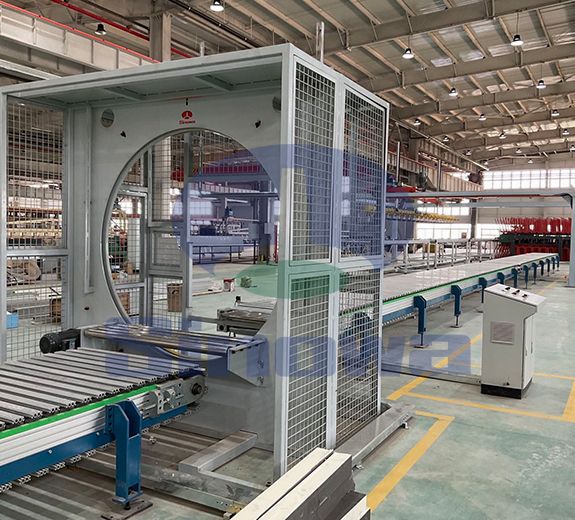
The high-power low-consumption design quickens the reaction of the polyurethane sandwich panel production line while energy consumption is kept low.
With the brand-new, fully sealed inner insulation design, the energy consumption is controlled at the minimum level to achieve the design objective of less than an hour for the insulation system to be activated from the room temperature above 5℃ to the production process temperature.
The energy consumption is only 40% that of those similar products.
| PRODUCTION TYPE | PU | PIR | PHENOLIC | |||
|---|---|---|---|---|---|---|
| PRODUCTION USE | INSULATION PANEL | DOCORATIVE PANEL | ||||
| SURFACE OF SHEET | ALUMINUM FOIL | NON-WOVEN FABRIC | PAPER | NAKED | ||
| PRODUCT THICKNESS | 10m--- 200mm | |||||
| PRODUCTION SPEED | 3.0m---25m |
|---|---|
| FOAMING METHOD | TWO OR MULTI COMPONENTS FOAMING |
| FOAMING AGENT | PENTANE OR 141B |
| LENGTH OF LINE | 45m—100m CUSTOMER OPTIONAL |
Sinowa is a well-known manufacturer and technical service provider of high-end polyurethane insulation board production lines and various high-performance cold roll forming machine in China. Our main products include polyurethane double-sided color steel sandwich panel production line, polyurethane and phenolic soft facing insulation panel production line and high-efficiency roll forming machines.
Sinowa has invested outstanding efforts in both the insulation board production line and the roll forming line, This is why our products are more efficiency, quality, automatic control technology, environmental protection, energy consumption indicators and the appearance and safety protection are comprehensively leading, Some subversive design changes in many major technical points,these major innovations make our products excellent in price/performance and user experience.
Sinowa is committed to the development and manufacturing of high-end and high-efficiency sandwich panel production lines. Our sandwich panel production lines are leading the way in efficiency, automatic control, human-computer interaction, environmental protection and energy consumption. Using system integration and bus control technology, it realizes the automatic integrated linkage control of the entire production line, and can achieve remote interactive communication, which has the world-class level and a comprehensive leading high-performance production line in the market.
In the modern construction industry, the demand for efficient, durable, and energy-saving roofing materials has been continuously rising, driven by the global emphasis on green buildings and sustainable development. Among various roofing solutions, polyurethane sandwich panels have emerged as a preferred choice for many construction projects due to their excellent thermal insulation, light weight, high strength, and good waterproof performance. The production of these high-quality panels relies heavily on advanced polyurethane sandwich panel production lines specifically designed for roof applications. These production lines integrate multiple processes, from raw material preparation to final product packaging, ensuring the consistency, stability, and reliability of the panels while meeting the diverse requirements of different roofing projects.

The polyurethane sandwich panel for roof is a composite material composed of two outer facing materials and a middle polyurethane foam core. The outer facings, usually made of color steel plates, aluminum plates, or other metal sheets, provide structural strength and weather resistance, while the polyurethane foam core offers superior thermal insulation and sound insulation properties. The production line is designed to bond these three layers tightly through a series of precise processes, forming a single integrated panel that can withstand harsh environmental conditions, including extreme temperatures, heavy rain, strong winds, and ultraviolet radiation. Unlike traditional roofing materials, polyurethane sandwich panels produced by professional lines have the advantages of quick installation, long service life, and low maintenance costs, making them widely used in industrial plants, warehouses, commercial buildings, residential buildings, and other roofing projects.
The operation of a polyurethane sandwich panel production line for roof involves a series of interconnected processes, each of which plays a crucial role in determining the final quality of the panels. The entire production process can be divided into several key stages: raw material preparation, facing material uncoiling and leveling, polyurethane foam mixing and foaming, composite bonding, cutting, and packaging. Each stage requires strict control of parameters to ensure that the panels meet the required standards for roof applications. The integration of these processes into an automated production line not only improves production efficiency but also reduces human errors, ensuring that each panel has consistent performance and dimensions.
Raw material preparation is the first and foundational stage of the production process. The main raw materials required include the outer facing materials, polyurethane raw materials (polyol and isocyanate), foaming agents, catalysts, and other additives. The outer facing materials, such as color steel plates, need to be inspected for surface quality, thickness, and flatness before entering the production line to avoid defects that may affect the final panel performance. The polyurethane raw materials must be stored in a controlled environment to maintain their stability, as temperature and humidity changes can affect the foaming reaction. Foaming agents are used to control the density and cell structure of the polyurethane core, while catalysts accelerate the foaming process to ensure uniform foam formation. Additives such as flame retardants and antioxidants may also be added to enhance the fire resistance and durability of the panels, especially for roof applications where fire safety is a critical concern.
After raw material preparation, the outer facing materials are fed into the production line through uncoiling equipment. The uncoiling process involves unwinding the rolled facing materials and feeding them into a leveling machine to eliminate any wrinkles or deformations caused during storage and transportation. Leveling is essential to ensure that the facing materials are flat and smooth, which is crucial for the subsequent bonding process. The leveling machine uses a series of rollers to apply uniform pressure to the facing materials, correcting any unevenness and ensuring that the surface is suitable for bonding with the polyurethane foam core. In some advanced production lines, the uncoiling and leveling processes are automated, with sensors monitoring the flatness of the facing materials and adjusting the rollers accordingly to maintain consistent quality.
The next stage is the mixing and foaming of the polyurethane raw materials. This is a critical process that directly affects the quality of the foam core, including its density, thermal conductivity, and mechanical strength. The polyurethane raw materials, polyol and isocyanate, are mixed in a precise ratio using a high-pressure mixing head. The mixing head ensures that the two components are thoroughly mixed to initiate the foaming reaction. Foaming agents are added to the mixture to create a cellular structure, which gives the polyurethane core its lightweight and thermal insulation properties. The foaming process must be controlled carefully, as factors such as temperature, mixing speed, and the ratio of raw materials can all affect the foam quality. Too much foaming agent may lead to a foam core with large cells and low strength, while too little may result in a dense core with poor thermal insulation performance. Catalysts are used to control the speed of the foaming reaction, ensuring that the foam expands uniformly and bonds tightly with the outer facing materials.
Once the polyurethane foam mixture is prepared, it is sprayed or poured between the two leveled outer facing materials, which are moving continuously through the production line. The composite bonding process involves pressing the two facing materials and the foam core together to ensure tight adhesion. This is typically done using a series of pressure rollers that apply uniform pressure to the composite structure as it moves forward. The pressure and speed of the rollers are carefully controlled to ensure that the foam core is evenly distributed between the facing materials and that there are no gaps or bubbles in the final panel. The bonding process also requires precise control of the temperature, as the polyurethane foam cures at a specific temperature range. If the temperature is too low, the foam may not cure properly, leading to poor adhesion and reduced panel strength. If the temperature is too high, the foam may cure too quickly, resulting in a brittle core with uneven cell structure.
After the composite bonding process, the continuous panel is fed into a cutting machine to be cut into the required lengths and widths. The cutting machine uses high-precision blades or saws to ensure clean, straight cuts without damaging the panel structure. The cutting parameters, such as cutting speed and blade pressure, are adjusted according to the thickness and material of the panels to avoid burrs or uneven edges. In some production lines, the cutting process is automated, with computer-controlled systems adjusting the cutting dimensions based on the project requirements. This ensures that the panels are cut to the exact specifications needed for the roof installation, reducing waste and improving efficiency.
The final stage of the production process is packaging. The cut panels are inspected for quality to ensure that they meet the required standards for thickness, flatness, bond strength, and foam density. Any panels with defects, such as cracks, bubbles, or uneven surfaces, are removed from the production line. The qualified panels are then packaged using protective materials, such as plastic film or foam, to prevent damage during transportation and storage. The packaging process may also include stacking the panels in a neat and stable manner, making it easier to load and unload them at the construction site. Some advanced production lines also integrate automatic packaging systems, which further improve efficiency and reduce labor costs.
The performance of a polyurethane sandwich panel production line for roof is determined by several key factors, including automation level, process control precision, and equipment reliability. Modern production lines are increasingly adopting automated systems, which reduce the need for manual intervention and improve production efficiency. Automated systems can monitor and adjust parameters such as temperature, pressure, and mixing ratio in real time, ensuring consistent product quality. For example, sensors installed in the mixing head can detect the ratio of polyol and isocyanate, adjusting the flow rate to maintain the correct proportion. Similarly, sensors in the composite bonding section can monitor the pressure and temperature, making adjustments to ensure optimal bonding.
Another important factor is the flexibility of the production line. Different roofing projects have different requirements for panel dimensions, thickness, and performance. A high-quality production line should be able to adapt to these changes quickly, allowing for the production of panels with different specifications without significant downtime. For example, the cutting machine should be able to adjust the cutting dimensions easily, and the foaming system should be able to change the foam density to meet different thermal insulation requirements. This flexibility is particularly important in the construction industry, where project requirements can vary greatly from one project to another.
The technological advancement of polyurethane sandwich panel production lines has also been driven by the growing demand for energy-saving and environmentally friendly building materials. Polyurethane foam is a highly energy-efficient insulation material, with a low thermal conductivity that helps reduce the energy consumption of buildings. The production line itself is also being optimized to reduce energy consumption and environmental impact. For example, some production lines use energy-saving motors and heat recovery systems to reduce electricity and fuel consumption. Additionally, the use of environmentally friendly foaming agents, such as water-based foaming agents, reduces the emission of harmful substances, making the production process more sustainable.
In terms of application, polyurethane sandwich panels produced by these production lines are widely used in various roof projects. In industrial plants and warehouses, where large-span roofs are common, the lightweight and high-strength properties of polyurethane sandwich panels make them an ideal choice, as they can reduce the load on the building structure while providing excellent thermal insulation. In commercial buildings, such as shopping malls and office buildings, the panels not only provide thermal insulation but also have a good appearance, which can enhance the overall aesthetic of the building. In residential buildings, polyurethane sandwich panels are used for both flat and sloped roofs, offering homeowners a durable and energy-efficient roofing solution that reduces heating and cooling costs.
The durability of polyurethane sandwich panels produced by professional production lines is another key advantage. The panels are resistant to corrosion, moisture, and ultraviolet radiation, ensuring a long service life even in harsh environmental conditions. The bond between the outer facing materials and the polyurethane core is strong, preventing delamination and ensuring the structural integrity of the panel. Additionally, the panels are easy to maintain, requiring only occasional cleaning to remove dirt and debris. This durability makes polyurethane sandwich panels a cost-effective choice for roof applications, as they reduce the need for frequent repairs and replacements.
As the construction industry continues to develop, the demand for high-quality polyurethane sandwich panels for roof applications is expected to grow. This will drive further advancements in production line technology, with a focus on improving automation, flexibility, and sustainability. Future production lines may integrate more advanced technologies, such as artificial intelligence and Internet of Things, to enhance process control and monitoring. For example, AI systems could analyze production data in real time to identify potential defects and adjust parameters automatically, improving product quality and reducing waste. IoT devices could also be used to monitor the performance of the production line remotely, allowing for timely maintenance and reducing downtime.
In conclusion, the polyurethane sandwich panel production line for roof is a critical piece of equipment in the modern construction industry, enabling the production of high-quality, energy-efficient, and durable roofing materials. The production line integrates multiple precise processes, from raw material preparation to packaging, ensuring consistent product quality and high production efficiency. With the growing emphasis on green buildings and sustainable development, the importance of these production lines will continue to increase. By adopting advanced technologies and optimizing the production process, manufacturers can produce polyurethane sandwich panels that meet the diverse needs of different roofing projects, contributing to the development of a more sustainable and efficient construction industry. The continuous improvement of production line technology will not only enhance the performance of polyurethane sandwich panels but also reduce their environmental impact, making them an even more attractive choice for roof applications in the future.
«Polyurethane Sandwich Panel Production Line For Roof» Update Date:2026/5/7
URL: https://www.sinowa.cn/en/blog/polyurethane-sandwich-panel-production-line-for-roof.html
Tags: Polyurethane Sandwich Panel Production Line ,
