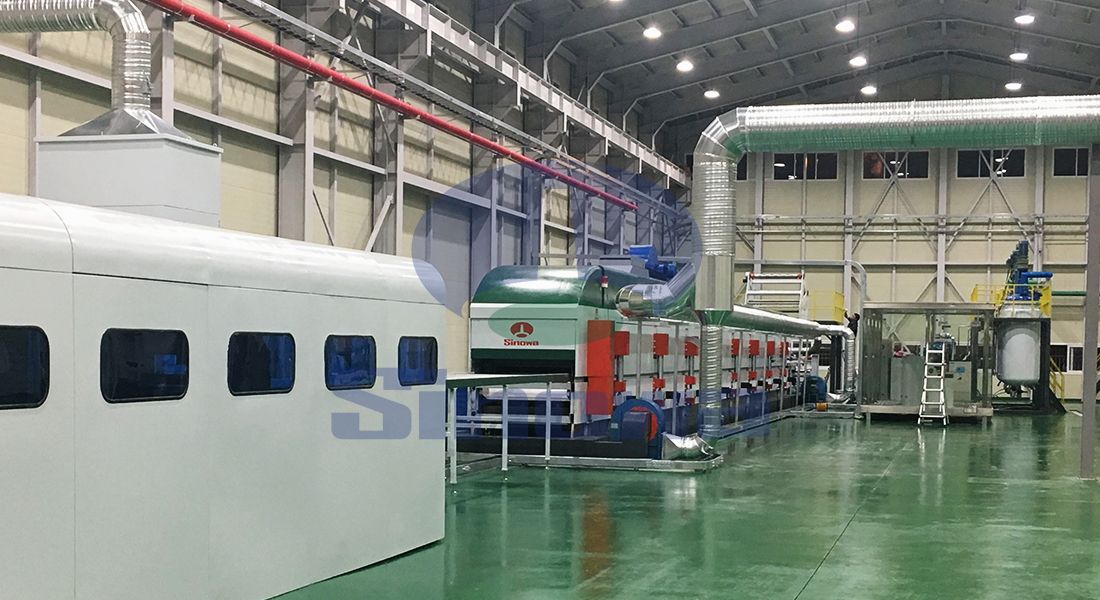
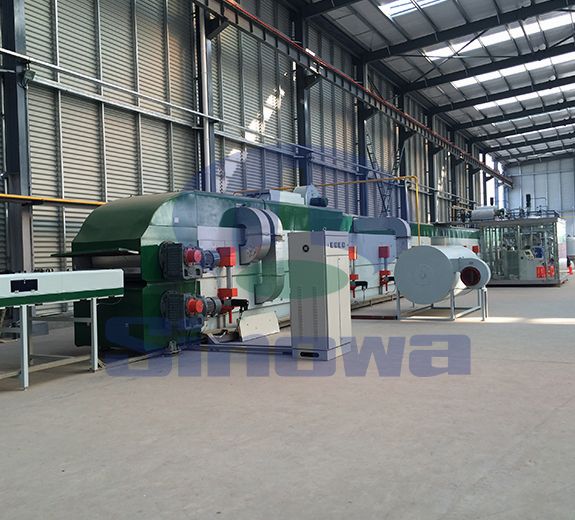
Sinowa is a well-known Thermal Insulation Sandwich Panel Line Supplier From China, Continuous Insulation Panel Production Line of the PU and phenolic aldehyde surface has diversified and multifunctional production characteristics, which may produce products with different specifications such as PU, PF, PIR, etc.
The surface material may be aluminum foil, colored steel, cement base cloth, kraft paper, non-woven fabrics, etc.
The products are widely applied to such occasions as construction, decoration, pipeline ventilation, subway construction, etc.
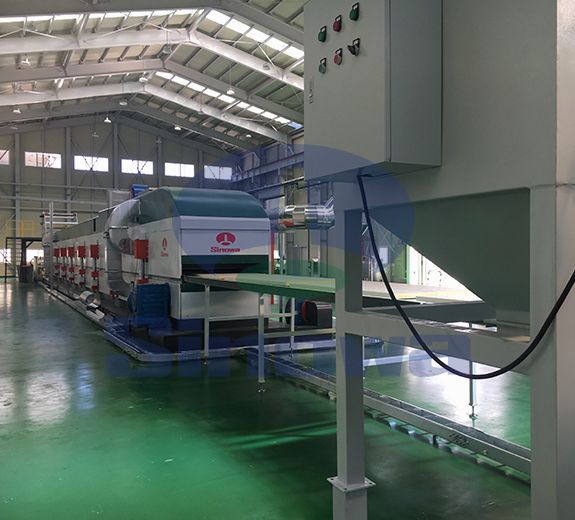
The thermal insulation sandwich panel line of soft layer insulation board is able to continuously and efficiently produce high-quality PU and Phenolic insulation boards.
We spare no efforts to improve our product quality and technological reliability by employing the most cutting-edge and the most reliable support and processes to make our products highly reliable and endurable. As a result, the thermal insulation sandwich panel line of our soft layer insulation panels is highlighted by many perfect qualities. It is the core idea in Sinowa's product roadmap to surpass our competitors in terms of design philosophy, manufacture methods and service level, going for excellence and leading position and making constant improvement on our products and services, which is also our core value system to create efficiency and convenience for our customers.
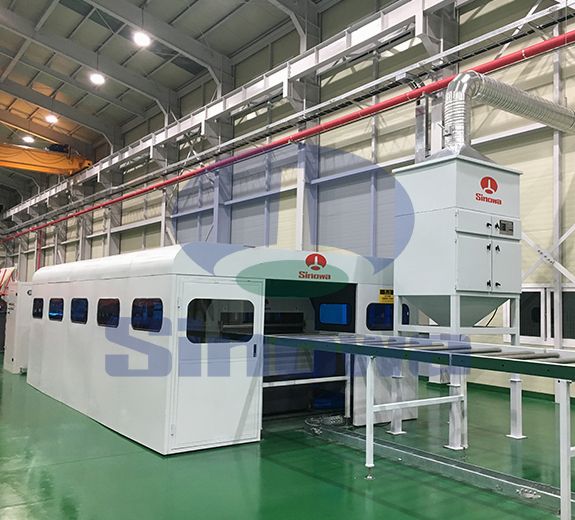
Well-grounded on our solid strength as a renowned large-scale enterprise, Sinowa has a high starting point in developing industrial assembly lines.
Based on the advanced science and technology introduced from within and without the country and supported by a great number of first-grade parts and components from the home and aboard, these assembly lines have a high-level configuration of supporting products in terms of machinery, electrical control, hydraulic pressure, automatic measurement and tracking, and so on.
This is a strong proof of our product’s reliable quality and high efficiency.
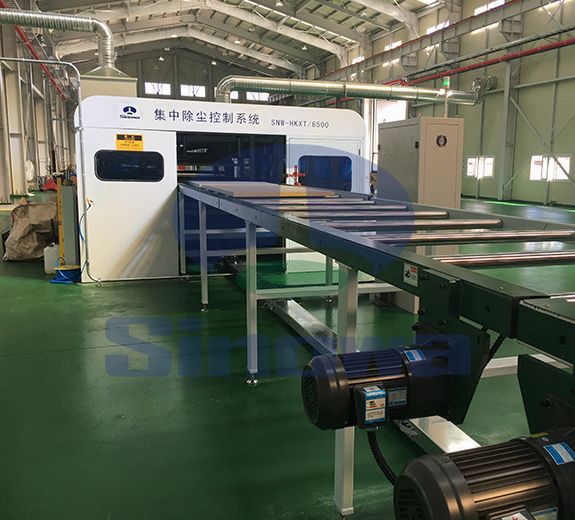
The first-class appearance design and excellent energy saving measures make it unnecessary for customers to additionally construct the heat preservation and isolation room for production around the clock throughout the year, so that the customers may save lots of resources and costs.
Modularized standard design and important parts machined with CNC machine tool make the production line have excellent quality assurance. Dependence on the man-made factors is eliminated. The operation is precision, with the highest operation speed of 30m/min. The thermal insulation sandwich panel line has the world-class production efficiency.
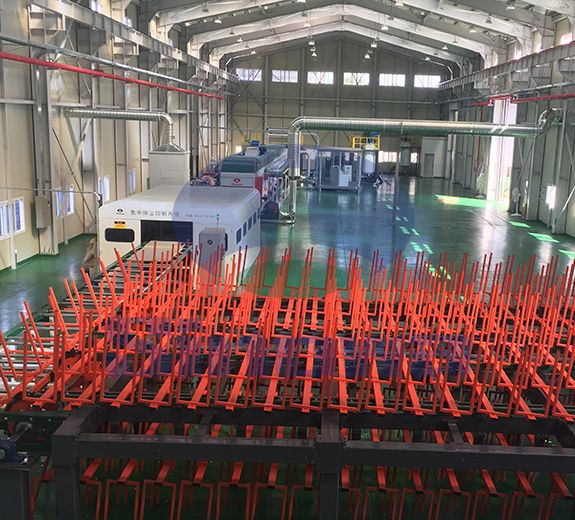
The high performance and reliable multicomponent cyclopentane foaming technology and equipment of Sinowa may be also applied to the foaming process of the phenolic aldehyde board. Therefore, our customers may not only freely adjust the foaming matching according to the raw material, but also save lots of costs. Moreover, they are of significance for environmental protection.
Sinowa's industrial thermal insulation sandwich panel line of insulation panels is distinguished by its impressive performance of energy conservation. In each high point of energy consumption throughout the entire pu sandwich panel line are implemented corresponding measures to considerably lower the consumption level.
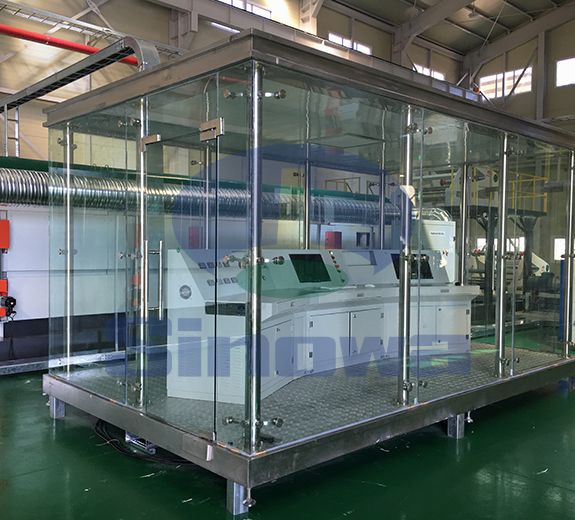
For example, the body of the lamination belt conveyer is covered with insulation panels in very reasonable structures, which doesn’t blemish the overall outlook but greatly increases the insulation performance.
The entire thermal insulation sandwich panel line is constantly optimized and improved so that the consumption of each power source is significantly reduced. The motor power of our lamination conveying system is only 3.0 kw, about 50% less than those of the same kind.
All in all, the energy consumption of the whole sandwich panel line equals 40% or even less of the equivalent lines in the market.
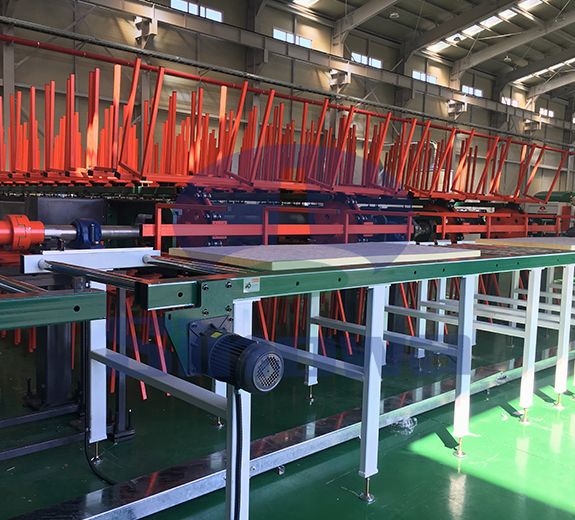
The thermal insulation sandwich panel line of Sinowa adopts the most advanced concepts in the world to realize the modularized design with all the parts bolted together rather than welded.
In standardized production, the parts can be dismantled and exchanged, so the production cycle is drastically shortened and the maintenance becomes by far easier.
Through finite element analysis, the equipment design is greatly optimized to realize modularization, digitization, and weight-minimalization.
| PRODUCTION TYPE | PU | PIR | PHENOLIC | |||
|---|---|---|---|---|---|---|
| PRODUCTION USE | INSULATION PANEL | DOCORATIVE PANEL | ||||
| SURFACE OF SHEET | ALUMINUM FOIL | NON-WOVEN FABRIC | PAPER | NAKED | ||
| PRODUCT THICKNESS | 10m--- 200mm | |||||
| PRODUCTION SPEED | 3.0m---25m |
|---|---|
| FOAMING METHOD | TWO OR MULTI COMPONENTS FOAMING |
| FOAMING AGENT | PENTANE OR 141B |
| LENGTH OF LINE | 45m—100m CUSTOMER OPTIONAL |
Sinowa is a well-known manufacturer and technical service provider of high-end polyurethane insulation board production lines and various high-performance cold roll forming machine in China. Our main products include polyurethane double-sided color steel sandwich panel production line, polyurethane and phenolic soft facing insulation panel production line and high-efficiency roll forming machines.
Sinowa has invested outstanding efforts in thermal insulation sandwich panel line, This is why our products are more efficiency, quality, automatic control technology, environmental protection, energy consumption indicators and the appearance and safety protection are comprehensively leading, Some subversive design changes in many major technical points,these major innovations make our products excellent in price/performance and user experience.
Sinowa is committed to the development and manufacturing of high-end and high-efficiency thermal insulation sandwich panel line. Our sandwich panel production lines are leading the way in efficiency, automatic control, human-computer interaction, environmental protection and energy consumption. Using system integration and bus control technology, it realizes the automatic integrated linkage control of the entire production line, and can achieve remote interactive communication, which has the world-class level and a comprehensive leading high-performance production line in the market.
The continuous advancement of modern building industrialization has made thermal insulation sandwich panels one of the most indispensable composite building materials in the construction industry, and professional thermal insulation sandwich panel production lines have become the core equipment for standardized and large-scale manufacturing of such panels. A complete thermal insulation sandwich panel line integrates raw material feeding, surface layer pressing, core material compounding, integrated molding and post-processing trimming, realizing continuous automated production of composite panels with multilayer structures. Unlike traditional single-layer building boards, the finished products produced by this production line adopt a typical three-layer sandwich structure, which organically combines rigid surface substrates and porous thermal insulation core materials through physical bonding and composite molding processes. This unique structural design endows the panels with excellent comprehensive performance that single building materials cannot match, covering mechanical stability, thermal insulation, sound insulation and environmental adaptability. With the diversified optimization of production line technology, the types of thermal insulation sandwich panels are constantly enriched, and their application scenarios have gradually expanded from simple industrial buildings to multiple fields such as commercial facilities, special engineering buildings and temporary construction projects, becoming an important material support for energy-saving and lightweight development in the global construction industry.

The basic structure of products manufactured by thermal insulation sandwich panel lines follows a stable three-layer composite logic, and each structural layer bears distinct functional responsibilities to jointly build a high-performance building component. The outer and inner surface layers of the panel are usually made of high-strength metal substrates with uniform thickness and smooth surface. These surface materials possess excellent tensile resistance and surface flatness, which can effectively resist external physical impacts and environmental erosion. In the continuous production process of the production line, the surface layers undergo surface leveling and anti-corrosion pretreatment, forming a dense protective layer on the outside of the core material. This structural arrangement avoids direct exposure of the internal thermal insulation medium to the external environment, reducing the aging and damage of the core material caused by temperature changes, moisture penetration and ultraviolet radiation. The middle core layer is the key functional part that determines the thermal insulation performance of the sandwich panel, and it is filled with porous lightweight thermal insulation materials. The production line realizes uniform filling and dense foaming of the core material through precise material distribution and constant temperature foaming processes, ensuring that the internal structure of the core material is compact and the pore size is evenly distributed. Between the surface layer and the core layer, the production line adopts high-pressure composite bonding technology to form a tight molecular connection interface. There is no obvious gap between different layers, which effectively enhances the overall structural integrity of the panel and prevents layer separation during long-term use. In addition, the edge of the panel will be precisely cut and sealed by the trimming device of the production line, optimizing the docking structure of the board body and improving the airtightness and connection stability during on-site assembly.
In terms of structural performance, the finished panels of thermal insulation sandwich panel lines show outstanding advantages in mechanical bearing capacity, structural stability and deformation resistance. The overall lightweight design is a typical structural feature of such panels. Reasonable material matching and hollow porous structure reduce the self-weight of a single panel to a low range, which greatly lowers the load-bearing pressure on the building foundation and main frame. This lightweight structural property not only simplifies the transportation and handling work of the panels but also shortens the construction cycle of building installation. In terms of compression and bending resistance, the metal surface layer provides rigid mechanical support, while the internal porous core material disperses external pressure evenly. When subjected to external wind pressure, gravity and other loads, the panel can maintain a stable shape without local depression or permanent deformation. The optimized board edge structure further improves the mechanical performance of the splicing parts. The embedded groove and tenon connection structure enables seamless docking between panels, which enhances the overall rigidity of the building enclosure structure and avoids structural loosening caused by thermal expansion and contraction. Moreover, the integrated molding process of the production line eliminates the hidden dangers of artificial assembly gaps. The overall structural uniformity of the panels ensures that each batch of finished products has consistent mechanical indicators, which is conducive to maintaining the long-term structural stability of buildings in complex climatic environments such as strong winds and alternating cold and heat.
Thermal insulation performance is the core functional attribute of panels produced by thermal insulation sandwich panel lines, and it is also an important basis for distinguishing different product types. The closed-cell structure inside the core material can effectively lock static air, which is a natural low thermal conductivity medium, thereby blocking the heat transfer path between the internal and external environments of the building. Different core material formulas bring differentiated thermal insulation effects. Some core materials with ultra-low thermal conductivity can maintain stable heat insulation capabilities under extreme temperature differences, effectively reducing the heat exchange efficiency between indoor and outdoor spaces. In high-temperature seasons, the panels can isolate external heat radiation to keep the indoor space cool, while in low-temperature environments, they can prevent internal heat loss and reduce the energy consumption of heating equipment. In addition to static thermal insulation performance, the structural compactness of the panels also ensures good air tightness. The seamless composite structure can prevent cold and hot air convection caused by air penetration, further optimizing the overall thermal insulation effect. For buildings with high constant temperature requirements, the multi-layer composite structure of the panels can slow down the temperature change rate of the indoor environment, reducing the energy consumption loss caused by frequent temperature adjustment.
Based on the differences in core materials and structural optimization directions, the products of thermal insulation sandwich panel lines can be divided into multiple categories with distinct performance characteristics. The first category is polyurethane thermal insulation sandwich panels. This type of panel is formed by continuous high-pressure foaming of polyurethane raw materials on the production line. The core material has a high closed-cell rate and a dense internal structure. It has the advantages of low thermal conductivity, light weight and good waterproof performance. The overall flexibility of the structure is strong, and it can adapt to a variety of curved and flat building surfaces. The second category is rock wool sandwich panels. The production line uses high-density rock wool fibers as the core filler. The fiber interweaving structure gives the panels excellent high-temperature resistance and flame retardancy. The internal fiber gaps can absorb sound waves, achieving a good noise reduction effect. This type of panel has a heavier self-weight and higher structural rigidity, suitable for buildings with high fire protection requirements. The third category is silicon rock sandwich panels. The special inorganic filling structure of the core material enables the panels to maintain stable physical properties in extreme temperature environments. It is not easy to deform or crack under long-term high and low temperature alternating conditions, and has strong environmental corrosion resistance. The fourth category is phenolic sandwich panels. With uniform and fine internal pores, the core material has ultra-low thermal conductivity and excellent surface flatness. The smooth surface is not easy to accumulate dust, meeting the high cleanliness requirements of special buildings. In addition, there are composite edge-sealed sandwich panels optimized by the production line. The edge-sealing structure strengthens the tightness of the board body, solves the problem of easy water seepage at the splicing gap of traditional panels, and further improves the durability of the panels.
Different types of thermal insulation sandwich panels produced by professional production lines have clear application positioning, covering diversified usage scenarios in the construction field. In the field of industrial buildings, such panels are widely used for the wall and roof enclosure of large factories and warehouses. The lightweight structure reduces the construction difficulty of large-span buildings, while the thermal insulation performance can improve the internal working environment of the factory. For chemical, electric power and other industrial sites with high fire safety requirements, rock wool and silicon rock sandwich panels are selected to rely on their flame retardant and high temperature resistant characteristics to reduce building fire risks. In cold storage and constant temperature storage buildings, polyurethane sandwich panels become the preferred material. Their efficient thermal insulation and waterproof performance can stabilize the internal low-temperature environment, reduce the operation energy consumption of refrigeration equipment, and avoid storage quality deterioration caused by temperature fluctuations.
In the field of special purification buildings, phenolic sandwich panels with smooth surfaces and non-dust-accumulating properties are applied to electronic processing workshops, pharmaceutical production workshops and food processing workshops. The seamless splicing structure can reduce dust adhesion and bacterial reproduction on the wall surface, meeting the strict cleanliness standards of the production space. At the same time, the stable chemical properties of the core material will not release harmful substances, ensuring the safety and hygiene of the production environment. In public building facilities such as exhibition halls and stadiums, the panels with diverse surface colors and flat textures can meet architectural aesthetic requirements. The rapid assembly characteristics shorten the construction period of public buildings, and the good sound insulation performance can optimize the internal acoustic environment to improve the comfort of personnel activities.
In addition to permanent buildings, thermal insulation sandwich panels also have important application value in temporary construction and building renovation projects. The simple and fast assembly mode enables the panels to be used in temporary office buildings, living quarters and emergency rescue facilities. The production line can customize panels of different sizes according to the usage demand, realizing flexible layout of temporary spaces. For old buildings that need energy-saving renovation, the panels can be directly attached to the original building wall. Without large-scale demolition and reconstruction, the thermal insulation performance of the building can be improved, and the overall energy consumption of the building can be reduced. In coastal and windy areas, the optimized tenon-connected panels can resist strong wind pressure, maintaining the structural integrity of the building enclosure in harsh weather conditions.
With the continuous upgrading of thermal insulation sandwich panel line technology, the structural performance of finished panels is still being optimized, and the application scope is constantly expanding. Modern production lines adopt automated intelligent control systems to realize precise adjustment of raw material ratio, foaming density and pressing thickness, ensuring that each batch of panels has stable and reliable performance indicators. The innovation of core material formulas is gradually improving the environmental protection and recyclability of the panels, reducing resource consumption in the production and use process. In the future, driven by the development trend of green buildings and industrial construction, thermal insulation sandwich panel lines will develop towards higher automation, lower energy consumption and more diversified customization. The updated panels will further balance structural strength, thermal insulation efficiency and environmental adaptability, providing more efficient and economical material solutions for modern construction projects in various fields. As a mature composite building material production system, the thermal insulation sandwich panel line will continue to play an irreplaceable role in promoting the high-quality development of the global construction industry.
«Thermal Insulation Sandwich Panel Line» Update Date:2026/5/11
URL: https://www.sinowa.cn/en/blog/thermal-insulation-sandwich-panel-line.html
Tags:
