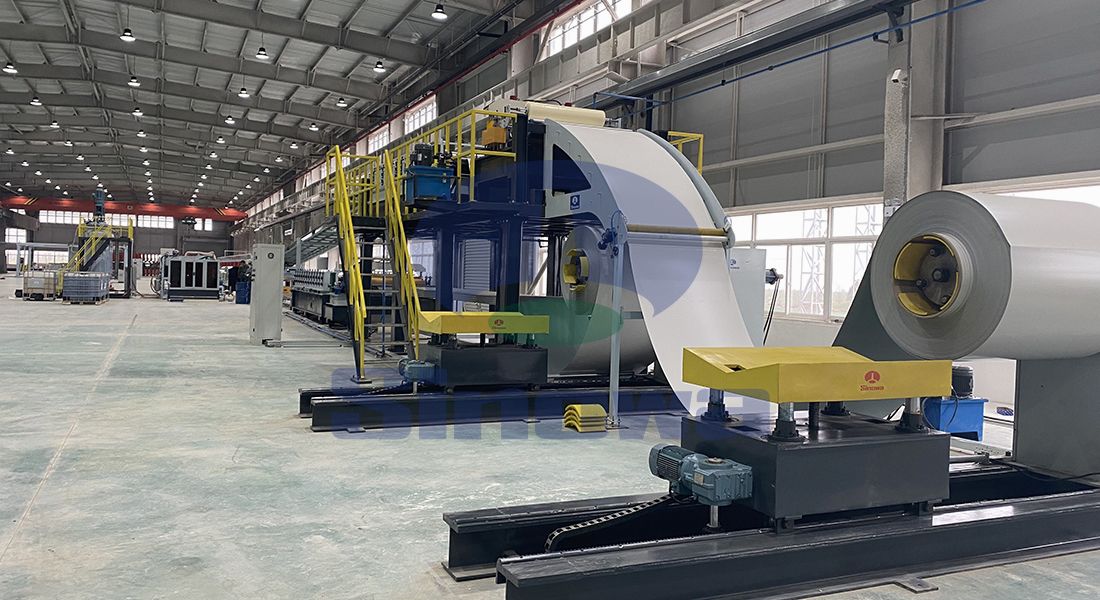
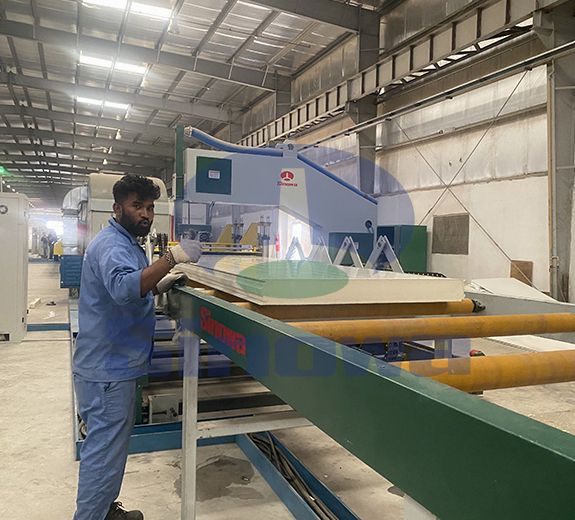
Sinowa is a well-known Polyurethane Sandwich Panel Assembly Line Supplier From China, Dedicated to the research and development of high-end & high-efficiency polyurethane sandwich panel assembly line, Sinowa is comprehensively taking the leading position in terms of efficiency, automation control level, HMI, environment protection and energy consumption, with subversive designs made in some critical technological fields to procure exceptional cost performance and customer-friendly experience for the entire polyurethane sandwich panel assembly line.
The adoption of system integration technology and bus control technology accomplishes the full automatization of integrated and coordinated control of the entire polyurethane sandwich panel assembly line with accessible remote interactive communication. Ranking the first-class level in the world, it is currently the continuous pu sandwich panel line in the market taking a comprehensive lead in high performance.
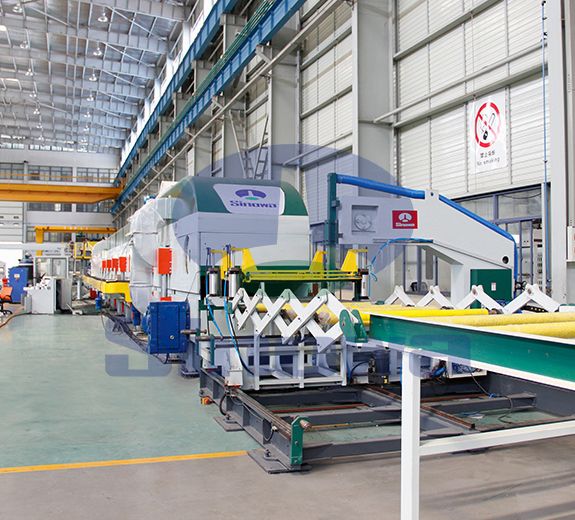
Based on the continuous technological pursuit, the polyurethane sandwich panel assembly line developed by Sinowa provides you with high-efficiency industrial value. Based on China's cost advantage and our hard-working technology concept, our sandwich panel production line has a world-leading price-performance advantage. Polyurethane Sandwich Panel Assembly Line can meet a variety of production needs of customers.The whole sandwich panel line design concept of modularization enables all our components to be integrated and combined at will.
Our polyurethane sandwich panel assembly line can easily automate the production of roof sandwich panel, wall sandwich panel, cold storage sandwich panel and other products by different combination and configuration selection and siple switching. The inner core layer can be polyrethane or rock wool, glass wool, an so on.
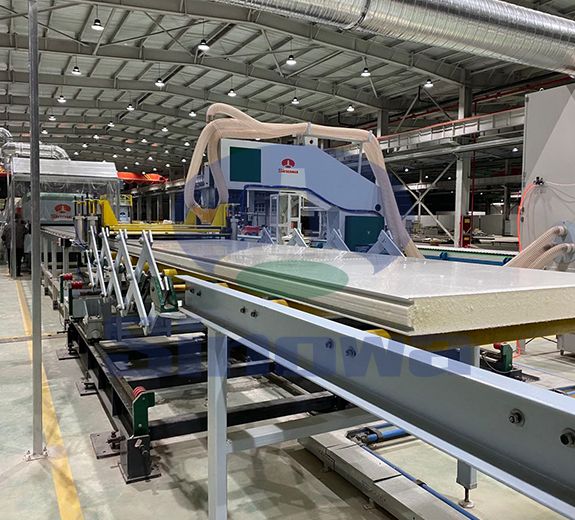
The polyurethane sandwich panel assembly line has high adaptability, which may produce various sandwich panel of the PU, PIR and rock wool systems.
We may design various products according to the customer’s requirements, including various configurations, so as to meet their demands with flexible price system.
Highly integrated and linked control system centralizes all control points at the main central center, achieving parameter linkage, fault self-diagnosis controlled by the whole continuous sandwich panel line and shipping distance control.
High-level automatic control system also saves the manpower and reduces the manpower loss for customers.
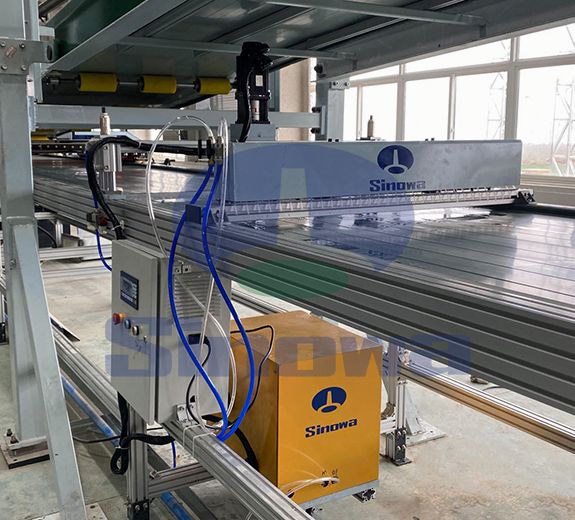
Concentrated system control is fully realized in the practice of concentrated process control so that the control system of all the movements of the parts in the polyurethane sandwich panel assembly line is integrated in one process control console with accessible remote communication to elevate the automation and reduce the allocated number of personnel for the assembly line.
The main engine with modularized design achieves the precision operation of the polyurethane sandwich panel assembly line, stable and reliable quality, less part and maintenance loss.
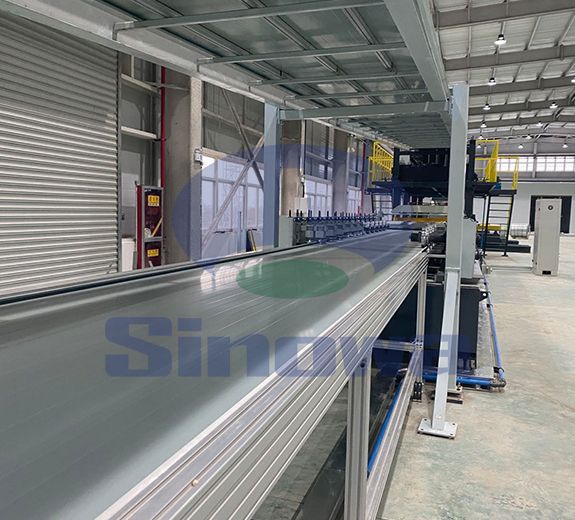
The whole polyurethane sandwich panel assembly line is strictly modularized in design to ensure the greatest probability for the parts to be interchangeable, making it the most cost- and energy-saving. No joining made manually, all the key processes of the parts are completed in the machining center. As soon as the parts are inspected and warehoused, they enter into the assembly process. The modularized assembly can not only greatly increase the production efficiency but, most importantly, realize quick delivery as well. It elevates the reliability of product quality to a totally new level and minimizes the influence from human factors.
The whole polyurethane sandwich panel assembly line has over 40 innovative inventions, making our products have lots of unique features and the comprehensive performance of our production line leading in the industry.
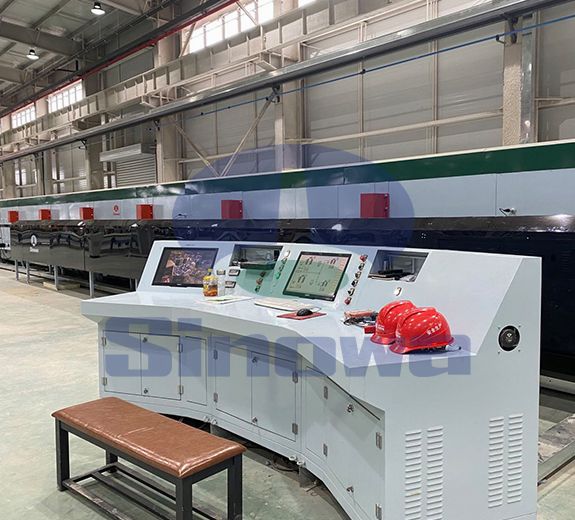
The precision servo hoisting mechanism employed by the main engine without hydraulic system makes the board thickness control flexible and the customer may conveniently change or adjust the board thickness. There will be not such troubles as hydraulic system adjustment, leakage, maintenance, etc.
High-level energy saving and protection design makes the whole polyurethane sandwich panel assembly line possible to produce around the clock throughout the year and the customer will save huge budget. In addition, the isolated heat preservation room is constructed for warming the environment. The energy saving and protection design of our high-tech polyurethane sandwich panel assembly line may guarantee that the customer’s production line may be freely heated and produce in the main time to save more costs for customers.
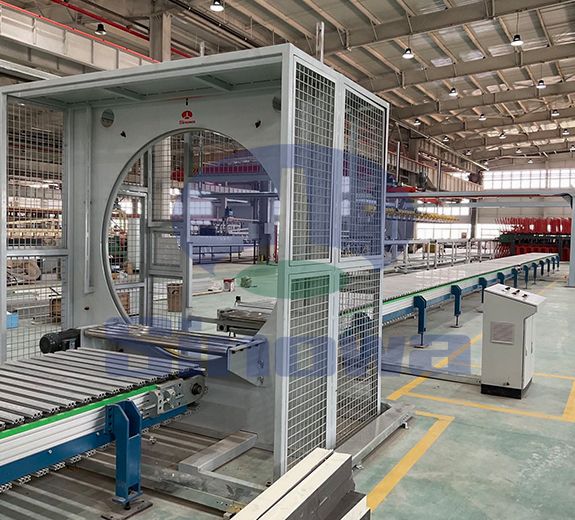
The high-power low-consumption design quickens the reaction of the polyurethane sandwich panel assembly line while energy consumption is kept low.
With the brand-new, fully sealed inner insulation design, the energy consumption is controlled at the minimum level to achieve the design objective of less than an hour for the insulation system to be activated from the room temperature above 5℃ to the production process temperature.
The energy consumption is only 40% that of those similar products.
| PRODUCTION TYPE | PU | PIR | PHENOLIC | |||
|---|---|---|---|---|---|---|
| PRODUCTION USE | INSULATION PANEL | DOCORATIVE PANEL | ||||
| SURFACE OF SHEET | ALUMINUM FOIL | NON-WOVEN FABRIC | PAPER | NAKED | ||
| PRODUCT THICKNESS | 10m--- 200mm | |||||
| PRODUCTION SPEED | 3.0m---25m |
|---|---|
| FOAMING METHOD | TWO OR MULTI COMPONENTS FOAMING |
| FOAMING AGENT | PENTANE OR 141B |
| LENGTH OF LINE | 45m—100m CUSTOMER OPTIONAL |
Sinowa is a well-known manufacturer and technical service provider of high-end polyurethane insulation board production lines and various high-performance cold roll forming machine in China. Our main products include polyurethane double-sided color steel sandwich panel production line, polyurethane and phenolic soft facing insulation panel production line and high-efficiency roll forming machines.
Sinowa has invested outstanding efforts in both the insulation board production line and the roll forming line, This is why our products are more efficiency, quality, automatic control technology, environmental protection, energy consumption indicators and the appearance and safety protection are comprehensively leading, Some subversive design changes in many major technical points,these major innovations make our products excellent in price/performance and user experience.
Sinowa is committed to the development and manufacturing of high-end and high-efficiency sandwich panel production lines. Our sandwich panel production lines are leading the way in efficiency, automatic control, human-computer interaction, environmental protection and energy consumption. Using system integration and bus control technology, it realizes the automatic integrated linkage control of the entire production line, and can achieve remote interactive communication, which has the world-class level and a comprehensive leading high-performance production line in the market.
A custom polyurethane sandwich panel assembly line represents a tailored production system built to match unique manufacturing requirements rather than relying on a universal, one-size-fits-all machine setup. At its core, this line is engineered to handle variations in panel dimensions, surface materials, foam thickness and structural configurations that standard equipment cannot accommodate. Every functional station is arranged and calibrated according to the intended output profile, ensuring that raw material feeding, foaming, lamination and cutting operations work in seamless coordination. The design process begins with mapping out the full production workflow, accounting for how different input materials interact during the polyurethane curing phase. Operators gain greater flexibility to switch between product variants without extensive retooling or long downtime between batches. Precision control over the foam injection process helps maintain consistent density and bonding quality across every finished panel, even when specifications change frequently. This level of customization also opens opportunities to integrate auxiliary handling mechanisms that align with existing factory layout and material transport routines, removing bottlenecks that often appear when generic machinery is forced into spaces it was not designed for. Manufacturers who opt for this type of assembly setup are typically focused on expanding their product portfolio while keeping stable production quality for specialized application scenarios.

The material feeding section forms the starting point of the custom polyurethane sandwich panel assembly line, and it is modified carefully to suit the specific face sheets and core components used in production. Different types of facing substrates move along guided tracks at adjustable speeds, with tension control systems preventing wrinkling, stretching or misalignment as they advance toward the foaming zone. Feeding guides and roller assemblies can be repositioned to fit narrow or wide panels, and support structures are reinforced to handle heavier or more rigid sheet materials that standard feeders struggle to carry. Before reaching the injection stage, the surfaces of the face materials pass through preparation modules that remove dust and minor surface contaminants, creating a cleaner interface for polyurethane adhesion. Adjustment parameters for feed speed and sheet positioning are stored so operators can quickly recall settings for recurring product types. This modular feeding design avoids unnecessary restrictions on material selection, allowing producers to test new facing options with minimal adjustments to the overall line structure. Stable and accurate feeding directly reduces waste caused by offset lamination, and it establishes a reliable foundation for all subsequent forming and curing processes downstream.
Polyurethane foaming and injection is the most technically sensitive segment within the custom polyurethane sandwich panel assembly line, where careful tuning determines the insulation performance and structural integrity of the final sandwich panel. The chemical mixing unit combines the raw polyol and isocyanate components under precisely regulated flow rates and mixing pressure, adapting to the foam formulation selected for each panel variant. Injection heads move along the width of the moving face sheets to distribute the reactive mixture evenly, with travel speed and output volume adjusted to match the required core thickness and foam rise behavior. Because the line is custom-built, the injection path can be modified to avoid uneven foam distribution in extra-thick panels or specialized shaped profiles. Sensors monitor the reactive process in real time to flag irregularities in mixture consistency before defects become embedded in the finished product. The enclosed foaming area contains the expanding foam within the space between the upper and lower face sheets as the chemical reaction proceeds. Fine adjustments to mixing ratios and injection timing make it possible to produce foam cores with different flexibility, hardness and thermal properties without major hardware replacement.
Continuous lamination and pressing follows immediately after polyurethane injection, pressing the upper and lower face sheets firmly against the expanding foam to form a unified sandwich structure. The pressing section of the custom line features adjustable clearance between the upper and lower conveyor belts, allowing operators to set exact gaps corresponding to target panel thickness. Pressure distribution across the full panel width is balanced to prevent localized compression that could thin the foam core or delaminate the surface materials. Conveyor speed through the pressing zone is synchronized with the foaming stage to match the natural curing rate of the polyurethane mixture, ensuring the foam finishes expanding and bonds fully before leaving the pressure zone. The belt surfaces are treated to resist adhesion from uncured foam and can be swapped out when working with particularly sticky or abrasive facing materials. Side guide mechanisms keep the stacked layers centered as they travel, preventing sideways shifting that would create uneven edge profiles. This synchronized lamination process eliminates weak bonding points and ensures the face materials and foam core act as a single composite structure once curing is complete.
Controlled curing zones are integrated into the custom polyurethane sandwich panel assembly line to stabilize the chemical reaction of the polyurethane foam under stable environmental conditions. The length and layout of the curing tunnel are customized based on the foam formulation and production speed, giving the material sufficient time to complete cross-linking and develop its intended physical characteristics. Air circulation inside the curing space maintains uniform conditions across the entire panel, avoiding hot spots or cool regions that would lead to inconsistent hardness or dimensional instability. Temperature and airflow settings can be modified when switching between fast-curing and slow-curing foam systems, removing the need to slow the whole line unnecessarily for slower reaction chemistries. Panels continue moving steadily through this section rather than being held stationary, preserving the continuous flow nature of the assembly process. Insulation around the curing enclosure reduces energy loss and keeps operating costs more predictable during long production runs. Proper curing control lowers the risk of post-production deformation, shrinkage or separation between the foam core and the outer facings after panels leave the line.
Trimming, cutting and edge finishing stations are arranged after the curing tunnel to shape the continuous composite slab into individual panels according to custom size requirements. Cutting tools are mounted on movable frames that can be programmed to produce variable lengths, and side trimming units remove irregular foam overflow and uneven edge material from both sides of the web. Cutting speed is matched to the line travel speed to deliver clean, straight cuts without tearing the face sheets or crushing the foam core. Additional edge processing attachments can be fitted to form joint profiles, grooves or sealing ridges along panel edges for specific assembly needs. Scrap generated during trimming is collected through dedicated extraction channels, keeping the working area clear and reducing manual cleanup work. All cutting and trimming parameters can be altered quickly when shifting from one panel dimension to another. This flexible finishing stage removes the limitation of fixed cut lengths found on standard lines, letting manufacturers respond to custom order requests without secondary off-line cutting operations that add labor and time.
Automated inspection systems are incorporated into the custom polyurethane sandwich panel assembly line to identify surface flaws, bonding gaps, dimensional deviations and foam density inconsistencies as panels move through the line. Non-contact sensing tools scan both surfaces and edges without damaging the finished product, capturing data that operators review on central control interfaces. Readings are compared against the preset specifications for the active product run, and the system flags units that fall outside acceptable ranges for separation or re-evaluation. Inspection points are placed strategically at multiple stages, not just at the final output, so problems can be traced back to earlier stations such as feeding, injection or pressing. The inspection framework is scalable; extra sensing modules can be added later if new quality criteria emerge for future panel designs. Records from each production run are stored for internal quality tracking, supporting consistent process refinement over time. Real-time detection minimizes the volume of defective output and reduces the material loss that comes from discovering flaws only after full batches have been completed.
Handling, stacking and offloading equipment forms the final operational block of the custom polyurethane sandwich panel assembly line, designed to move finished panels gently and arrange them neatly for packaging or transfer to storage. Pneumatic or mechanical transfer arms adjust their grip and lifting spacing to suit different panel sizes and weights, avoiding concentrated pressure points that could dent face surfaces or crack the foam core. Stacking sequences can be adjusted to alternate protective separators between panels when surface materials are prone to scratching. The offloading pace is synchronized with upstream cutting and inspection so finished units do not pile up at the end of the line and create workflow congestion. The layout of this area is planned around the available floor space and the route used to transport finished goods onward, whether to wrapping stations or loading zones. Safety interlocks slow or stop movement if unexpected obstructions enter the transfer path. This tailored handling setup cuts down on manual lifting and reduces the chance of damage that frequently occurs when finished sandwich panels are moved by hand between production steps.
Centralized control architecture ties all individual stations of the custom polyurethane sandwich panel assembly line together into one coordinated production system. A main control interface gives operators access to parameters for feed speed, chemical mixing ratios, injection patterns, pressing pressure, curing environment, cutting dimensions and inspection thresholds in a single location. Different product recipes can be saved and activated with simple selection, removing the need to manually reset dozens of separate controls every time the panel design changes. The control platform shows live status information for each section of the line, highlighting alerts and performance trends to support quick troubleshooting. Communication between connected modules ensures speed adjustments in one zone automatically trigger matching changes in linked zones, preventing mismatched timing that causes product defects. Access permissions can be layered so routine operators only adjust day-to-day settings while advanced configuration remains restricted to technical staff. This unified control approach reduces the learning burden for teams running complex, multi-variant production and improves overall operational stability across long production cycles.
The long-term value of investing in a custom polyurethane sandwich panel assembly line extends beyond immediate production flexibility and consistent panel quality, supporting adaptive manufacturing as market demands evolve over time. Because the line is built with modular principles, additional stations or upgraded components can be integrated later without rebuilding the entire system from scratch. Manufacturers can gradually introduce new facing materials, foam formulations, panel geometries and finishing features as new application opportunities arise. The optimized workflow also tends to reduce overall material waste and energy consumption compared to forcing custom production through rigid standard machinery. Teams gain deeper process knowledge from working with equipment built around their specific product goals, which supports continuous fine-tuning of foam formulations and operating routines. This type of production asset is especially suitable for operations that serve diverse customer requirements where standardized panel sizes and properties are not sufficient. Over its service life, the line supports sustainable production planning by keeping manufacturing capacity aligned closely with changing product needs, avoiding the limitations and inflexibility that define generic sandwich panel production solutions.
polyurethane sandwich panel assembly line, polyurethane sandwich panel assembly line manufacturer, polyurethane sandwich panel assembly line for sale, polyurethane sandwich panel assembly line supplier, China polyurethane sandwich panel assembly line, Custom polyurethane sandwich panel assembly line
«Custom Polyurethane Sandwich Panel Assembly Line» Update Date:2026/10/26
URL: https://www.sinowa.cn/en/blog/custom-polyurethane-sandwich-panel-assembly-line.html
Tags: PU sandwich panel line , PU sandwich panel machine , PU sandwich panel production line , sandwich panel line , sandwich panel machine , sandwich panel production line
