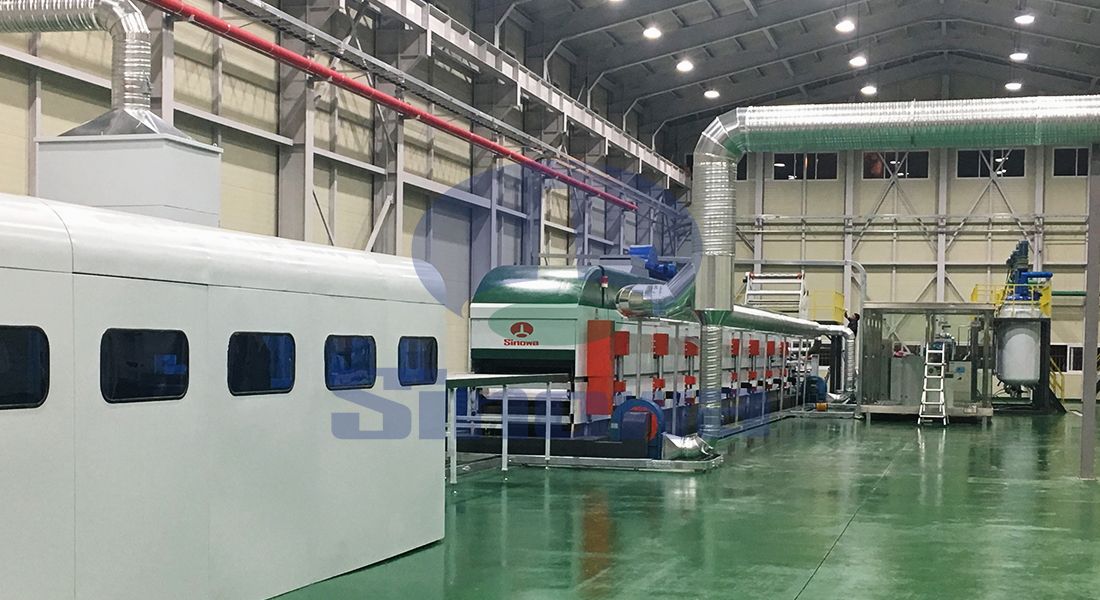
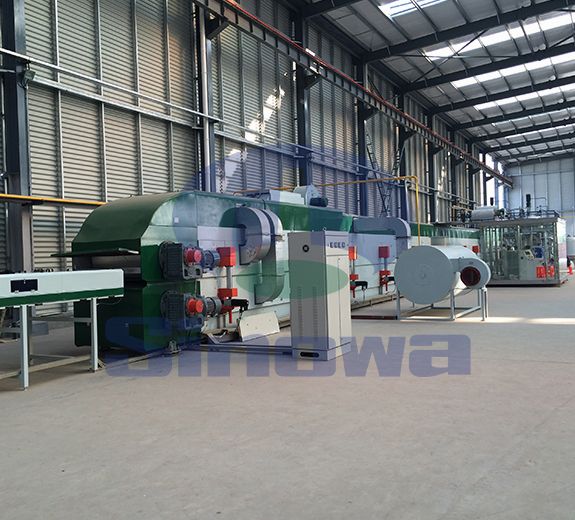
Sinowa is a well-known Fully Automatic Polyurethane Insulation Panel Production Line Supplier From China, Continuous Insulation Panel Production Line of the PU and phenolic aldehyde surface has diversified and multifunctional production characteristics, which may produce products with different specifications such as PU, PF, PIR, etc.
The surface material may be aluminum foil, colored steel, cement base cloth, kraft paper, non-woven fabrics, etc.
The products are widely applied to such occasions as construction, decoration, pipeline ventilation, subway construction, etc.
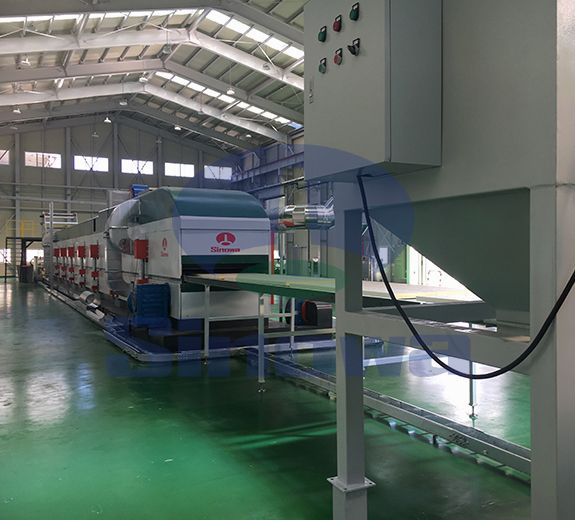
The fully automatic polyurethane insulation panel production line of soft layer insulation board is able to continuously and efficiently produce high-quality PU and Phenolic insulation boards.
We spare no efforts to improve our product quality and technological reliability by employing the most cutting-edge and the most reliable support and processes to make our products highly reliable and endurable. As a result, the fully automatic polyurethane insulation panel production line of our soft layer insulation panels is highlighted by many perfect qualities. It is the core idea in Sinowa's product roadmap to surpass our competitors in terms of design philosophy, manufacture methods and service level, going for excellence and leading position and making constant improvement on our products and services, which is also our core value system to create efficiency and convenience for our customers.
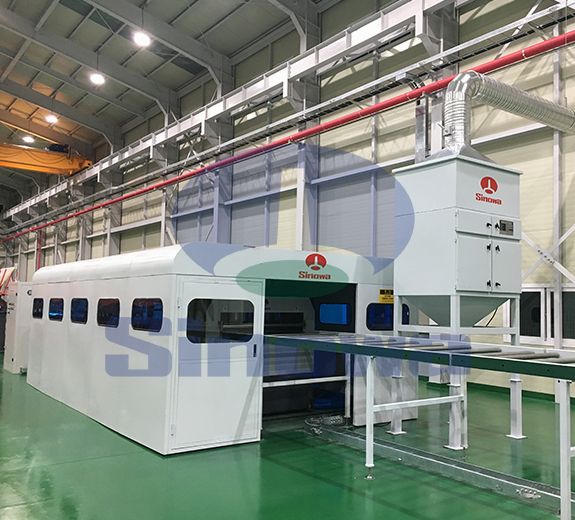
Well-grounded on our solid strength as a renowned large-scale enterprise, Sinowa has a high starting point in developing industrial assembly lines.
Based on the advanced science and technology introduced from within and without the country and supported by a great number of first-grade parts and components from the home and aboard, these assembly lines have a high-level configuration of supporting products in terms of machinery, electrical control, hydraulic pressure, automatic measurement and tracking, and so on.
This is a strong proof of our product’s reliable quality and high efficiency.
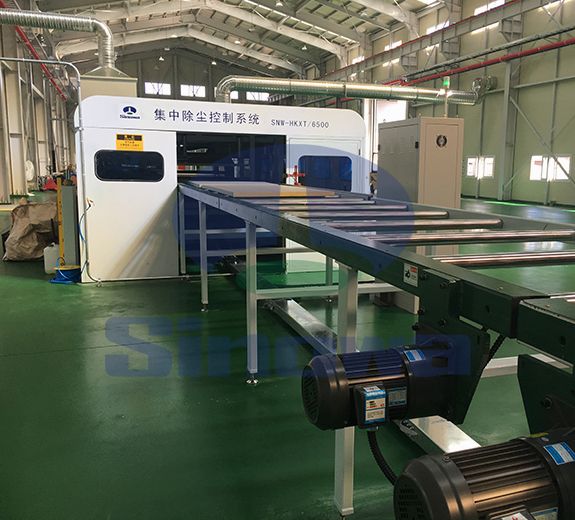
The first-class appearance design and excellent energy saving measures make it unnecessary for customers to additionally construct the heat preservation and isolation room for production around the clock throughout the year, so that the customers may save lots of resources and costs.
Modularized standard design and important parts machined with CNC machine tool make the production line have excellent quality assurance. Dependence on the man-made factors is eliminated. The operation is precision, with the highest operation speed of 30m/min. The fully automatic polyurethane insulation panel production line has the world-class production efficiency.
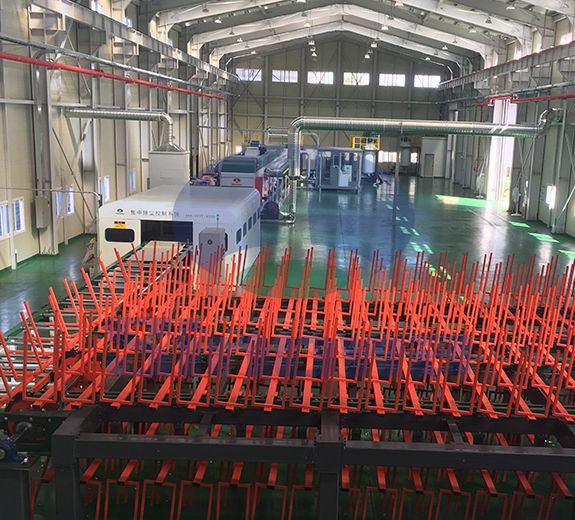
The high performance and reliable multicomponent cyclopentane foaming technology and equipment of Sinowa may be also applied to the foaming process of the phenolic aldehyde board. Therefore, our customers may not only freely adjust the foaming matching according to the raw material, but also save lots of costs. Moreover, they are of significance for environmental protection.
Sinowa's industrial fully automatic polyurethane insulation panel production line of insulation panels is distinguished by its impressive performance of energy conservation. In each high point of energy consumption throughout the entire pu sandwich panel line are implemented corresponding measures to considerably lower the consumption level.
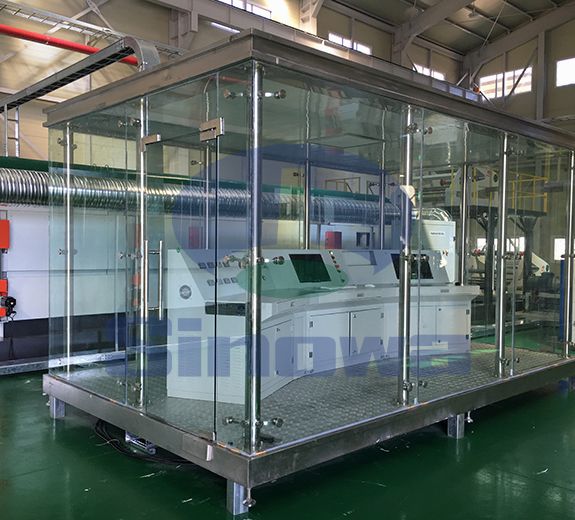
For example, the body of the lamination belt conveyer is covered with insulation panels in very reasonable structures, which doesn’t blemish the overall outlook but greatly increases the insulation performance.
The entire fully automatic polyurethane insulation panel production line is constantly optimized and improved so that the consumption of each power source is significantly reduced. The motor power of our lamination conveying system is only 3.0 kw, about 50% less than those of the same kind.
All in all, the energy consumption of the whole sandwich panel line equals 40% or even less of the equivalent lines in the market.
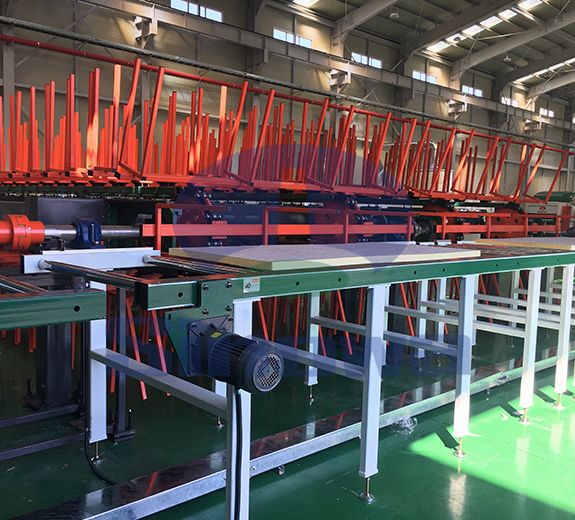
The fully automatic polyurethane insulation panel production line of Sinowa adopts the most advanced concepts in the world to realize the modularized design with all the parts bolted together rather than welded.
In standardized production, the parts can be dismantled and exchanged, so the production cycle is drastically shortened and the maintenance becomes by far easier.
Through finite element analysis, the equipment design is greatly optimized to realize modularization, digitization, and weight-minimalization.
| PRODUCTION TYPE | PU | PIR | PHENOLIC | |||
|---|---|---|---|---|---|---|
| PRODUCTION USE | INSULATION PANEL | DOCORATIVE PANEL | ||||
| SURFACE OF SHEET | ALUMINUM FOIL | NON-WOVEN FABRIC | PAPER | NAKED | ||
| PRODUCT THICKNESS | 10m--- 200mm | |||||
| PRODUCTION SPEED | 3.0m---25m |
|---|---|
| FOAMING METHOD | TWO OR MULTI COMPONENTS FOAMING |
| FOAMING AGENT | PENTANE OR 141B |
| LENGTH OF LINE | 45m—100m CUSTOMER OPTIONAL |
Sinowa is a well-known manufacturer and technical service provider of high-end polyurethane insulation board production lines and various high-performance cold roll forming machine in China. Our main products include polyurethane double-sided color steel sandwich panel production line, polyurethane and phenolic soft facing insulation panel production line and high-efficiency roll forming machines.
Sinowa has invested outstanding efforts in both the insulation board production line and the roll forming line, This is why our products are more efficiency, quality, automatic control technology, environmental protection, energy consumption indicators and the appearance and safety protection are comprehensively leading, Some subversive design changes in many major technical points,these major innovations make our products excellent in price/performance and user experience.
Sinowa is committed to the development and manufacturing of high-end and high-efficiency sandwich panel production lines. Our sandwich panel production lines are leading the way in efficiency, automatic control, human-computer interaction, environmental protection and energy consumption. Using system integration and bus control technology, it realizes the automatic integrated linkage control of the entire production line, and can achieve remote interactive communication, which has the world-class level and a comprehensive leading high-performance production line in the market.
The fully automatic production line for polyurethane insulation panel represents a major leap forward in the manufacturing of building insulation materials, reshaping the way core structural panels are formed, foamed, and finished in a continuous workflow. This integrated system brings together raw material feeding, metering, mixing, continuous foaming, lamination, curing, trimming, and stacking into one unbroken sequence, removing the need for frequent manual intervention between separate processing stages. Every functional unit is synchronized through central control logic, so the speed of material delivery matches the reaction rate of polyurethane components and the travel speed of the conveying substrate. Operators mainly oversee parameter stability and system status rather than handling semi-finished products directly, which cuts down on inconsistent handling that often leads to uneven foam density or flawed surface bonding. Raw polyurethane liquid components are transferred in sealed pipelines to avoid premature contact with moisture or airborne contaminants that could disrupt the foaming reaction. Even subtle variations in material flow are adjusted in real time to maintain consistent mixing ratios across long production runs. This kind of continuous operation also supports extended running periods, allowing steady output without repeated stops for loading and unloading individual panels by hand. The design focuses on harmonizing chemical reaction characteristics with mechanical motion, laying a solid foundation for reliable, repeatable panel formation over thousands of production cycles.

The feeding and metering section acts as the starting point of the whole line, responsible for precisely delivering all required raw materials into the mixing chamber under stable pressure and temperature conditions. Polyurethane consists of multiple reactive components that must be combined at an exact proportion to achieve the intended cellular structure inside the finished insulation core. Specialized pumping structures push each liquid stream independently, with flow monitoring elements tracking volume output at all times. Temperature control units wrap around storage and delivery pipes to keep material viscosity within a narrow suitable range, because overly thick or thin liquid will hinder uniform mixing and damage the quality of the foam structure. Solid facing materials, which form the two outer surfaces of the insulation panel, are unwound from large rolls and guided onto the conveyor track with controlled tension to prevent wrinkling, stretching or offset alignment as they move forward. Side guiding devices keep the facings centered, ensuring that the foam core fills the space between the two sheets evenly without overflowing along the edges. This stage avoids mismatched feeding speeds that could create gaps, thin spots or excess raw material waste. Careful management of both liquid chemicals and solid facings at this early stage greatly reduces the likelihood of defects emerging in later production links.
Once the raw components reach the mixing head, high-efficiency blending takes place right before the mixture is deposited between the upper and lower facing sheets. The mixing space is engineered to generate intense turbulence in a very short time, so different chemical streams combine thoroughly before the foaming reaction begins to expand the mixture. The mixed liquid flows out in a controlled curtain, spreading evenly across the width of the moving facings. Timing here is critical, as polyurethane starts expanding quickly after mixing, and the distribution pattern directly decides the uniformity of cell size throughout the insulation core. The mixing assembly can be cleaned automatically at set intervals to stop residual cured material from accumulating and blocking flow channels, which would distort the output pattern over time. Adjustable positioning mechanisms allow the discharge point to be fine-tuned according to production speed and target panel thickness. Operators can adjust mixing intensity and discharge width through the main control interface to adapt to different product specifications. A well-functioning mixing step ensures that no pockets of unmixed material remain inside the finished panel, which would create weak zones and uneven thermal performance across the surface.
After the mixed material is applied, the continuous double-belt pressing system takes charge of shaping the panel and guiding the foaming reaction through its expansion phase. Two endless moving belts run at identical speed, clamping the facings and expanding foam between them to lock in the target thickness while the polyurethane rises and cures. Pressure applied by the belts remains evenly distributed across the entire width, restraining excessive local expansion that would warp the panel or create thickness deviations. The inner surface of the belts is treated to prevent adhesion with fresh polyurethane, letting the cured panel separate cleanly without tearing the outer facings. The length of the double-belt section is calculated to match the full curing cycle of the foam under normal operating conditions, giving the cellular structure enough time to stabilize before the panel leaves the pressing zone. As the assembly travels forward inside the press, heat generated by the exothermic foaming reaction is managed naturally within the enclosed space of the belt tunnel. This continuous forming method produces panels with flat, parallel surfaces and consistent core thickness along the entire length, avoiding the irregular shapes common in batch production methods that rely on separate molds for each piece.
Curing progress continues as the newly formed panel moves along the post-pressing conveyor, where the chemical reaction inside the foam slowly completes and the internal structure gains full mechanical strength. Even after leaving the double-belt press, the polyurethane core still undergoes subtle internal changes, and premature cutting or handling can cause permanent deformation or surface indentation. The conveying path in this zone provides sufficient resting distance so that residual reaction heat dissipates gradually and cell walls harden completely. Support rollers underneath keep the long continuous web of panel flat and prevent sagging under its own weight. Air circulation around the conveyor helps moderate surface temperature, reducing the chance of thermal stress between the foam core and outer facings. During this phase, the bond between the foam core and facing materials also finishes maturing, building strong adhesion that resists delamination under normal use conditions. The curing section is designed to match the line speed, so faster production runs require a longer curing path to maintain the same stabilization standard. Skipping adequate curing time leads to soft cores, poor dimensional stability and higher rejection rates in downstream inspection, making this quiet stage essential to overall product quality.
When the continuous panel web finishes curing, it enters the trimming and cutting unit to remove irregular edge waste and divide the endless strip into individual panels of preset length. Side trimming tools run parallel to the travel direction, shaving off uneven foam overflow and misaligned facing edges on both sides to create straight, uniform panel edges. The removed waste material is carried away by an auxiliary conveying system for collection, keeping the cutting area clear and preventing debris from interfering with moving parts. Cross-cutting equipment moves synchronously with the running panel web, maintaining matching forward speed while the cut is made, so there is no dragging or distortion of the panel surface during separation. Cutting parameters including cut length, blade travel speed and cutting frequency are all set from the central control system and can be altered quickly when switching between different product sizes. The cutting blades are built to hold sharpness over long operating hours, reducing the frequency of stops for blade replacement and sharpening. After cutting, each individual panel is briefly checked by built-in sensing elements to verify that length and edge dimensions fall within the target range. This automated shaping process delivers panels with clean, precise edges ready for stacking and packaging.
Following cutting and dimension checking, the automatic stacking module arranges finished panels neatly into stable piles according to pre-set stacking rules. Transfer arms or suction lifting devices pick single panels from the outgoing conveyor and place them on the stacking platform, carefully controlling placement position and orientation. Sensors detect the height of each growing stack and trigger platform lowering after each layer to keep the top surface at a consistent transfer height. The system can alternate panel orientation when needed to distribute weight evenly and prevent surface scratches between stacked layers. Once a stack reaches the target quantity, it is moved out of the stacking station, and a new empty pallet moves into position to receive the next batch of panels. This process removes heavy lifting work from factory staff and lowers the risk of surface damage caused by rough manual handling. Stacking sequence can be adjusted to suit different panel dimensions and facing types, accommodating thin lightweight panels as well as thicker, heavier insulation boards. Smooth, reliable stacking also simplifies later packaging and loading operations, creating a seamless link between finished production and warehouse storage.
The central control system serves as the brain coordinating every individual station across the polyurethane insulation panel production line, collecting real-time data from sensors and adjusting operating parameters dynamically. Touch-based human-machine interfaces display live information including material flow rates, line speed, temperature readings, pressure values, production count and alarm notifications. All key settings can be saved as preset recipes, so operators can recall configurations for familiar panel types without retyping every parameter from scratch when switching products. The system monitors for abnormal conditions such as low raw material level, pressure drop, overheating or blockages, and triggers clear alerts before small issues turn into widespread defective output. It also records production data over time, creating an operation log that helps technical teams analyze performance trends and identify opportunities for stable improvement. Access permissions are layered to limit high-level parameter changes to qualified technicians, preventing accidental adjustments by general operators. While the system handles most routine regulation automatically, it still keeps manual override functions available for controlled intervention during maintenance or special test runs. This balance of autonomous control and supervised operation delivers both high efficiency and safe operation.
Maintenance and condition monitoring are built into the design of the fully automatic line, supporting sustained operation and extending the service life of all mechanical and fluid handling components. Regular lubrication cycles for chains, bearings and moving belts can be scheduled and tracked within the control system, reducing wear from friction during continuous motion. Seals on chemical pumps, pipelines and mixing heads are subject to periodic inspection because contact with reactive polyurethane materials can gradually degrade sealing performance and cause leakage. Easy access panels are arranged at key maintenance points, so technicians can reach pumps, cutting assemblies and sensor mounts without large-scale disassembly of surrounding structures. The line also includes automatic flushing sequences for the chemical circuit after production stops, cleaning leftover reactive material from pipes and the mixing head to avoid permanent blockage. Vibration and temperature sensors fitted on main drive components flag abnormal wear early, so worn parts can be replaced during planned downtime rather than failing unexpectedly mid-run. A thoughtful maintenance framework cuts unplanned shutdown time and keeps the line running at consistent efficiency over long periods of use.
The application value of the fully automatic polyurethane insulation panel production line lies in its ability to support steady, high-volume supply of insulation panels while stabilizing product consistency across large batches. Panels produced on this continuous line feature uniform foam cell structure, reliable bonding between core and facings, and precise dimensional accuracy, all of which are important for consistent performance when the panels are installed in building envelope systems. The automated workflow reduces reliance on skilled manual labor for repetitive forming tasks, letting skilled personnel focus on system supervision, quality review and equipment optimization. It also helps manage raw material consumption more precisely, cutting unnecessary waste that commonly occurs in less controlled production setups. As demand for efficient insulation solutions continues to grow, this type of integrated production setup offers a scalable manufacturing path that can expand output capacity by extending operating hours rather than multiplying separate production stations. The technology continues to evolve through fine tuning of mixing logic, pressing control and sensing capabilities, further refining stability and expanding the range of panel variants that can be produced on one unified line. For manufacturing facilities focused on insulation panel output, this automatic line establishes a dependable foundation for standardized, streamlined production day after day.
fully automatic polyurethane insulation panel production line, fully automatic polyurethane insulation panel production line manufacturer, fully automatic polyurethane insulation panel production line for sale, fully automatic polyurethane insulation panel production line supplier, China fully automatic polyurethane insulation panel production line, Custom fully automatic polyurethane insulation panel production line
«Fully Automatic Production Line For Polyurethane Insulation Panel» Update Date:2026/10/27
URL: https://www.sinowa.cn/en/blog/fully-automatic-production-line-for-polyurethane-insulation-panel.html
Tags: PU sandwich panel line , PU sandwich panel machine , PU sandwich panel production line , sandwich panel line , sandwich panel machine , sandwich panel production line
