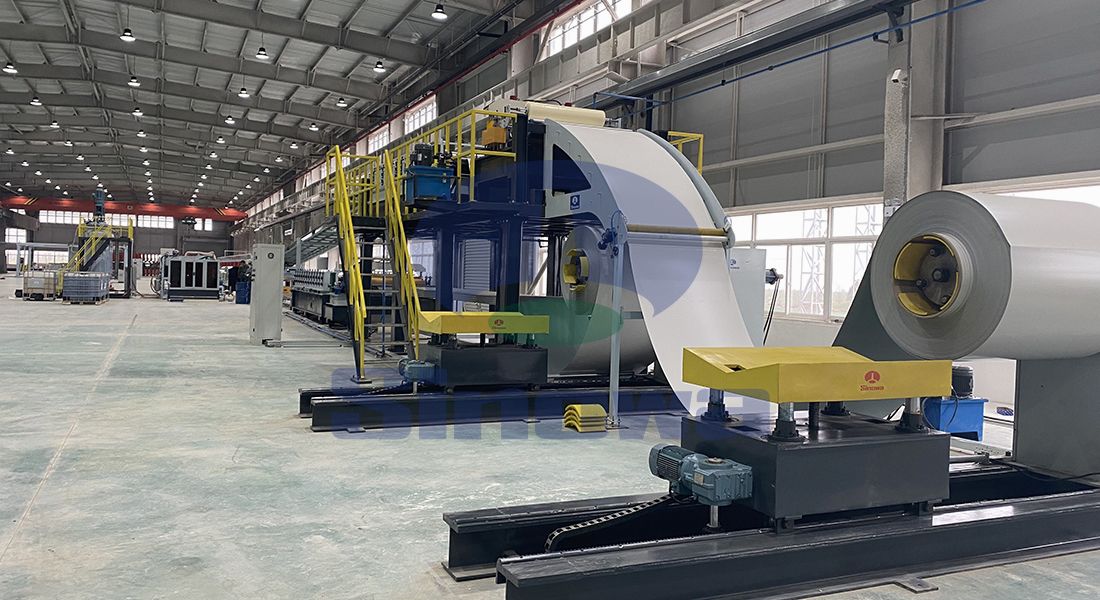
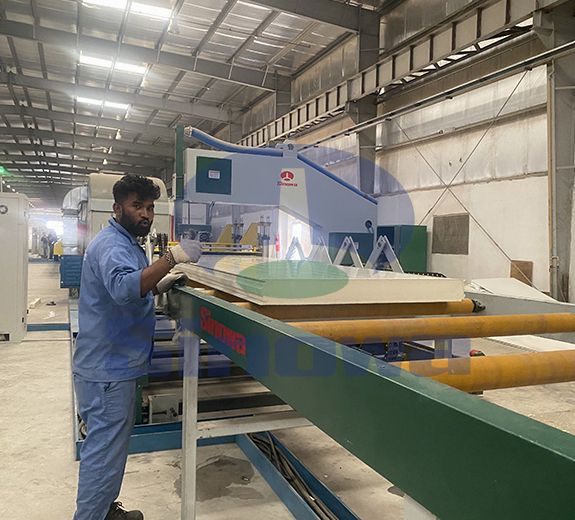
Sinowa is a well-known Low Price Composite PU Sandwich Panel Production Line Supplier From China, Dedicated to the research and development of high-end & high-efficiency composite pu sandwich panel production line, Sinowa is comprehensively taking the leading position in terms of efficiency, automation control level, HMI, environment protection and energy consumption, with subversive designs made in some critical technological fields to procure exceptional cost performance and customer-friendly experience for the entire composite pu sandwich panel production line.
The adoption of system integration technology and bus control technology accomplishes the full automatization of integrated and coordinated control of the entire composite pu sandwich panel production line with accessible remote interactive communication. Ranking the first-class level in the world, it is currently the continuous pu sandwich panel line in the market taking a comprehensive lead in high performance.
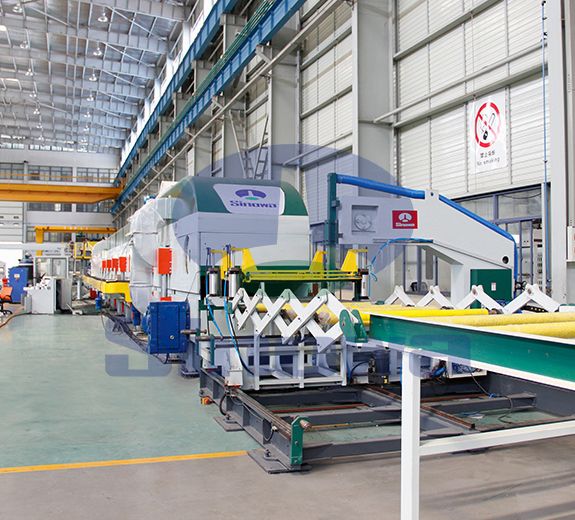
Based on the continuous technological pursuit, the composite pu sandwich panel production line developed by Sinowa provides you with high-efficiency industrial value. Based on China's cost advantage and our hard-working technology concept, our sandwich panel production line has a world-leading price-performance advantage. Composite PU Sandwich Panel Production Line can meet a variety of production needs of customers.The whole sandwich panel line design concept of modularization enables all our components to be integrated and combined at will.
Our composite pu sandwich panel production line can easily automate the production of roof sandwich panel, wall sandwich panel, cold storage sandwich panel and other products by different combination and configuration selection and siple switching. The inner core layer can be polyrethane or rock wool, glass wool, an so on.
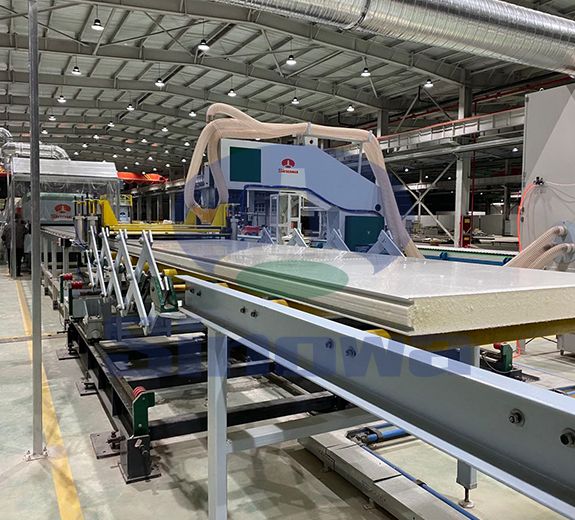
The composite pu sandwich panel production line has high adaptability, which may produce various sandwich panel of the PU, PIR and rock wool systems.
We may design various products according to the customer’s requirements, including various configurations, so as to meet their demands with flexible price system.
Highly integrated and linked control system centralizes all control points at the main central center, achieving parameter linkage, fault self-diagnosis controlled by the whole continuous sandwich panel line and shipping distance control.
High-level automatic control system also saves the manpower and reduces the manpower loss for customers.
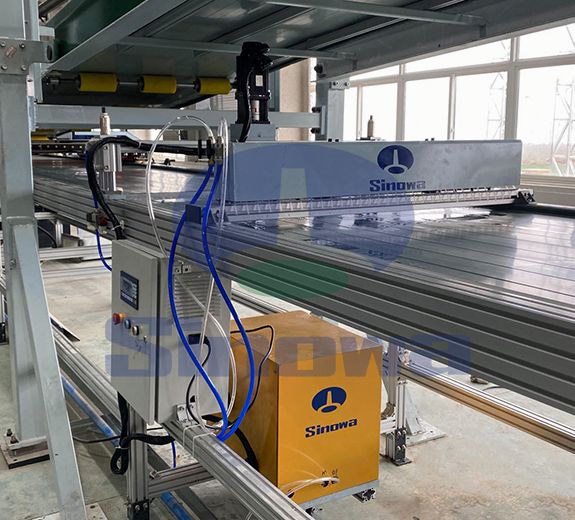
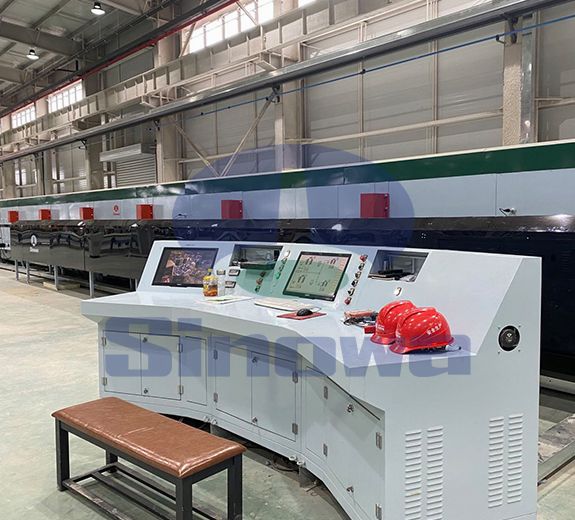
Concentrated system control is fully realized in the practice of concentrated process control so that the control system of all the movements of the parts in the composite pu sandwich panel production line is integrated in one process control console with accessible remote communication to elevate the automation and reduce the allocated number of personnel for the assembly line.
The main engine with modularized design achieves the precision operation of the composite pu sandwich panel production line, stable and reliable quality, less part and maintenance loss.
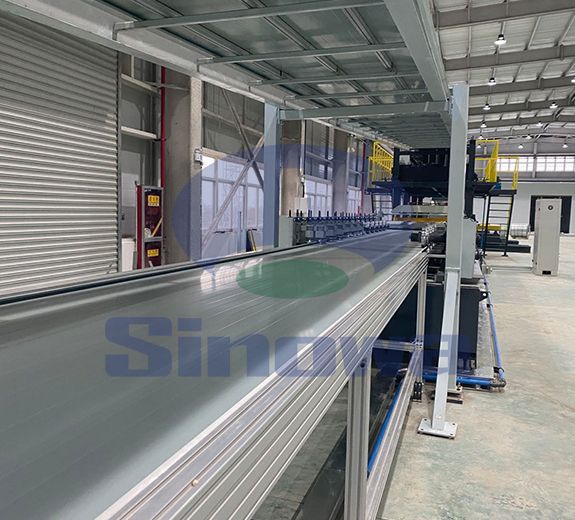
The whole composite pu sandwich panel production line is strictly modularized in design to ensure the greatest probability for the parts to be interchangeable, making it the most cost- and energy-saving. No joining made manually, all the key processes of the parts are completed in the machining center. As soon as the parts are inspected and warehoused, they enter into the assembly process. The modularized assembly can not only greatly increase the production efficiency but, most importantly, realize quick delivery as well. It elevates the reliability of product quality to a totally new level and minimizes the influence from human factors.
The whole composite pu sandwich panel production line has over 40 innovative inventions, making our products have lots of unique features and the comprehensive performance of our production line leading in the industry.
The precision servo hoisting mechanism employed by the main engine without hydraulic system makes the board thickness control flexible and the customer may conveniently change or adjust the board thickness. There will be not such troubles as hydraulic system adjustment, leakage, maintenance, etc.
High-level energy saving and protection design makes the whole composite pu sandwich panel production line possible to produce around the clock throughout the year and the customer will save huge budget. In addition, the isolated heat preservation room is constructed for warming the environment. The energy saving and protection design of our high-tech composite pu sandwich panel production line may guarantee that the customer’s production line may be freely heated and produce in the main time to save more costs for customers.
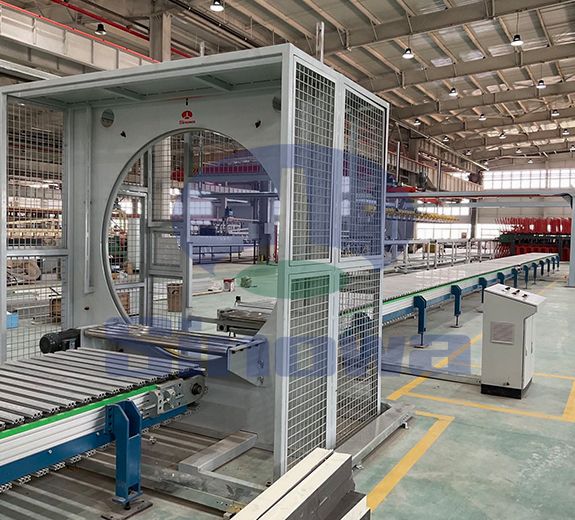
The high-power low-consumption design quickens the reaction of the composite pu sandwich panel production line while energy consumption is kept low.
With the brand-new, fully sealed inner insulation design, the energy consumption is controlled at the minimum level to achieve the design objective of less than an hour for the insulation system to be activated from the room temperature above 5℃ to the production process temperature.
The energy consumption is only 40% that of those similar products.
| PRODUCTION TYPE | PU | PIR | PHENOLIC | |||
|---|---|---|---|---|---|---|
| PRODUCTION USE | INSULATION PANEL | DOCORATIVE PANEL | ||||
| SURFACE OF SHEET | ALUMINUM FOIL | NON-WOVEN FABRIC | PAPER | NAKED | ||
| PRODUCT THICKNESS | 10m--- 200mm | |||||
| PRODUCTION SPEED | 3.0m---25m |
|---|---|
| FOAMING METHOD | TWO OR MULTI COMPONENTS FOAMING |
| FOAMING AGENT | PENTANE OR 141B |
| LENGTH OF LINE | 45m—100m CUSTOMER OPTIONAL |
Sinowa is a well-known manufacturer and technical service provider of high-end polyurethane insulation board production lines and various high-performance cold roll forming machine in China. Our main products include polyurethane double-sided color steel sandwich panel production line, polyurethane and phenolic soft facing insulation panel production line and high-efficiency roll forming machines.
Sinowa has invested outstanding efforts in low price composite pu sandwich panel production line, This is why our products are more efficiency, quality, automatic control technology, environmental protection, energy consumption indicators and the appearance and safety protection are comprehensively leading, Some subversive design changes in many major technical points,these major innovations make our products excellent in price/performance and user experience.
Sinowa is committed to the development and manufacturing of high-end and high-efficiency low price composite pu sandwich panel production line. Our sandwich panel production lines are leading the way in efficiency, automatic control, human-computer interaction, environmental protection and energy consumption. Using system integration and bus control technology, it realizes the automatic integrated linkage control of the entire production line, and can achieve remote interactive communication, which has the world-class level and a comprehensive leading high-performance production line in the market.
The low price composite PU sandwich panel production line represents a practical manufacturing solution designed to meet growing market demand for affordable insulated building panels without sacrificing core functional performance. This type of production setup integrates multiple processing units into one continuous workflow, allowing raw materials to move sequentially through feeding, foaming, laminating, cutting and stacking stages with minimal manual intervention. Unlike highly customized heavy-duty lines built for extreme output requirements, this configuration focuses on stable and consistent operation under regular production loads, making it suitable for manufacturers that serve regional construction and prefabricated housing projects. Every component of the line is selected to balance operational reliability and overall investment cost, avoiding over-engineered structures that add unnecessary expenses for users with moderate production targets. Operators can learn to manage the main controls within a short training period, and routine maintenance tasks do not require specialized technical teams that are hard to source in many local industrial areas. The continuous forming process keeps material waste at a reasonable level, which further helps production facilities control running costs after the equipment is installed and commissioned. Many new market entrants choose this line as their first step into the sandwich panel industry because its entry threshold is manageable while it still delivers finished panels that fit common application scenarios in modern construction.

Raw material handling forms the starting point of the whole production cycle on the low price composite PU sandwich panel production line, and careful coordination of material supply directly influences the surface quality and thermal performance of the final panels. Upper and lower facing materials are unwound steadily from roll racks, with tension adjustment devices keeping the sheets flat and preventing wrinkles or uneven stretching as they travel forward. The PU foam raw materials are stored in separate sealed tanks and delivered through precise metering pumps to the mixing head, where they combine thoroughly before being evenly distributed onto the moving facing sheet. The distribution speed and pouring width can be adjusted according to the required thickness of the finished panel, so the same line can produce products with different insulation dimensions to satisfy varied project needs. Support guides hold the facing materials in correct alignment during the foaming stage, ensuring the foam layer bonds tightly with both surfaces without gaps or partial separation. Operators regularly check the flow state of the mixed foam to avoid issues such as incomplete curing or inconsistent density inside the core layer. Simple filtering structures are fitted on the material pipelines to reduce the risk of blockages caused by tiny impurities, cutting down unexpected downtime during long production runs. Well-managed material feeding also helps maintain uniform panel weight across each batch, which creates more predictable results for downstream construction users.
Continuous pressing and curing is the core forming section of the low price composite PU sandwich panel production line, where liquid PU foam expands and hardens into a solid insulation core between two facing layers. After the foam mixture is applied, the layered materials enter a double-belt press system that maintains stable pressure and temperature throughout the curing process. The press belts move at a synchronized speed matching the front feeding section, so the whole panel moves forward as a single unit without internal shifting between the skin materials and foam core. Temperature control in this zone is kept within a suitable range to support full foam expansion and complete chemical curing, avoiding problems like soft inner cores or brittle foam structures that weaken the finished product. The length of the curing channel is calibrated to match the standard running speed of the line, so panels exit the press area already holding their fixed shape and stable bonding strength. Adjustment mechanisms allow operators to change the clearance between the upper and lower belts quickly, which changes the final thickness of the sandwich panels without major mechanical modification. Vibration reduction parts are installed around the pressing frame to limit small shakes that could create uneven foam distribution. This continuous forming method delivers far higher efficiency than batch-type manual molding, and it keeps the labor requirement low for each unit of panels produced.
Trimming and cutting operations come right after the curing section on the low price composite PU sandwich panel production line, shaping the continuous long panel into standard lengths and cleaning uneven edges for convenient installation. As the formed panel travels forward, edge trimming devices remove excess foam and irregular material from both sides to create straight, parallel edges on every finished piece. The cutting unit uses a tracking system that follows the moving panel to complete cross-cutting at preset lengths, so cutting actions do not interrupt the steady forward movement of the production flow. Cut waste generated during this stage is collected through a simple collection chute, and most of the waste can be gathered for centralized disposal or further processing. The cutting speed is synchronized with the line running speed to prevent chipping, cracking or delamination along the cut edges of the PU core and facing sheets. Operators can input new length parameters through the control interface whenever orders require different panel sizes, and the system adapts to the new setting quickly. Safety shields surround the rotating cutting tools to protect on-site workers while still allowing visual inspection of the cutting effect. Consistent edge quality reduces extra processing work at construction sites and makes panel assembly simpler for builders.
The stacking and discharging section handles finished panels after cutting, completing the last step inside the low price composite PU sandwich panel production line before goods are moved to storage areas. A transfer platform receives individual cut panels and aligns them neatly before the stacking mechanism lifts and arranges each piece into orderly piles. The stacking speed matches the output rate of the cutting unit, preventing finished panels from piling up and blocking the production path. Soft contact surfaces on the stacking arms avoid scratching or denting the outer facing layers of the panels, preserving the appearance quality of the products. Once a stack reaches the preset quantity, the system sends the stack onto an outgoing roller table so workers can move it away with standard handling equipment. This automated stacking part reduces the heavy physical labor that would otherwise be needed to lift and arrange panels manually. Sensors are placed at key positions to detect empty or misaligned panels, and the system can trigger an alert when abnormal products pass through. Tidy stacking also makes inventory management and loading transport more efficient, lowering the chance of damage during transit to customers.
The central control system serves as the command center of the low price composite PU sandwich panel production line, linking all separate functional sections and allowing operators to monitor and adjust production parameters from one location. The control interface displays real-time data including line running speed, material flow rate, pressing temperature and the total number of panels produced in the current shift. All main working parameters can be modified directly on the interface, and common production settings can be saved for fast recall when repeating the same panel specification. Alarm prompts appear clearly when the system detects abnormal states such as material shortage, pressure deviation or motor overload, helping staff locate and resolve faults faster. The control logic is designed with straightforward operation logic, avoiding overly complex menu structures that slow down daily operation. Independent emergency stop buttons are distributed along the whole line to handle unexpected situations immediately from any working position. The system supports stable continuous operation for long working hours, and it does not rely on complicated auxiliary digital platforms that add extra cost and learning burden. Even teams with limited experience in automated equipment can master the core control functions after basic guidance.
Maintenance and daily upkeep of the low price composite PU sandwich panel production line follow a regular routine that protects long-term stable performance and extends the usable life of the equipment. Daily inspection focuses on checking belt tension, pipeline connections, cutting blade sharpness and the lubrication status of transmission chains and bearings. Remaining PU material inside the mixing head needs to be cleaned after production stops to prevent residual foam from hardening and blocking internal channels. Worn consumable parts such as sealing strips and filter elements can be replaced separately, and these spare parts are generally easy to source from ordinary industrial supply channels. The equipment structure is designed to give maintenance workers easy access to key wearing parts, so disassembly and replacement work do not take excessive time. Keeping the production area clean also reduces dust buildup on sensors and moving parts, which helps avoid false signal errors and premature wear. Following the recommended maintenance cycle can greatly reduce sudden breakdowns that halt production schedules. When minor faults emerge, most issues can be fixed by on-site technicians without waiting for remote specialized support, which keeps operational downtime under good control.
The finished PU sandwich panels made by this production line carry practical advantages that fit many common building applications, and these strengths are achieved while keeping the overall manufacturing investment reasonable. The closed-cell PU foam core delivers reliable thermal insulation performance, helping structures reduce energy transfer between indoor and outdoor environments. The composite structure formed by the foam core bonded firmly between two facing layers gives the panels good rigidity, so they can bear normal handling loads during transportation and installation. Panels produced on this line can be used for wall and roof enclosures in temporary buildings, storage warehouses, workshop spaces and other similar structures. The surface of the panels can keep a neat and uniform look, and they can be installed rapidly to shorten the overall construction timeline of projects. Manufacturers using this line can adjust raw material combinations properly to tweak surface features according to what local buyers prefer. While the line targets cost-effective production, the finished products still maintain stable basic performance that meets the practical needs of most mainstream users. This balance of accessible production cost and usable panel performance is the main reason this type of line gains steady attention from new manufacturing investors.
Compared with larger, high-output sandwich panel production lines, the low price composite PU sandwich panel production line shows distinct advantages for businesses with limited capital and moderate order volumes. Large-scale high-speed lines feature many extra auxiliary modules that push up purchase costs, installation requirements and power consumption during operation. This cost-effective line occupies a smaller floor area, which means manufacturers do not need to prepare an extra-large factory space to host the full set of equipment. Its total power demand is lower, bringing down regular electricity expenditure for daily operation. The line has flexible running modes; it can run for short batches to fill small orders instead of requiring continuous nonstop operation to reach economic efficiency. For businesses whose orders fluctuate seasonally, this flexibility prevents unnecessary resource waste during slow periods. The installation process is also relatively simple, and site preparation requirements are less demanding. This equipment offers a balanced choice for producers who want to enter the insulated panel market without committing to the heavy capital and operational burden of top-tier industrial production systems.
Looking ahead, the low price composite PU sandwich panel production line will continue to fill an important niche in the insulated panel manufacturing sector as demand for efficient and affordable building materials keeps expanding. More local builders and project contractors prefer prefabricated sandwich panels to cut construction cycles, creating steady demand for reasonably priced panel products. Equipment developers keep refining small details of this line type, improving the consistency of foam mixing and reducing material consumption without driving up the overall equipment cost. Users of these lines can gradually expand their production capacity later if market orders grow, by adding auxiliary units step by step rather than replacing the whole production system at once. This scalable potential makes the line a sustainable starting investment for many growing manufacturing workshops. As awareness of thermal insulation building solutions spreads in more regional markets, the demand for accessible production equipment like this will remain steady. It connects the supply side of low-cost prefabricated construction materials with market demand, supporting the development of simpler, faster building methods in many practical construction scenarios.
composite pu sandwich panel production line, composite pu sandwich panel production line manufacturer, composite pu sandwich panel production line for sale, composite pu sandwich panel production line supplier, China composite pu sandwich panel production line, Custom composite pu sandwich panel production line
«Low Price Composite PU Sandwich Panel Production Line» Update Date:2026/10/26
URL: https://www.sinowa.cn/en/blog/low-price-composite-pu-sandwich-panel-production-line.html
Tags: PU sandwich panel line , PU sandwich panel machine , PU sandwich panel production line , sandwich panel line , sandwich panel machine , sandwich panel production line
