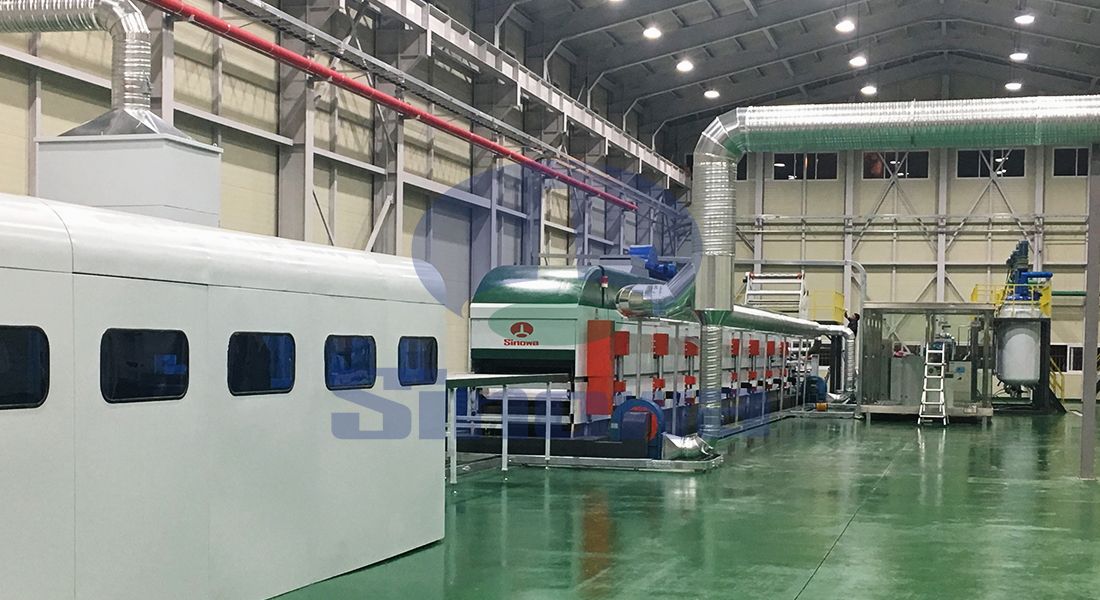
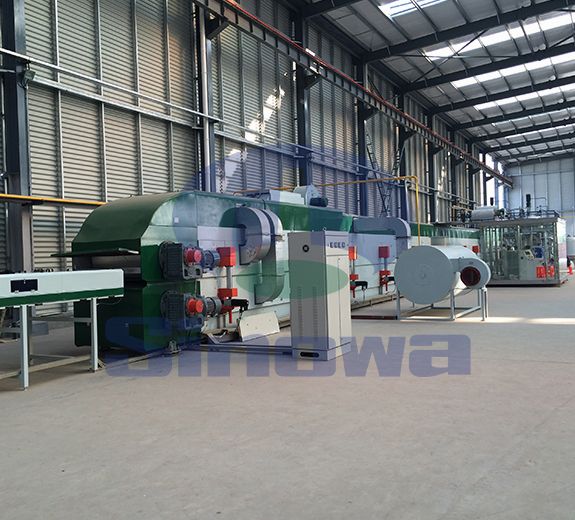
Sinowa is a well-known PU Insulation Panel Machine Supplier From China, Continuous Insulation Panel Production Line of the PU and phenolic aldehyde surface has diversified and multifunctional production characteristics, which may produce products with different specifications such as PU, PF, PIR, etc.
The surface material may be aluminum foil, colored steel, cement base cloth, kraft paper, non-woven fabrics, etc.
The products are widely applied to such occasions as construction, decoration, pipeline ventilation, subway construction, etc.
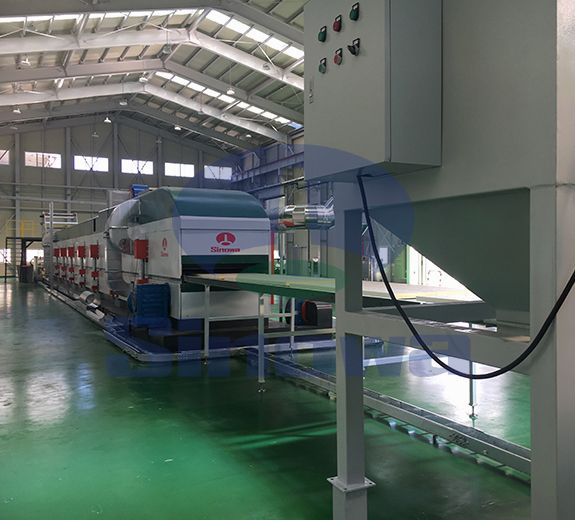
The pu insulation panel machine of soft layer insulation board is able to continuously and efficiently produce high-quality PU and Phenolic insulation boards.
We spare no efforts to improve our product quality and technological reliability by employing the most cutting-edge and the most reliable support and processes to make our products highly reliable and endurable. As a result, the pu insulation panel machine of our soft layer insulation panels is highlighted by many perfect qualities. It is the core idea in Sinowa's product roadmap to surpass our competitors in terms of design philosophy, manufacture methods and service level, going for excellence and leading position and making constant improvement on our products and services, which is also our core value system to create efficiency and convenience for our customers.
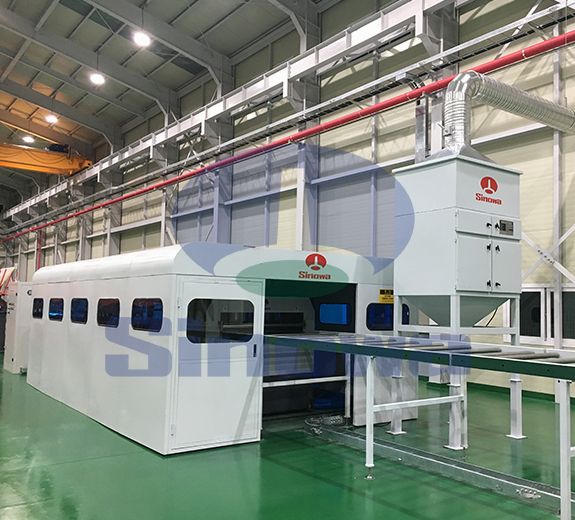
Well-grounded on our solid strength as a renowned large-scale enterprise, Sinowa has a high starting point in developing industrial assembly lines.
Based on the advanced science and technology introduced from within and without the country and supported by a great number of first-grade parts and components from the home and aboard, these assembly lines have a high-level configuration of supporting products in terms of machinery, electrical control, hydraulic pressure, automatic measurement and tracking, and so on.
This is a strong proof of our product’s reliable quality and high efficiency.
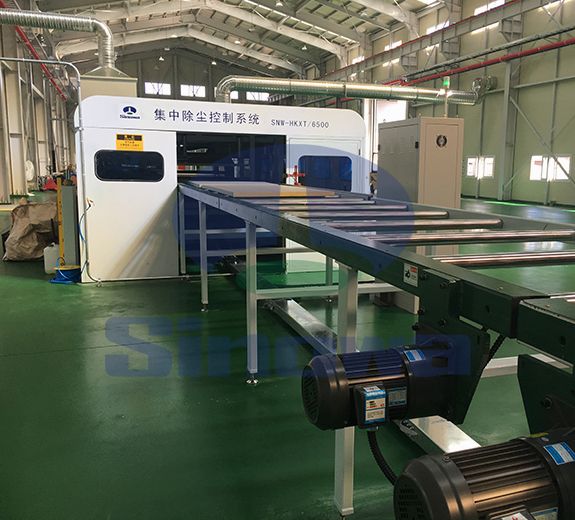
The first-class appearance design and excellent energy saving measures make it unnecessary for customers to additionally construct the heat preservation and isolation room for production around the clock throughout the year, so that the customers may save lots of resources and costs.
Modularized standard design and important parts machined with CNC machine tool make the production line have excellent quality assurance. Dependence on the man-made factors is eliminated. The operation is precision, with the highest operation speed of 30m/min. The pu insulation panel machine has the world-class production efficiency.
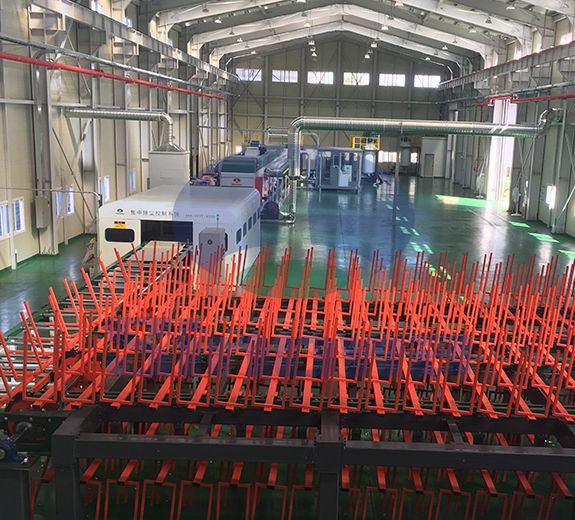
The high performance and reliable multicomponent cyclopentane foaming technology and equipment of Sinowa may be also applied to the foaming process of the phenolic aldehyde board. Therefore, our customers may not only freely adjust the foaming matching according to the raw material, but also save lots of costs. Moreover, they are of significance for environmental protection.
Sinowa's industrial pu insulation panel machine of insulation panels is distinguished by its impressive performance of energy conservation. In each high point of energy consumption throughout the entire pu sandwich panel line are implemented corresponding measures to considerably lower the consumption level.
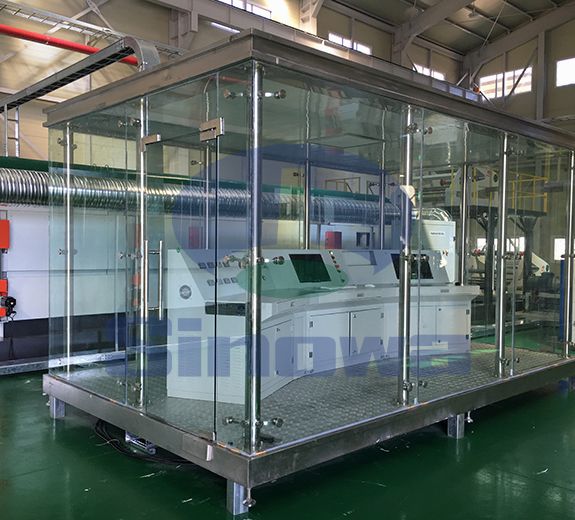
For example, the body of the lamination belt conveyer is covered with insulation panels in very reasonable structures, which doesn’t blemish the overall outlook but greatly increases the insulation performance.
The entire pu insulation panel machine is constantly optimized and improved so that the consumption of each power source is significantly reduced. The motor power of our lamination conveying system is only 3.0 kw, about 50% less than those of the same kind.
All in all, the energy consumption of the whole sandwich panel line equals 40% or even less of the equivalent lines in the market.
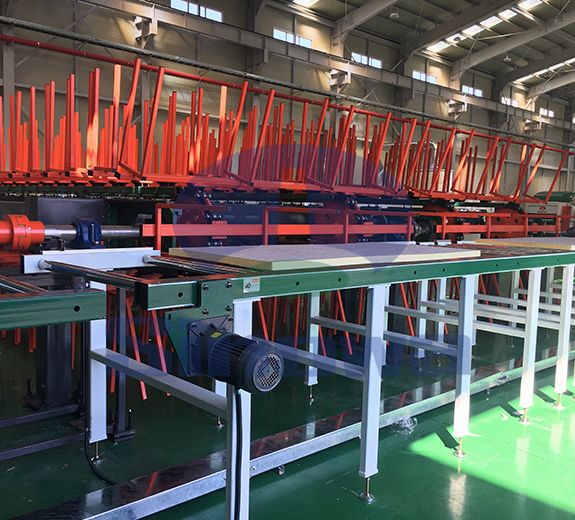
The pu insulation panel machine of Sinowa adopts the most advanced concepts in the world to realize the modularized design with all the parts bolted together rather than welded.
In standardized production, the parts can be dismantled and exchanged, so the production cycle is drastically shortened and the maintenance becomes by far easier.
Through finite element analysis, the equipment design is greatly optimized to realize modularization, digitization, and weight-minimalization.
| PRODUCTION TYPE | PU | PIR | PHENOLIC | |||
|---|---|---|---|---|---|---|
| PRODUCTION USE | INSULATION PANEL | DOCORATIVE PANEL | ||||
| SURFACE OF SHEET | ALUMINUM FOIL | NON-WOVEN FABRIC | PAPER | NAKED | ||
| PRODUCT THICKNESS | 10m--- 200mm | |||||
| PRODUCTION SPEED | 3.0m---25m |
|---|---|
| FOAMING METHOD | TWO OR MULTI COMPONENTS FOAMING |
| FOAMING AGENT | PENTANE OR 141B |
| LENGTH OF LINE | 45m—100m CUSTOMER OPTIONAL |
Sinowa is a well-known manufacturer and technical service provider of high-end polyurethane insulation board production lines and various high-performance cold roll forming machine in China. Our main products include polyurethane double-sided color steel sandwich panel production line, polyurethane and phenolic soft facing insulation panel production line and high-efficiency roll forming machines.
Sinowa has invested outstanding efforts in pu insulation panel machine, This is why our products are more efficiency, quality, automatic control technology, environmental protection, energy consumption indicators and the appearance and safety protection are comprehensively leading, Some subversive design changes in many major technical points,these major innovations make our products excellent in price/performance and user experience.
Sinowa is committed to the development and manufacturing of high-end and high-efficiency pu insulation panel machine. Our sandwich panel production lines are leading the way in efficiency, automatic control, human-computer interaction, environmental protection and energy consumption. Using system integration and bus control technology, it realizes the automatic integrated linkage control of the entire production line, and can achieve remote interactive communication, which has the world-class level and a comprehensive leading high-performance production line in the market.
The PU insulation panel machine stands as a core piece of processing equipment for continuous production of rigid polyurethane insulation panels, designed to integrate multiple functional units into one stable production line. At its heart, the machine controls the accurate mixing and injection of two-component PU raw materials, ensuring the chemical reaction proceeds evenly before the material enters the forming mould. Operators adjust flow rates and mixing ratios through the central control interface, so the foaming reaction generates uniform cellular structures inside the finished panels. The whole set of equipment is built to maintain steady running speed for long shifts, reducing frequent stops caused by unstable material supply or uneven mixing. Raw material storage and delivery sections are sealed properly to prevent moisture and dust from interfering with foaming quality, as even tiny impurities can create voids or weak spots within the insulation core. The machine also works with different surface facer materials, letting the final product combine the thermal performance of PU foam with the protective strength of outer layers. Every movement of the conveyor, injection head and pressing device is synchronised to avoid mismatched timing that may lead to uneven panel thickness or surface defects.

As production begins, the surface facers are unwound and guided steadily along the conveyor path, moving forward at a preset speed aligned with the foaming injection system. The facers are held flat by guiding rollers and tension adjustment assemblies, which stop wrinkling, offset or curling during the forming stage. Once the facers are in place, mixed PU liquid is poured evenly between the upper and lower layers, and the liquid quickly expands under controlled temperature to fill the space between the two surfaces. The pressing section then applies consistent pressure to shape the panel to the target thickness, while limiting excessive expansion that would break the outer facers. Temperature control modules around the mould and pressing zone keep the reaction environment stable, because PU foaming is highly sensitive to ambient and surface temperatures. If temperature fluctuates sharply, foam density will vary across a single panel, weakening its consistent insulation ability. Workers only need to monitor the running status and make minor parameter tweaks instead of manually spreading the foaming material, which greatly cuts down labour intensity and human-caused inconsistencies.
The curing zone is an indispensable part of the whole PU insulation panel machine, giving the foamed material enough time to complete cross-linking and gain stable physical properties before cutting. Inside this area, panels keep moving forward slowly while heat distribution remains balanced across the entire width of the line. Insufficient curing time leaves the foam soft and prone to deformation after leaving the line, while overly long curing reduces overall production efficiency. The length and running speed of the curing tunnel are matched to the foaming formula and target panel thickness, so each batch gets the proper reaction duration. During curing, internal stress inside the foam gradually releases, lowering the risk of later warping or shrinkage of finished panels. The outer facers bond tightly with the PU core in this stage, forming an integrated composite structure rather than separate layers that peel apart easily. Operators can observe curing effects through transparent observation windows without interrupting the continuous flow of panels through the machine.
After finishing curing, the continuous panel strip enters the cutting unit of the PU insulation panel machine, where it is divided into finished panels of required lengths. The cutting mechanism uses fast, smooth cutting movements to create clean, neat edges without crushing the foam core or tearing the surface facers. Cutting length can be modified directly on the control system, so the line can switch between different panel specifications without major mechanical adjustment. A positioning sensor tracks the forward movement of the panel in real time, sending trigger signals to the cutter when the target length arrives. Chips and small foam scraps produced in cutting are collected by a simple recovery structure, keeping the working area tidy and preventing debris from jamming moving rollers. Once cut, individual panels are separated from the continuous strip and move toward the discharging section. This automated cutting process ensures each finished piece meets dimensional consistency, which matters a lot for later installation and assembly of insulation systems.
Discharging and stacking functions follow the cutting process, helping organise finished PU insulation panels in neat piles ready for transfer and storage. The discharging conveyor sends panels out at a gentle speed, with soft supporting structures to avoid scratching or denting panel surfaces. Stacking guides align each panel so edges line up closely, preventing slanted stacks that may topple during handling. Some designs include adjustable stacking heights and pause functions, allowing staff to remove full stacks and place empty receiving racks without halting the whole production line. At this stage, workers carry out simple visual checks, spotting obvious surface scratches, edge damage or uneven foaming before panels move to storage. Good stacking arrangement also protects panel insulation performance, as heavy, misaligned stacking can squeeze foam cells and permanently reduce thermal resistance. This part of the machine connects the production flow to post-processing and logistics, closing the loop of continuous panel manufacturing.
The control system of the PU insulation panel machine acts as the brain that coordinates all separate units into one coordinated production system. It displays real-time data such as line speed, raw material flow, working temperature and production count on an easy-to-read interface. Parameter settings can be saved for common panel types, so operators can recall previous stable formulas quickly when switching product specifications. Safety interlock programs are built into the control logic; when a protective cover opens or a conveyor jam is detected, the machine slows or stops automatically to lower accident risks. Data records can be stored for later review, helping technicians trace quality issues back to changes in running parameters. The system supports gradual fine tuning instead of sudden large adjustments, which protects the stability of the foaming reaction. Even operators without deep chemical knowledge can master basic operation after standard training, though complex fault diagnosis still requires skilled technical support.
Maintenance work directly affects the service life and stable output of a PU insulation panel machine, with regular inspection tasks spread across all functional sections. The mixing head needs routine cleaning after production stops, as leftover PU material will solidify and block internal channels if allowed to sit for too long. Rollers, chains and transmission parts require periodic lubrication to reduce friction and slow down wear, avoiding jerky movement of the conveyor line. Seals on raw material pipelines are checked regularly for tiny leaks, since leaked PU mixture can harden rapidly and damage surrounding components. Electrical cabinets and sensors should stay dry and free from foam dust buildup, as dust accumulation may cause signal errors or short circuits. Planned maintenance is usually arranged during production gaps, so it does not take up valuable continuous running time. Timely upkeep reduces unexpected breakdowns, keeps quality steady and extends the usable cycle of the whole production setup.
Material adaptability is a key advantage built into modern PU insulation panel machines, letting manufacturers test different facer types and foam formulations within reasonable ranges. Different facer materials bring different surface hardness, water resistance and wear resistance to the final panel, while the PU core retains its core thermal insulation feature. The injection and mixing system can adapt to adjusted material viscosity within its designed range, as long as operators update matching speed and temperature settings accordingly. Some formulations create foam with lighter weight, while others produce denser cores for higher mechanical load resistance. The machine’s adjustable mould gap supports production of panels with varying thickness, covering many common application scenarios for thermal insulation. Even when raw material batches have minor natural property differences, careful tuning of machine parameters can offset small changes and keep finished panel performance consistent. This flexibility helps producers respond to shifting market demands for different insulation panel variants.
Energy efficiency has become a major consideration in the design of new PU insulation panel machines, balancing production capacity with reasonable energy consumption. Heating elements in the curing and forming zones use targeted heat distribution instead of widespread, wasteful heating of the whole workshop space. Drive motors for conveyors and pressing units adopt designs that adjust power output based on actual load, rather than running at fixed high power constantly. Sealed structures on raw material tanks and pipelines reduce heat loss and cut extra energy needed to keep materials at proper reaction temperature. Optimised foaming mixing also reduces raw material waste, because well-controlled reactions turn nearly all input materials into usable panel core instead of wasted defective products. Lower energy use not only lessens ongoing operating costs for the production site but also supports smoother, more sustainable long-term operation. Many design improvements focus on cutting unnecessary energy loss without sacrificing production speed or finished panel quality.
Looking ahead, the development direction of PU insulation panel machines centres on smoother automation, better monitoring precision and more flexible format switching. Future iterations will add richer real-time quality feedback, where minor variations in foam density or surface flatness are detected automatically and trigger small parameter corrections without human input. Line structures will become more compact for sites with limited workshop space, while still keeping the full sequence from facer feeding to stacking intact. Human-machine interaction will grow simpler, with clearer alerts for early signs of component wear or material inconsistency. These advances aim to reduce reliance on highly experienced on-site operators while lifting overall output stability. As demand for efficient thermal insulation materials continues to expand, this type of equipment will keep evolving to match the needs of panel producers, supporting steady supply of reliable insulation panels for many downstream application areas.
pu insulation panel machine, pu insulation panel machine manufacturer, pu insulation panel machine for sale, pu insulation panel machine supplier, China pu insulation panel machine, Custom pu insulation panel machine
«PU Insulation Panel Machine» Update Date:2026/10/28
URL: https://www.sinowa.cn/en/blog/pu-insulation-panel-machine.html
Tags: PU sandwich panel line , PU sandwich panel machine , PU sandwich panel production line , sandwich panel line , sandwich panel machine , sandwich panel production line
