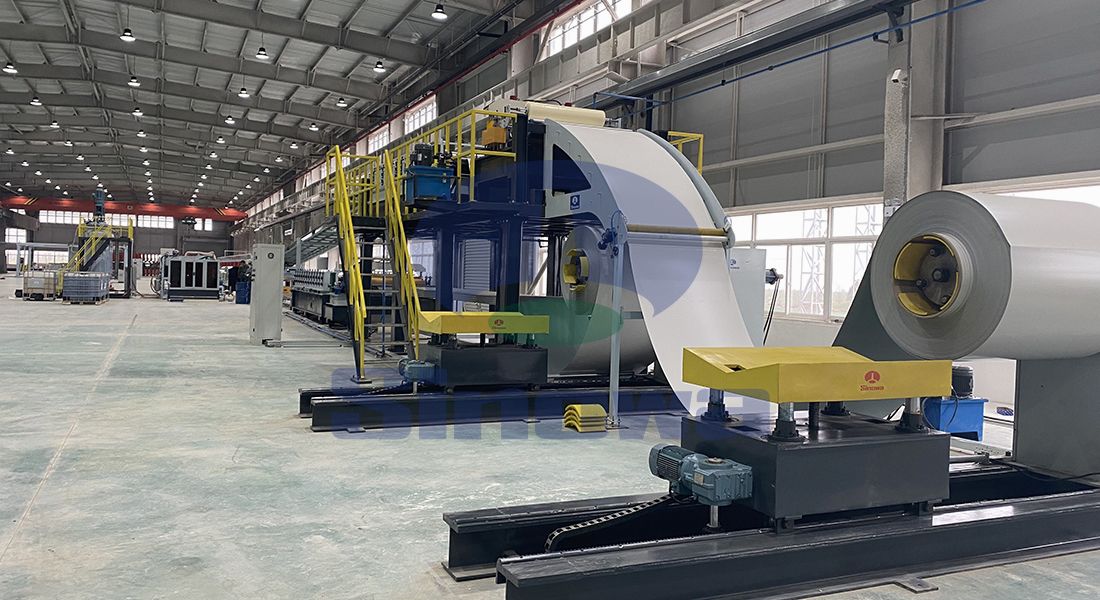
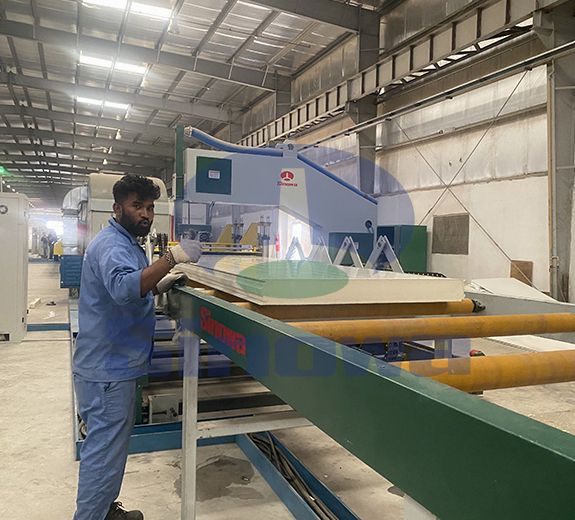
Sinowa is a well-known PU Panel Line Supplier From China, Dedicated to the research and development of high-end & high-efficiency pu panel line, Sinowa is comprehensively taking the leading position in terms of efficiency, automation control level, HMI, environment protection and energy consumption, with subversive designs made in some critical technological fields to procure exceptional cost performance and customer-friendly experience for the entire pu panel line.
The adoption of system integration technology and bus control technology accomplishes the full automatization of integrated and coordinated control of the entire pu panel line with accessible remote interactive communication. Ranking the first-class level in the world, it is currently the continuous pu sandwich panel line in the market taking a comprehensive lead in high performance.
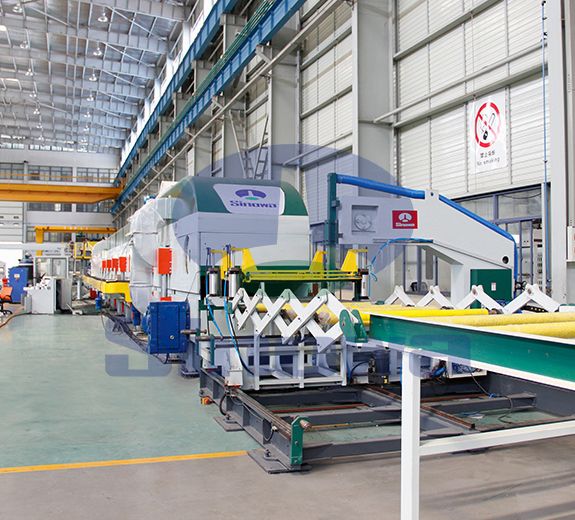
Based on the continuous technological pursuit, the pu panel line developed by Sinowa provides you with high-efficiency industrial value. Based on China's cost advantage and our hard-working technology concept, our sandwich panel production line has a world-leading price-performance advantage. PU Panel Line can meet a variety of production needs of customers.The whole sandwich panel line design concept of modularization enables all our components to be integrated and combined at will.
Our pu panel line can easily automate the production of roof sandwich panel, wall sandwich panel, cold storage sandwich panel and other products by different combination and configuration selection and siple switching. The inner core layer can be polyrethane or rock wool, glass wool, an so on.
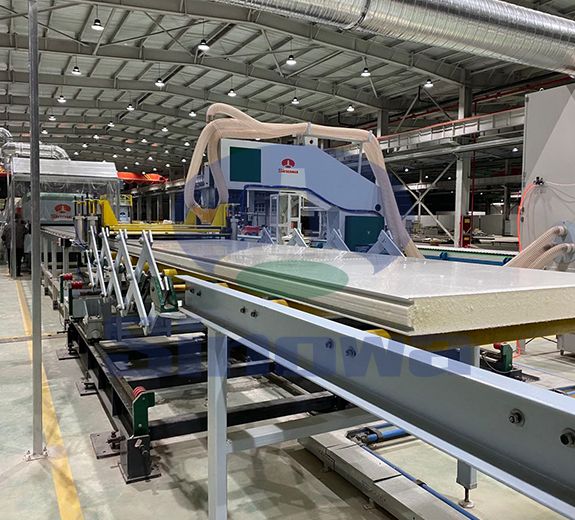
The pu panel line has high adaptability, which may produce various sandwich panel of the PU, PIR and rock wool systems.
We may design various products according to the customer’s requirements, including various configurations, so as to meet their demands with flexible price system.
Highly integrated and linked control system centralizes all control points at the main central center, achieving parameter linkage, fault self-diagnosis controlled by the whole continuous sandwich panel line and shipping distance control.
High-level automatic control system also saves the manpower and reduces the manpower loss for customers.
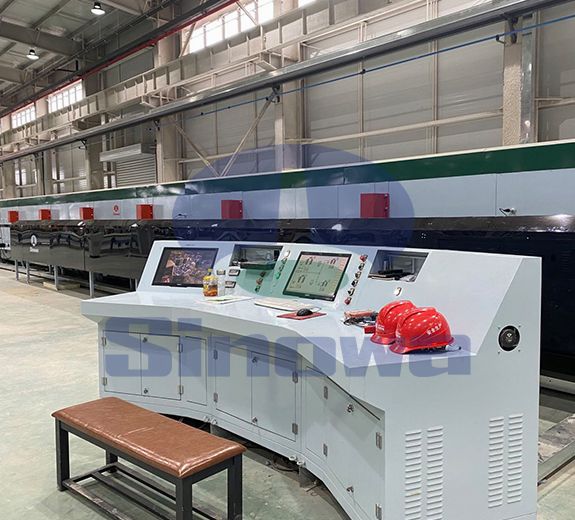
Concentrated system control is fully realized in the practice of concentrated process control so that the control system of all the movements of the parts in the pu panel line is integrated in one process control console with accessible remote communication to elevate the automation and reduce the allocated number of personnel for the assembly line.
The main engine with modularized design achieves the precision operation of the pu panel line, stable and reliable quality, less part and maintenance loss.
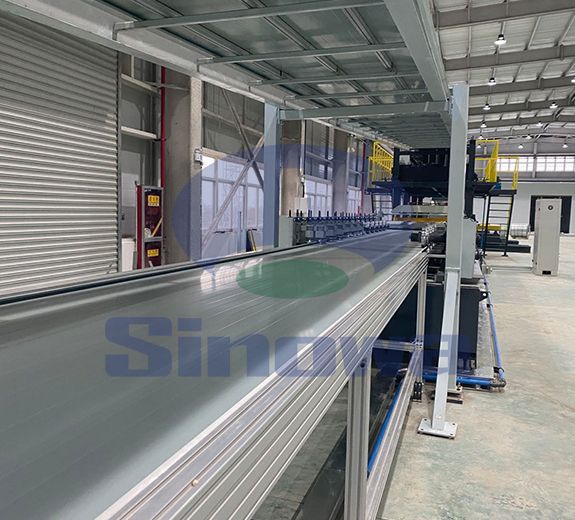
The whole pu panel line is strictly modularized in design to ensure the greatest probability for the parts to be interchangeable, making it the most cost- and energy-saving. No joining made manually, all the key processes of the parts are completed in the machining center. As soon as the parts are inspected and warehoused, they enter into the assembly process. The modularized assembly can not only greatly increase the production efficiency but, most importantly, realize quick delivery as well. It elevates the reliability of product quality to a totally new level and minimizes the influence from human factors.
The whole pu panel line has over 40 innovative inventions, making our products have lots of unique features and the comprehensive performance of our production line leading in the industry.
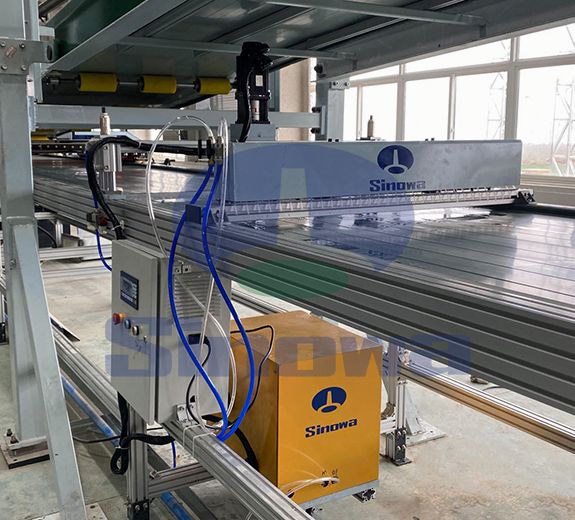
The precision servo hoisting mechanism employed by the main engine without hydraulic system makes the board thickness control flexible and the customer may conveniently change or adjust the board thickness. There will be not such troubles as hydraulic system adjustment, leakage, maintenance, etc.
High-level energy saving and protection design makes the whole pu panel line possible to produce around the clock throughout the year and the customer will save huge budget. In addition, the isolated heat preservation room is constructed for warming the environment. The energy saving and protection design of our high-tech pu panel line may guarantee that the customer’s production line may be freely heated and produce in the main time to save more costs for customers.
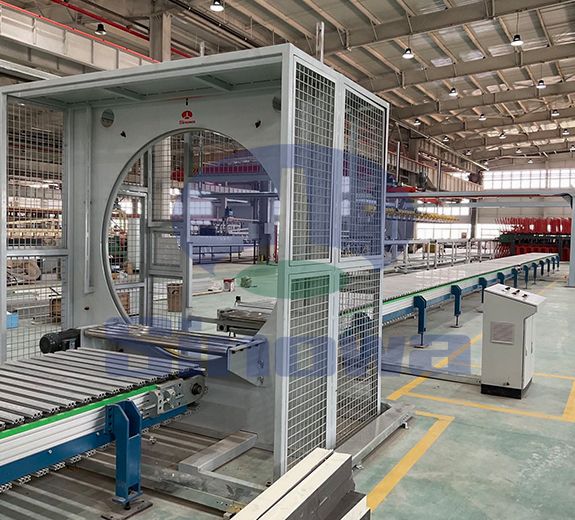
The high-power low-consumption design quickens the reaction of the pu panel line while energy consumption is kept low.
With the brand-new, fully sealed inner insulation design, the energy consumption is controlled at the minimum level to achieve the design objective of less than an hour for the insulation system to be activated from the room temperature above 5℃ to the production process temperature.
The energy consumption is only 40% that of those similar products.
| PRODUCTION TYPE | PU | PIR | PHENOLIC | |||
|---|---|---|---|---|---|---|
| PRODUCTION USE | INSULATION PANEL | DOCORATIVE PANEL | ||||
| SURFACE OF SHEET | ALUMINUM FOIL | NON-WOVEN FABRIC | PAPER | NAKED | ||
| PRODUCT THICKNESS | 10m--- 200mm | |||||
| PRODUCTION SPEED | 3.0m---25m |
|---|---|
| FOAMING METHOD | TWO OR MULTI COMPONENTS FOAMING |
| FOAMING AGENT | PENTANE OR 141B |
| LENGTH OF LINE | 45m—100m CUSTOMER OPTIONAL |
Sinowa is a well-known manufacturer and technical service provider of high-end polyurethane insulation board production lines and various high-performance cold roll forming machine in China. Our main products include polyurethane double-sided color steel sandwich panel production line, polyurethane and phenolic soft facing insulation panel production line and high-efficiency roll forming machines.
Sinowa has invested outstanding efforts in pu panel line, This is why our products are more efficiency, quality, automatic control technology, environmental protection, energy consumption indicators and the appearance and safety protection are comprehensively leading, Some subversive design changes in many major technical points,these major innovations make our products excellent in price/performance and user experience.
Sinowa is committed to the development and manufacturing of high-end and high-efficiency pu panel line. Our sandwich panel production lines are leading the way in efficiency, automatic control, human-computer interaction, environmental protection and energy consumption. Using system integration and bus control technology, it realizes the automatic integrated linkage control of the entire production line, and can achieve remote interactive communication, which has the world-class level and a comprehensive leading high-performance production line in the market.
The PU panel line stands as a sophisticated production system built to turn raw chemical components and surface materials into finished insulated panels through a continuous, streamlined workflow. At the heart of this line lies the controlled reaction of polyurethane foam, which forms the core insulating layer bonded firmly between two outer facings. Every segment of the equipment is calibrated to maintain consistent material flow, mixing ratios and reaction timing, because even minor fluctuations can alter the density, adhesion and thermal performance of the final product. Raw materials are stored in sealed tanks and delivered through precision metering units, where separate streams of polyol and isocyanate converge inside a high-pressure mixing head. The mixing process happens rapidly, generating a liquid blend that expands steadily after it is spread evenly across the moving lower facing sheet. Operators monitor the fluid state closely to ensure the foam spreads without gaps, bubbles or uneven thickness before the upper facing is brought down to enclose the rising foam layer. This initial forming stage sets the foundation for the structural integrity of each panel, and steady line speed coordination keeps the whole sequence synchronized without unnecessary interruptions.

As the combined facing sheets and wet foam move forward along the conveyor, they enter the double-belt curing section, the longest and most critical zone within the entire PU panel line. Inside this enclosed chamber, stable temperature and pressure conditions support the full chemical curing of the polyurethane mixture, allowing the foam to complete its expansion and develop a rigid, closed-cell structure. The upper and lower belts apply uniform pressure across the full width of the panel, preventing warping, bulging or separation between the foam core and the surface facings. Belt tension is adjusted carefully to match the thickness requirement of the panel being produced, and the length of the curing tunnel is designed to give the foam enough time to finish cross-linking before the panel exits. If the residence time here is too short, the foam remains incompletely cured and may shrink or delaminate after cutting. If the residence time is excessively long, production efficiency drops without extra benefit to product quality. Balancing curing time, temperature and pressure becomes a daily focus for the technical team managing the line.
Once the continuous slab exits the curing tunnel, it moves toward the cutting station where fixed-length panels are separated from the endless web. Cutting tools are engineered to deliver clean, straight edges without crushing the foam core or tearing the outer facings. The cutting system receives length signals from tracking sensors that follow the movement of the panel, triggering the cutting action automatically at preset intervals. After each cut, edge trimming units remove ragged margins and shape the side profiles to create interlocking joints that fit neatly when panels are installed side by side. These joint profiles vary according to application needs, and the tool sets can be swapped out to switch between different designs during production changeovers. Fine chips and foam scraps generated during cutting are collected through a built-in extraction system to keep the working area tidy and avoid debris interfering with downstream equipment. Each cut panel is then inspected visually for surface blemishes, edge damage or signs of poor bonding before it proceeds onward.
Material handling after cutting is arranged to move finished panels gently, because the composite structure, while strong under steady load, can be scratched, dented or bent if mishandled. Transfer rollers and side clamping devices shift individual panels away from the main production path and arrange them into stacks. Stacking patterns are planned to distribute weight evenly and keep panel surfaces protected from abrasion. Soft contact surfaces on all handling equipment reduce the risk of marking decorative or coated facings. Once a stack reaches the target quantity, it is secured with strapping that holds the panels aligned during later transport. The stacking pace is matched to the speed of the cutting section to prevent bottlenecks, and buffer zones are included in the layout so short pauses in stacking do not force the main foaming process to stop unexpectedly. This smooth handover from production to packaging reduces idle time and supports stable output over long operating runs.
Changeover management represents one of the key operational challenges on a PU panel line, as manufacturers frequently switch between different panel thicknesses, facing materials and joint profiles to meet varied project demands. A changeover involves adjusting metering settings for the foam chemicals, repositioning the gap between the double belts, exchanging cutting and profiling tools, and recalibrating the tracking sensors. Each adjustment must be followed by the production of trial pieces, which are checked for foam density, bond strength, flatness and dimensional accuracy before full production resumes. Experienced technicians follow a consistent sequence to minimize wasted material and lost runtime. Some adjustments can be preset and recalled from saved parameter groups, which greatly shortens the transition period between product types. Careful documentation of settings for each product variant also reduces inconsistencies when the same specification is run again weeks or months later.
Maintenance routines are scheduled around production cycles to preserve the reliability of every component on the PU panel line. The mixing head receives frequent cleaning, since residual cured polyurethane can build up inside mixing chambers and block material passages, ruining the homogeneity of future foam batches. Conveyor belts, drive chains and guide rollers are inspected for wear, alignment and tension, because uneven belt movement creates thickness variation across panels. Seals, valves and metering pumps are checked for leakage, as exposure to raw PU materials can cause seal degradation over time. Electrical sensors and control actuators are tested to ensure they send accurate readings and respond to commands without delay. Preventive maintenance avoids sudden breakdowns that leave partially cured panels trapped inside the curing tunnel, a problem that requires time-consuming removal and extensive cleanup. A well-maintained line runs with fewer unplanned stops and delivers more consistent product quality across thousands of panels.
Raw material quality directly shapes the performance of panels made on the PU panel line, even when the machine settings are perfectly configured. The two primary liquid components must maintain stable viscosity and reactivity within the storage environment, and temperature control of storage tanks prevents shifts that alter expansion behavior. Surface facings arrive in continuous rolls, and their surface cleanliness, coating adhesion and tensile properties affect how securely they bond to the foam core. Any oil residue, dust or release agent on the inner surface of a facing can create a weak boundary layer that leads to delamination later. Roll alignment is also important; misfed facings create wrinkles or offset edges that become defects in the finished panel. Operators sample incoming materials at regular intervals and run small foaming tests when new batches are introduced, comparing reaction speed and foam texture against established benchmarks. This front-end screening stops problematic materials from entering the main production sequence and generating large batches of non-conforming product.
Environmental control within the production hall complements the built-in climate controls of the PU panel line itself. Ambient air temperature and humidity influence the chemical reaction rate of polyurethane, especially near the open foaming zone where liquid mixture meets the facing sheet. High humidity can introduce moisture into the foam matrix, triggering unwanted secondary reactions that create voids and reduce insulation performance. Ventilation systems manage vapor release from the mixing area while maintaining steady air conditions across the line floor. Airflow is directed to avoid disturbing the freshly spread foam before it sets. Lighting is arranged to support clear visual inspection without creating hot spots that locally accelerate curing. The working environment is designed not only for operator comfort and safety but also to remove external variables that would otherwise add uncertainty to the foaming process. Stable ambient conditions make machine parameters more predictable and easier to reproduce day after day.
Quality assessment for panels from the PU panel line combines inline monitoring and off-line sampling methods. Inline sensors continuously record panel thickness, line speed, material pressure and temperature across the curing tunnel, feeding data back to the central control system. If readings drift outside acceptable ranges, the system alerts operators so corrections can be made quickly. Periodically, finished panels are taken from the line for more thorough evaluation. Samples may be cut open to examine foam cell structure, check for voids and confirm that the bond between foam and facing extends uniformly over the entire contact area. Flatness and dimensional checks verify that panels will fit together correctly during installation. These checks do not rely on a single measurement; instead, they build a picture of how the whole production run behaves. Records from testing help identify slow, drifting issues that inline sensors alone might miss, supporting continuous refinement of operating parameters.
Looking ahead, the evolution of the PU panel line centers on refined process control, waste reduction and broader application flexibility. Improvements focus on tighter modulation of chemical dosing, smarter tracking of material consumption and more adaptive curing controls that respond automatically to subtle changes in raw material reactivity. Design updates also aim to simplify tool changes and reduce the volume of scrap generated during start-up and product switches. As end users seek panels suited for different thermal and structural requirements, the production line must adapt to new facing materials and foam formulations without sacrificing throughput or consistency. Even with advancing automation, skilled operators remain essential, bringing judgment to interpret unusual process signals and adjust the system when conditions shift. The PU panel line remains a powerful manufacturing platform where precise chemistry, mechanical engineering and disciplined process management combine to produce composite panels that serve many different building and enclosure applications.
pu panel line, pu panel line manufacturer, pu panel line for sale, pu panel line supplier, China pu panel line, Custom pu panel line
«PU Panel Line» Update Date:2026/10/27
URL: https://www.sinowa.cn/en/blog/pu-panel-line.html
Tags: PU sandwich panel line , PU sandwich panel machine , PU sandwich panel production line , sandwich panel line , sandwich panel machine , sandwich panel production line
