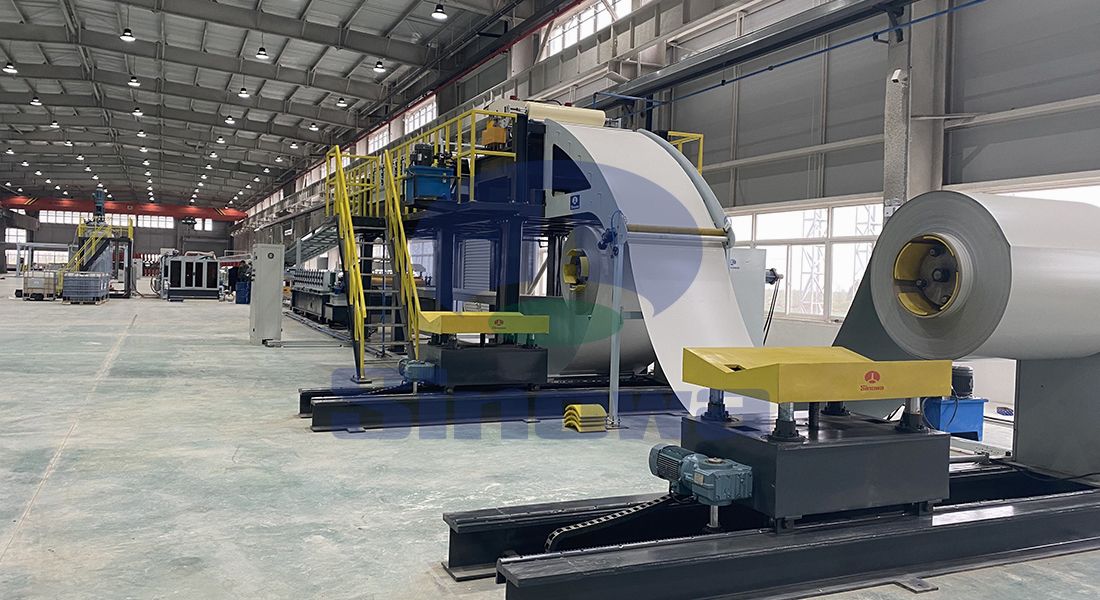
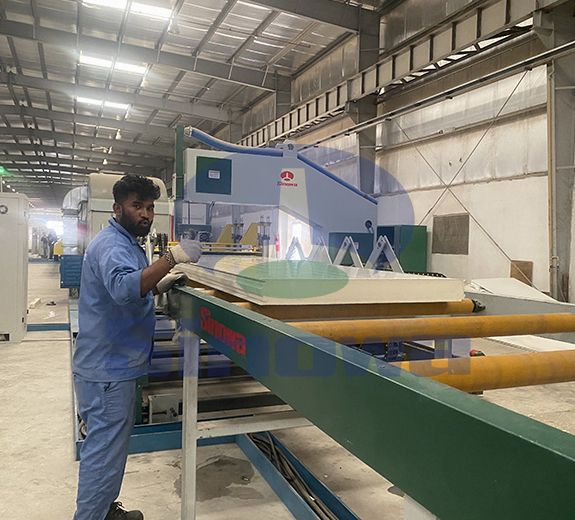
Sinowa is a well-known Sandwich Panel Making Line Supplier From China, Dedicated to the research and development of high-end & high-efficiency sandwich panel making line, Sinowa is comprehensively taking the leading position in terms of efficiency, automation control level, HMI, environment protection and energy consumption, with subversive designs made in some critical technological fields to procure exceptional cost performance and customer-friendly experience for the entire sandwich panel making line.
The adoption of system integration technology and bus control technology accomplishes the full automatization of integrated and coordinated control of the entire sandwich panel making line with accessible remote interactive communication. Ranking the first-class level in the world, it is currently the continuous pu sandwich panel line in the market taking a comprehensive lead in high performance.
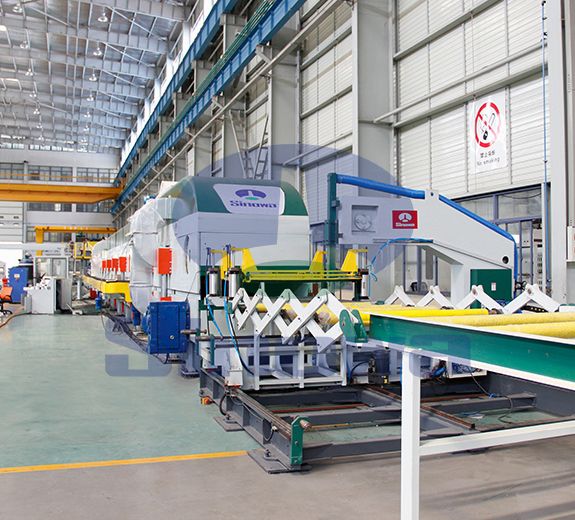
Based on the continuous technological pursuit, the sandwich panel making line developed by Sinowa provides you with high-efficiency industrial value. Based on China's cost advantage and our hard-working technology concept, our sandwich panel production line has a world-leading price-performance advantage. Sandwich Panel Making Line can meet a variety of production needs of customers.The whole sandwich panel line design concept of modularization enables all our components to be integrated and combined at will.
Our sandwich panel making line can easily automate the production of roof sandwich panel, wall sandwich panel, cold storage sandwich panel and other products by different combination and configuration selection and siple switching. The inner core layer can be polyrethane or rock wool, glass wool, an so on.
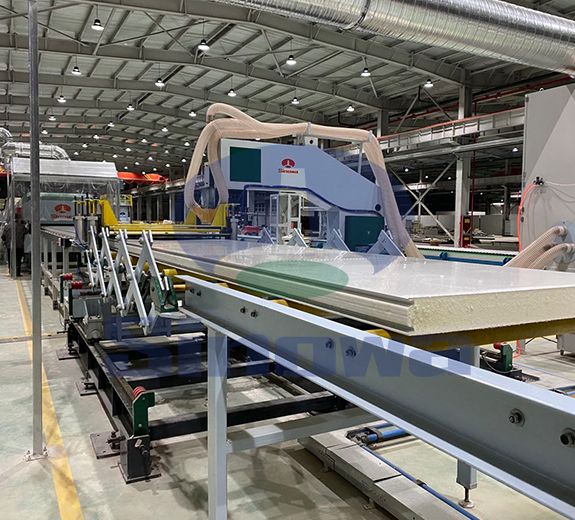
The sandwich panel making line has high adaptability, which may produce various sandwich panel of the PU, PIR and rock wool systems.
We may design various products according to the customer’s requirements, including various configurations, so as to meet their demands with flexible price system.
Highly integrated and linked control system centralizes all control points at the main central center, achieving parameter linkage, fault self-diagnosis controlled by the whole continuous sandwich panel line and shipping distance control.
High-level automatic control system also saves the manpower and reduces the manpower loss for customers.
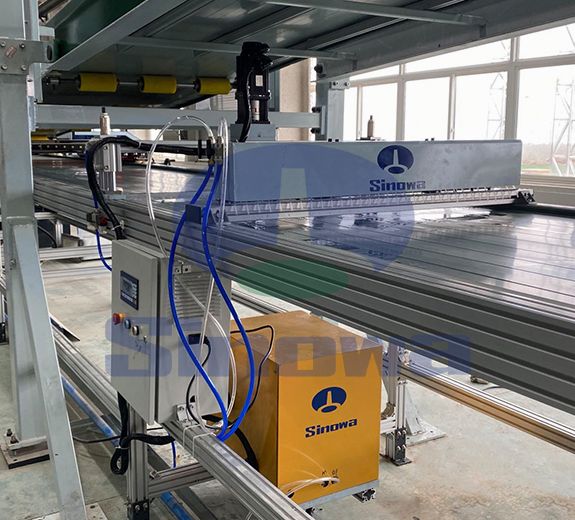
Concentrated system control is fully realized in the practice of concentrated process control so that the control system of all the movements of the parts in the sandwich panel making line is integrated in one process control console with accessible remote communication to elevate the automation and reduce the allocated number of personnel for the assembly line.
The main engine with modularized design achieves the precision operation of the sandwich panel making line, stable and reliable quality, less part and maintenance loss.
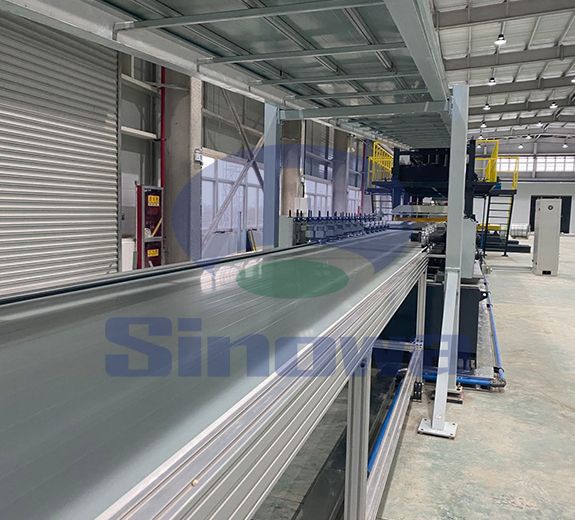
The whole sandwich panel making line is strictly modularized in design to ensure the greatest probability for the parts to be interchangeable, making it the most cost- and energy-saving. No joining made manually, all the key processes of the parts are completed in the machining center. As soon as the parts are inspected and warehoused, they enter into the assembly process. The modularized assembly can not only greatly increase the production efficiency but, most importantly, realize quick delivery as well. It elevates the reliability of product quality to a totally new level and minimizes the influence from human factors.
The whole sandwich panel making line has over 40 innovative inventions, making our products have lots of unique features and the comprehensive performance of our production line leading in the industry.
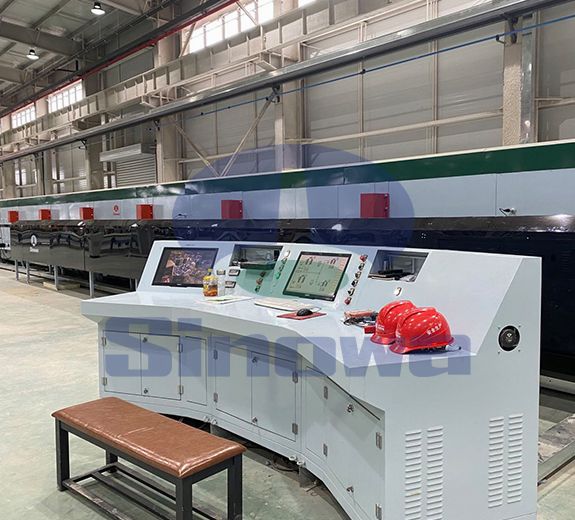
The precision servo hoisting mechanism employed by the main engine without hydraulic system makes the board thickness control flexible and the customer may conveniently change or adjust the board thickness. There will be not such troubles as hydraulic system adjustment, leakage, maintenance, etc.
High-level energy saving and protection design makes the whole sandwich panel making line possible to produce around the clock throughout the year and the customer will save huge budget. In addition, the isolated heat preservation room is constructed for warming the environment. The energy saving and protection design of our high-tech sandwich panel making line may guarantee that the customer’s production line may be freely heated and produce in the main time to save more costs for customers.
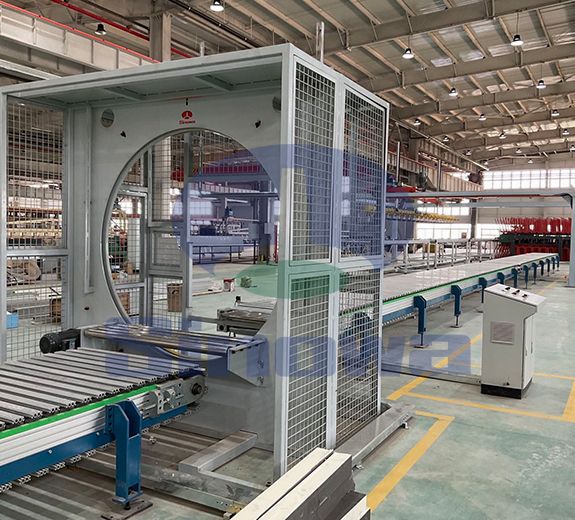
The high-power low-consumption design quickens the reaction of the sandwich panel making line while energy consumption is kept low.
With the brand-new, fully sealed inner insulation design, the energy consumption is controlled at the minimum level to achieve the design objective of less than an hour for the insulation system to be activated from the room temperature above 5℃ to the production process temperature.
The energy consumption is only 40% that of those similar products.
| PRODUCTION TYPE | PU | PIR | PHENOLIC | |||
|---|---|---|---|---|---|---|
| PRODUCTION USE | INSULATION PANEL | DOCORATIVE PANEL | ||||
| SURFACE OF SHEET | ALUMINUM FOIL | NON-WOVEN FABRIC | PAPER | NAKED | ||
| PRODUCT THICKNESS | 10m--- 200mm | |||||
| PRODUCTION SPEED | 3.0m---25m |
|---|---|
| FOAMING METHOD | TWO OR MULTI COMPONENTS FOAMING |
| FOAMING AGENT | PENTANE OR 141B |
| LENGTH OF LINE | 45m—100m CUSTOMER OPTIONAL |
Sinowa is a well-known manufacturer and technical service provider of high-end polyurethane insulation board production lines and various high-performance cold roll forming machine in China. Our main products include polyurethane double-sided color steel sandwich panel production line, polyurethane and phenolic soft facing insulation panel production line and high-efficiency roll forming machines.
Sinowa has invested outstanding efforts in sandwich panel making line, This is why our products are more efficiency, quality, automatic control technology, environmental protection, energy consumption indicators and the appearance and safety protection are comprehensively leading, Some subversive design changes in many major technical points,these major innovations make our products excellent in price/performance and user experience.
Sinowa is committed to the development and manufacturing of high-end and high-efficiency sandwich panel making line. Our sandwich panel production lines are leading the way in efficiency, automatic control, human-computer interaction, environmental protection and energy consumption. Using system integration and bus control technology, it realizes the automatic integrated linkage control of the entire production line, and can achieve remote interactive communication, which has the world-class level and a comprehensive leading high-performance production line in the market.
Sandwich panel making lines are advanced automated systems designed to produce composite sandwich panels, which consist of two outer facings and a core material bonded together to form a single, integrated structure. These production lines have become indispensable in modern manufacturing, especially in industries related to construction, cold storage, and industrial facilities, due to their ability to produce high-quality, consistent, and efficient panels that meet diverse functional requirements. The structure of a sandwich panel making line is a modular assembly of interconnected units, each performing a specific function in the production cycle while maintaining synchronized operation to ensure a smooth and seamless workflow. Every component, from the initial feeding of raw materials to the final stacking of finished panels, is designed to work in harmony, ensuring precision, efficiency, and reliability throughout the entire production process. Understanding the structure, performance, types, and applications of these production lines is essential for manufacturers looking to optimize their production processes and meet the growing demand for high-performance sandwich panels in various industries.

The structure of a sandwich panel making line is composed of several key functional units that work together to transform raw materials into finished sandwich panels. The core components typically include the uncoiling and leveling unit, pre-treatment module, core material feeding system, laminating and bonding unit, curing system, cutting unit, and stacking and packaging unit. The uncoiling and leveling unit is the starting point of the production process, where the outer facing materials—commonly metal sheets, aluminum, fiber cement boards, or other structural substrates—are fed into the system. Large coils of facing materials are mounted on decoilers, which unroll the materials smoothly and feed them into leveling machines. These leveling machines eliminate wrinkles, deformations, or unevenness in the facing materials, ensuring a flat and consistent base that is critical for the subsequent bonding and laminating processes. Some advanced lines may also integrate precision cutting mechanisms at this stage to adjust the width of the facings according to the desired panel specifications, ensuring compatibility with different panel sizes and applications.
Following the uncoiling and leveling process, the facing materials move to the pre-treatment module, which plays a vital role in enhancing the bonding strength between the facings and the core material. This module cleans and conditions the surface of the facing materials, removing contaminants such as oil, dust, or oxide layers that could compromise adhesion. The pre-treatment process may involve chemical cleaning, mechanical polishing, or plasma treatment, depending on the type of facing material and the required bonding performance. This step is crucial for ensuring the long-term structural stability of the finished sandwich panels, as a strong bond between the facings and the core prevents delamination and ensures the panel’s overall durability. After pre-treatment, the facing materials are guided to the laminating and bonding unit, which is the heart of the sandwich panel making line.
The laminating and bonding unit is where the two outer facings and the core material are combined to form the sandwich structure. The core material feeding system delivers the core material—whether it is polyurethane (PU), polyisocyanurate (PIR), expanded polystyrene (EPS), mineral wool, rock wool, or another insulating material—between the two pre-treated facing materials. For liquid core materials such as PU or PIR, a high-pressure mixing head is used to combine the raw components (such as polyol and isocyanate) along with additives like blowing agents, catalysts, and flame retardants, ensuring a uniform mixture that expands and hardens to form a rigid core. For solid core materials such as mineral wool or EPS, the core material is cut to the required thickness and fed into the gap between the two facings using an automated feeding system. The laminating unit then applies controlled heat and pressure to the combined structure, ensuring that the facings and core material bond together securely. The pressure and temperature are precisely regulated to optimize the bonding process, with different parameters used depending on the type of core and facing materials to achieve the desired structural integrity and performance.
After the laminating and bonding process, the continuous sandwich panel moves to the curing system, where the core material is fully cured to achieve its final properties. For liquid core materials like PU or PIR, curing is typically achieved through a combination of heat and time, with the panel passing through a heated tunnel or conveyor system that maintains a consistent temperature to ensure complete curing. The curing time and temperature are carefully controlled to prevent under-curing or over-curing, which could affect the panel’s strength, insulation performance, and durability. For solid core materials such as mineral wool or EPS, the curing process may be minimal, focusing primarily on ensuring the adhesive used to bond the core to the facings is fully set. Once cured, the continuous panel is fed into the cutting unit, which uses an automatic tracking cross-cut saw or other precision cutting tools to cut the panel into specified lengths. The cutting unit can adjust its parameters in real-time according to production requirements, supporting the production of panels with varying lengths to meet different customer needs. Some lines may also include a trimming system to remove excess material from the sides of the panels, ensuring neat edges and consistent dimensions.
The final component of the sandwich panel making line is the stacking and packaging unit, which automates the process of collecting, stacking, and packaging the finished panels. After cutting, the panels are conveyed to a stacking machine, which arranges them in neat piles according to specified quantities and dimensions. This automation reduces manual labor and minimizes the risk of damage to the finished panels during handling. The packaging unit then wraps the stacked panels in protective material, such as plastic film, to prevent dust, moisture, or damage during storage and transportation. Some advanced lines may also integrate labeling systems to mark the panels with relevant information, such as dimensions, material type, and production date, facilitating inventory management and quality control.
The performance of a sandwich panel making line is determined by several key factors, including production efficiency, precision, consistency, adaptability, and reliability. Production efficiency refers to the line’s ability to produce a large volume of panels within a given time frame, which is critical for meeting high-demand orders. Continuous production lines, in particular, offer high production speeds, often capable of producing thousands of square meters of panels per shift, making them ideal for large-scale manufacturing. Precision is another essential performance characteristic, as it ensures that the finished panels have consistent dimensions, thickness, and bonding quality. Advanced lines use automated control systems, such as PLC (Programmable Logic Controller) systems, to monitor and adjust production parameters in real-time, ensuring that each panel meets the required specifications. Consistency is closely related to precision, as it ensures that every panel produced is identical in terms of performance and quality, which is essential for applications where uniformity is critical, such as large-scale construction projects.
Adaptability is another key performance feature of modern sandwich panel making lines, allowing manufacturers to produce a wide range of panel types by adjusting the line’s parameters and components. This adaptability includes the ability to handle different types of facing materials (such as metal, aluminum, or fiber cement), core materials (such as PU, EPS, or mineral wool), and panel dimensions (varying thicknesses, widths, and lengths). Some lines are designed with modular components, allowing manufacturers to easily switch between different production configurations to meet changing market demands. Reliability is also crucial, as downtime can significantly impact production schedules and costs. High-quality lines are built with durable components and advanced monitoring systems that detect potential issues early, minimizing the risk of breakdowns and ensuring continuous operation. Additionally, energy efficiency is an increasingly important performance factor, with modern lines incorporating energy-saving technologies such as efficient heating systems, variable frequency drives, and waste reduction measures to reduce operational costs and environmental impact.
Sandwich panel making lines can be classified into several types based on their production method, core material compatibility, and automation level. The most common classification is based on the production method, which includes continuous and discontinuous (batch) production lines. Continuous sandwich panel making lines operate in a non-stop, streamlined process, where raw materials are fed into the line continuously, and finished panels are produced without interruption. These lines are highly automated, with minimal manual intervention, and are ideal for mass production of standardized panels. They offer high production efficiency, consistent quality, and lower operational costs per panel over time, making them suitable for large-scale manufacturing facilities serving industries such as cold storage, warehousing, and industrial construction. Continuous lines typically have a higher upfront investment but offer better long-term return on investment due to their efficiency and scalability.
Discontinuous (batch) sandwich panel making lines, on the other hand, produce panels in batches, with each panel being individually injected, pressed, and cured in a mold. This production method is more labor-intensive and time-consuming compared to continuous lines, but it offers greater flexibility for small-scale production or custom-sized panels. Discontinuous lines require lower initial capital investment, making them suitable for startups, emerging markets, or manufacturers with low-volume production needs. They are ideal for producing custom panels with unique dimensions, shapes, or core material combinations, as the mold can be easily adjusted between batches. However, discontinuous lines have lower production speed, higher manual intervention, and greater variation in panel quality compared to continuous lines, making them less suitable for large-scale or urgent projects.
Another classification of sandwich panel making lines is based on the type of core material they are designed to handle. PU/PIR sandwich panel making lines are specialized for producing panels with polyurethane or polyisocyanurate cores, which are known for their excellent thermal insulation, lightweight, and high strength. These lines are equipped with high-pressure mixing systems to handle the liquid raw materials of PU/PIR, as well as precise temperature and pressure control systems to ensure proper foaming and curing. Mineral wool/rock wool sandwich panel making lines are designed for solid core materials such as mineral wool or rock wool, which offer superior fire resistance, acoustic insulation, and durability. These lines include automated core feeding systems that handle the solid core material, as well as adhesive application systems to ensure strong bonding between the core and the facings. EPS sandwich panel making lines are specialized for expanded polystyrene cores, which are lightweight, cost-effective, and offer good thermal insulation, making them suitable for residential and commercial construction.
Sandwich panel making lines can also be classified based on their automation level, ranging from semi-automatic to fully automatic. Semi-automatic lines require some manual intervention, such as loading raw materials, adjusting parameters, or handling finished panels, and are suitable for small to medium-scale production. Fully automatic lines integrate all production processes from raw material feeding to packaging, with minimal manual intervention, and are ideal for large-scale manufacturing. These lines use advanced control systems, such as PLC and human-machine interface (HMI) systems, to monitor and control every aspect of the production process, ensuring high efficiency, precision, and consistency.
The applications of sandwich panel making lines are diverse, covering a wide range of industries that require high-performance composite panels. The primary application area is the construction industry, where sandwich panels produced by these lines are used for building facades, roofs, walls, and partitions. The panels’ lightweight, high strength, and thermal insulation properties make them an ideal choice for modern construction, as they reduce the overall weight of the building, improve energy efficiency, and speed up the construction process. In industrial construction, sandwich panels are widely used for manufacturing industrial sheds, warehouses, factories, and workshops, where they provide excellent insulation, soundproofing, and durability. The ability to produce large panels quickly makes sandwich panel making lines essential for large-scale industrial projects, where time and efficiency are critical.
Another important application area is the cold storage and refrigeration industry. Sandwich panels produced by these lines are used to construct cold storage rooms, walk-in freezers, refrigerated warehouses, and cold chain transportation containers. The core materials used in these panels, such as PU, PIR, or EPS, offer excellent thermal insulation properties, which are essential for maintaining low temperatures and reducing energy consumption in cold storage facilities. The panels’ airtight and moisture-resistant properties also help to prevent condensation and maintain the quality of stored goods, making them ideal for the food, pharmaceutical, and logistics industries. Sandwich panel making lines designed for cold storage applications are often equipped with specialized systems to ensure the panels meet the strict thermal insulation requirements of the industry.
The prefabricated building industry is another major application area for sandwich panel making lines. Prefabricated buildings are constructed using pre-manufactured components, including sandwich panels, which are assembled on-site. This construction method offers several advantages, including faster construction time, lower labor costs, and better quality control. Sandwich panels produced by these lines are used for walls, roofs, and floors of prefabricated houses, temporary residences, field work offices, construction site dormitories, and portable buildings. The lightweight and easy-to-install nature of the panels makes them ideal for prefabricated construction, as they can be easily transported and assembled without the need for heavy equipment.
Sandwich panel making lines also find applications in the noise control and environmental protection industries. Sandwich panels with soundproof core materials, such as mineral wool or rock wool, are used to construct noise barriers along highways, railways, and urban areas with heavy traffic. These panels help to reduce noise pollution, improving the environmental quality of the surrounding areas. Additionally, sandwich panels produced by these lines are used in the construction of clean rooms, which require strict control of dust, bacteria, and temperature. These panels are designed to be dust-free, easy to clean, and have excellent airtightness, making them suitable for pharmaceutical, electronic, and food processing facilities.
In addition to these major application areas, sandwich panel making lines are also used in the agricultural industry for constructing greenhouses, livestock barns, and agricultural storage facilities. The panels’ thermal insulation properties help to maintain stable temperatures inside greenhouses, promoting plant growth, while their durability and weather resistance make them suitable for outdoor agricultural applications. They are also used in the automotive industry for producing lightweight components, such as truck bodies and trailer walls, where the panels’ high strength-to-weight ratio helps to improve fuel efficiency.
The demand for sandwich panel making lines is expected to continue growing in the coming years, driven by the increasing adoption of sandwich panels in various industries and the growing emphasis on energy efficiency, sustainability, and rapid construction. As the construction industry moves towards green and modular construction, the need for high-quality, efficient sandwich panel making lines will become even more critical. Manufacturers are continuously innovating to improve the performance, adaptability, and energy efficiency of these lines, incorporating advanced technologies such as artificial intelligence, IoT (Internet of Things), and automation to optimize production processes and meet the evolving needs of the market. Whether for large-scale industrial production or small-scale custom manufacturing, sandwich panel making lines play a vital role in producing the high-performance composite panels that are essential for modern construction and industrial applications.
«Sandwich Panel Making Line» Update Date:2026/4/1
URL: https://www.sinowa.cn/en/blog/sandwich-panel-making-line.html
Tags:
