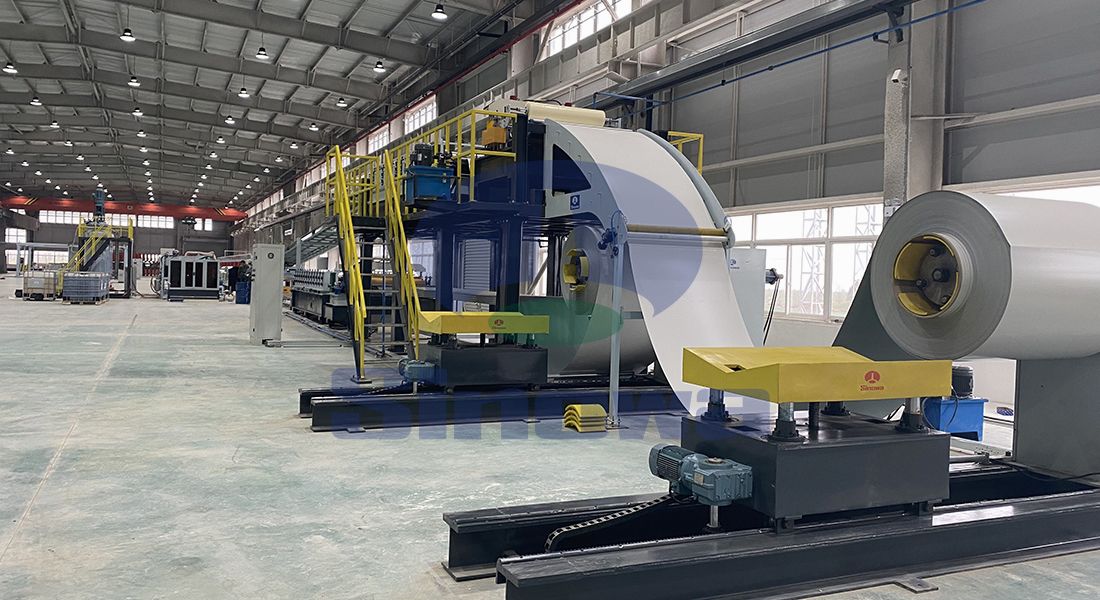
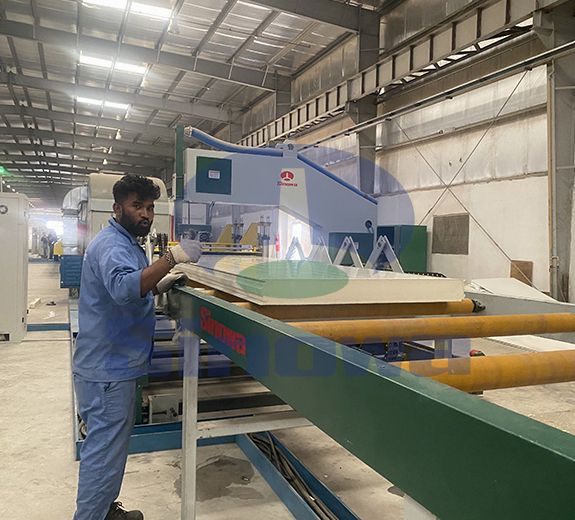
Sinowa is a well-known China Sandwich Panel Machine Supplier From China, Dedicated to the research and development of high-end & high-efficiency sandwich panel machine, Sinowa is comprehensively taking the leading position in terms of efficiency, automation control level, HMI, environment protection and energy consumption, with subversive designs made in some critical technological fields to procure exceptional cost performance and customer-friendly experience for the entire sandwich panel machine.
The adoption of system integration technology and bus control technology accomplishes the full automatization of integrated and coordinated control of the entire sandwich panel machine with accessible remote interactive communication. Ranking the first-class level in the world, it is currently the continuous pu sandwich panel line in the market taking a comprehensive lead in high performance.
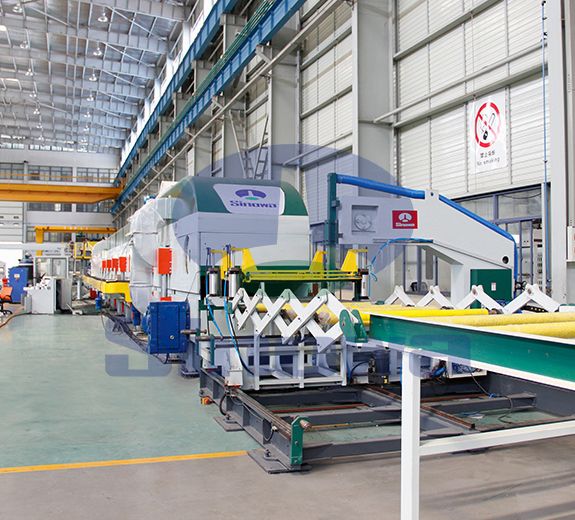
Based on the continuous technological pursuit, the sandwich panel machine developed by Sinowa provides you with high-efficiency industrial value. Based on China's cost advantage and our hard-working technology concept, our sandwich panel production line has a world-leading price-performance advantage. Sandwich Panel Machine can meet a variety of production needs of customers.The whole sandwich panel line design concept of modularization enables all our components to be integrated and combined at will.
Our sandwich panel machine can easily automate the production of roof sandwich panel, wall sandwich panel, cold storage sandwich panel and other products by different combination and configuration selection and siple switching. The inner core layer can be polyrethane or rock wool, glass wool, an so on.
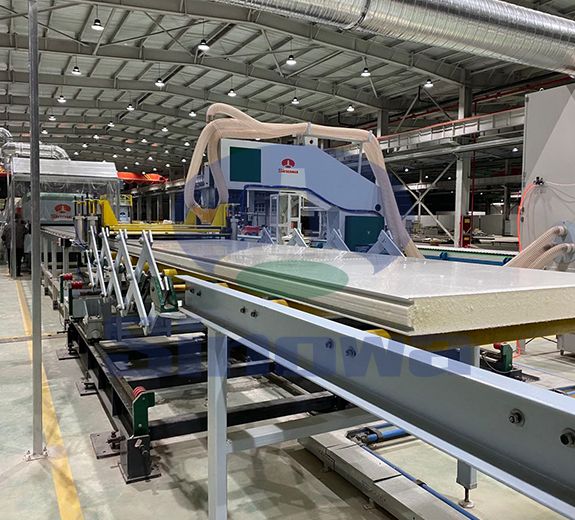
The sandwich panel machine has high adaptability, which may produce various sandwich panel of the PU, PIR and rock wool systems.
We may design various products according to the customer’s requirements, including various configurations, so as to meet their demands with flexible price system.
Highly integrated and linked control system centralizes all control points at the main central center, achieving parameter linkage, fault self-diagnosis controlled by the whole continuous sandwich panel line and shipping distance control.
High-level automatic control system also saves the manpower and reduces the manpower loss for customers.
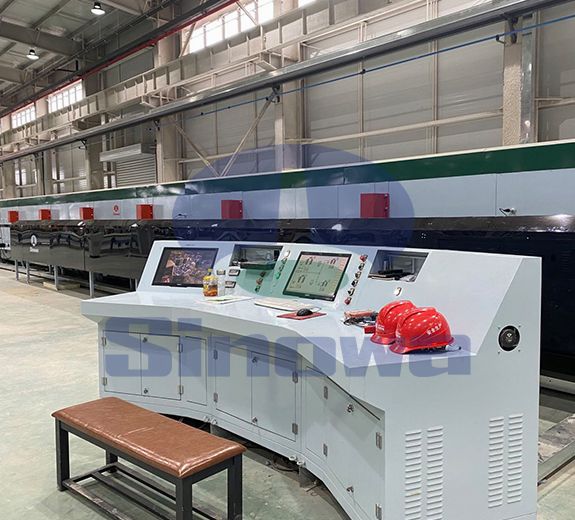
Concentrated system control is fully realized in the practice of concentrated process control so that the control system of all the movements of the parts in the sandwich panel machine is integrated in one process control console with accessible remote communication to elevate the automation and reduce the allocated number of personnel for the assembly line.
The main engine with modularized design achieves the precision operation of the sandwich panel machine, stable and reliable quality, less part and maintenance loss.
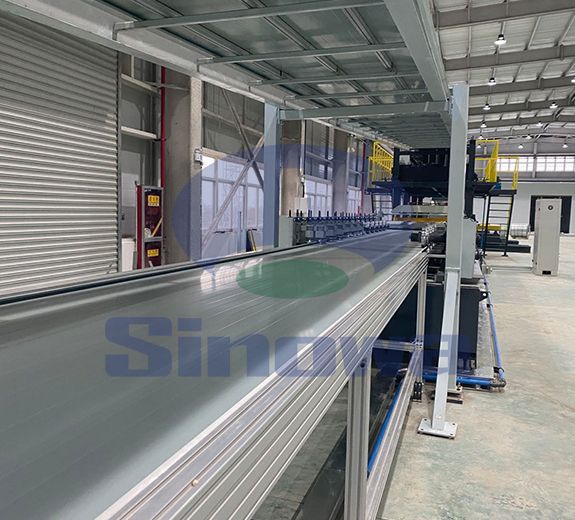
The whole sandwich panel machine is strictly modularized in design to ensure the greatest probability for the parts to be interchangeable, making it the most cost- and energy-saving. No joining made manually, all the key processes of the parts are completed in the machining center. As soon as the parts are inspected and warehoused, they enter into the assembly process. The modularized assembly can not only greatly increase the production efficiency but, most importantly, realize quick delivery as well. It elevates the reliability of product quality to a totally new level and minimizes the influence from human factors.
The whole sandwich panel machine has over 40 innovative inventions, making our products have lots of unique features and the comprehensive performance of our production line leading in the industry.
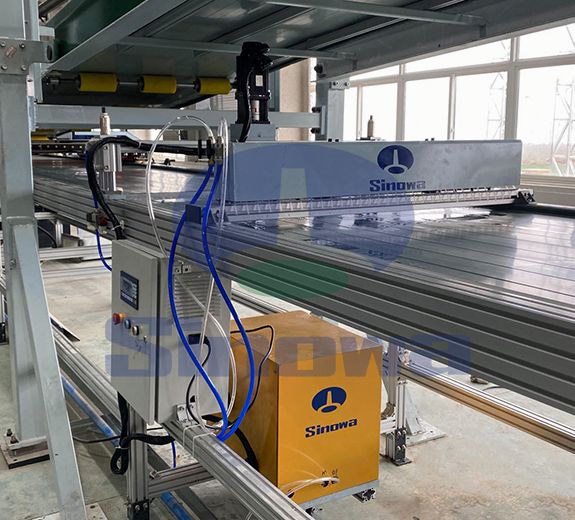
The precision servo hoisting mechanism employed by the main engine without hydraulic system makes the board thickness control flexible and the customer may conveniently change or adjust the board thickness. There will be not such troubles as hydraulic system adjustment, leakage, maintenance, etc.
High-level energy saving and protection design makes the whole sandwich panel machine possible to produce around the clock throughout the year and the customer will save huge budget. In addition, the isolated heat preservation room is constructed for warming the environment. The energy saving and protection design of our high-tech sandwich panel machine may guarantee that the customer’s production line may be freely heated and produce in the main time to save more costs for customers.
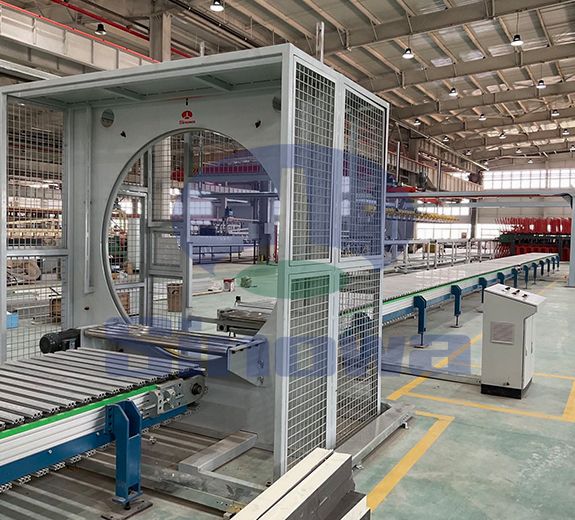
The high-power low-consumption design quickens the reaction of the sandwich panel machine while energy consumption is kept low.
With the brand-new, fully sealed inner insulation design, the energy consumption is controlled at the minimum level to achieve the design objective of less than an hour for the insulation system to be activated from the room temperature above 5℃ to the production process temperature.
The energy consumption is only 40% that of those similar products.
| PRODUCTION TYPE | PU | PIR | PHENOLIC | |||
|---|---|---|---|---|---|---|
| PRODUCTION USE | INSULATION PANEL | DOCORATIVE PANEL | ||||
| SURFACE OF SHEET | ALUMINUM FOIL | NON-WOVEN FABRIC | PAPER | NAKED | ||
| PRODUCT THICKNESS | 10m--- 200mm | |||||
| PRODUCTION SPEED | 3.0m---25m |
|---|---|
| FOAMING METHOD | TWO OR MULTI COMPONENTS FOAMING |
| FOAMING AGENT | PENTANE OR 141B |
| LENGTH OF LINE | 45m—100m CUSTOMER OPTIONAL |
Sinowa is a well-known manufacturer and technical service provider of high-end polyurethane insulation board production lines and various high-performance cold roll forming machine in China. Our main products include polyurethane double-sided color steel sandwich panel production line, polyurethane and phenolic soft facing insulation panel production line and high-efficiency roll forming machines.
Sinowa has invested outstanding efforts in china sandwich panel machine, This is why our products are more efficiency, quality, automatic control technology, environmental protection, energy consumption indicators and the appearance and safety protection are comprehensively leading, Some subversive design changes in many major technical points,these major innovations make our products excellent in price/performance and user experience.
Sinowa is committed to the development and manufacturing of high-end and high-efficiency china sandwich panel machine. Our sandwich panel production lines are leading the way in efficiency, automatic control, human-computer interaction, environmental protection and energy consumption. Using system integration and bus control technology, it realizes the automatic integrated linkage control of the entire production line, and can achieve remote interactive communication, which has the world-class level and a comprehensive leading high-performance production line in the market.
The production of sandwich panel machines has developed steadily to meet the rising demand for efficient building materials across many industrial sectors. These machines are designed to combine different core materials with metal facings into integrated panels that balance structural strength and thermal performance. The core working principle relies on continuous feeding, accurate material alignment, controlled bonding and automatic forming within one connected production line. Operators can adjust running parameters according to the required thickness and surface style of finished panels, which makes the equipment flexible for varied project needs. Modern designs focus on stable running status to reduce unexpected stops during long-hour production. Many structural parts are processed with precision to keep consistent pressure on bonding layers, avoiding gaps or uneven adhesion that would affect final panel quality. The layout of the whole line takes workshop space and material handling flow into consideration, so raw material loading and finished product unloading can be arranged smoothly. As construction ideas shift toward faster installation and energy-saving performance, this type of production equipment gains more attention from manufacturers who prepare finished sandwich panels for different application scenarios.
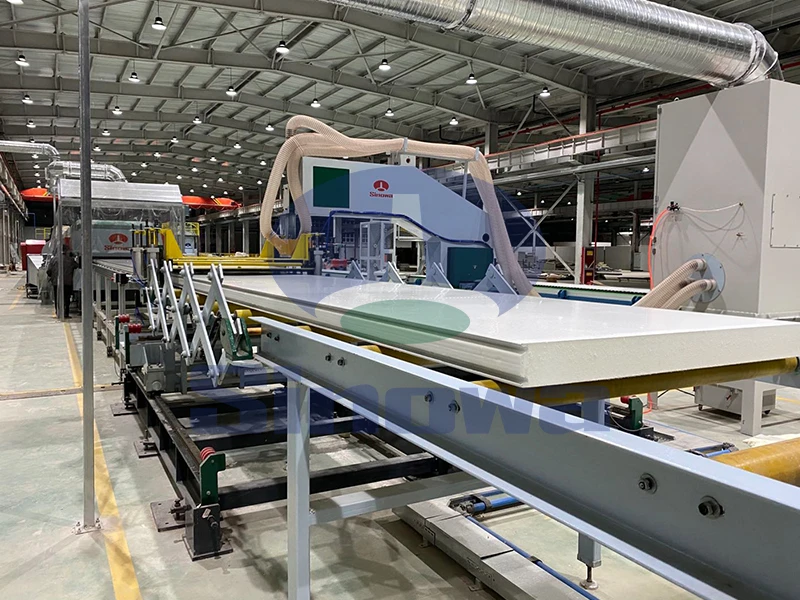
Material compatibility stands as one of the key features of well-developed sandwich panel machines. A qualified line can work with multiple core fillers while maintaining stable forming results, and each kind of core material brings different characteristics to the finished panels. The feeding system holds rolls of surface sheet steadily and sends them forward at a matched speed together with core materials, so all layers move synchronously without slipping or offsetting. The bonding stage creates reliable connection between surface layers and the inner core, and the process avoids excessive adhesive waste while ensuring every contact area gets sufficient coverage. Operators do not need to switch major machine structures when changing core materials most of the time, and simple parameter adjustments are usually enough to adapt to new production targets. Careful control over material tension prevents surface sheets from wrinkling or stretching during transportation inside the machine. This compatibility helps panel producers expand their product range without investing in completely separate production lines, which brings greater flexibility to their daily manufacturing arrangements.
Automation upgrades have reshaped the operation experience of sandwich panel machines in recent years. Control interfaces gather key running data in one place, allowing operators to monitor line speed, feeding progress and forming status without walking back and forth across the whole workshop. Built-in sensing components detect abnormal material feeding or position deviation and send timely reminders to staff, so small issues can be handled before they turn into large batches of defective products. Automatic cutting units cut continuous panel strips into preset lengths once forming and bonding finish, and the cutting action keeps neat edges to reduce secondary trimming work later. Some auxiliary functions help record daily output data for internal production management, supporting better planning of raw material supply and delivery schedules. Even with automatic functions retained, the equipment still keeps straightforward manual override options for inspection and maintenance work. The progress of automation does not aim to remove human supervision entirely, but to lower repetitive physical work and reduce errors caused by long-time manual operation.
Running stability directly influences the long-term value of a sandwich panel machine for panel manufacturers. Vibration control is embedded into the base frame and transmission assemblies, because continuous vibration will gradually loosen connecting parts and harm the consistency of finished panels. Transmission components are engineered to deliver even power output, so the line speed stays steady rather than fluctuating randomly during operation. Regular wear parts are designed for easy disassembly and replacement, which shortens downtime when maintenance becomes necessary. Cooling and auxiliary supporting systems work together to keep the bonding environment stable under different ambient temperature conditions. When a machine maintains stable performance day after day, the ratio of qualified finished panels stays at a good level and raw material loss can be kept within a reasonable range. Buyers of such equipment pay close attention to stability during trial runs, as unstable operation will bring extra cost and delay delivery plans for panel orders. Good stability also extends the overall service life of the production line with proper routine maintenance work carried out on schedule.
Energy efficiency has become an important consideration in the design of new sandwich panel machines. Design teams optimize power consumption of driving systems and heating or bonding related modules to cut energy use for each unit of finished panels. Energy-saving adjustments do not sacrifice the bonding effect or forming precision, and the machine can still reach the required production speed under optimized settings. Reasonable sealing design reduces unnecessary heat loss inside key working sections, which helps maintain a stable working environment with less energy input. Many updated models distribute power intelligently, letting idle sections reduce energy consumption automatically when they are not participating in production. For panel factories running production lines for multiple shifts every day, improved energy efficiency creates obvious savings over months and years of continuous operation. This direction of development matches the general tendency of production industries to control resource consumption and operate in a more sustainable way. Equipment users often compare energy consumption performance when they assess different available machine solutions for their production plans.
Maintenance convenience is carefully considered in the structural layout of sandwich panel machines. All core inspection points and lubrication positions are arranged in accessible locations, so maintenance personnel can carry out checks without dismantling large sections of the production line. Clear structural separation between functional sections means that if one module needs servicing, other parts of the line can remain untouched for inspection. Standardized connection structures make spare part matching simpler, and users can prepare commonly replaced components in advance according to maintenance guidance. Operation manuals cover routine inspection items, lubrication cycles and common troubleshooting guidance, helping internal maintenance teams build familiarity with the equipment gradually. Proper maintenance prevents minor faults from accumulating and developing into serious breakdowns that halt production for a long time. Factory teams who form stable maintenance habits can keep their sandwich panel machines working reliably for many years. The ease of maintenance also lowers the technical threshold for on-site staff to manage the equipment independently after basic training.
Finished panel quality control is supported by multiple functional sections integrated within sandwich panel machines. After the multi-layer materials are compounded and bonded, the panels go through shaping sections to correct flatness and keep uniform thickness across the whole surface. The continuous pressing section applies balanced pressure across the panel width, avoiding situations where one side of the panel is pressed tighter than the other. Surface protection can also be applied on the machine as an optional step, adding a thin protective film to prevent scratches during transportation and storage of finished panels. The cutting mechanism maintains accurate length control so each finished panel meets the size requirement set for the order. Even small deviations in thickness, flatness or length can create problems when panels are delivered to construction sites for installation. The machine’s built-in quality control functions reduce dependence on full manual inspection of every single panel after production. Panel manufacturers rely on these built-in controls to keep product quality consistent for repeat orders from downstream customers.
Production capacity flexibility makes sandwich panel machines suitable for businesses of different operation scales. A single line can run at different speed levels, so producers can slow down output for small trial orders and raise speed to fulfill large batch orders when demand rises. The width adjustment range of the machine covers the most widely used panel dimensions in the market, removing the need to buy separate lines just for different panel widths. Smaller manufacturing workshops can start with a reasonably sized line and expand auxiliary modules later when business grows, rather than investing in the largest configuration at the very beginning. Larger panel factories often match multiple feeding and stacking auxiliary units to the main machine to lift overall handling efficiency. This flexible capacity setup helps equipment owners adjust production plans quickly following market order changes. Instead of being locked into one fixed output level, the machine adapts to seasonal demand changes and fluctuating order volumes. This feature is highly valued by operators who face unpredictable order flow from construction and industrial enclosure projects.
Safety arrangements are integrated into every functional zone of sandwich panel machines to protect on-site workers. Physical guard structures cover moving transmission rollers, cutting devices and pressure assemblies to prevent accidental contact during running. Safety stop controls are placed at multiple positions along the production line, so any staff member near the machine can pause operation immediately if a dangerous situation appears. Safety interlock settings stop the line automatically when protective covers are opened without following proper procedures, avoiding operation while key guards are removed. Guidance labels mark high-temperature areas, pinch points and areas requiring special attention for all operators to see clearly. Training for machine operation always includes safety protocols, teaching staff the correct startup, shutdown and fault handling sequences. Safety design does not interfere with normal production workflow, and the protective structures are designed not to block routine observation of material forming conditions. Equipment designers keep balancing production efficiency and operator safety, recognizing that safe operation is the foundation of stable long-term manufacturing work.
The future development of sandwich panel machines will keep moving toward smarter integration and broader application adaptability. New generations of equipment will deepen the connection between production data and factory management systems, making it easier to track raw material consumption, output and equipment health status over long periods. Design work will continue to refine forming precision and material utilization rate, cutting leftover scraps generated during panel production. More adaptable configurations will emerge to support innovative composite structures that fit emerging building and industrial enclosure requirements. The user experience will keep improving with more intuitive operation logic and remote diagnostic support for technical assistance. As downstream markets keep exploring new ways to use sandwich panels, the corresponding production equipment will evolve to match new product specifications and manufacturing needs. The core value of these machines remains supporting fast, consistent and cost-effective production of composite building panels. Continuous technical refinement will help this type of equipment stay essential for the supply chain of modern lightweight construction materials for a long time ahead.
sandwich panel machine, sandwich panel machine manufacturer, sandwich panel machine for sale, sandwich panel machine supplier, China sandwich panel machine, Custom sandwich panel machine
«China Sandwich Panel Machine» Update Date:2026/10/27
URL: https://www.sinowa.cn/en/blog/china-sandwich-panel-machine.html
Tags: Insulated Sandwich Panel Machines , Sandwich Panel Machines , Rockwool Sandwich Panel Machine , Polyurethane Sandwich Panel Machine , Continuous Sandwich Panel Machine , Continuous Polyurethane Sandwich Panel Machine , Continuous PU Sandwich Panel Machine , Rock Wool Sandwich Panel Machine , Mineral Wool Sandwich Panel Machine , PU Sandwich Panel Machine , PU sandwich panel line , PU sandwich panel machine , PU sandwich panel production line , sandwich panel line , sandwich panel machine , sandwich panel production line
