Apr 28, 2026
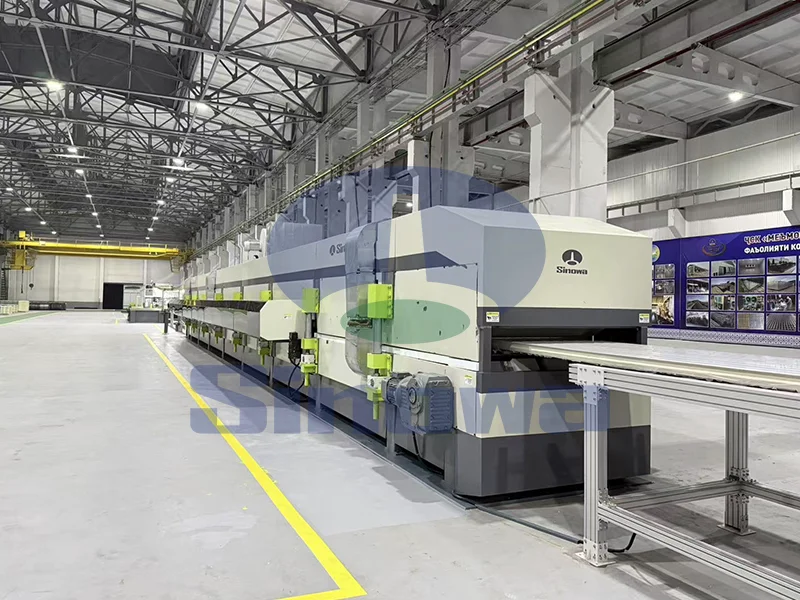
The design of a PIR sandwich panel production line stands as a comprehensive engineering integration project that combines mechanical structure optimization, chemical reaction process control, automated transmission coordination, and precise temperature and pressure regulation, focusing on achieving continuous, stable, and high-efficiency manufacturing of composite panels with excellent thermal insulation, structural rigidity, and dimensional uniformity. Unlike ordinary composite material production equipment, the core essence of PIR sandwich panel line design lies in balancing the chemical foaming and curing characteristics of polyisocyanurate raw materials with the mechanical forming and composite bonding process of metal facing materials, ensuring that every production link from raw material input to finished panel output maintains consistent process parameters and stable operating status, and fundamentally avoids product quality defects such as uneven core density, weak bonding between facing and core layers, dimensional deviation of panel profiles, and inconsistent surface flatness. The overall design concept always adheres to the dual core principles of production process adaptability and long-term operational stability, taking into account the diverse production demands of different panel specifications, application scenarios, and production capacity scales, while optimizing the structural layout and system matching of each functional module to reduce unnecessary energy consumption, simplify daily operation and maintenance work, and extend the overall service life of the entire production line. Every structural parameter, process control logic, and equipment matching scheme in the line design is formulated based on the inherent physical and chemical properties of PIR foam materials and the processing characteristics of metal surface materials, avoiding blind structural superposition and redundant functional configuration, so that the entire production line can achieve coordinated operation of all links under continuous long-term working conditions, and steadily produce high-quality PIR sandwich panels that meet the basic use requirements of building enclosure, cold chain storage, industrial partition, and thermal insulation engineering.