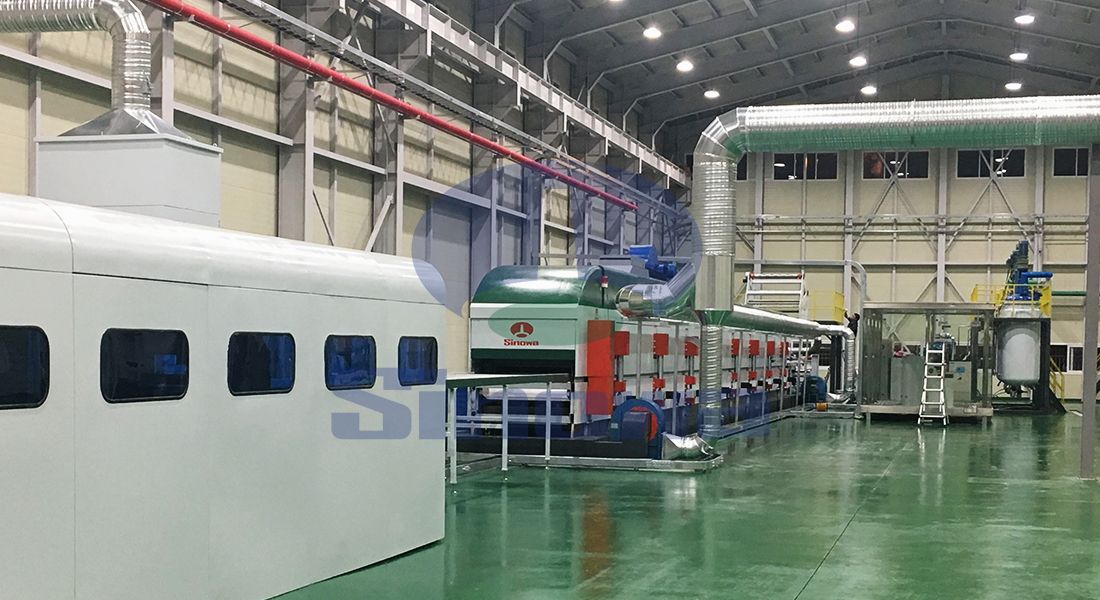
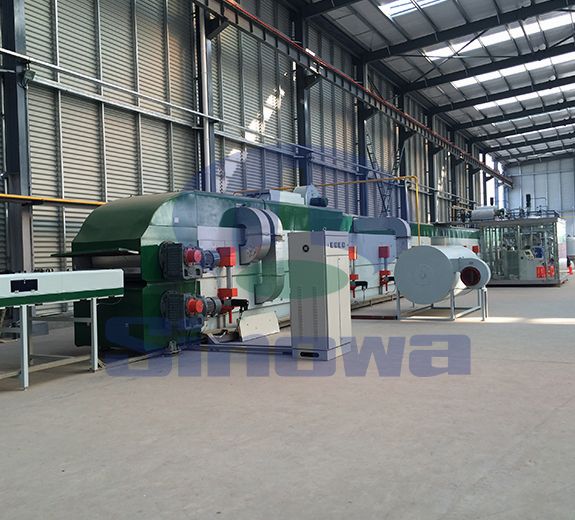
Sinowa is a well-known Insulated Sandwich Panels Lines Supplier From China, Continuous Insulation Panel Production Line of the PU and phenolic aldehyde surface has diversified and multifunctional production characteristics, which may produce products with different specifications such as PU, PF, PIR, etc.
The surface material may be aluminum foil, colored steel, cement base cloth, kraft paper, non-woven fabrics, etc.
The products are widely applied to such occasions as construction, decoration, pipeline ventilation, subway construction, etc.
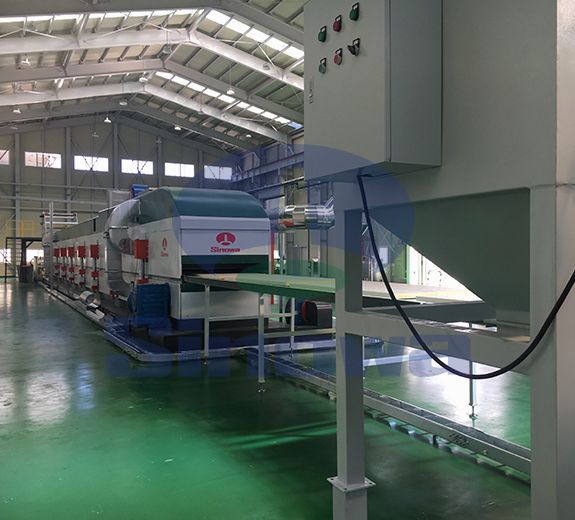
The sandwich panels line of soft layer insulation board is able to continuously and efficiently produce high-quality PU and Phenolic insulation boards.
We spare no efforts to improve our product quality and technological reliability by employing the most cutting-edge and the most reliable support and processes to make our products highly reliable and endurable. As a result, the sandwich panels line of our soft layer insulation panels is highlighted by many perfect qualities. It is the core idea in Sinowa's product roadmap to surpass our competitors in terms of design philosophy, manufacture methods and service level, going for excellence and leading position and making constant improvement on our products and services, which is also our core value system to create efficiency and convenience for our customers.
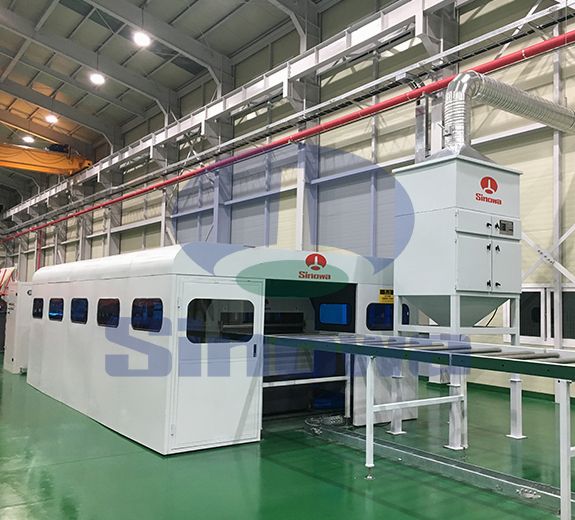
Well-grounded on our solid strength as a renowned large-scale enterprise, Sinowa has a high starting point in developing industrial assembly lines.
Based on the advanced science and technology introduced from within and without the country and supported by a great number of first-grade parts and components from the home and aboard, these assembly lines have a high-level configuration of supporting products in terms of machinery, electrical control, hydraulic pressure, automatic measurement and tracking, and so on.
This is a strong proof of our product’s reliable quality and high efficiency.
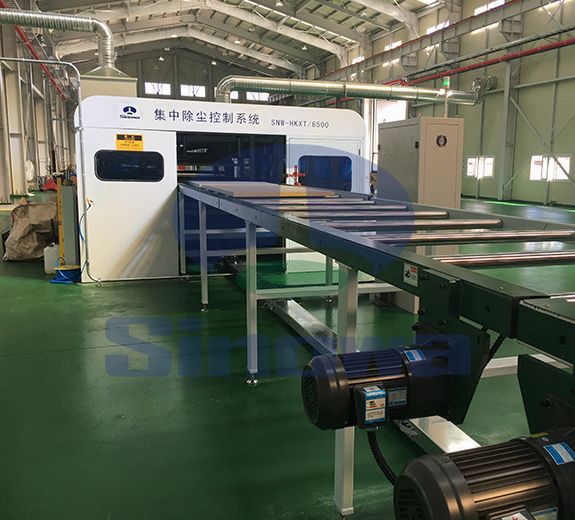
The first-class appearance design and excellent energy saving measures make it unnecessary for customers to additionally construct the heat preservation and isolation room for production around the clock throughout the year, so that the customers may save lots of resources and costs.
Modularized standard design and important parts machined with CNC machine tool make the production line have excellent quality assurance. Dependence on the man-made factors is eliminated. The operation is precision, with the highest operation speed of 30m/min. The sandwich panels line has the world-class production efficiency.
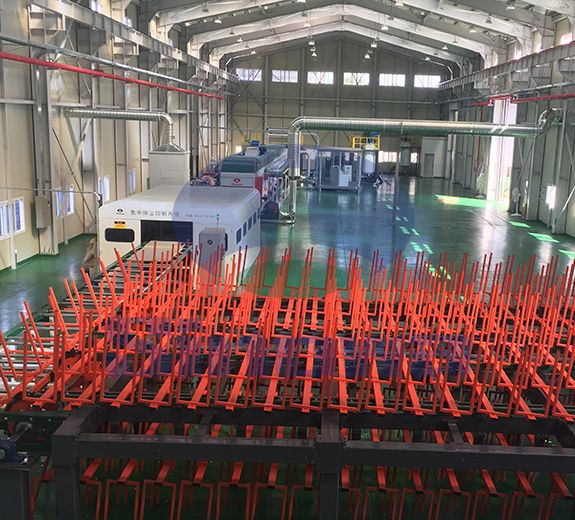
The high performance and reliable multicomponent cyclopentane foaming technology and equipment of Sinowa may be also applied to the foaming process of the phenolic aldehyde board. Therefore, our customers may not only freely adjust the foaming matching according to the raw material, but also save lots of costs. Moreover, they are of significance for environmental protection.
Sinowa's industrial sandwich panels line of insulation panels is distinguished by its impressive performance of energy conservation. In each high point of energy consumption throughout the entire pu sandwich panel line are implemented corresponding measures to considerably lower the consumption level.
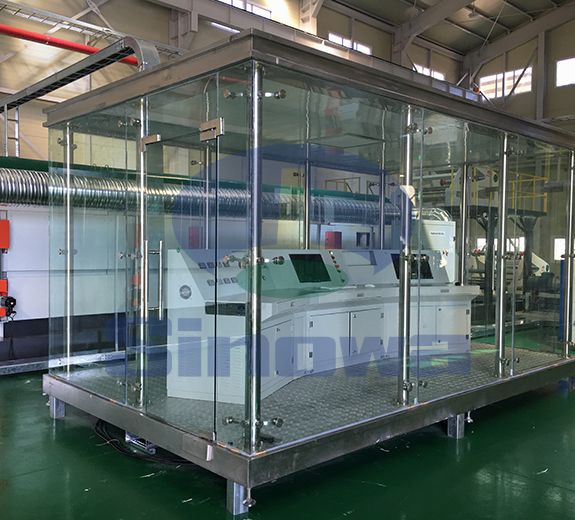
For example, the body of the lamination belt conveyer is covered with insulation panels in very reasonable structures, which doesn’t blemish the overall outlook but greatly increases the insulation performance.
The entire sandwich panels line is constantly optimized and improved so that the consumption of each power source is significantly reduced. The motor power of our lamination conveying system is only 3.0 kw, about 50% less than those of the same kind.
All in all, the energy consumption of the whole sandwich panel line equals 40% or even less of the equivalent lines in the market.
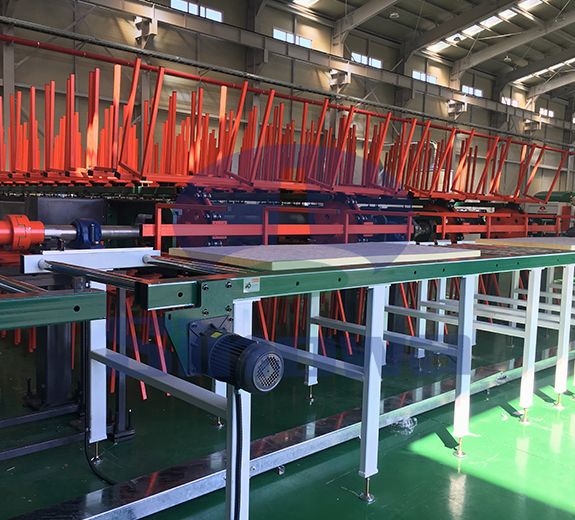
The sandwich panels line of Sinowa adopts the most advanced concepts in the world to realize the modularized design with all the parts bolted together rather than welded.
In standardized production, the parts can be dismantled and exchanged, so the production cycle is drastically shortened and the maintenance becomes by far easier.
Through finite element analysis, the equipment design is greatly optimized to realize modularization, digitization, and weight-minimalization.
| PRODUCTION TYPE | PU | PIR | PHENOLIC | |||
|---|---|---|---|---|---|---|
| PRODUCTION USE | INSULATION PANEL | DOCORATIVE PANEL | ||||
| SURFACE OF SHEET | ALUMINUM FOIL | NON-WOVEN FABRIC | PAPER | NAKED | ||
| PRODUCT THICKNESS | 10m--- 200mm | |||||
| PRODUCTION SPEED | 3.0m---25m |
|---|---|
| FOAMING METHOD | TWO OR MULTI COMPONENTS FOAMING |
| FOAMING AGENT | PENTANE OR 141B |
| LENGTH OF LINE | 45m—100m CUSTOMER OPTIONAL |
Sinowa is a well-known manufacturer and technical service provider of high-end polyurethane insulation board production lines and various high-performance cold roll forming machine in China. Our main products include polyurethane double-sided color steel sandwich panel production line, polyurethane and phenolic soft facing insulation panel production line and high-efficiency roll forming machines.
Sinowa has invested outstanding efforts in insulated sandwich panels lines, This is why our products are more efficiency, quality, automatic control technology, environmental protection, energy consumption indicators and the appearance and safety protection are comprehensively leading, Some subversive design changes in many major technical points,these major innovations make our products excellent in price/performance and user experience.
Sinowa is committed to the development and manufacturing of high-end and high-efficiency insulated sandwich panels lines. Our sandwich panel production lines are leading the way in efficiency, automatic control, human-computer interaction, environmental protection and energy consumption. Using system integration and bus control technology, it realizes the automatic integrated linkage control of the entire production line, and can achieve remote interactive communication, which has the world-class level and a comprehensive leading high-performance production line in the market.
Insulated sandwich panel lines are advanced integrated manufacturing systems designed for the continuous and automated production of composite building panels that combine structural stability and thermal insulation functionality. As core industrial equipment supporting modern construction material production, these production lines integrate mechanical processing, automatic material distribution, chemical compounding, constant-temperature curing, and precision shaping technologies to fabricate high-performance sandwich panels with layered structures. Typically composed of tough outer surface sheets and porous thermal insulation core materials, the finished panels produced by these lines feature lightweight properties, excellent rigidity, and superior temperature retention capabilities, making them widely applicable in industrial buildings, cold chain facilities, commercial enclosures, and special architectural projects. The systematic operation of the production line ensures consistent product quality, high production efficiency, and flexible material adaptability, gradually replacing traditional manual and semi-automatic production modes. This industrial manufacturing solution not only optimizes the structural performance of building insulation materials but also promotes the energy-saving and intelligent upgrading of the construction material industry, becoming an essential pillar for modern green building development.

The overall structural composition of insulated sandwich panel lines is highly systematic and modular, with each functional unit closely coordinated to complete the full-cycle production of composite panels. The front-end module mainly includes automatic unwinding devices and raw material pretreatment systems, which are responsible for stably releasing coiled surface materials and conducting surface cleaning, straightening, and preheating treatments. These pretreatment processes eliminate surface impurities and structural stress of raw materials, laying a solid foundation for tight lamination and bonding in subsequent procedures. Following the pretreatment unit is the core material feeding and layout system, which can automatically distribute and pave different types of thermal insulation core materials according to production requirements, ensuring uniform thickness and flat layout of the intermediate insulation layer. The middle section of the production line is equipped with precision lamination and composite pressing devices, which apply stable and balanced pressure to bond the surface materials and core insulation layers tightly without gaps or deviations. The rear-end modules cover constant-temperature curing, continuous cutting, surface trimming, and automatic stacking equipment, realizing one-stop processing from raw material input to finished product output. Each module operates in synchronous linkage, avoiding intermittent production delays, and the integrated mechanical structure effectively reduces manual operation errors, ensuring the overall continuity and stability of the production process for long-term industrial operation.
Raw material selection and adaptive matching are critical factors that determine the performance diversity of products manufactured by insulated sandwich panel lines. The production line supports a wide range of surface and core materials, enabling customized production to meet different application scenario demands. For surface materials, high-toughness coiled metal sheets with excellent weather resistance and mechanical strength are the most commonly used options, which provide effective surface protection, anti-deformation ability, and structural bearing capacity for finished panels. These surface materials undergo special surface treatment processes during production to enhance their corrosion resistance and wear resistance, extending the service life of panels in complex outdoor and industrial environments. In terms of core insulation materials, the production line is compatible with multiple organic and inorganic insulation materials with low thermal conductivity, including polymer foam materials and inorganic fiber insulation materials. Different core materials endow the finished panels with differentiated thermal insulation effects, fire resistance performance, and sound insulation capabilities. During operation, the production line can automatically adjust feeding speed, paving thickness, and compound parameters according to the characteristics of different raw materials, realizing flexible switching of product specifications. This strong material adaptability allows a single production line to manufacture multiple types of insulated sandwich panels, greatly improving the versatility and economic value of industrial production equipment.
The working principle of insulated sandwich panel lines is built on the integration of mechanical transmission, material bonding mechanics, and thermodynamic control, realizing standardized and continuous composite molding of sandwich panels. The entire production process follows a closed-loop continuous operation logic, starting from the automatic unwinding and conveying of surface raw materials to ensure stable and consistent material transmission speed. After pretreatment, the upper and lower surface materials are transported to the composite station, while the core insulation material is evenly laid between the two surface layers through an automatic distributing system. At the lamination station, the production line adopts precise pressure control technology to apply uniform mechanical pressure on the composite layers, promoting close contact between the surface materials and core materials. For chemical composite processes, the equipment maintains a constant temperature environment to activate adhesive materials and accelerate the bonding reaction between layers, ensuring the integration of the composite structure. After preliminary compound molding, the semi-finished panels enter the curing system, where graded temperature control is adopted to stabilize the molecular structure of bonding materials and insulation core materials, eliminating internal structural stress. Finally, the continuous panels are cut into standardized sizes by precision cutting devices, with edge trimming and surface finishing conducted to ensure neat and smooth product edges. This scientific working principle ensures that each batch of products maintains consistent structural firmness and performance stability.
Automation and intelligent control technologies are the core advantages of modern insulated sandwich panel lines, greatly improving production efficiency and product precision compared with traditional production equipment. The entire production process is controlled by an integrated intelligent system, which can automatically adjust key production parameters such as conveying speed, lamination pressure, curing temperature, and cutting dimensions according to preset production programs. The intelligent monitoring system conducts real-time tracking and detection of each production link, automatically identifying abnormal parameters such as uneven material paving, insufficient bonding pressure, and temperature deviation, and triggering self-correction operations or early warning prompts. This real-time intelligent control effectively avoids product quality defects caused by manual parameter adjustment errors. In addition, the production line is equipped with automatic counting, sizing, and stacking functions, which can complete finished product sorting and arrangement without manual intervention, reducing labor investment and improving production continuity. The human-computer interaction interface of the equipment is simple and efficient, allowing operators to quickly switch production modes, adjust product specifications, and view production data. The high degree of automation not only improves the hourly output of the production line but also ensures the dimensional accuracy and structural consistency of each finished panel, realizing large-scale standardized industrial production.
Products manufactured by insulated sandwich panel lines possess multiple superior performance characteristics, making them highly competitive in the field of modern building materials. First of all, the composite layered structure endows the panels with an optimal combination of lightweight and high strength. Compared with traditional solid building insulation materials, sandwich panels produced by automated lines have lower overall weight, which reduces the load-bearing pressure of building structures while maintaining excellent rigidity and impact resistance. Secondly, the porous core insulation material with low thermal conductivity gives the panels outstanding thermal insulation and heat preservation performance, which can effectively block indoor and outdoor heat exchange, reduce building energy consumption for heating and cooling, and achieve significant energy-saving effects. In addition, the integrated composite structure formed by precise lamination and curing has good air tightness and water resistance, preventing moisture penetration and avoiding insulation performance attenuation caused by damp core materials. The finished panels also have excellent sound insulation and noise reduction capabilities, which can effectively isolate external noise interference. Moreover, the standardized production process ensures flat and smooth panel surfaces with good decorative performance, eliminating the need for secondary surface decoration in most application scenarios. These comprehensive performance advantages make the panels suitable for both industrial functional buildings and commercial and civil architectural decoration projects.
Insulated sandwich panel lines serve a wide range of application scenarios, covering multiple fields of modern construction and industrial infrastructure construction. In industrial construction, the panels produced by these lines are widely used in factory workshops, industrial enclosures, and logistics warehouses, providing stable thermal insulation, dustproof, and weatherproof effects for industrial production spaces. In the cold chain industry, the high-efficiency thermal insulation performance of the panels makes them ideal materials for cold storage, freezing rooms, and fresh-keeping warehouses, effectively maintaining stable internal temperature and reducing the operating energy consumption of refrigeration equipment. In agricultural construction, the panels are applied to agricultural breeding buildings and crop storage facilities, creating a constant-temperature and dry internal environment suitable for crop storage and livestock growth. In addition, these insulated sandwich panels are also commonly used in temporary construction facilities, commercial building exterior walls, office space partition walls, and building renovation projects. The flexible production capacity of the production line can meet the personalized specification requirements of different scenarios, from conventional standard panels to customized special-sized products. The diverse application value of its products enables the production line to adapt to the multi-dimensional development needs of the construction material market and continuously expand its industrial application scope.
With the continuous development of green building concepts and industrial intelligent manufacturing, insulated sandwich panel lines are evolving towards higher efficiency, energy conservation, and environmental protection, becoming a key driving force for the upgrading of the building insulation material industry. Modern production lines are continuously optimized in structural design and process technology, adopting energy-saving transmission systems and efficient thermodynamic control technologies to reduce equipment energy consumption and production waste in the manufacturing process. The upgraded production processes can improve the bonding firmness and structural durability of composite panels, extending the service cycle of building materials and reducing resource waste caused by frequent material replacement. At the same time, the production line is gradually realizing environmentally friendly production, with optimized material utilization rates to reduce raw material residue and waste discharge during processing, conforming to the development trend of green industrial manufacturing. In terms of technological innovation, future production lines will integrate more advanced intelligent sensing and digital management technologies to realize full-process digital monitoring, data analysis, and remote operation, further improving production intelligence and management refinement. As the demand for energy-saving and environmentally friendly building materials continues to grow in the construction industry, insulated sandwich panel lines will continue to iterate and upgrade, providing more efficient and high-quality manufacturing solutions for modern green building construction and promoting the sustainable development of the construction material industry.
«Insulated Sandwich Panels Lines» Update Date:2026/8/13
URL: https://www.sinowa.cn/en/blog/insulated-sandwich-panels-lines.html
Tags:
