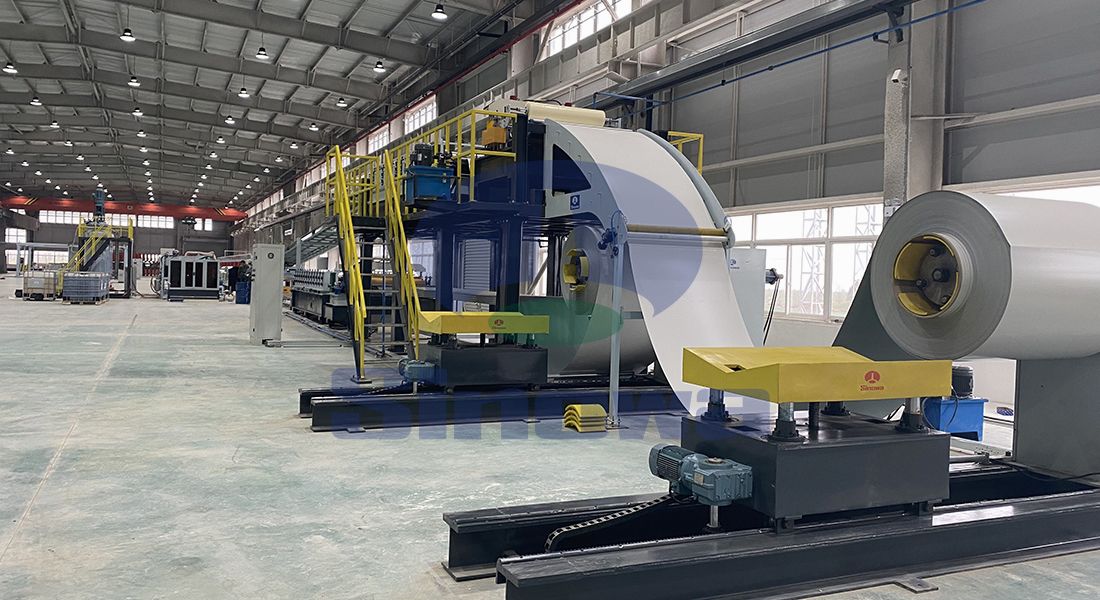
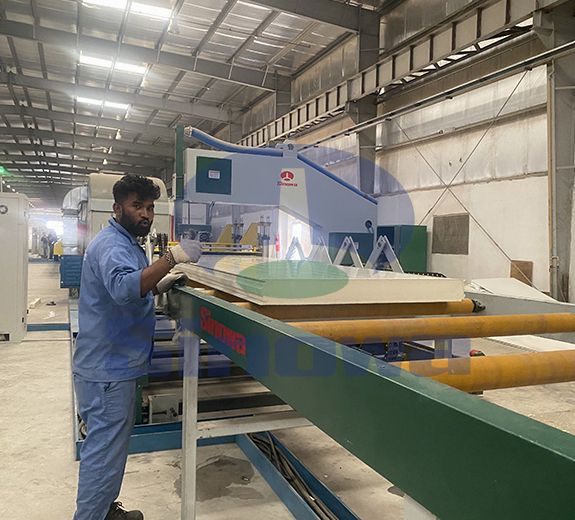
Sinowa is a well-known Low Price Sandwich Panel Production Line Supplier From China, Dedicated to the research and development of high-end & high-efficiency sandwich panel production line, Sinowa is comprehensively taking the leading position in terms of efficiency, automation control level, HMI, environment protection and energy consumption, with subversive designs made in some critical technological fields to procure exceptional cost performance and customer-friendly experience for the entire sandwich panel production line.
The adoption of system integration technology and bus control technology accomplishes the full automatization of integrated and coordinated control of the entire sandwich panel production line with accessible remote interactive communication. Ranking the first-class level in the world, it is currently the continuous pu sandwich panel line in the market taking a comprehensive lead in high performance.
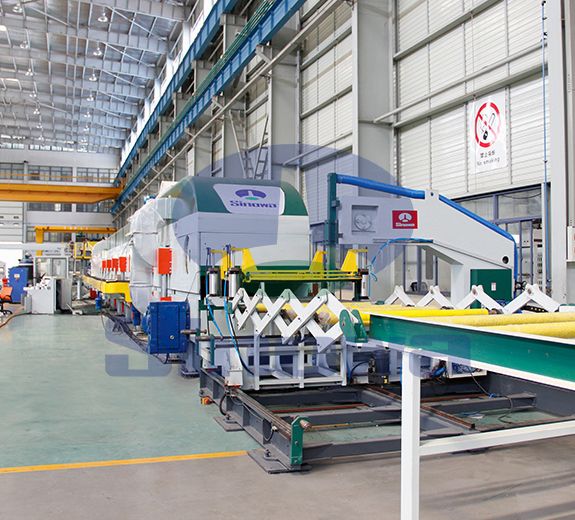
Based on the continuous technological pursuit, the sandwich panel production line developed by Sinowa provides you with high-efficiency industrial value. Based on China's cost advantage and our hard-working technology concept, our sandwich panel production line has a world-leading price-performance advantage. Sandwich Panel Production Line can meet a variety of production needs of customers.The whole sandwich panel line design concept of modularization enables all our components to be integrated and combined at will.
Our sandwich panel production line can easily automate the production of roof sandwich panel, wall sandwich panel, cold storage sandwich panel and other products by different combination and configuration selection and siple switching. The inner core layer can be polyrethane or rock wool, glass wool, an so on.
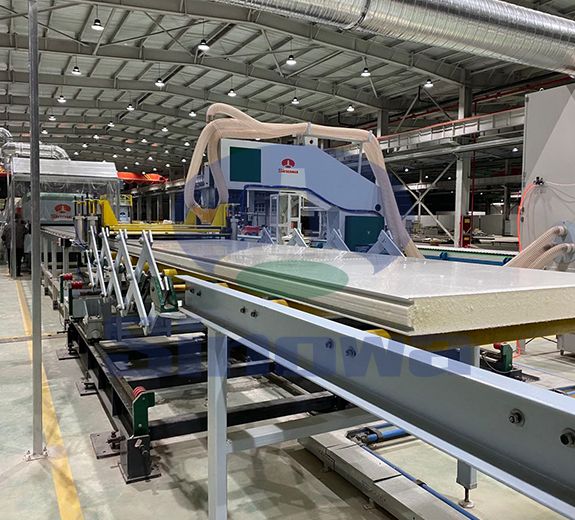
The sandwich panel production line has high adaptability, which may produce various sandwich panel of the PU, PIR and rock wool systems.
We may design various products according to the customer’s requirements, including various configurations, so as to meet their demands with flexible price system.
Highly integrated and linked control system centralizes all control points at the main central center, achieving parameter linkage, fault self-diagnosis controlled by the whole continuous sandwich panel line and shipping distance control.
High-level automatic control system also saves the manpower and reduces the manpower loss for customers.
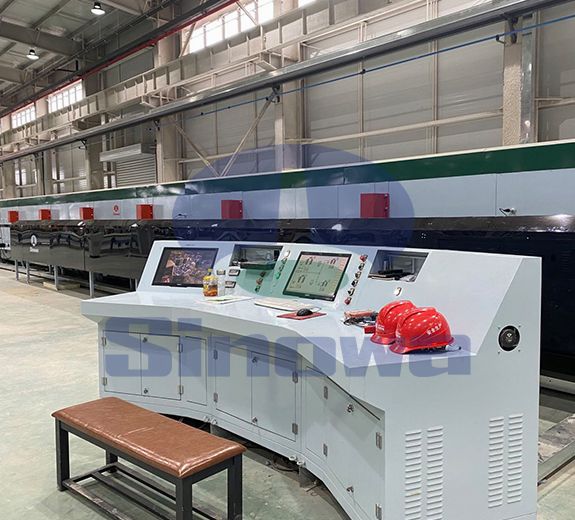
Concentrated system control is fully realized in the practice of concentrated process control so that the control system of all the movements of the parts in the sandwich panel production line is integrated in one process control console with accessible remote communication to elevate the automation and reduce the allocated number of personnel for the assembly line.
The main engine with modularized design achieves the precision operation of the sandwich panel production line, stable and reliable quality, less part and maintenance loss.
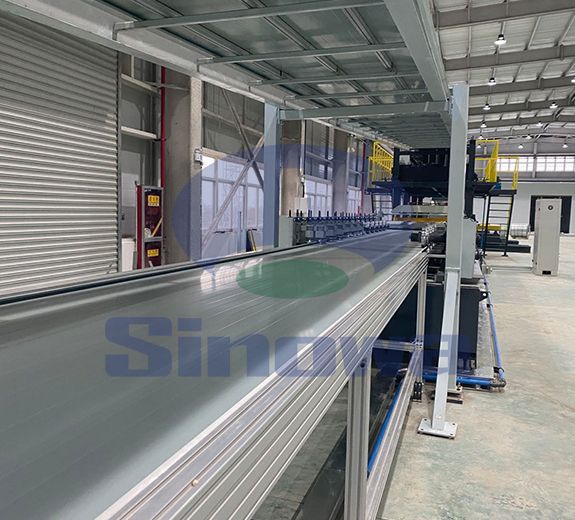
The whole sandwich panel production line is strictly modularized in design to ensure the greatest probability for the parts to be interchangeable, making it the most cost- and energy-saving. No joining made manually, all the key processes of the parts are completed in the machining center. As soon as the parts are inspected and warehoused, they enter into the assembly process. The modularized assembly can not only greatly increase the production efficiency but, most importantly, realize quick delivery as well. It elevates the reliability of product quality to a totally new level and minimizes the influence from human factors.
The whole sandwich panel production line has over 40 innovative inventions, making our products have lots of unique features and the comprehensive performance of our production line leading in the industry.
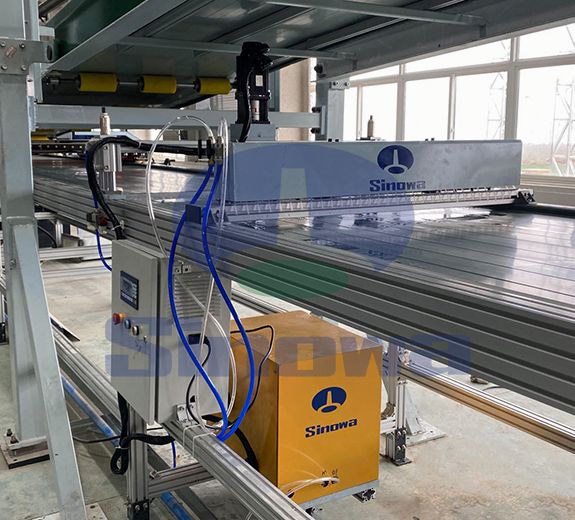
The precision servo hoisting mechanism employed by the main engine without hydraulic system makes the board thickness control flexible and the customer may conveniently change or adjust the board thickness. There will be not such troubles as hydraulic system adjustment, leakage, maintenance, etc.
High-level energy saving and protection design makes the whole sandwich panel production line possible to produce around the clock throughout the year and the customer will save huge budget. In addition, the isolated heat preservation room is constructed for warming the environment. The energy saving and protection design of our high-tech sandwich panel production line may guarantee that the customer’s production line may be freely heated and produce in the main time to save more costs for customers.
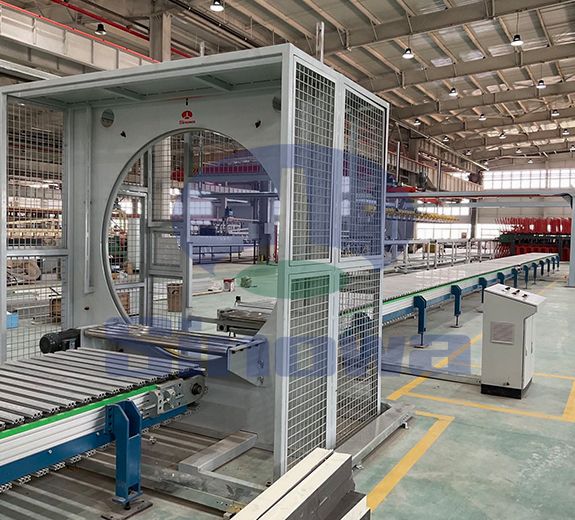
The high-power low-consumption design quickens the reaction of the sandwich panel production line while energy consumption is kept low.
With the brand-new, fully sealed inner insulation design, the energy consumption is controlled at the minimum level to achieve the design objective of less than an hour for the insulation system to be activated from the room temperature above 5℃ to the production process temperature.
The energy consumption is only 40% that of those similar products.
| PRODUCTION TYPE | PU | PIR | PHENOLIC | |||
|---|---|---|---|---|---|---|
| PRODUCTION USE | INSULATION PANEL | DOCORATIVE PANEL | ||||
| SURFACE OF SHEET | ALUMINUM FOIL | NON-WOVEN FABRIC | PAPER | NAKED | ||
| PRODUCT THICKNESS | 10m--- 200mm | |||||
| PRODUCTION SPEED | 3.0m---25m |
|---|---|
| FOAMING METHOD | TWO OR MULTI COMPONENTS FOAMING |
| FOAMING AGENT | PENTANE OR 141B |
| LENGTH OF LINE | 45m—100m CUSTOMER OPTIONAL |
Sinowa is a well-known manufacturer and technical service provider of high-end polyurethane insulation board production lines and various high-performance cold roll forming machine in China. Our main products include polyurethane double-sided color steel sandwich panel production line, polyurethane and phenolic soft facing insulation panel production line and high-efficiency roll forming machines.
Sinowa has invested outstanding efforts in low price sandwich panel production line, This is why our products are more efficiency, quality, automatic control technology, environmental protection, energy consumption indicators and the appearance and safety protection are comprehensively leading, Some subversive design changes in many major technical points,these major innovations make our products excellent in price/performance and user experience.
Sinowa is committed to the development and manufacturing of high-end and high-efficiency low price sandwich panel production line. Our sandwich panel production lines are leading the way in efficiency, automatic control, human-computer interaction, environmental protection and energy consumption. Using system integration and bus control technology, it realizes the automatic integrated linkage control of the entire production line, and can achieve remote interactive communication, which has the world-class level and a comprehensive leading high-performance production line in the market.
The search for a low price sandwich panel production line often starts with the practical need of manufacturers who want to expand their product capacity without overextending their available budget. Many new factories and small-scale fabrication workshops recognize that sandwich panels remain in steady demand for building enclosures, temporary shelters, cold storage units and partition walls, yet they cannot commit to the heavy capital outlay associated with fully automated, high-end manufacturing systems. A low-cost line does not automatically mean poor build quality, as it typically focuses on core functional modules while trimming extra automated features that some operations may not require. Buyers in this category usually prioritize consistent basic forming, reliable material feeding and stable bonding performance above sophisticated monitoring accessories or multi-mode switching functions. They spend time comparing the layout of roller sets, the structure of glue spreading units and the simplicity of operation interfaces, because a machine that is easy for local workers to master will reduce long-term training costs and downtime. It is also common for purchasers to consider the flexibility of the line to handle different surface materials, so that the same equipment can produce panels fitted with metal sheets or lighter facing materials according to changing market orders. Careful evaluation at this stage helps buyers avoid the mistake of selecting equipment that is overly simplified to the point where it cannot maintain uniform panel thickness and proper adhesion between core and facing layers.
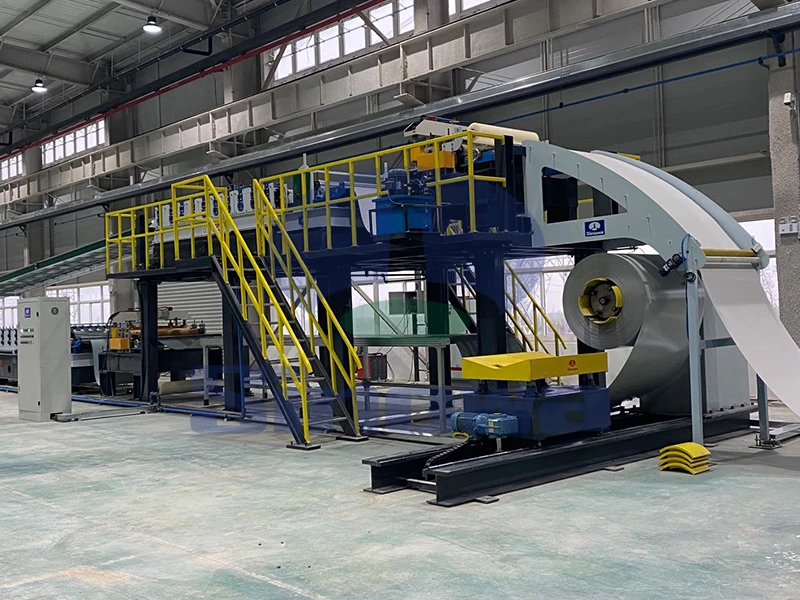
When assessing a low price sandwich panel production line, operators must understand the balance between production speed and output stability. These affordable systems are generally designed for moderate daily output, matching the order volume of regional suppliers rather than large industrial plants supplying nationwide construction projects. Slower running speeds create room for better manual oversight at key stations, where workers can check glue distribution, align incoming core materials and remove defective semi-finished products before they move further along the workflow. Continuous operation still remains possible, though frequent non-stop running for multiple days may place more stress on drive parts and sealing components compared with premium lines. Regular visual checks and simple lubrication routines become essential maintenance habits to extend the service life of the whole setup. The feeding section often relies on semi-automatic adjustment instead of digital automatic calibration, which means workers need to reset guides and tension controls when switching to raw rolls of different widths. This extra manual work is acceptable for businesses that do not change product specifications every few hours, and it is one of the main reasons that the overall cost of the equipment stays within a lower range. Users who accept this operating style can gain a capable production system while keeping their initial investment manageable.
Material compatibility stands as another critical point to examine for anyone planning to run a low price sandwich panel production line. Most models in this category are built to work with widely used core materials, including foam, mineral wool and other insulating substrates that are commonly combined with flat facing sheets. The pressing section is engineered to apply steady pressure across the panel surface to ensure the adhesive creates a solid bond between the core and the outer layers. Some economical lines have fixed pressing gap ranges, which limits the range of panel thicknesses they can produce without mechanical modification. This limitation is not a flaw for businesses that focus on a narrow product range, but it can create difficulties for workshops that frequently need to make panels of many different thickness sizes. The glue application mechanism usually supports single-side or double-side spreading, and the flow rate needs careful tuning to prevent insufficient glue that causes delamination or excess glue that wastes raw materials and messes up finished surfaces. Operators learn through practice how ambient temperature and humidity affect the curing speed of the adhesive, adjusting production pace accordingly to keep panel quality consistent. Choosing raw materials that match the working parameters of the machine helps reduce waste and keeps the production process predictable day after day.
Installation and commissioning of a low price sandwich panel production line follows a straightforward process that suits teams with basic mechanical knowledge. The equipment arrives split into separate sections, including the material unwinding rack, glue coating unit, continuous pressing frame, cutting station and finished product support table. These segments connect through standard fasteners and transmission links, and the layout can be arranged to fit inside ordinary factory halls without requiring special reinforced foundations or oversized power supply upgrades. Instruction materials outline the sequence for assembly, alignment and initial test runs, guiding technicians to adjust chain tension, roller parallelism and cutter position step by step. Many buyers arrange for their own maintenance staff to complete most of the setup, which removes the expense of bringing in external technical teams for long on-site support. The electrical control system uses simple control panels with physical buttons and basic indicator lights instead of complex touchscreen programs with remote data logging functions. This simpler control design lowers the cost of electrical components and also makes troubleshooting easier when small faults appear, as replacement parts for standard switches and motors are easy to source locally. Once test panels pass visual inspection and manual strength checks, the line can enter formal production gradually.
Daily operation of a low price sandwich panel production line demands disciplined workflow management to maintain stable output quality. Before starting each shift, workers carry out a short inspection to clear debris from rollers, verify glue supply levels and confirm that safety guards stay in their proper positions. Raw material rolls are loaded onto unwinding supports and aligned carefully to stop sideways drifting, which would create uneven panel edges and lead to trimmed waste. As the line moves, staff stationed at intermediate points watch for wrinkled facing sheets, gaps in the glue layer or misalignment of the inner core material. When small issues appear, they pause the equipment briefly to make corrections rather than letting flawed panels accumulate. The cutting station trims panels to preset lengths, and finished pieces slide onto receiving racks for temporary stacking while the adhesive continues its curing process. Operators learn not to stack fresh panels too high or shift them quickly, because newly bonded structures can separate if subjected to sudden impact or uneven pressure. Shift handover includes notes about material batches, common adjustments needed and any unusual noises from moving parts. These simple operational habits compensate for the lack of advanced automatic defect detection found on more expensive production lines.
Spare parts availability has a large influence on the long-term value of a low price sandwich panel production line. Most components fitted on these machines belong to common mechanical and electrical types that circulate widely in local machinery markets. Drive motors, bearings, conveyor chains, glue pump seals and cutting blades can be replaced without waiting for special custom-made parts from distant suppliers. This feature cuts downtime significantly when wear parts degrade after weeks or months of continuous use. Business owners often build a small stock of frequently replaced items, ordering spares alongside the main equipment purchase to prepare for future maintenance needs. It is wise to check the standard dimensions of wear parts before finalizing the selection of the production line, avoiding designs that rely heavily on uniquely shaped components with few alternative suppliers. Even though the equipment carries a lower upfront cost, running it becomes uneconomical if every minor breakdown creates long waiting periods for replacements. Responsible users keep a simple service log recording when parts are changed and how operating conditions affect component wear, helping them predict maintenance needs ahead of failures.
Safety considerations must never be overlooked simply because a sandwich panel production line falls into the lower price category. Moving rollers, transmission chains and the rotating cutting mechanism all carry potential hazards if operators ignore basic safety rules. Standard protective covers surround exposed moving areas, and emergency stop buttons sit within easy reach at multiple positions along the line. Workers receive training to keep clothing, loose tools and hands away from running parts and to shut down power fully before cleaning or carrying out adjustments. Glue handling also brings safety concerns, as many bonding agents release vapors that require proper ventilation inside the workshop space. Good ventilation reduces buildup of fumes and also supports stable glue curing, creating a safer working environment while benefiting product quality at the same time. Operators wear suitable protective gear such as gloves and eye protection when handling adhesives or trimming panel samples. Safety procedures are built into the regular work routine rather than treated as optional extra steps. A low-cost machine does not excuse careless operation, and consistent safety practice prevents workplace accidents that would disrupt production and increase operating costs far beyond the initial savings on equipment.
Understanding the output limitations helps business owners set realistic expectations for a low price sandwich panel production line. This type of equipment works best for steady, small-batch orders where specifications do not change constantly. It can reliably produce standard panels for common construction applications, but it struggles to match the high throughput and precision consistency of fully automated systems designed for mass production. When order volume spikes suddenly, the line cannot easily accelerate beyond its designed operating speed without risking poor bonding quality and accelerated wear. Some operators respond to busy periods by adding extra work shifts instead of pushing the machine past its comfortable operating range. This approach keeps product quality steady and protects the service life of the mechanical structure. Buyers should map out their projected order volume over the next few years before deciding whether this kind of line matches their development plan. For many emerging businesses, the moderate output capacity is exactly what they need, allowing them to enter the sandwich panel market and build a customer base before considering investment in larger, more capable production systems later on.
Ongoing optimization is possible even with a low price sandwich panel production line, using low-cost adjustments rather than major upgrades. Experienced operators gradually refine glue spreading techniques, adjust roller pressure settings and optimize the arrangement of raw material storage to reduce handling time. Minor improvements to the receiving rack design can prevent surface scratches on finished panels, and simple guides added to the feeding section reduce material misalignment. These changes require only basic metal fabrication skills and inexpensive materials, bringing noticeable gains in finished product yield. Operators also learn to match their production schedule to environmental conditions, scheduling batches of panels that need slower curing during cooler periods and adjusting glue mixture ratios accordingly. Records of successful settings for different raw material combinations create an internal reference guide for new staff members. While these tweaks cannot turn an economical line into a high-speed premium system, they narrow the quality gap and lower material waste over time. The willingness to refine workflows often makes a bigger difference to profitability than small differences in the original purchase price of the equipment.
The long-term success of investing in a low price sandwich panel production line depends on matching the machine features to actual business requirements instead of chasing unnecessary automation. For many small and medium producers, the core goal is to make dependable sandwich panels that satisfy local buyers, maintain stable cash flow and avoid being locked into heavy debt from expensive machinery purchases. This category of equipment offers a practical entry point into the insulated panel manufacturing sector, combining essential forming, bonding and cutting functions while removing costly advanced features that add little value to certain operating models. Success comes from careful selection, disciplined daily maintenance, trained operators and realistic planning around output limits. Businesses that treat this production line as a capable foundational tool can grow steadily, learn the details of sandwich panel manufacturing and accumulate experience that supports future expansion. When the time comes to scale up, the knowledge gained from running an economical line helps owners make smarter decisions about upgrading equipment. In the right hands, a reasonably priced sandwich panel production line becomes a reliable asset that supports consistent manufacturing and sustainable business growth for years.
sandwich panel production line, sandwich panel production line manufacturer, sandwich panel production line for sale, sandwich panel production line supplier, China sandwich panel production line, Custom sandwich panel production line
«Low Price Sandwich Panel Production Line» Update Date:2026/10/27
URL: https://www.sinowa.cn/en/blog/low-price-sandwich-panel-production-line.html
Tags: PUR Sandwich Panel Production Line , Continuous Sandwich Panel Production Line , Insulated Sandwich Panel Production Line , PIR Sandwich Panel Production Line , Sandwich Panel Production Line , Rockwool Sandwich Panel Production Line , Automatic Sandwich Panel Production Line , PU Sandwich Panel Production Line , Polyurethane Sandwich Panel Production Line , Continuous PU Sandwich Panel Production Line , Mineral Wool Sandwich Panel Production Line , PU sandwich panel line , PU sandwich panel machine , PU sandwich panel production line , sandwich panel line , sandwich panel machine , sandwich panel production line
