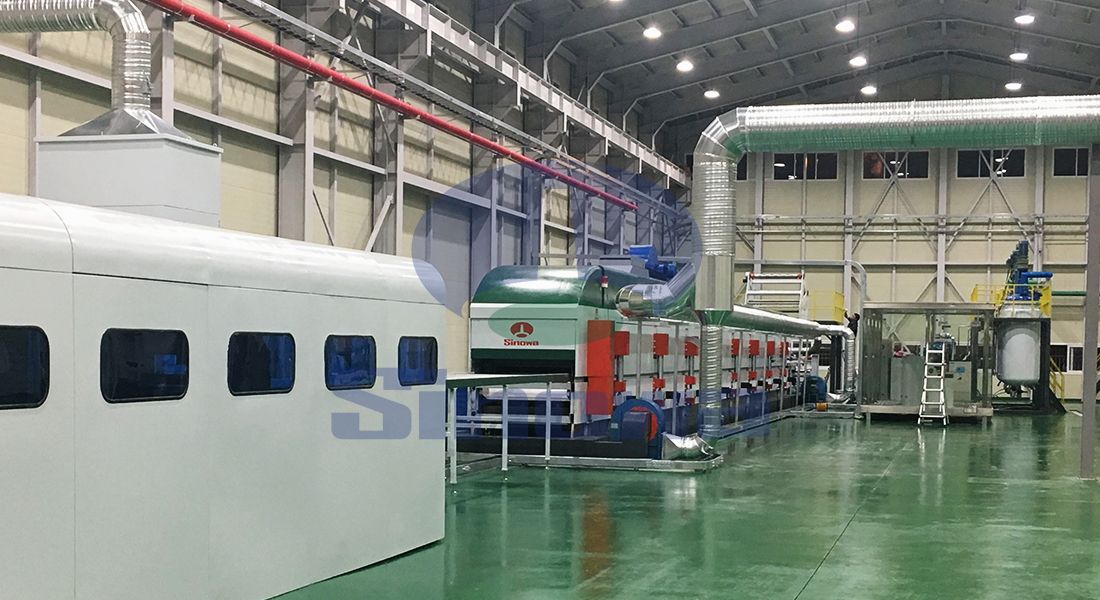
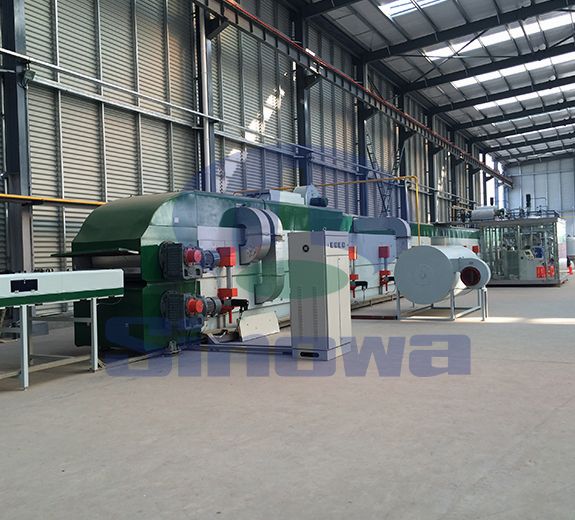
Sinowa is a well-known PU Insulation Sandwich Panel Line Supplier From China, Continuous Insulation Panel Production Line of the PU and phenolic aldehyde surface has diversified and multifunctional production characteristics, which may produce products with different specifications such as PU, PF, PIR, etc.
The surface material may be aluminum foil, colored steel, cement base cloth, kraft paper, non-woven fabrics, etc.
The products are widely applied to such occasions as construction, decoration, pipeline ventilation, subway construction, etc.
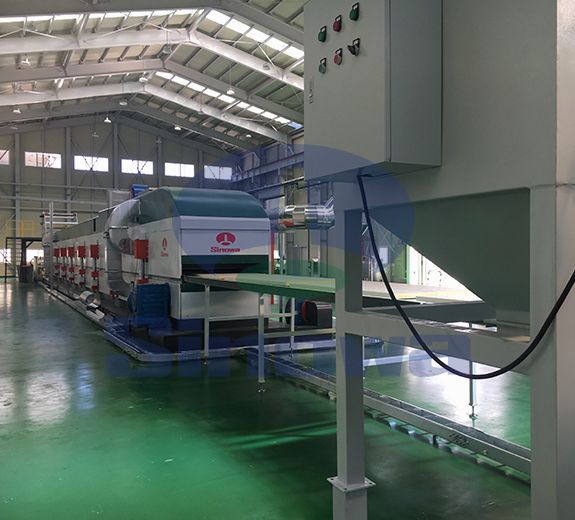
The pu sandwich panel line of soft layer insulation board is able to continuously and efficiently produce high-quality PU and Phenolic insulation boards.
We spare no efforts to improve our product quality and technological reliability by employing the most cutting-edge and the most reliable support and processes to make our products highly reliable and endurable. As a result, the pu sandwich panel line of our soft layer insulation panels is highlighted by many perfect qualities. It is the core idea in Sinowa's product roadmap to surpass our competitors in terms of design philosophy, manufacture methods and service level, going for excellence and leading position and making constant improvement on our products and services, which is also our core value system to create efficiency and convenience for our customers.
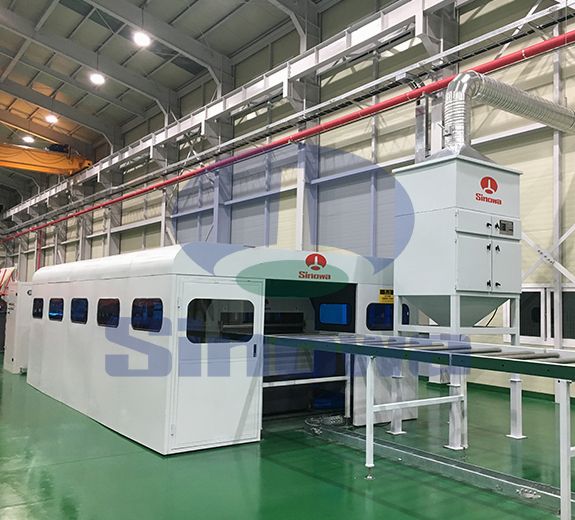
Well-grounded on our solid strength as a renowned large-scale enterprise, Sinowa has a high starting point in developing industrial assembly lines.
Based on the advanced science and technology introduced from within and without the country and supported by a great number of first-grade parts and components from the home and aboard, these assembly lines have a high-level configuration of supporting products in terms of machinery, electrical control, hydraulic pressure, automatic measurement and tracking, and so on.
This is a strong proof of our product’s reliable quality and high efficiency.
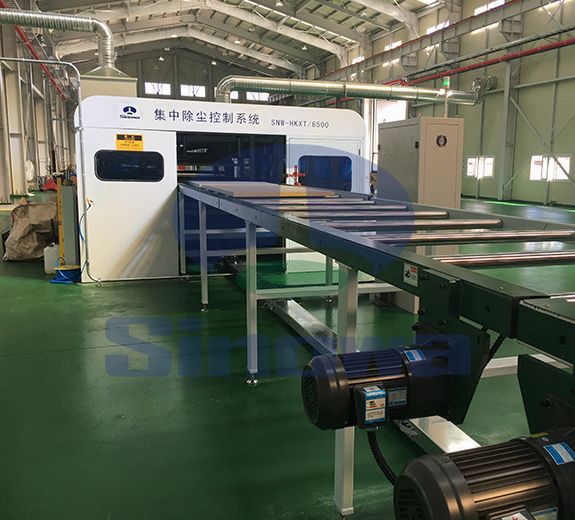
The first-class appearance design and excellent energy saving measures make it unnecessary for customers to additionally construct the heat preservation and isolation room for production around the clock throughout the year, so that the customers may save lots of resources and costs.
Modularized standard design and important parts machined with CNC machine tool make the production line have excellent quality assurance. Dependence on the man-made factors is eliminated. The operation is precision, with the highest operation speed of 30m/min. The pu sandwich panel line has the world-class production efficiency.
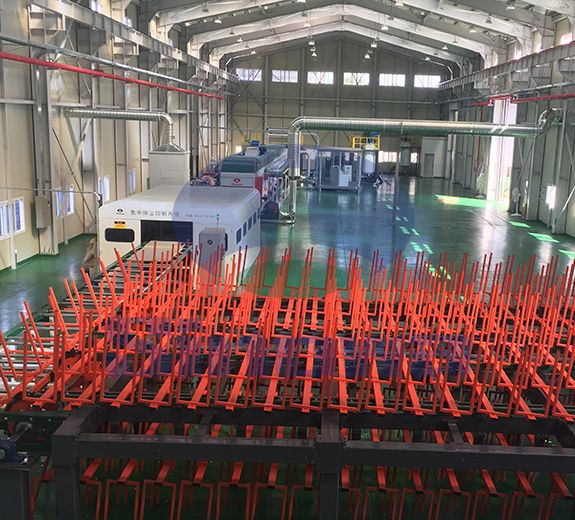
The high performance and reliable multicomponent cyclopentane foaming technology and equipment of Sinowa may be also applied to the foaming process of the phenolic aldehyde board. Therefore, our customers may not only freely adjust the foaming matching according to the raw material, but also save lots of costs. Moreover, they are of significance for environmental protection.
Sinowa's industrial pu sandwich panel line of insulation panels is distinguished by its impressive performance of energy conservation. In each high point of energy consumption throughout the entire pu sandwich panel line are implemented corresponding measures to considerably lower the consumption level.
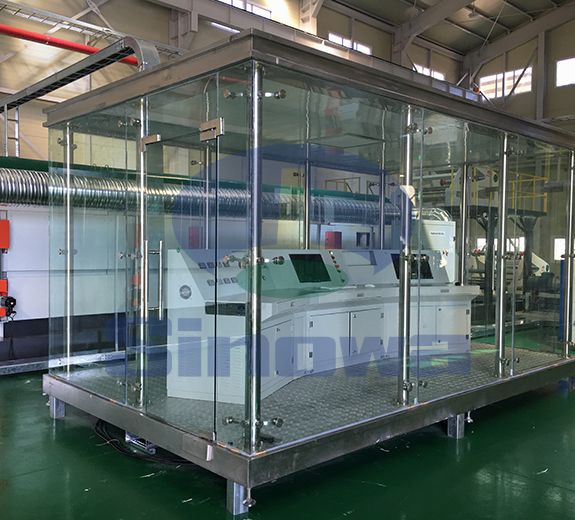
For example, the body of the lamination belt conveyer is covered with insulation panels in very reasonable structures, which doesn’t blemish the overall outlook but greatly increases the insulation performance.
The entire pu sandwich panel line is constantly optimized and improved so that the consumption of each power source is significantly reduced. The motor power of our lamination conveying system is only 3.0 kw, about 50% less than those of the same kind.
All in all, the energy consumption of the whole sandwich panel line equals 40% or even less of the equivalent lines in the market.
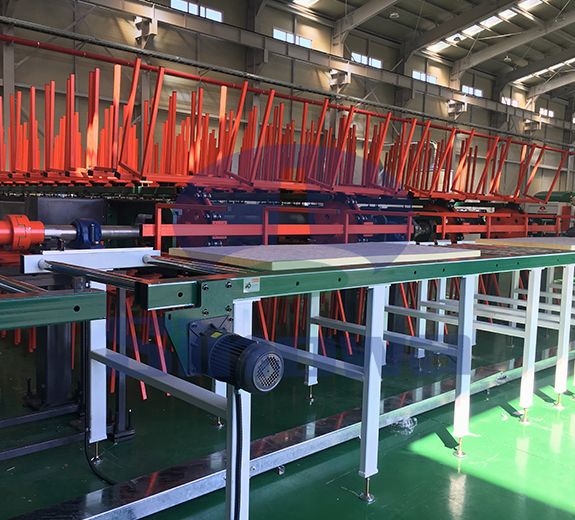
The pu sandwich panel line of Sinowa adopts the most advanced concepts in the world to realize the modularized design with all the parts bolted together rather than welded.
In standardized production, the parts can be dismantled and exchanged, so the production cycle is drastically shortened and the maintenance becomes by far easier.
Through finite element analysis, the equipment design is greatly optimized to realize modularization, digitization, and weight-minimalization.
| PRODUCTION TYPE | PU | PIR | PHENOLIC | |||
|---|---|---|---|---|---|---|
| PRODUCTION USE | INSULATION PANEL | DOCORATIVE PANEL | ||||
| SURFACE OF SHEET | ALUMINUM FOIL | NON-WOVEN FABRIC | PAPER | NAKED | ||
| PRODUCT THICKNESS | 10m--- 200mm | |||||
| PRODUCTION SPEED | 3.0m---25m |
|---|---|
| FOAMING METHOD | TWO OR MULTI COMPONENTS FOAMING |
| FOAMING AGENT | PENTANE OR 141B |
| LENGTH OF LINE | 45m—100m CUSTOMER OPTIONAL |
Sinowa is a well-known manufacturer and technical service provider of high-end polyurethane insulation board production lines and various high-performance cold roll forming machine in China. Our main products include polyurethane double-sided color steel sandwich panel production line, polyurethane and phenolic soft facing insulation panel production line and high-efficiency roll forming machines.
Sinowa has invested outstanding efforts in pu insulation sandwich panel line, This is why our products are more efficiency, quality, automatic control technology, environmental protection, energy consumption indicators and the appearance and safety protection are comprehensively leading, Some subversive design changes in many major technical points,these major innovations make our products excellent in price/performance and user experience.
Sinowa is committed to the development and manufacturing of high-end and high-efficiency pu insulation sandwich panel line. Our sandwich panel production lines are leading the way in efficiency, automatic control, human-computer interaction, environmental protection and energy consumption. Using system integration and bus control technology, it realizes the automatic integrated linkage control of the entire production line, and can achieve remote interactive communication, which has the world-class level and a comprehensive leading high-performance production line in the market.
In the modern manufacturing and construction sectors, the demand for high-efficiency thermal insulation building materials continues to rise as energy conservation and environmental protection concepts gain global popularity. PU insulation sandwich panels have emerged as one of the most widely used composite materials due to their excellent thermal insulation performance, stable structural rigidity, and convenient installation characteristics. The production efficiency and product quality of these panels are largely determined by the operational performance of PU insulation sandwich panel lines, which integrate mechanical transmission, chemical foaming, automatic molding, and precision processing technologies. These streamlined production systems realize continuous and automated manufacturing of composite panels, effectively meeting the large-scale material supply demands of industrial buildings, cold storage facilities, and special enclosure engineering projects. With the continuous upgrading of industrial manufacturing standards, the structural optimization and technological iteration of production lines have become crucial driving forces for improving the overall performance of PU sandwich panels and reducing comprehensive production costs.
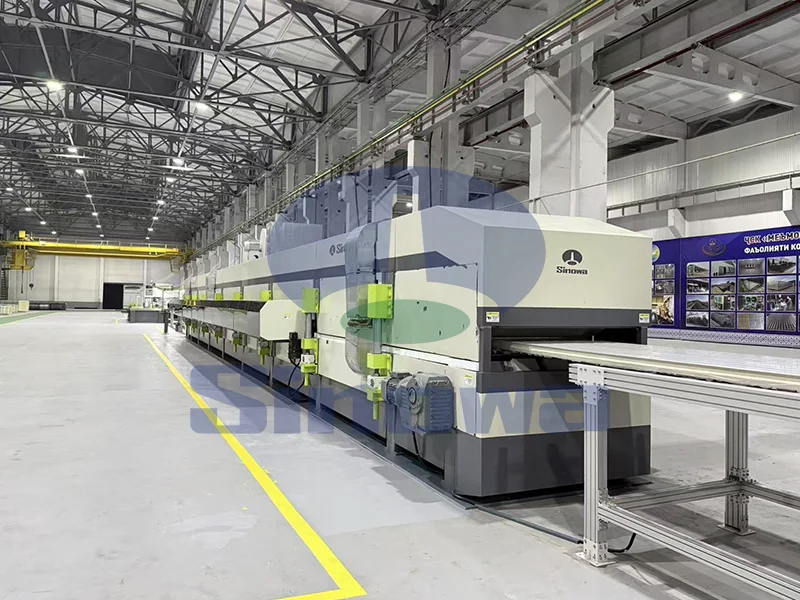
A complete PU insulation sandwich panel line consists of multiple interconnected functional units, each undertaking independent production tasks while maintaining precise collaborative operation throughout the entire manufacturing process. The basic composition of the production line covers raw material feeding systems, surface material pretreatment units, high-pressure mixing and pouring devices, double-belt molding systems, temperature-controlled curing structures, trimming and cutting mechanisms, as well as finished product conveying and stacking components. Every functional module is designed based on the physical and chemical properties of polyurethane raw materials and composite surface materials, ensuring that each production link maintains stable operating parameters. The internal connection of the production line adopts an integrated transmission structure, which minimizes material handling gaps during the production process, avoids quality fluctuations caused by manual intervention, and lays a solid foundation for the consistent batch production of sandwich panels.
The raw material feeding part serves as the starting link of the entire production workflow, mainly responsible for the stable supply of surface base materials and polyurethane chemical raw materials. For metal surface materials commonly used in building panels, the feeding unit is equipped with automatic unwinding structures and tension control components. These structures can maintain constant tension during the transportation of coiled sheet materials, preventing surface wrinkles, stretching deformation, or offset deviation in the subsequent composite molding process. Meanwhile, the feeding system for polyurethane raw materials includes sealed storage tanks and precision metering pump groups. Polyurethane resin, curing agents, foaming agents, and other auxiliary raw materials are stored in separate containers to avoid premature chemical reactions caused by mixed storage. The metering pumps accurately control the proportion of various raw materials through mechanical calibration, which directly affects the foaming density, pore structure, and bonding strength of the intermediate heat-insulating core layer.
Before formal composite molding, surface materials need to go through a complete pretreatment process to eliminate impurities and optimize surface adhesion performance. The pretreatment unit is equipped with surface cleaning and leveling structures, which can remove dust, oil stains, and oxide layers attached to the surface of metal sheets. For non-metal surface materials such as color-coated plates and composite films, the pretreatment link also includes surface roughening treatment to enhance the bonding tightness between the surface material and the polyurethane foam layer. In addition, the pretreatment section is matched with an auxiliary heating device to adjust the surface material temperature to a reasonable range. This temperature adjustment can reduce the temperature difference between the surface material and the foamed raw materials, avoid interfacial stress generated by rapid temperature changes during composite molding, and effectively prevent the later delamination and peeling of sandwich panels.
The high-pressure mixing and pouring system is the core functional component of the entire production line, determining the uniformity and foaming effect of polyurethane raw materials. After being precisely proportioned by the metering pump, multiple liquid raw materials are transported to the high-speed mixing head for instantaneous homogeneous mixing. The internal structure of the mixing head adopts a turbulent flow design, which can break the molecular agglomeration of raw materials and realize the microscopic uniform fusion of different chemical components. The mixed liquid materials are evenly coated on the inner surface of the upper and lower base materials through the reciprocating movement of the distribution nozzle. The intelligent walking mechanism of the nozzle can adjust the movement speed and blanking amount according to the preset panel thickness parameters, ensuring that the liquid raw materials form a uniform liquid layer on the surface of the base material without local accumulation or blank gaps. This precise pouring method provides a stable material foundation for the formation of fine and uniform foam pores in the subsequent foaming stage.
The double-belt molding system undertakes the key task of foaming and composite shaping of sandwich panels. After being coated with polyurethane liquid materials, the upper and lower surface materials are synchronously sent into the closed space between the upper and lower conveyor belts. The internal circulation heating structure of the double-belt device can maintain a constant molding temperature, creating a stable chemical reaction environment for polyurethane foaming and curing. During the slow transportation of materials with the conveyor belt, the polyurethane liquid undergoes continuous chemical reactions, gradually expands and foams, and fills the gap between the upper and lower surface materials. Under the combined action of constant temperature and mechanical pressure, the foam structure gradually stabilizes and forms a dense heat-insulating core layer. The spacing between the double belts can be mechanically adjusted to adapt to the production requirements of panels with different thickness specifications, and the parallelism of the upper and lower belts is strictly controlled to ensure the uniform thickness of finished panels without warping deformation.
Temperature control is an indispensable technical parameter throughout the foaming and curing process of PU sandwich panels. The curing unit connected behind the double-belt molding area is equipped with an intelligent constant temperature system, which maintains the internal temperature within the optimal reaction range. Moderate heating can accelerate the cross-linking reaction of polyurethane molecules, shorten the curing molding cycle, and improve the structural compactness of the foam core. Excessively high temperature will cause excessive foaming of raw materials, resulting in loose internal pores and reduced insulation performance, while excessively low temperature will lead to incomplete curing, prolonged production cycles, and insufficient bonding strength between layers. After the primary curing in the constant temperature area, the semi-finished panels will enter the natural cooling section to slowly reduce the surface and internal temperature, eliminating the internal stress generated during high-temperature molding and enhancing the long-term structural stability of the panels.
After cooling and shaping, the semi-finished panels enter the trimming and cutting processing stage to complete the finishing of external dimensions. The trimming devices on both sides of the production line use high-speed rotating cutting tools to trim the excess edges of the panels, ensuring that the width of each panel maintains a unified standard size. The cutting mechanism adopts servo positioning control, which can flexibly adjust the cutting length according to production orders and realize automatic fixed-length cutting of continuous panels. In the cutting process, the production line is equipped with dust and debris collection structures to clean up the foam scraps generated by processing in real time, maintaining the cleanliness of the production environment and avoiding the impact of residual debris on the surface flatness of finished products. All trimming and cutting processes are completed online without secondary handling, which effectively improves the processing efficiency and avoids surface scratches caused by manual transportation.
The final stage of the production line includes finished product inspection, conveying, and stacking operations. The online detection system monitors the key indicators of finished panels in real time, including surface flatness, overall thickness uniformity, and edge cutting precision. Unqualified products with dimensional deviations or surface defects are automatically marked and separated from the qualified product conveying line. Qualified finished panels are transported to the stacking area through the roller conveying mechanism, and the automatic stacking equipment neatly arranges the panels according to the preset stacking standards. The stacking process strictly controls the stacking height to prevent the bottom panels from being deformed by excessive pressure. Meanwhile, the surface of the finished panels is protected with isolation films to avoid friction scratches during storage and transportation, ensuring that the panels maintain a complete and smooth appearance when leaving the factory.
The excellent performance of PU insulation sandwich panels is closely related to the refined control of each link in the production line. The polyurethane foam formed under precise production parameters has a closed-cell structure, which can effectively block the heat conduction path and achieve low thermal conductivity. This structural characteristic endows the panels with superior thermal insulation capabilities, making them suitable for temperature-controlled spaces such as cold storage and constant-temperature workshops. In addition, the integrated composite molding process of the production line enhances the interfacial bonding force between the surface material and the foam core. The composite structure formed by chemical bonding has strong peeling resistance and shear resistance, enabling the panels to withstand external wind pressure and mechanical extrusion during use. The adjustable production parameters of the production line also support the customized production of panels with different densities and thicknesses, meeting the usage requirements of different application scenarios.
In actual industrial production applications, the operational stability of the PU insulation sandwich panel line directly affects the economic benefits of production activities. The fully automated linkage design reduces manual operation links, lowers the labor cost input in the production process, and simplifies the daily production management work. The continuous production mode realizes uninterrupted feeding, molding, and cutting, greatly improving the unit time output of panels. The intelligent parameter adjustment function enables the production line to quickly switch production specifications, which is convenient for manufacturers to respond to diversified market order demands. Moreover, the optimized structural design of the production line reduces the waste rate of raw materials. The precise metering and pouring system minimizes the residual amount of chemical raw materials, and the edge trimming scraps can be recycled and processed, which conforms to the current development trend of energy saving and consumption reduction in the manufacturing industry.
With the continuous progress of industrial manufacturing technology, the upgrading direction of PU insulation sandwich panel line is gradually clear. In terms of intelligent optimization, more high-precision sensing elements and automatic feedback control systems will be embedded in the production line. These elements can monitor real-time data such as raw material ratio, molding temperature, and running speed in the production process, and automatically adjust operating parameters according to data changes to further improve production accuracy. In terms of environmental protection optimization, the production line will adopt low-toxicity and low-volatile raw material conveying structures, and add waste gas purification and noise reduction devices to reduce the environmental impact of the production process. In terms of structural upgrading, the modular assembly design will become the mainstream, which is convenient for equipment maintenance, component replacement, and production line layout adjustment, improving the flexibility of production equipment.
From the perspective of industrial application prospects, PU insulation sandwich panels produced by professional production lines have broad market space in multiple industries. In the construction field, the panels are used for the enclosure structures of industrial plants, logistics warehouses, and temporary buildings, providing stable thermal insulation and weather resistance for buildings. In the cold chain logistics industry, the panels serve as the main building materials for cold storage and refrigerated transportation compartments, reducing energy consumption caused by temperature exchange. In addition, the panels also have application value in special fields such as clean workshops and petrochemical anti-corrosion buildings. Driven by market demand, the technological innovation of PU insulation sandwich panel line will continue to promote the performance improvement and cost optimization of sandwich panel products, and further expand the application boundary of composite insulation materials.
In conclusion, the PU insulation sandwich panel line is a comprehensive intelligent production system integrating machinery, chemistry, and automatic control. Each functional unit in the production line cooperates closely to complete the whole process from raw material processing to finished product output, realizing standardized and large-scale manufacturing of insulation sandwich panels. The reasonable structural design and precise parameter control of the production line ensure the excellent thermal insulation performance, mechanical strength, and appearance quality of finished panels. With the increasing emphasis on energy conservation and green manufacturing in various industries, the market demand for high-quality PU insulation sandwich panels will continue to grow, which also puts forward higher requirements for the technological level and operational stability of production lines. Continuous technological research and development and structural optimization of production lines will become the core driving force to promote the sustainable development of the composite panel manufacturing industry, providing reliable material support for the upgrading of modern construction and industrial facilities.
«PU Insulation Sandwich Panel Line» Update Date:2026/5/11
URL: https://www.sinowa.cn/en/blog/pu-insulation-sandwich-panel-line.html
Tags: PU Sandwich Panel Lines , Continuous PU Sandwich Panel Line ,
