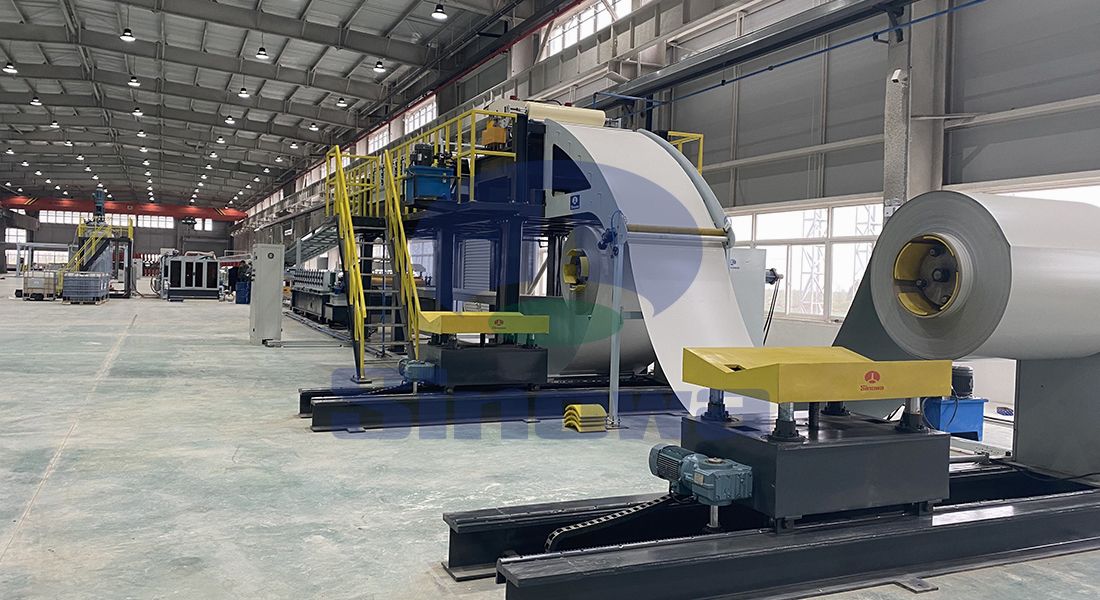
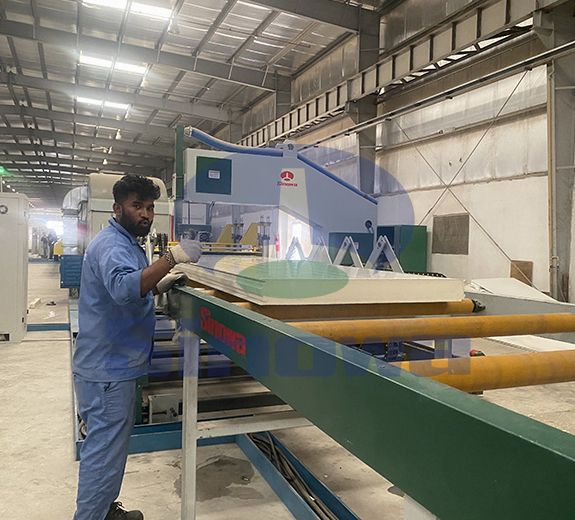
Sinowa is a well-known Sandwich Panel Machine Supplier From China, Dedicated to the research and development of high-end & high-efficiency sandwich panel machine, Sinowa is comprehensively taking the leading position in terms of efficiency, automation control level, HMI, environment protection and energy consumption, with subversive designs made in some critical technological fields to procure exceptional cost performance and customer-friendly experience for the entire sandwich panel machine.
The adoption of system integration technology and bus control technology accomplishes the full automatization of integrated and coordinated control of the entire sandwich panel machine with accessible remote interactive communication. Ranking the first-class level in the world, it is currently the continuous pu sandwich panel line in the market taking a comprehensive lead in high performance.
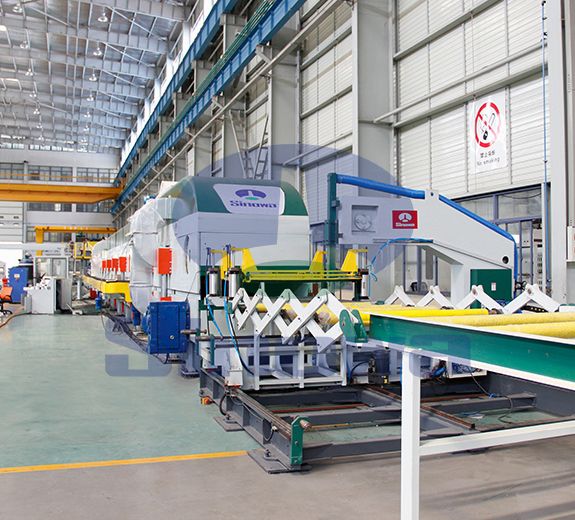
Based on the continuous technological pursuit, the sandwich panel machine developed by Sinowa provides you with high-efficiency industrial value. Based on China's cost advantage and our hard-working technology concept, our sandwich panel production line has a world-leading price-performance advantage. Sandwich Panel Machine can meet a variety of production needs of customers.The whole sandwich panel line design concept of modularization enables all our components to be integrated and combined at will.
Our sandwich panel machine can easily automate the production of roof sandwich panel, wall sandwich panel, cold storage sandwich panel and other products by different combination and configuration selection and siple switching. The inner core layer can be polyrethane or rock wool, glass wool, an so on.
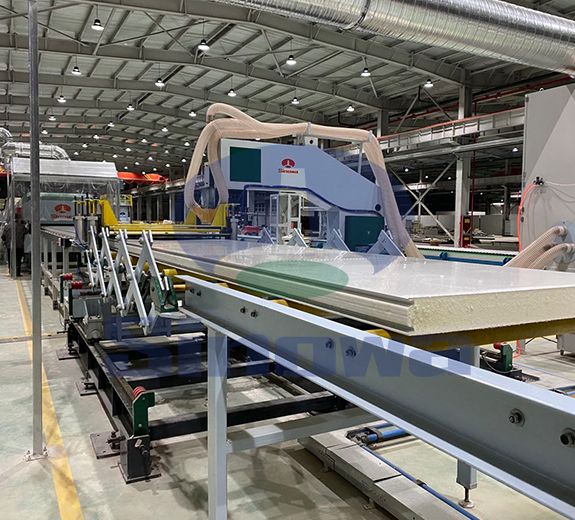
The sandwich panel machine has high adaptability, which may produce various sandwich panel of the PU, PIR and rock wool systems.
We may design various products according to the customer’s requirements, including various configurations, so as to meet their demands with flexible price system.
Highly integrated and linked control system centralizes all control points at the main central center, achieving parameter linkage, fault self-diagnosis controlled by the whole continuous sandwich panel line and shipping distance control.
High-level automatic control system also saves the manpower and reduces the manpower loss for customers.
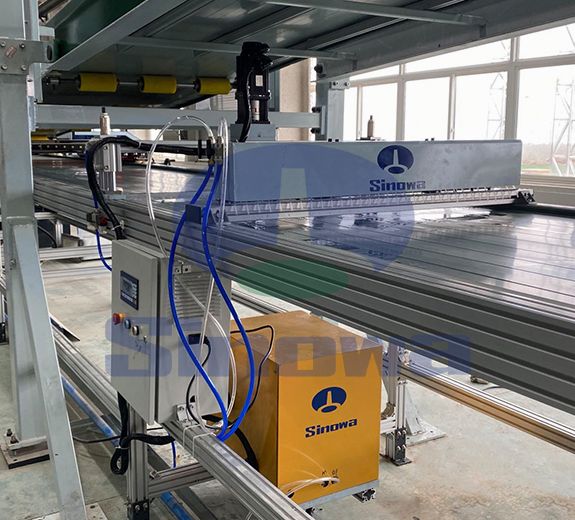
Concentrated system control is fully realized in the practice of concentrated process control so that the control system of all the movements of the parts in the sandwich panel machine is integrated in one process control console with accessible remote communication to elevate the automation and reduce the allocated number of personnel for the assembly line.
The main engine with modularized design achieves the precision operation of the sandwich panel machine, stable and reliable quality, less part and maintenance loss.
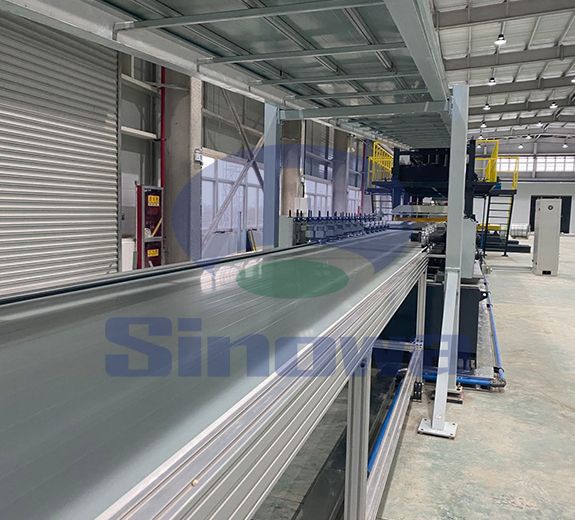
The whole sandwich panel machine is strictly modularized in design to ensure the greatest probability for the parts to be interchangeable, making it the most cost- and energy-saving. No joining made manually, all the key processes of the parts are completed in the machining center. As soon as the parts are inspected and warehoused, they enter into the assembly process. The modularized assembly can not only greatly increase the production efficiency but, most importantly, realize quick delivery as well. It elevates the reliability of product quality to a totally new level and minimizes the influence from human factors.
The whole sandwich panel machine has over 40 innovative inventions, making our products have lots of unique features and the comprehensive performance of our production line leading in the industry.
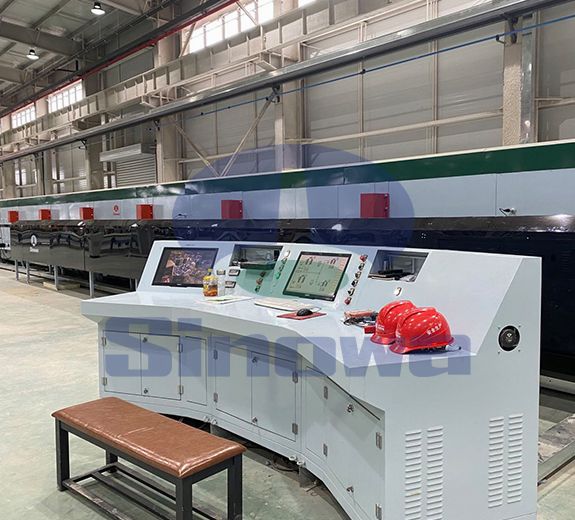
The precision servo hoisting mechanism employed by the main engine without hydraulic system makes the board thickness control flexible and the customer may conveniently change or adjust the board thickness. There will be not such troubles as hydraulic system adjustment, leakage, maintenance, etc.
High-level energy saving and protection design makes the whole sandwich panel machine possible to produce around the clock throughout the year and the customer will save huge budget. In addition, the isolated heat preservation room is constructed for warming the environment. The energy saving and protection design of our high-tech sandwich panel machine may guarantee that the customer’s production line may be freely heated and produce in the main time to save more costs for customers.
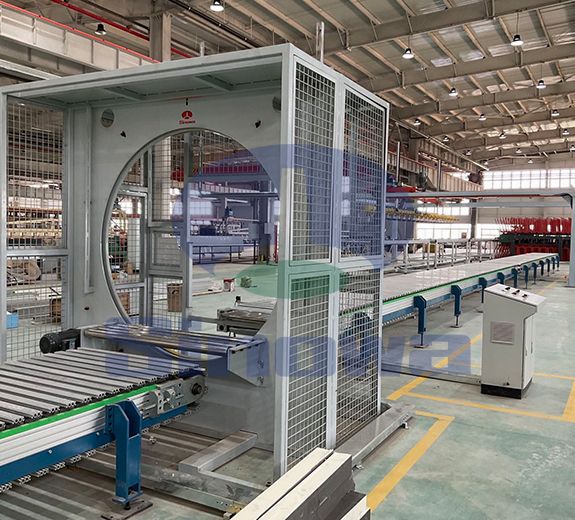
The high-power low-consumption design quickens the reaction of the sandwich panel machine while energy consumption is kept low.
With the brand-new, fully sealed inner insulation design, the energy consumption is controlled at the minimum level to achieve the design objective of less than an hour for the insulation system to be activated from the room temperature above 5℃ to the production process temperature.
The energy consumption is only 40% that of those similar products.
| PRODUCTION TYPE | PU | PIR | PHENOLIC | |||
|---|---|---|---|---|---|---|
| PRODUCTION USE | INSULATION PANEL | DOCORATIVE PANEL | ||||
| SURFACE OF SHEET | ALUMINUM FOIL | NON-WOVEN FABRIC | PAPER | NAKED | ||
| PRODUCT THICKNESS | 10m--- 200mm | |||||
| PRODUCTION SPEED | 3.0m---25m |
|---|---|
| FOAMING METHOD | TWO OR MULTI COMPONENTS FOAMING |
| FOAMING AGENT | PENTANE OR 141B |
| LENGTH OF LINE | 45m—100m CUSTOMER OPTIONAL |
Sinowa is a well-known manufacturer and technical service provider of high-end polyurethane insulation board production lines and various high-performance cold roll forming machine in China. Our main products include polyurethane double-sided color steel sandwich panel production line, polyurethane and phenolic soft facing insulation panel production line and high-efficiency roll forming machines.
Sinowa has invested outstanding efforts in both the insulation board production line and the roll forming line, This is why our products are more efficiency, quality, automatic control technology, environmental protection, energy consumption indicators and the appearance and safety protection are comprehensively leading, Some subversive design changes in many major technical points,these major innovations make our products excellent in price/performance and user experience.
Sinowa is committed to the development and manufacturing of high-end and high-efficiency sandwich panel production lines. Our sandwich panel production lines are leading the way in efficiency, automatic control, human-computer interaction, environmental protection and energy consumption. Using system integration and bus control technology, it realizes the automatic integrated linkage control of the entire production line, and can achieve remote interactive communication, which has the world-class level and a comprehensive leading high-performance production line in the market.
The pricing dynamics of sandwich panel machines stand as a pivotal consideration for investors, manufacturing enterprises, and industrial participants engaged in the production of insulated building panels. These industrial production lines serve as essential manufacturing infrastructure for creating composite building materials that integrate outer metal sheets with lightweight insulating core materials, widely applied in industrial workshops, cold storage facilities, modern architectural enclosures, and temporary construction structures. Understanding the multifaceted elements that shape the overall cost framework of such machinery enables purchasers to make rational investment decisions, balance operational budgets, and match equipment specifications with long-term production demands. Unlike standardized consumer goods, the cost composition of sandwich panel machines involves intricate industrial variables, ranging from mechanical structural design and raw material consumption for equipment manufacturing to production automation levels, functional customization, and post-sale operational supporting services. Every subtle difference in equipment configuration and performance parameters can generate noticeable fluctuations in the overall market positioning of these machines, forming a complex and flexible pricing system within the industrial machinery sector.
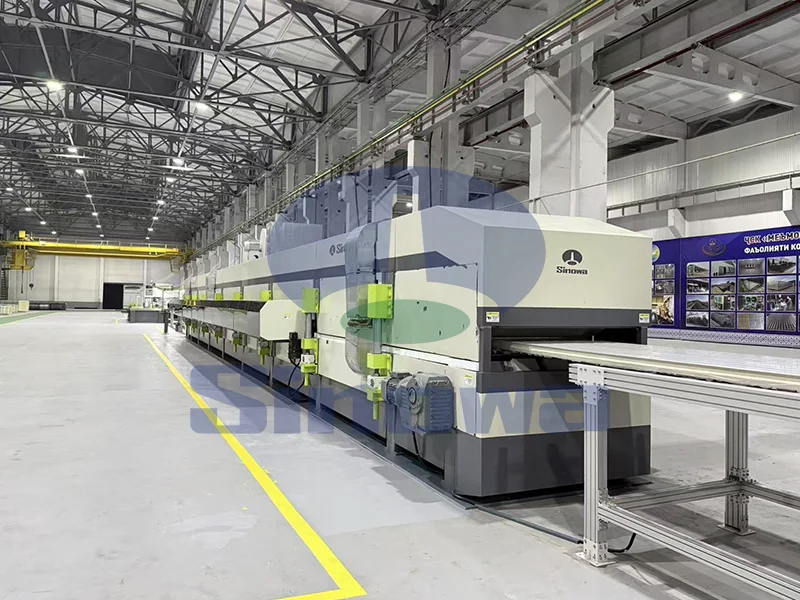
To comprehensively analyze the price-related characteristics of sandwich panel machines, it is necessary to first clarify the basic structural composition and operational working principles of standard production lines. A complete sandwich panel manufacturing system consists of multiple interconnected functional modules that work in tandem to complete continuous automated production procedures. The feeding module undertakes the orderly unfolding and preliminary leveling of raw metal sheets, eliminating surface wrinkles and structural deformations that may occur during raw material storage and transportation. Subsequent forming and pressing units reshape flat metal sheets into customized profiles through precision mechanical rollers, laying a solid foundation for the subsequent composite bonding process. In the core composite stage, the equipment uniformly distributes insulating core materials between two layers of metal sheets, and completes integrated bonding and solidification through constant-temperature pressurization, ensuring stable adhesion between layers and consistent overall structural density of finished panels. The final cutting and output module accurately segments continuously produced composite plates according to preset dimensional standards, while conducting preliminary surface quality inspection and neat stacking of finished products. The integration degree, processing accuracy, and mechanical coordination efficiency of these functional modules directly determine the manufacturing cost of the equipment itself, thereby exerting a fundamental impact on market pricing trends.
Automation grade constitutes one of the most critical factors driving the cost differentiation of sandwich panel machines. Production lines with low automation rely heavily on manual assistance for raw material feeding, parameter adjustment, finished product collection, and equipment operation monitoring. Such mechanical structures adopt relatively simple transmission designs, basic control components, and conventional processing technologies in the manufacturing process, which effectively reduces production difficulty and raw material consumption for equipment fabrication. Correspondingly, these semi-automatic mechanical systems have lower market entry thresholds, making them suitable for small-scale processing factories with limited daily output and flexible production rhythm requirements. In contrast, highly automated production lines adopt integrated intelligent control logic, realizing one-click start-up, automatic raw material deviation correction, real-time temperature and pressure monitoring, and unmanned finished product sorting throughout the entire production process. This advanced automation configuration requires the embedding of high-precision sensing elements, intelligent operation terminals, and stable digital transmission systems, which significantly increases the research and development investment and component procurement costs of the equipment. Additionally, highly automated machines optimize internal mechanical transmission structures to reduce manual intervention links, further improving manufacturing precision and operational stability, and their inherent technological advantages naturally push the overall market cost to a higher level.
Material selection for equipment manufacturing is another indispensable core factor affecting the pricing of sandwich panel machines. The long-term stable operation of industrial production lines requires high structural rigidity and corrosion resistance, and the metal raw materials used for main frames, pressure rollers, transmission shafts, and molding molds directly determine the service life and operating stability of the machinery. Equipment made of ordinary carbon steel materials has relatively low raw material procurement and processing costs, meeting the basic production demands of low-frequency working scenarios. However, such materials are prone to surface oxidation, structural deformation, and component wear after long-term mechanical friction and environmental humidity erosion, requiring frequent maintenance and part replacement. In comparison, production machines adopting high-strength alloy steel and anti-corrosion surface treatment processes have stronger pressure resistance, wear resistance, and environmental adaptability. The optimized material formula enhances the fatigue resistance of key components, effectively extending the overall service cycle of the equipment and reducing long-term maintenance frequency. The difference in raw material grades and processing techniques leads to a clear hierarchical gap in the manufacturing cost of finished machinery, forming distinct price gradients in the market.
Functional scalability and customized modification requirements further enrich the pricing fluctuation range of sandwich panel machines. Standardized universal production lines are designed for mass production of conventional-specification building panels, with fixed mold sizes, single heating systems, and unified transmission speeds. These standardized machines adopt mature and streamlined production processes in the manufacturing stage, achieving large-scale batch production of equipment and effectively averaging manufacturing costs. They are widely applicable to most conventional building insulation panel production scenarios and have relatively stable and moderate market positioning. When facing personalized production demands, such as special-shaped panel molding, multi-density core material composite processing, ultra-thick or ultra-thin customized plate production, manufacturers need to carry out targeted structural transformation and functional upgrading of basic equipment. Customized links involve independent mold development, power system optimization, heating module expansion, and control program rewriting, consuming additional human resources, technical costs, and production cycles. Moreover, customized equipment usually cannot realize batch standardized manufacturing, resulting in higher marginal production costs. Therefore, the more complex the personalized modification requirements, the more prominent the cost increment of the equipment, and the higher the corresponding market quotation.
Market supply and demand relationships and industrial raw material cycles bring periodic fluctuations to the pricing of sandwich panel machines. The development momentum of the downstream construction industry directly affects the procurement willingness of panel processing enterprises. During periods of prosperous infrastructure construction and vigorous demand for thermal insulation enclosure materials, manufacturing enterprises expand production scales and increase equipment procurement orders. The continuous growth of market demand stimulates the overall transaction volume of mechanical equipment, and the tight supply state of high-quality production lines drives the market quotation to rise steadily. On the contrary, when the construction industry enters a dormant adjustment cycle, the market demand for finished sandwich panels shrinks, and enterprises delay equipment renewal and expansion plans. The weakened market demand leads to sufficient equipment inventory for manufacturers, triggering moderate price adjustments to accelerate capital recovery. Meanwhile, the price changes of upstream metal raw materials, electrical components, and transmission parts will be transmitted to the terminal mechanical equipment market. The overall cost of machinery manufacturing will rise when the prices of industrial raw materials increase, and the market price of equipment will also decline moderately with the raw material cost reduction in the industrial chain.
After-sales service system and technical supporting conditions also produce implicit influences on the comprehensive cost of sandwich panel machines. Complete supporting services include on-site installation and commissioning, professional operator training, regular equipment maintenance guidance, and long-term spare parts supply guarantee. Machinery suppliers with sound service systems need to build professional technical teams, formulate standardized service processes, and reserve sufficient spare parts inventory, which increases the daily operation and management costs of manufacturers. The additional service cost will be reasonably included in the overall pricing of equipment, enabling buyers to obtain continuous technical support and operational protection in the later production stage. Some low-cost mechanical products only provide simple equipment delivery services, lacking professional installation debugging and after-sales maintenance links. Although the one-time procurement cost is low, users need to spend extra funds on personnel training, fault maintenance, and spare parts replacement in the later operation process. From the perspective of comprehensive life cycle cost, equipment with complete service configuration has higher comprehensive cost performance despite its relatively high initial quotation.
Production efficiency and energy consumption indicators indirectly affect the market pricing differentiation of sandwich panel machines. Efficient production lines adopt optimized mechanical transmission layouts and constant-temperature energy-saving heating systems, which can shorten the single-panel molding cycle and realize continuous high-speed operation under stable power consumption. The advanced energy-saving structure reduces long-term power resource consumption for enterprises, and the efficient production capacity helps processing plants increase daily output and dilute unit production costs. The precision optimization of internal structures increases the manufacturing difficulty and technological investment of such high-efficiency equipment, so the market pricing is relatively high. In contrast, traditional low-efficiency production lines have unreasonable mechanical transmission designs, large heat loss in the heating process, and unstable operating power consumption. Although the procurement threshold is low, the long-term energy consumption cost and production time cost remain at a high level. The difference in energy-saving performance and production efficiency forms an invisible cost gap between different types of equipment, and also becomes an important reference basis for market price grading.
Regional manufacturing cost differences and logistics transportation conditions further widen the price fluctuation range of sandwich panel machines. Equipment manufacturers located in industrial agglomeration areas can rely on perfect upstream and downstream supporting industrial chains to realize convenient procurement of raw materials and parts, reducing intermediate transportation and circulation costs in the production process. The centralized industrial layout also optimizes the production process flow, improves equipment manufacturing efficiency, and controls comprehensive production costs within a reasonable range. Manufacturers in remote industrial areas face higher raw material transportation costs and incomplete supporting processing facilities, leading to increased equipment manufacturing expenses. In addition, the large volume and heavy weight of sandwich panel machines bring high requirements for transportation tools and loading and unloading equipment. The transportation distance, regional traffic conditions, and packaging protection standards during transit will generate additional logistics costs. These variable cost factors will be included in the final transaction price of the equipment, resulting in different sales prices for the same type of machinery in different trading regions.
With the continuous upgrading of global building energy conservation standards and the steady expansion of the prefabricated building market, the overall market demand for sandwich panel machines maintains a stable growth trend. The industrial development direction of machinery products gradually leans towards intelligent integration, energy conservation and consumption reduction, and multi-functional integration. The continuous iteration of production technology promotes the upgrading of equipment performance, and the application of new materials and new processes will further optimize the internal structural design of machinery. In the future, high-end intelligent production lines will further reduce manual dependence, realize full-process digital monitoring and remote fault diagnosis, and their technological added value will continue to increase, driving the steady rise of high-end equipment prices. Medium and low-end standardized equipment will rely on mature manufacturing processes to maintain stable cost control, meeting the basic production needs of small and medium-sized processing enterprises, and the market price will remain relatively stable within a reasonable range.
In conclusion, the price formation mechanism of sandwich panel machines is affected by multiple interconnected factors such as automation level, manufacturing materials, functional configuration, market supply and demand, service supporting systems, and regional costs. There is no fixed unified pricing standard in the industry, and all equipment quotations are comprehensively determined based on production performance, structural quality, and service attributes. For equipment purchasers, it is essential to abandon the single price-oriented procurement logic, fully combine their own production scale, product positioning, and long-term operation plans, and comprehensively evaluate the comprehensive cost performance and life cycle use value of equipment. Reasonable matching between equipment configuration and production demands can effectively avoid resource waste caused by excessive configuration or production limitations caused by insufficient configuration. For machinery manufacturers, continuously optimizing production processes, improving equipment stability and energy-saving performance, and improving after-sales service systems are the core ways to enhance market competitiveness and realize benign price operation in the industrial machinery market. With the continuous maturity of the prefabricated building industry and the gradual standardization of the mechanical manufacturing sector, the pricing system of sandwich panel machines will become more transparent and reasonable, promoting the sustainable and healthy development of the entire industrial chain.
«Sandwich Panel Machine Price» Update Date:2026/5/12
URL: https://www.sinowa.cn/en/blog/sandwich-panel-machine-price.html
Tags: Insulated Sandwich Panel Machines , Sandwich Panel Machines , Rockwool Sandwich Panel Machine , Polyurethane Sandwich Panel Machine , Continuous Sandwich Panel Machine , Continuous Polyurethane Sandwich Panel Machine , Continuous PU Sandwich Panel Machine , Rock Wool Sandwich Panel Machine , Mineral Wool Sandwich Panel Machine , PU Sandwich Panel Machine ,
